The recent release of a draft study on the B&P Tunnel project is an important opportunity for West Baltimore residents to share their comments on the draft. Learn more background about the B&P Tunnel project or read on for information on submitting comments and what is included in the draft report.
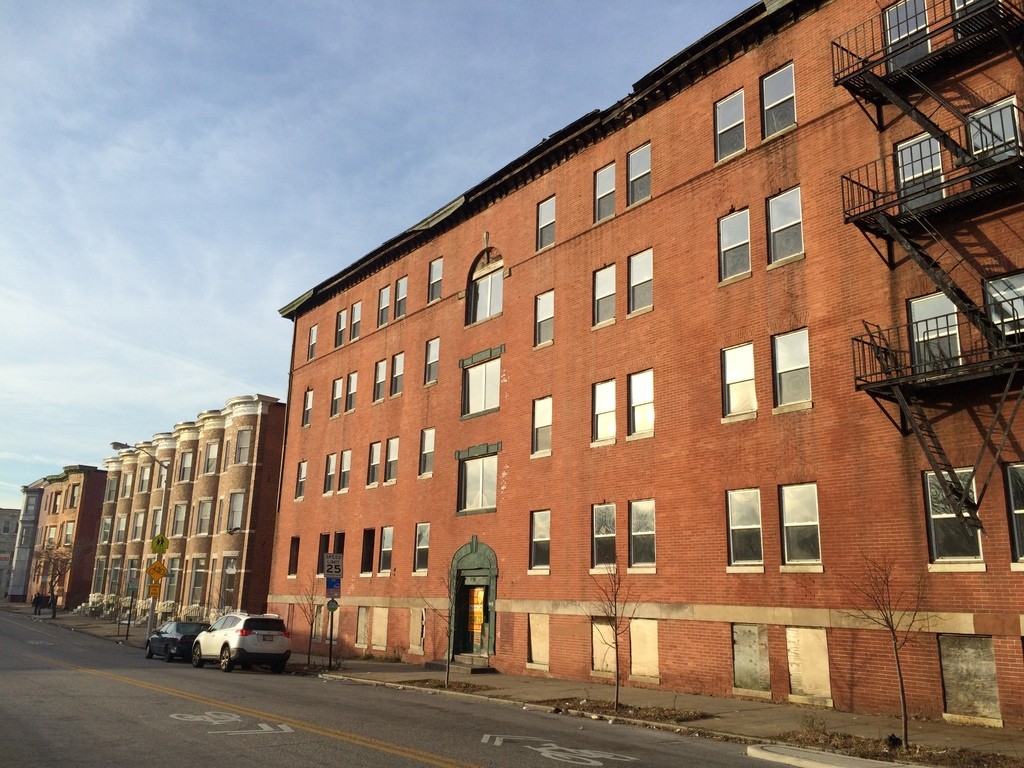
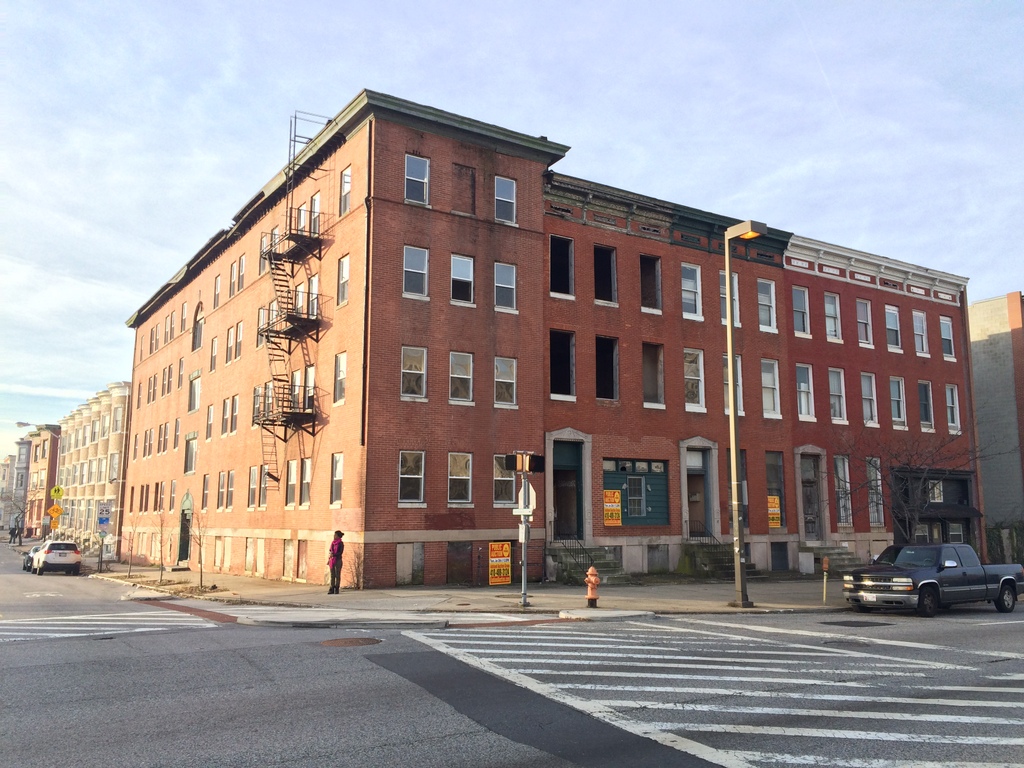
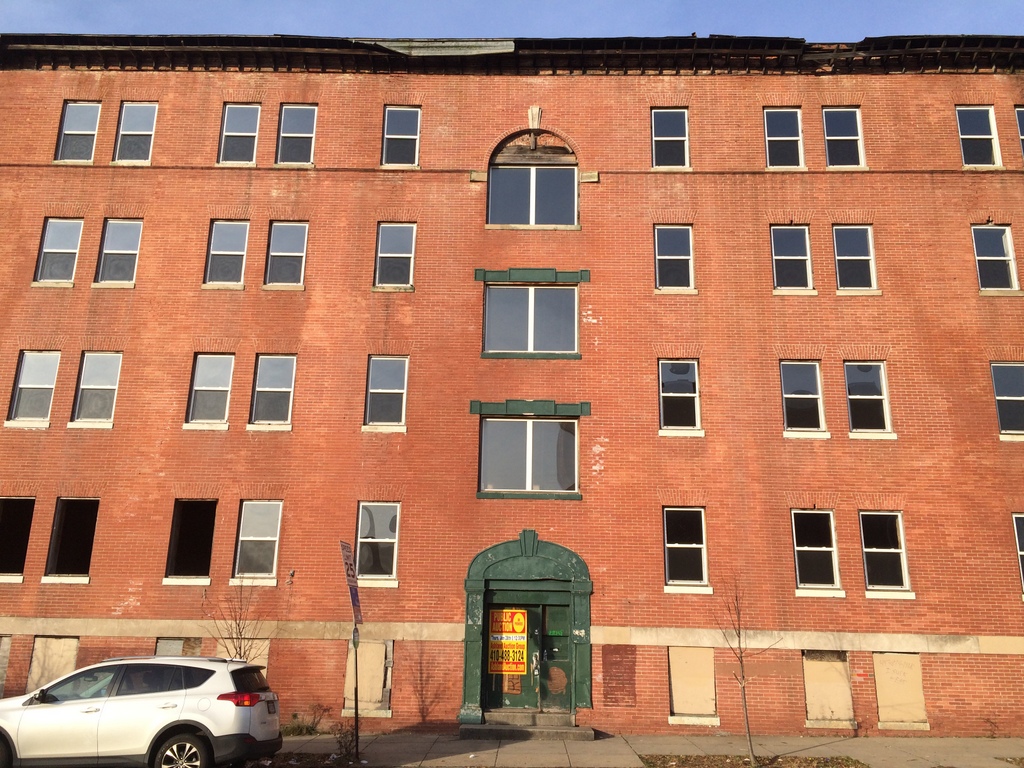
Formerly known as the Guilford Apartments, 233 E. North Avenue dates back to 1902 when the Guilford Avenue Construction Company awarded a $23,000 construction contract to builder C.S.M. Williamson. In the 1900s and 1910s, developers erected small to mid-sized apartment buildings across central and north Baltimore including the nearby Preston Apartment House (1902) at Guilford Avenue and Preston Street and The Walbert (1907) on Charles Street. The 1880s rowhouse next door at 231 E. North Avenue remained a single-family home up through the 1910s but was converted into an office by 1953.
Twenty years ago, the owner of the building received approval to expand from 22 apartments to 40 for a senior housing project. The effort stalled with little progress and, in 2012, a new developer won support from the Board of Municipal and Zoning Appeals to turn the vacant building into nineteen apartments. According to the auctioneer, the owner then gutted the interior preparing to start construction but could not complete the project.
233 E. North Avenue from Guilford Avenue, 2015 November 15
On Thursday, January 28, 2016 at 12:30 pm, 231-233 E. North Avenue is up for auction and we hope the building is rehabilitated and offers a welcome home for new neighbors in the Greenmount West community. The starting bid is for the property is $175,000 and property taxes are $4,465.12 (2015-2016). Thanks to the building’s location within the North Central National Register Historic District, a project at this building could be eligible for the Baltimore City Historic Tax Credit program—check out our tax credit guide for more information. Plans are also available:
Learn more about the 231-233 E. North Avenue from Ashland Auction. For questions or more information, contact auctioneer Adam Shpritz by phone at 410-365-3595 (cell) or 410-488-3124 (office) or by email at adam@ashlandauction.com. Pr-bid offers are accepted by phone at 410-488-3124 or by email to adam@ashlandauction.com.
We are glad to start the new year, and our winter tour season, by taking you behind the scenes at the workshops of two wonderful local artisans. For our January 27 tour, we’ll visit Thomas Brown Woodwright, a Remington workshop that turns out the highest quality wood products while almost exclusively using machines built before the Great Depression. On February 10, we’re headed to Mount Vernon on a walk through the studio of McLain Wiesand. From their shop on Cathedral Street, McLain Wiseand create decorative arts pieces and furniture sold in glamorous showrooms from Los Angeles to New York following the tradition of Baltimore’s famed 19th century furniture makers.
Finally, we are back again with Baltimore historian Jamie Hunt for our annual Mt. Vernon Valentines Love Stories tour covering two hundred years of love, loss and betrayal in Baltimore’s high society. We’ll be doing two of these tours on February 13—the first at 11:00 am and the second at 1:00 pm.
We are looking forward to year packed with heritage tours and hope you can join us on our first two.
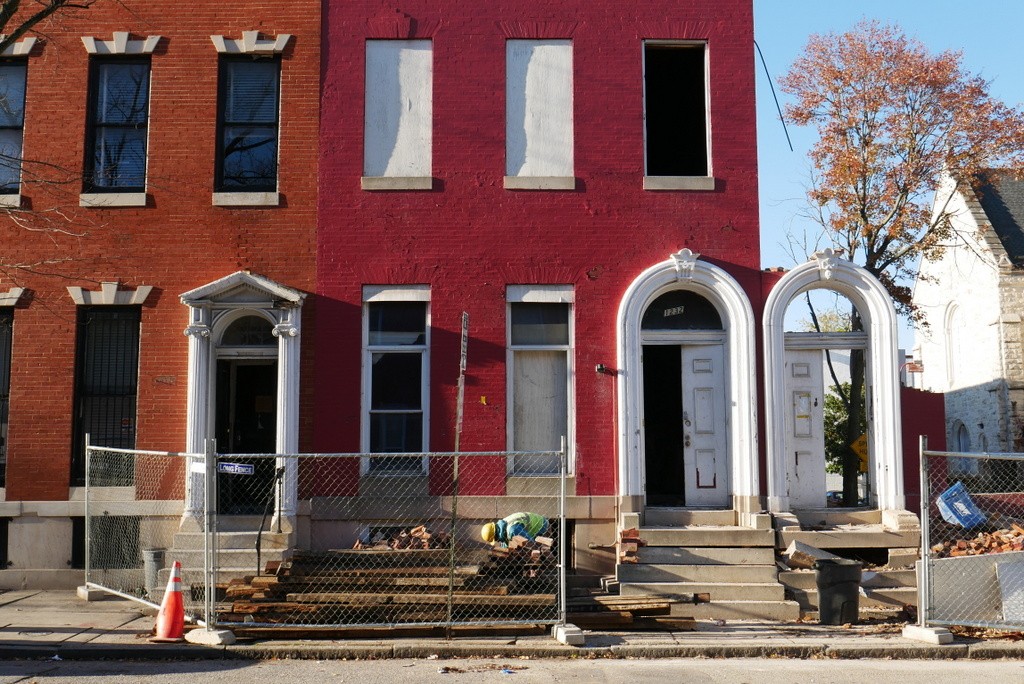
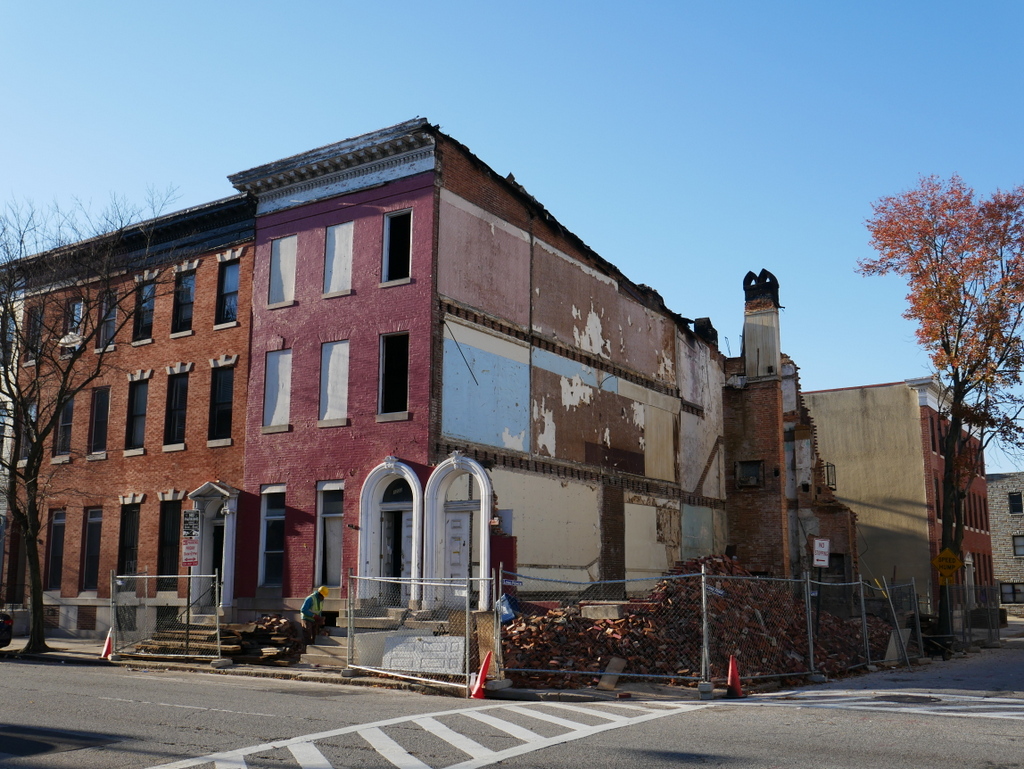
Built in 1868, the three-story brick rowhouse at 1232 Druid Hill Avenue is an important reminder of the city’s rapid growth after the Civil War and the African American history of the Upton neighborhood. Please come to the public CHAP hearing on Tuesday, January 12 to support listing 1232 Druid Hill Avenue as a local landmark and protect the building from demolition. If you are unable to attend, you can share your support for the nomination by email with Eric Holcomb, Executive Director, CHAP at eric.holcomb@baltimorecity.gov.
1232-1234 Druid Hill Avenue
Continued threats to Civil Rights heritage in West Baltimore neighborhoods highlight the urgent need to preserve 1232 Druid Hill Avenue. In September 2015, Bethel A.M.E. Church received permits for limited interior demolition at 1232 Druid Hill Avenue (acquired by the church in 1981) and the neighboring 1234 Druid Hill Avenue. Regrettably, the work soon led to a roof collapse at 1234 Druid Hill Avenue and the church received a permit to demolish both buildings—despite the fact that 1232 Druid Hill Avenue remained structurally sound. As the contractor tore down the Freedom House in early November, they continued to gut 1232 Druid Hill Avenue with an clear plan to tear the building down shortly.
Fortunately, the Baltimore Commission for Historical and Architectural Preservation (CHAP) stepped up and placed the building on their potential landmark list. The potential landmark list is a new tool for preservation in Baltimore created by the revised CHAP ordinance and replacing the controversial “special list” designation. As the Baltimore Brewreported in November, CHAP posted a notice at 1232 Druid Hill Avenue and scheduled a hearing for January 12 to hear testimony from the owner and members of the public and decide whether to add the building to CHAP’s landmark list.
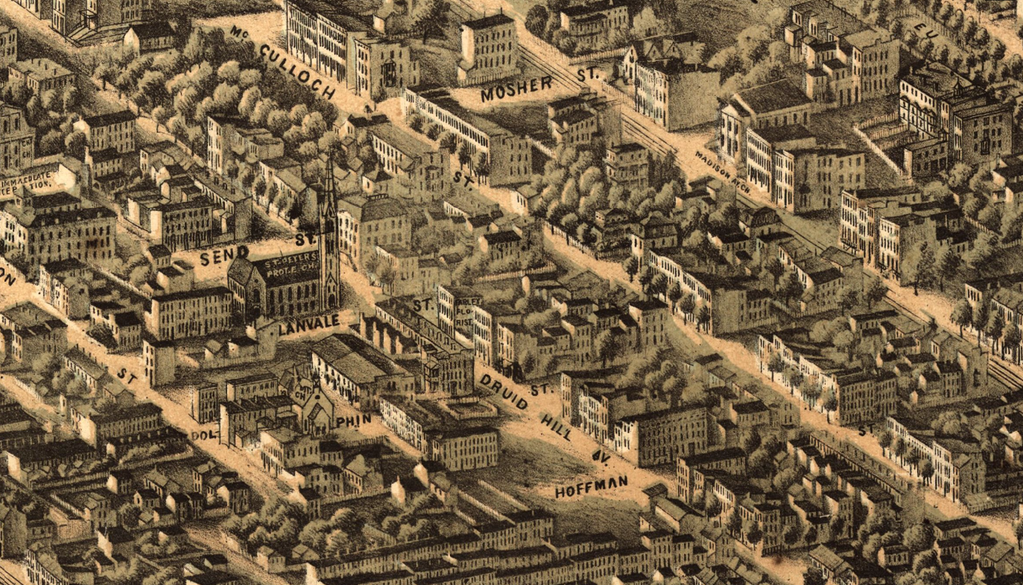
1232 Druid Hill Avenue tells the story of Baltimore’s changing neighborhoods through the stories of the many families who have called this house home. We call this the King/Briscoe House to recognize two particularly important residents at 1232 Druid Hill Avenue: local printer George W. King (who lived there from 1883 to 1898) and African American wagon driver Abraham Briscoe (who lived there with his family from 1899 to 1908). You can learn more about the history of 1232 Druid Hill Avenue with our draft landmark designation report.
If you plan to testify to support the designation next week, we urge you to read our tips for effective public testimony. The hearing starts at 1:00pm. This is the third item on the agenda so the staff presentation is likely to begin around 1:30pm. To testify, you need to sign up at the front desk for the planning department located just outside the Planning Department hearing room. Please feel free to contact us with any questions or comments or send me an email at pousson@baltimoreheritage.org.
Update –January 6, 2015: We just confirmed with Ashland Auction that 404 George Street is now under contract and the auction is cancelled. We plan to share additional information about the new owner and their plans for the building when we learn more. Thank you to everyone who helped spread the word!
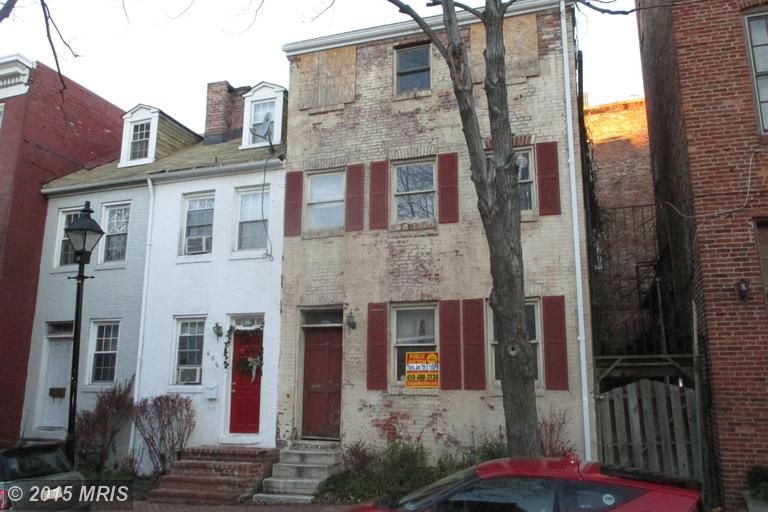
Tucked away on a narrow street, 404 George Street has had our attention since concerned neighbors first contacted us in 2012 about this three-story rowhouse in Seton Hill. Next Thursday, January 7, the building is up for auction—offering a unique opportunity to buy a historic house just steps away from the famed Mother Seton House.
In July 2012, local residents pushed Baltimore Housing to file a receivership case against the owner who held the building since 1986. Receivership is a process where a municipality or a qualified non-profit applies for a court to appoint them as the receiver of the property and move to restore the property to use.
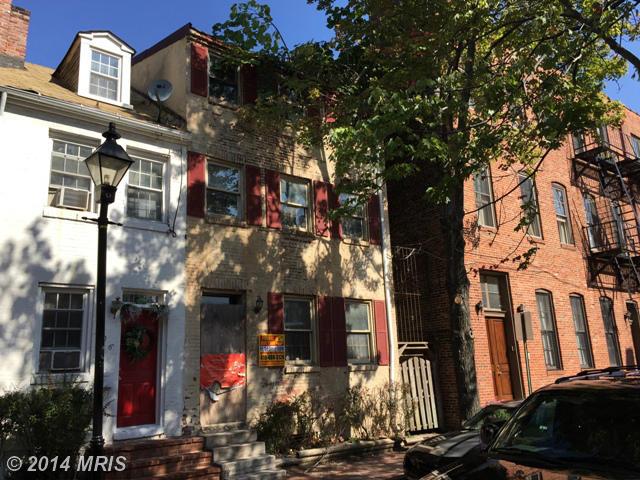
Courtesy MRIS, 2014.
Unfortunately, years of neglect took a toll on the structure. At the first auction in October 2014, the 404 George Street received no bids from interested buyers. Thankfully, Baltimore Housing quickly responded and stabilized the building to make the property more attractive to prospective developers. Stabilizing distressed vacant houses is a key strategy for encouraging private reinvestment and is often more cost-effective than demolition.
On Thursday, January 7 at 1:00 pm, 404 George Street is up for auction again. If you are a local builder, developer or an enthusiastic home rehabber, we invite you to come out next Thursday and invest in this beautiful community. If you are a neighbor, we need you to help spread the word!
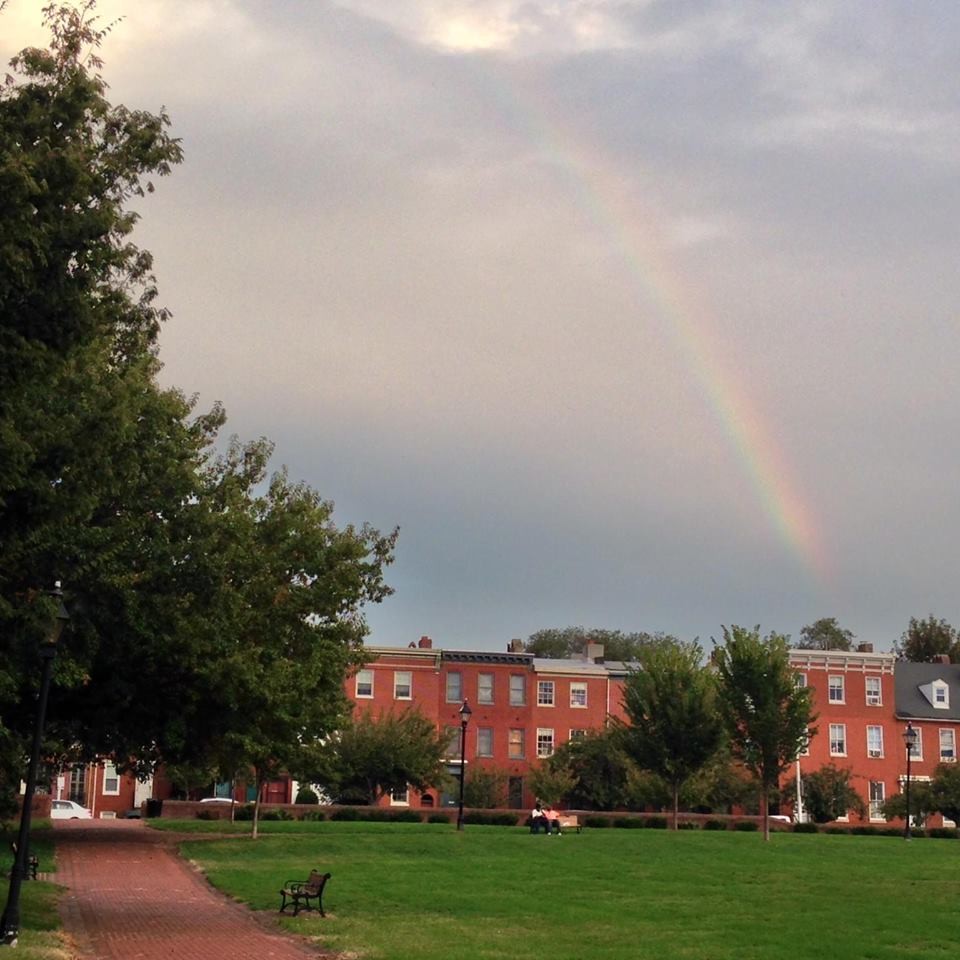
Built in the 19th century, 404 George Street is less than a block away from the Mother Seton House and St. Mary’s Seminary Chapel—an 1808 landmark designed by architect Maximilian Godefroy. St. Mary’s Park boasts a recently restored fountain and won recognition from Baltimore City Paper as the city’s best park in 2014. The 2012 master plan for Seton Hill has much more information on the neighborhood. Of course, the property is eligible for city and state historic tax credits—review our historic tax credit guide for more details.
Please help make 2016 the year that the vacant house at 404 George Street turns back into a home.
Learn more about 404 George Street and the auction process from the Ashland Auction Group. For questions or more information, contact auctioneer Adam Shpritz by phone at 410-365-3595 (cell) or 410-488-3124 (office) or by email at adam@ashlandauction.com. Bids start at $30,000. Pre-bid offers are accepted by phone at 410-488-3124 or by email to adam@ashlandauction.com.