Category: Preservation

Thank You for Attending Our Preservation Celebration 2026!

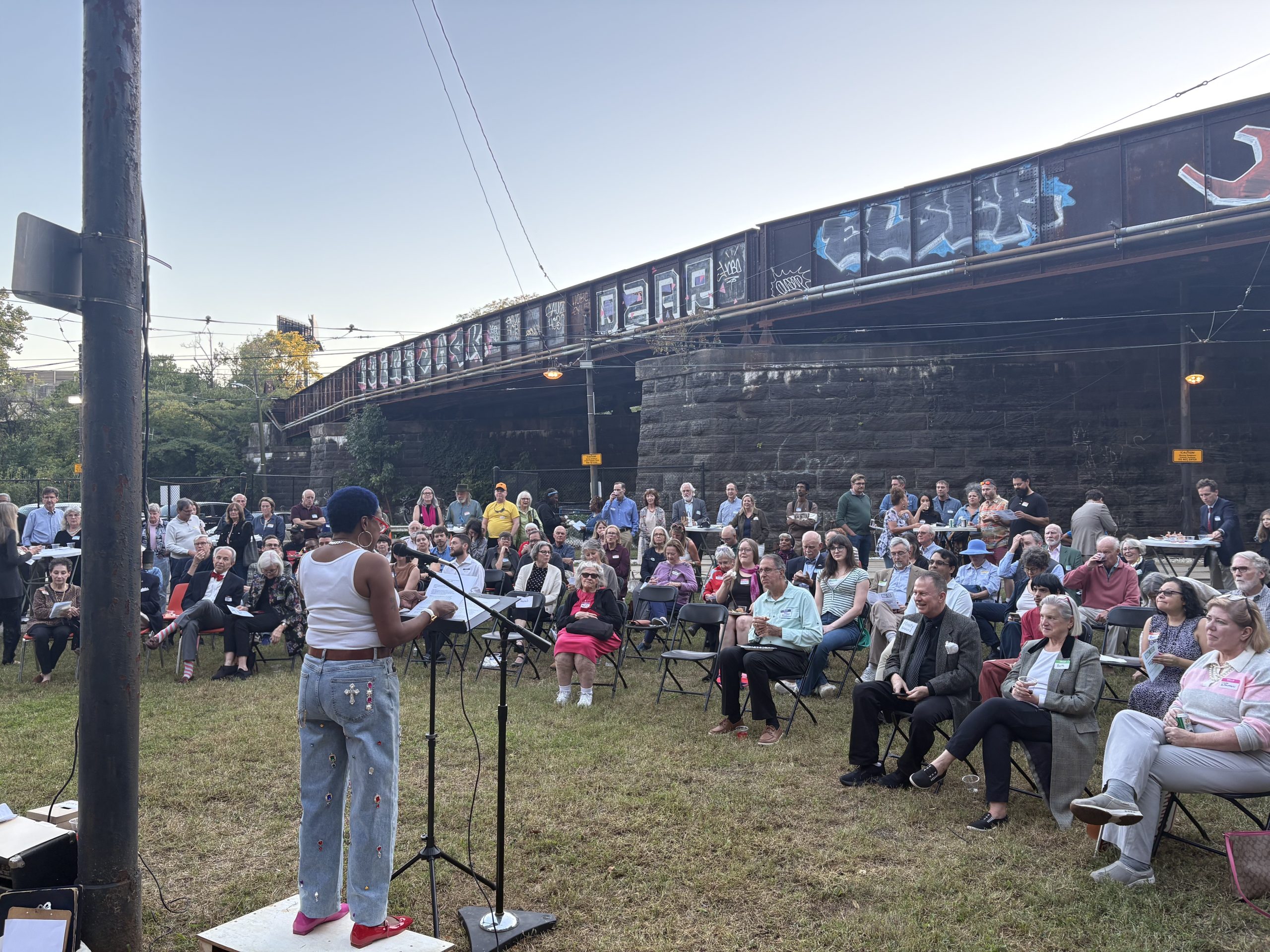
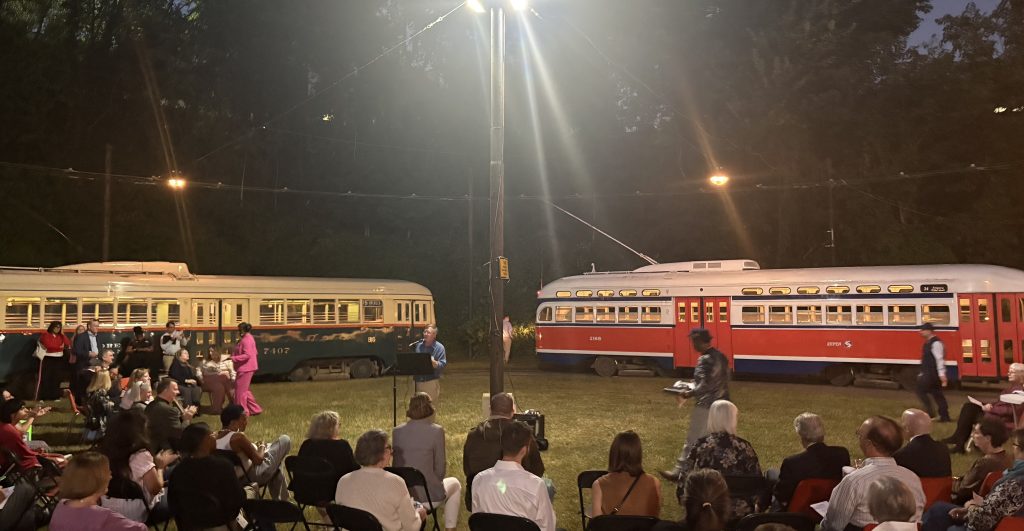
Last Thursday night, October 8, Baltimore Heritage had its annual Preservation Celebration at the Baltimore Streetcar Museum! We handed out 14 awards to groups and individuals doing fabulous work celebrating and preserving our city’s history and buildings. We gave out 6 micro-grants to 6 very worthy community projects. And we said a big thank you to our wonderful volunteers. They make historic preservation possible in Baltimore. We also gave out out some cool door prizes–gift certificates to the Charles Theatre, Faidley’s Seafood, and Wockenfuss Candies to name a few! All the while, we ate delicious food from Neopol Smokery and drank wine from Spirits of Mt. Vernon. Thank you to everyone attended. See our Facebook post for more photos!

Award Winners:

Volunteer of the Year: Bob Goldstein

Dedication to sharing Baltimore’s rich history


Charles Street Development & Downtown Partnership

For showcasing historic Charles Street with the Charles Street Promenade


Baltimore Architecture Foundation

For showcasing Baltimore’s architecture through Doors Open Baltimore


The Sanctuary Collective

For transforming a historic church into a youth basketball court & safe space


Christina Delgado, Yaritza Velez & Tola’s Room

For the exhibit,

From Borinquen to Baltimore: Puerto Rican Players of the Baltimore Elite Giants


The Baltimore Legacy Project

For producing video documentaries of Baltimore’s Black elders


The Ships Caulkers’ Houses & Friends of 612-614 S. Wolfe St, Inc.

For heritage education through walking tours


Baltimore Finishing Works & C&H Restoration

For over 100 years of saving Baltimore’s historic treasures


Greg Otto

For memorializing Baltimore‘s historic places in art


Bon Secours Community Works & Sisters of Bon Secours

For transforming vacant houses on Fulton Avenue


Key Tech

For restoring the McHenry Theater & Public School No. 15


Central Baltimore Partnership

For transforming empty spaces into neighborhood places


Douglas Gordon Award: Sally Johnston & Henry Hopkins

A lifetime of commitment to advancing Baltimore’s architecture and history


Pitch Party Winners: 

Baltimore Streetcar Museum – $1500

For a new WWI exhibit at the museum


Multilingual Education Center – $1000

For introducing schoolchildren to Baltimore’s church architecture through printmaking 


Renaissance Academy High School – $500

For a Marble Hill documentary produced by high school students


Friends of Hanlon Park – $500

For website start-up support and community gathering funds


Cameroon American Council – $500

For a project on Anna Murray Douglass and Baltimore’s Free Black Francophones of Nineteenth-Century Fells Point


Memorial Episcopal Church – $500

For roof repairs to the historic church, which is a community gathering spot
Join Us on October 8 at Our Preservation Celebration

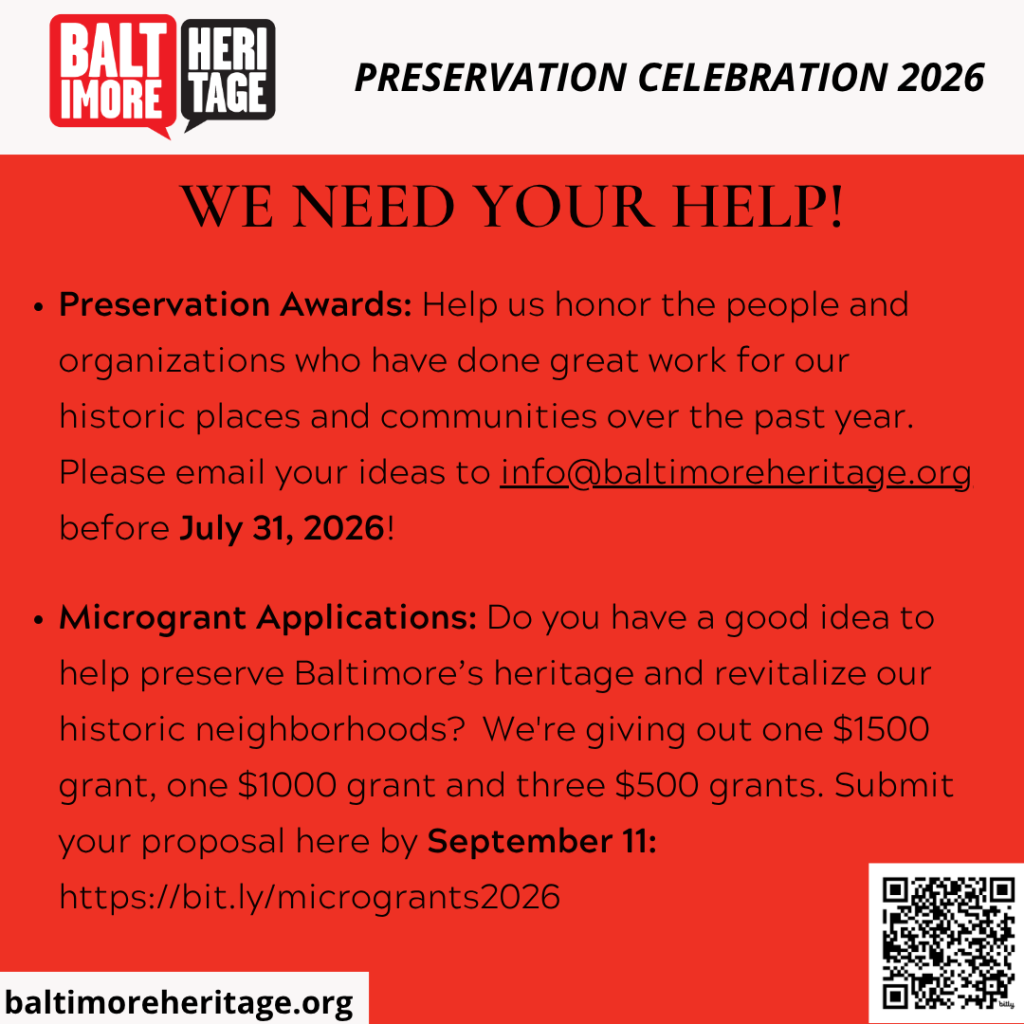
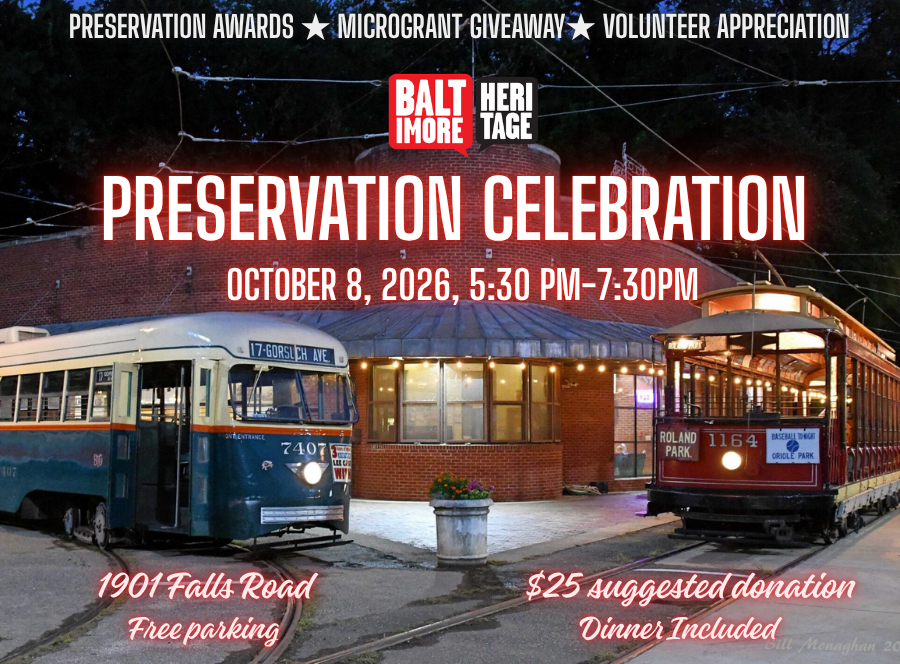
Join us for our free Preservation Celebration 2026 at the Baltimore Streetcar Museum! On October 8, we’ll honor our 2026 Preservation Award winners and, with your help, give out five micro-grants (from $500 to $1500) to people working on the front lines in our historic neighborhoods. We’ll say thank you to our volunteers and honor all of their hard work this year. And, we’ll be celebrating local Baltimore businesses by giving away door prize gift certificates to local restaurants, theatres and more! With dinner and drinks from locally-owned Baltimore vendors, we hope you will join us for what promises to be a wonderful evening. The event is free with a suggested donation of $25.

Event Schedule: 

5:30 pm – Doors Open with Food and Drink

6:00 pm – Welcome

6:05 pm – Presentation of 2026 Awards

6:30 pm – Microgrant Presentations and Selection


About Our 2026 Historic Preservation Awards

At our October 8 celebration, we will honor people in Baltimore who over the last year have made an impact in helping save our historic places and improve our historic neighborhoods.

Our awards recognize work of all kinds: people who have done an excellent rehab job on their house or building; people who have volunteered at a historic site; people who have stepped up to improve their historic community with a new program or partnership. Individuals are eligible, as are organizations, corporations, and government agencies or programs. Self nominations are encouraged! Please email nominations to Johns Hopkins (hopkins@baltimoreheritage.org) by July 31.


About Our 2026 Microgrants

We’re in our 11th year of giving away microgrants to help fund preservation work in the city.

We’ll pick the most promising ideas and give them a chance for one $1500 grant, one $1000 grant and three $500 grants. Supporters of each idea will get three minutes to pitch them and at the end, all of us present will cast ballots to decide which ideas receive which micro grants.

The types of eligible projects are endless, and as long as they relate to Baltimore’s history, heritage, historic buildings or historic neighborhoods we will consider them. Past award winners include: restoring leaking masonry at a historic church, launching an after school arts-based safe space program in a historic neighborhood, supporting archaeological efforts at a historic furnace, and providing supplies for a community trying to provide access to a neighboring park. The sky’s the limit!

The award amounts may not be enough to complete an entire project. That’s OK. The goal is to help spark new and support existing neighborhood-level preservation work. You don’t need to be a nonprofit organization or even a formalized group to be eligible. Individuals and small groups are welcome! Complete rules can be found on the application. Please apply by September 11, 2026.

2026 Preservation Celebration: Send Us Ideas for Awardees and Microgrants!

We are thrilled that this year’s Baltimore Heritage Preservation Celebration will be at the Baltimore Streetcar Museum! On October 8, we’ll honor our 2026 Preservation Award winners and, with your help, give out five micro-grants (from $500 to $1500) to people working on the front lines in our historic neighborhoods. We’ll say thank you to our volunteers and honor all of their hard work this year. And, we’ll be celebrating local Baltimore businesses by giving away door prize gift certificates to local restaurants, theatres and more! With dinner and drinks from locally-owned Baltimore vendors, we hope you will join us for what promises to be a wonderful evening. The event is free with a suggested donation of $25.

In addition to joining us on October 8, please take a minute to send us your suggestions for our annual preservation awards (email hopkins@baltimoreheritage.org with award nominations). And if you are helping improve a historic neighborhood or place in the city, please consider applying for one of our microgrants. See below for more information.

–Johns Hopkins, Executive Director


About Our 2026 Historic Preservation Awards

At our October 8 celebration, we will honor people in Baltimore who over the last year have made an impact in helping save our historic places and improve our historic neighborhoods.

Our awards recognize work of all kinds: people who have done an excellent rehab job on their house or building; people who have volunteered at a historic site; people who have stepped up to improve their historic community with a new program or partnership. Individuals are eligible, as are organizations, corporations, and government agencies or programs. Self nominations are encouraged! Please email nominations to Johns Hopkins (hopkins@baltimoreheritage.org) by July 31.


About Our 2026 Microgrants

We’re in our 11th year of giving away microgrants to help fund preservation work in the city.

We’ll pick the most promising ideas and give them a chance for one $1500 grant, one $1000 grant and three $500 grants. Supporters of each idea will get three minutes to pitch them and at the end, all of us present will cast ballots to decide which ideas receive which micro grants.

The types of eligible projects are endless, and as long as they relate to Baltimore’s history, heritage, historic buildings or historic neighborhoods we will consider them. Past award winners include: restoring leaking masonry at a historic church, launching an after school arts-based safe space program in a historic neighborhood, supporting archaeological efforts at a historic furnace, and providing supplies for a community trying to provide access to a neighboring park. The sky’s the limit!

The award amounts may not be enough to complete an entire project. That’s OK. The goal is to help spark new and support existing neighborhood-level preservation work. You don’t need to be a nonprofit organization or even a formalized group to be eligible. Individuals and small groups are welcome! Complete rules can be found on the application. Please apply by September 11, 2026.

Laurel Cemetery: Added to the National Register of Historic Places

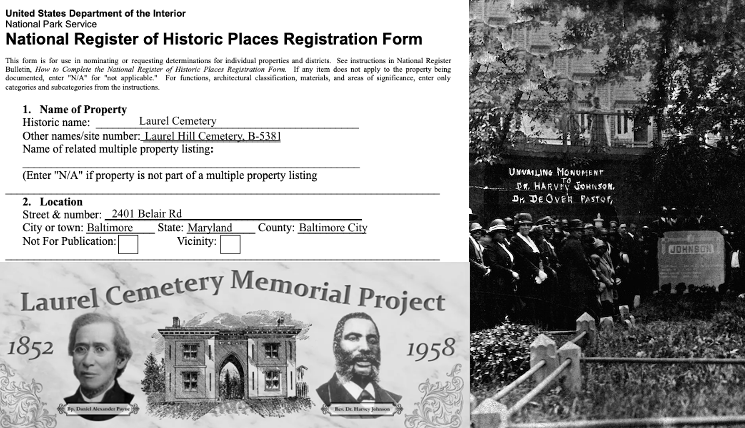
This past Tuesday, Laurel Cemetery was officially listed in the National Register of Historic Places. Baltimore Heritage, in partnership with the Laurel Cemetery Memorial Project, helped write the nomination. This historic property finally has the recognition it deserves as Baltimore’s first non-denominational African American cemetery, incorporated in 1852.

For decades Laurel Cemetery was the premiere burial site for African Americans, used by families across spectrums of social class, occupation, education, and religion. Here, the lives of washerwomen and laborers were commemorated alongside Civil War veterans and some of the most active and influential agents of African American progress. In 1894, Frederick Douglass traveled to Laurel Cemetery to speak at the unveiling of a monument honoring Bishop Daniel Alexander Payne, the sixth Bishop of the AME Church and founder of Wilberforce University. Leading Maryland Civil Rights leaders such as Rev. Harvey Johnson and Rev. Alexander Walker Wayman were also buried here. It is estimated that this burial ground was the resting place of an 37,000-42,000 people.

In 1957, the sole shareholder of the Laurel Cemetery Company sold the land against the wishes of descendants of those interred at the site. The closing of Laurel Cemetery was a politicized maneuver, organized clearly along lines of race and class. A series of lawsuits seeking justice for the disenfranchised descendants failed to prevail in the courts. Thus, after being in existence for 106 years, Laurel Cemetery was leveled and most of the site was paved over and completely forgotten in collective memory. One small undisturbed portion of the cemetery remains hidden in plain sight and this is the portion we nominated to be on the National Register of Historic Places. In February 1962, the former site of Laurel Cemetery became a department store. Today it is the Belair-Edison Crossing Shopping Center. For decades, most Baltimoreans have not known the site’s significance, the identities of those buried here, or even their own family connections to this space.

Thanks to the work of the Laurel Cemetery Memorial Project, Laurel Cemetery is no longer forgotten. It is celebrated as a sacred space and an important site of Black history and our city’s history. This nomination further supports the preservation and education of a key site in Baltimore’s (and Maryland’s) history.

Learn more about Laurel Cemetery on the Laurel Cemetery Memorial Project’s website. And stay tuned for a digitized version of the Laurel Cemetery’s National Register nomination form!

Baltimore Heritage Needs a Few Good Quilters!

If you are an experienced sewist who would like to use your skills and talents to join other volunteers in creating a group project that celebrates Baltimore, this post is for you.

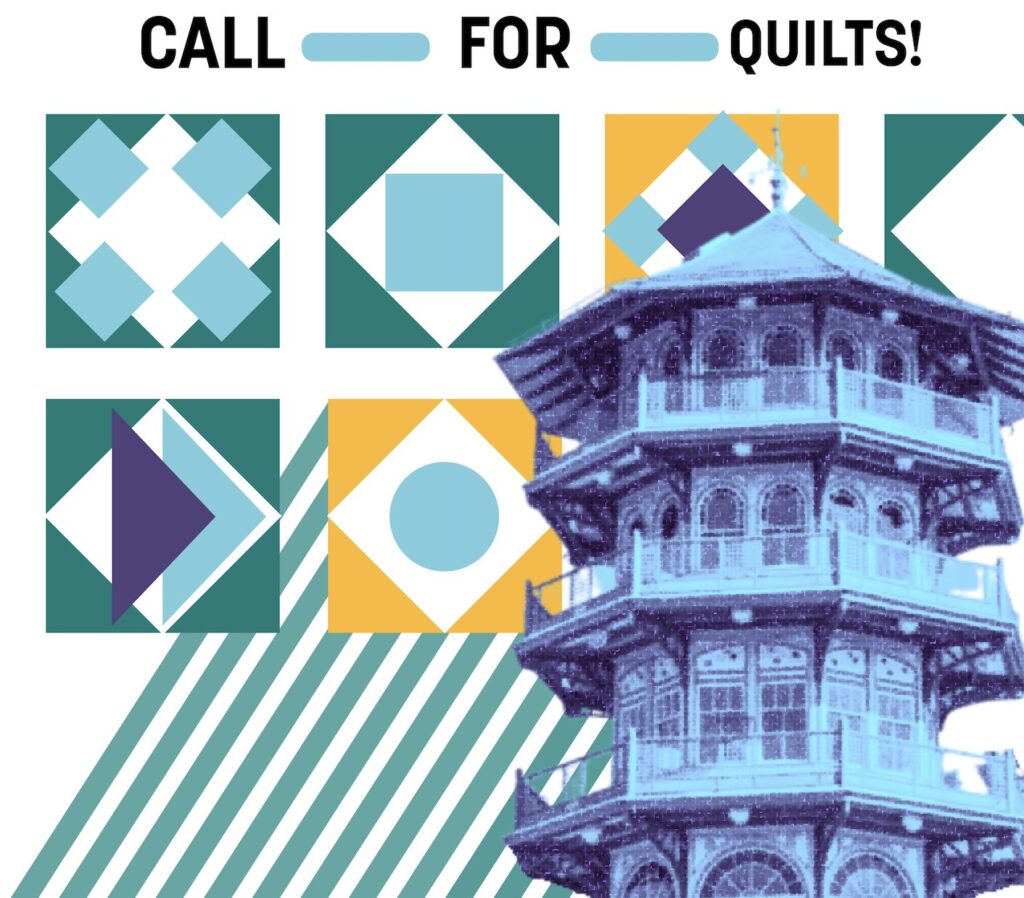
Baltimore Heritage would like to submit a quilt to the 2026 Homage to Baltimore Quilting Competition, https://www.homagetobaltimorequiltingcompetition.com, and we could use extra hands to help create a quilt that reflects Baltimore Heritage’s commitment to Baltimore’s communities via places, people, and traditions.

Our idea is to create quilt blocks that are inspired by the subjects of our Five Minute Histories videos. We have a few subjects in mind but will also consider suggestions (please visit our YouTube channel for inspiration). Blocks will be a standard size (yet to be determined) and will include space to cite the topic being represented as well as the quilter’s name. Blocks can include a wide ranging of quilting techniques including (but not limited to) piecing, applique, and embroidery. Blocks will be due March 1 to give us time to assemble and quilt the piece by the April 1 deadline.

Our initial though is that volunteers would work on their blocks individually, though we will schedule a meeting kickoff via Zoom once we have our volunteers in place. If, however, there is a desire for a dedicated sew-in day, we could try to make that happen. We will ask for progress photos from individuals to be able to provide updates via social media, so our community can see us at work.

What we cannot do:
-teach quilting or piecing—experienced sewists only
-provide sewing machines
-provide materials—though if someone is in need, there’s a good chance we can crowd source small pieces of fabric

What we can do:
-coordinate and make assignments
-handle quilt assembly, quilting, and submission
-provide updates via social media
-answer questions
-enthusiastically cheer on this project!

If this sounds like something you would like to be involved in and have time for, please contact Mary Zajac at zajac@baltimoreheritage.org by Tuesday, January 20. Thanks!