Discover a mysterious history at the Masonic Grand Lodge of Maryland’s Museum and Library

In addition to invoking more than a little mystery of rituals and clandestine meetings, Maryland’s Masons have been collecting important pieces of history for hundreds of years. Maryland Masons established a collection in the 1830’s to preserve relics associated with heroes of the American Revolution. The collection parameters were later expanded and the museum accumulated a vast array of material that encompasses not only Masonic-related objects, but also items that were deemed important to preserve for posterity.

Masonic Grand Lodge Museum and Library
Wednesday, March 6, 2013, 6:00 pm – 7:30 pm
Update: Due to predictions of continued severe weather, we have rescheduled tonight’s tour for Wednesday, April 10th, 6:00 pm
304 International Circle, Cockeysville, MD 21030
RSVP today! $15 members | $25 non-members
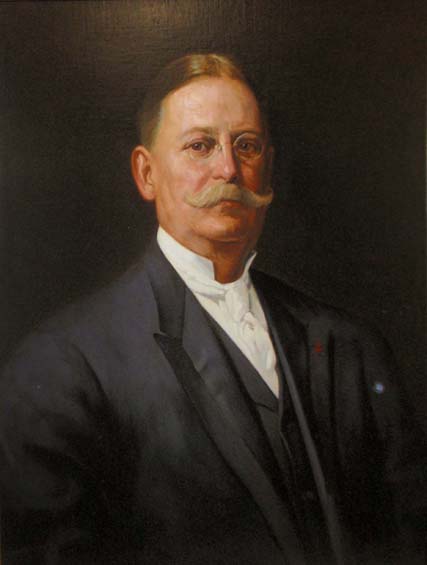
Painting of Thomas Shyrock by Meredith Janvier, c. 1910-20. Image courtesy Maryland State Archives,  MSA SC 1545-1214.
Painting of Thomas Shyrock by Meredith Janvier, c. 1910-20. Image courtesy Maryland State Archives, MSA SC 1545-1214.

Highlights of the collection include the desk that George Washington used to resign his commission as Commander-in-Chief of the U.S. Army in 1783 in the Old Senate Chamber of the Maryland State House, as well as a rich collection of items that belonged to Baltimore philanthropist and Maryland State Treasurer Thomas J. Shryock (1851-1918). The museum also boasts one of the most extensive and comprehensive collections of Masonic regalia in North America, dating back to 1775. As a result of an ongoing inventorying of the collection, many items have been rediscovered, including Thomas Jefferson’s paper knife given to the museum in 1959 by the widower of Jefferson’s great granddaughter, Sarah Randolph Hammerslough (1871-1959). Museum Curator Edward Heimiller will lead our tour and will help us better understand the origins, beliefs, and history of the freemasons.
Behind the Scenes tour of the G. Krug & Son Ironworks next week

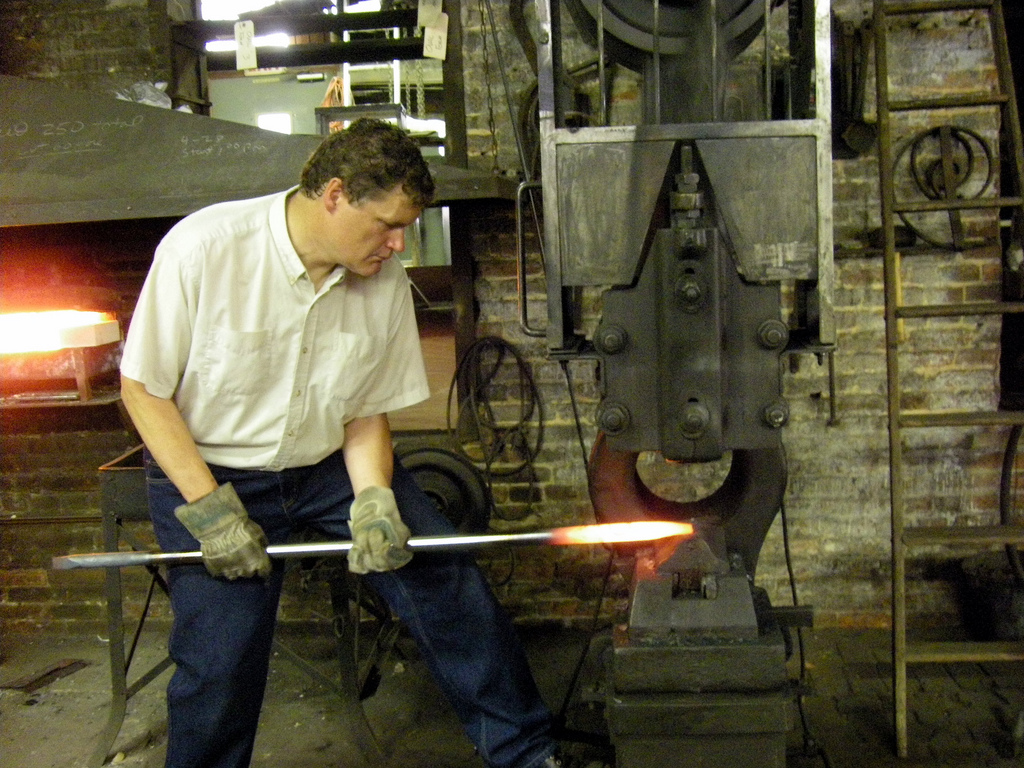
Join us next Wednesday for a tour of G. Krug & Son Ironworks and new museum. G. Krug is the nation’s oldest operating ironworks, and after 200 years has added an ironworks museum to its ongoing iron working business. G. Krug’s original work (and newer restoration work) can be found on local landmarks like the Otterbein Church, Baltimore Basilica, Washington Monument, and the Baltimore Zoo. In 2012, the fifth generation Krug family that now owns and operates the business added a museum to highlight the rich history of the family business and a collection that includes archival ironworks blueprints and rare pieces of century-old ironwork. Please join us for a tour of this 200 year old ironworking facility and new museum space on Saratoga Street.

G. Krug & Son Ironworks and Museum
Wednesday, February 20, 2013, 5:30 pm to 6:30 pm
415 West Saratoga Street, Baltimore, MD 21201
RSVP today! $15 per person for Baltimore Heritage members / $25 for non-members

On-street parking available nearby or find off-street parking at the surface lot at 112 N. Eutaw Street or the garage at 208 N. Paca Street. The shop is also a short walk from the Lexington Market Metro Station or Lexington Market Light Rail stop.

4942094169_5c69155b35_bMaryland first began to flourish as an ironworking center in the 1720s when the Principio Furnace opened in Cecil County and another furnace opened along the Gwynn’s Falls in Baltimore County. With the availability of iron and skilled labor to work it, G. Krug & Son was started in 1810 by Augustas Schwatka. In 1830, Andrew Merker bought the company and listed it as a “bell hanger and locksmith” firm. Gustav Krug, the Krug family ironworking progenitor, came to Baltimore in 1848 and began working for Merker. In 1871, Krug became the sole proprietor of the business and eventually changed its name to the current G. Krug & Son. The firm is the oldest continuously operating ironworks in the country, and it still fabricates artistic ironwork in the same building where it was founded in 1810. Krug staff, including Peter Krug, a fifth generation Krug ironworker, will lead our tour of this 200 year old facility and introduce us to their new Baltimore museum!

200 Years of Love Stories: Mt. Vernon Valentine’s Tour

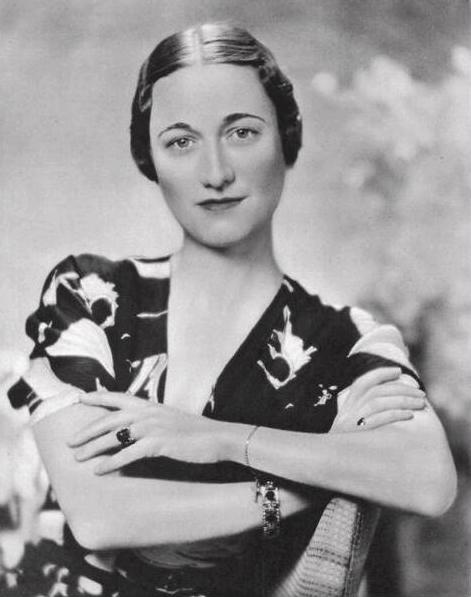
Wallis_Simpson c. 1936
Wallis Simpson c. 1936

Love, romance, jealousy… Mt. Vernon is the home not only of great architecture but also of great love stories. After a six-year hiatus, historian Jamie Hunt is back with a tour of historic romance in Mt. Vernon this Sunday. What better way to gear up for Valentine’s Day? We hope you can join us!

Tour Information

Sunday, February 10, 2013
1:00 pm to 2:30 pm or 3:00 pm to 4:30 pm (tours are the same, choose just one)
Meet at 14 West Mt. Vernon Place (Agora / Marburg Mansion), Baltimore, MD 21201
RSVP today! $10 per person for Baltimore Heritage members / $20 for non-members

For two centuries, Mt. Vernon has seen spectacular love stories, bitter feuds, and more than a few juicy trysts. The neighborhood’s earliest days inlclude the patriot and Mt. Vernon landowner John Eager Howard marrying a charming young Philadelphian, Harriet Chew, after her first love was hanged for treason in a plot that involved Benedict Arnold. Fast forward 200 years and Mt. Vernon saw a 20th century gradutate of its Baltimore School for the Arts, actress Jada Pinkett Smith, fall in love with and marry another noted Philadelphian, actor Will Smith.

In between these two sets of lovers are the royal tales of Betsy Patterson Bonaparte, who died wealthy but bitter in Mt. Vernon years after an annulled marriage to Napoleon’s brother Jerome, and Bessie Wallis Warfield, who was christened in a neighborhood church (just across the street from where Betsy died) and grew up to become the Duchess of Windsor. Not to be outdone by royalty, some of Baltimore’s most storied authors have ties to Mt. Vernon along with their beautful, sad marriages, including Edgar Allan Poe, H.L. Mencken, and F. Scott Fitzgerald. And of course the rich and famous of Baltimore’s Gilded Age include more than a few with offbeat love lives. Please join us and historian Jamie Hunt as we uncover historic loves won and lost in Baltimore’s great Mt. Vernon neighborhood.

Take a look at F. Scott Fitzgerald’s Bolton Hill rowhouse this Sunday

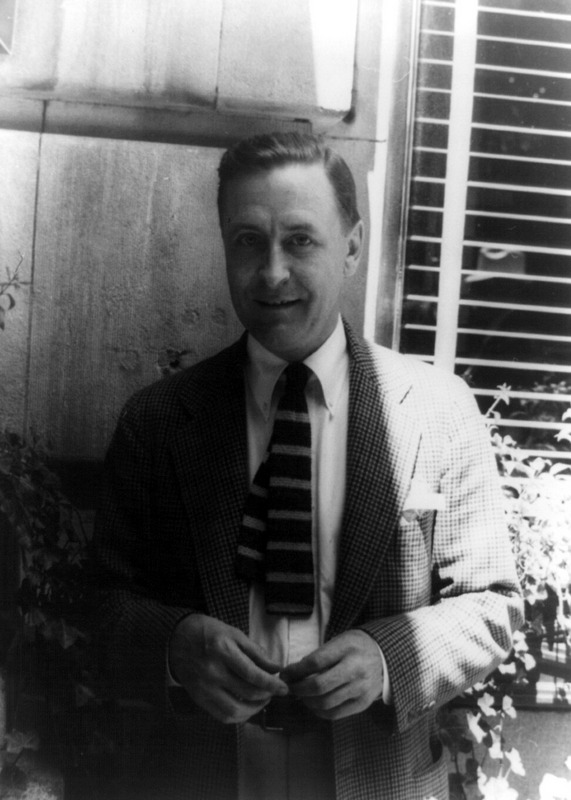
Francis Scott Fitzgerald 1937 June 4
F. Scott Fitzgerald, photographed by Carl van Vechten in 1937. Image Courtesy Library of Congress Prints and Photographs Division, LC-USZ62-88103.

Here is an exciting opportunity for anyone who loves Baltimore’s literary history: F. Scott Fitzgerald’s Bolton Hill rowhouse is now for sale! F. Scott and Zelda Fitzgerald lived in the home in the 1930s through several tumultuous years. The four bedroom, four bath house is going for $450,000. Take a look at the listing or stop by the open house before the Ravens take on the 49ers this Sunday, February 3 from 12:00pm to 2:00pm.

University of Baltimore student Nathan Dennies, a new volunteer working on Explore Baltimore Heritage, just finished a great story detailing Fitzgerald’s time at 1307 Park Avenue. Read on for an excerpt or find the full piece on Explore Baltimore Heritage. Don’t forget to download our free Explore Baltimore Heritage app for iPhone and Android!

In August 1933, F. Scott Fitzgerald moved with his family to 1307 Park Avenue. Fitzgerald had been forced out of his previous home in Towson due to a house fire attributed to his mentally ill wife, Zelda. Their rowhouse, a ten minute walk from the monument of Fitzgerald’s famous ancestor, Francis Scott Key, quickly became a place of turmoil, and was the last place where he and Zelda lived together.

Fitzgerald couldn’t get back on his feet at his new home. His first published novel in ten years, “Tender is The Night,” tanked after its April 1934 release, selling only 13,000 copies to mixed reviews, and left Fitzgerald under immense financial strain. Everyone in the house was affected. Zelda and Fitzgerald’s daughter, Francis Scott “Scottie” Fitzgerald, acted as a go-between for their landlord, forced to constantly ask her father for rent money.

Zelda, who spent her weekdays hospitalized at Sheppard Pratt in Towson, had a brief period of wellness during the first few months at 1307 Park Avenue and was allowed to go home and take painting classes at the Maryland Institute College of Art. However, her mental illness soon worsened and she was moved to the expensive Craig House sanitarium in New York, only to return to Sheppard Pratt in May 1934 in worse shape than ever.

While Zelda was in the hospital, Fitzgerald’s dependency on alcohol grew, and she even faced some hard times at the hospital. Writer H.L. Mencken, a friend of Fitzgerald who lived nearby in Mt. Vernon at the time, wrote in his journal in 1934, “The case of F. Scott Fitzgerald has become distressing. He is a boozing in a wild manner and has become a nuisance.”