We happy to publish this special guest post from Lisa Kraus and Jason Shellenhamer who are leading an archaeological dig in Herring Run Park for the second year this spring. Hope to see you at the dig!
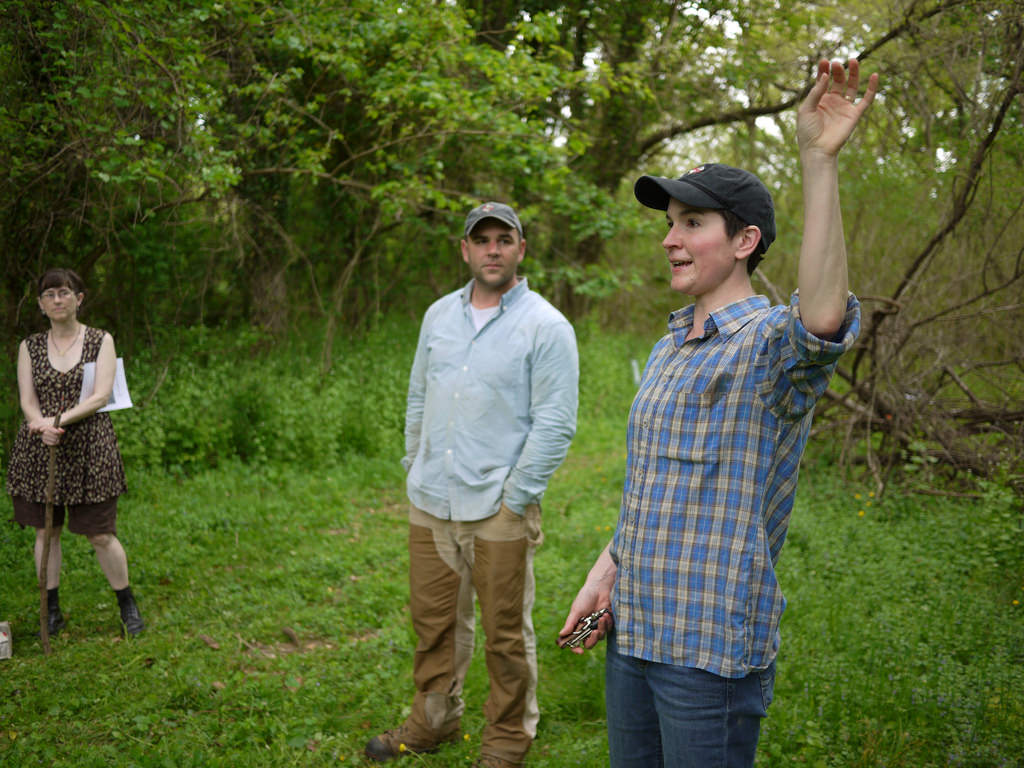
Archaeologists Jason Shellenhamer and Lisa Kraus, 2015 May 9.
After last year’s successful dig, we are excited to start our second season of archaeological fieldwork in Herring Run Park on April 23. If you are interested in learning more about the dig, please join us for our Archaeology Open House in the park on April 30th to share our discoveries—we hope you can join us!
What are we looking for in Herring Run Park?
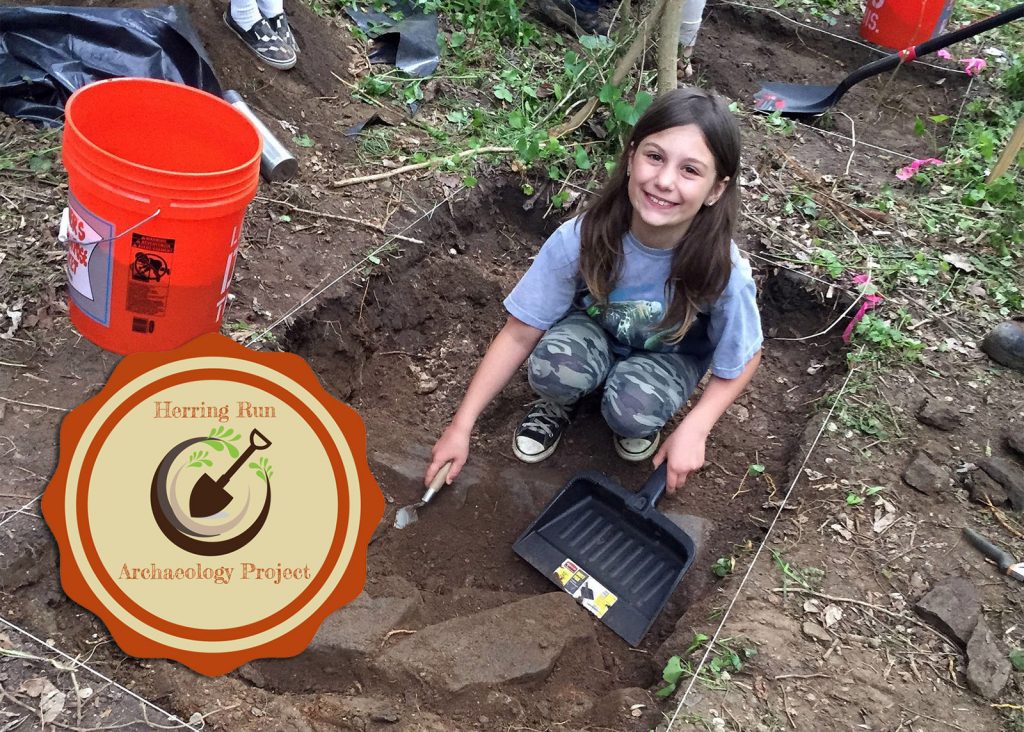
Aiden, Ilka, and Lisa testing a spot near the former site of the Eutaw Grist Mill.
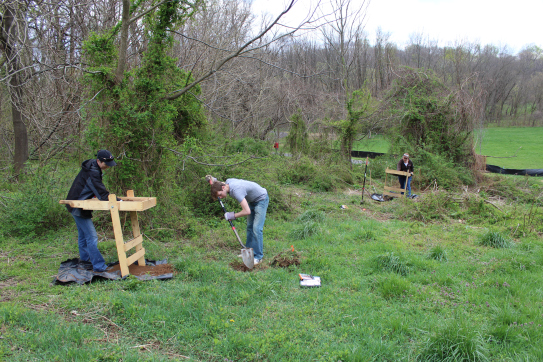
Last year, we located the site of Eutaw—the manor house of Baltimore merchant William Smith. This year, we are looking to learn more about a series of buildings found on mid-19th century maps just down slope from the Eutaw Manor house (we’ve been referring to these as “The Mystery Buildings”). With the help of project intern Aiden Ryan and volunteer Knuppel-Gray, we decided to dust off our screens and shovels, strap on our boots, and start a fun afternoon of exploration.
This initial fieldwork turned up an exciting new discovery—an intact foundation wall! Read more about these new discoveries on the Herring Run Archaeology blog.
How can you learn more about the dig?
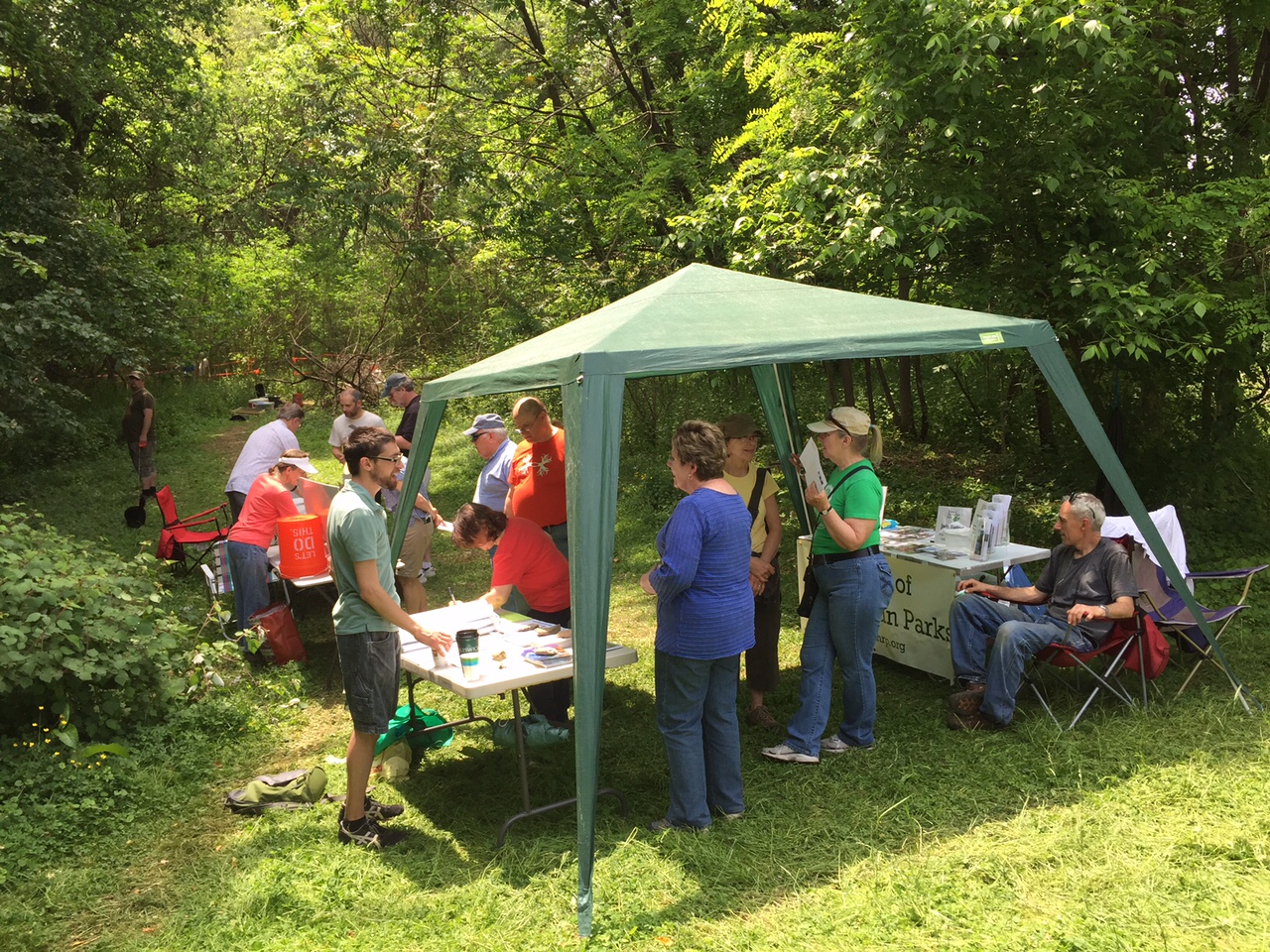
Photograph by David Gadsby, 2015 May 16.
Thanks to the forty people who signed up to volunteer during the week long dig this spring we are expecting a full week of fieldwork starting on April 23. If you are interested in learning more, please come out and join us at our open house on Saturday, April 30, anytime from 10:00 a.m. to 2:00 p.m.
We’ll be offering guided tours of the site starting at 10 a.m., and there will be opportunities to talk with the team and see the finds from the week of work in the park.
The Herring Run Archaeology Project is organized in partnership with the Northeast Baltimore History Roundtable, Friends of Herring Run Parks, Archaeological Society of Maryland, Baltimore City Department of Recreation and Parks, and Baltimore City Commission for Historical and Architectural Preservation.
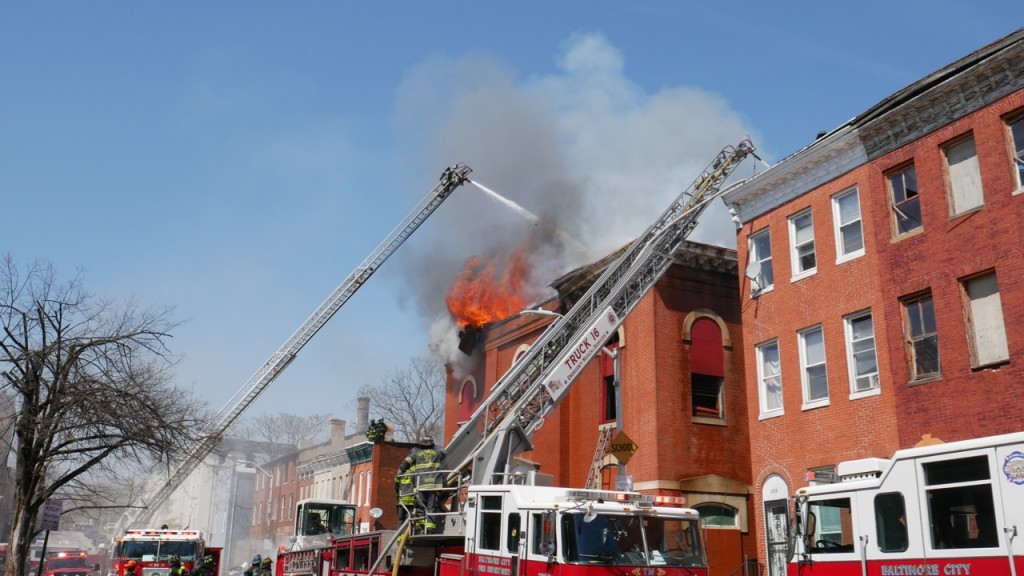
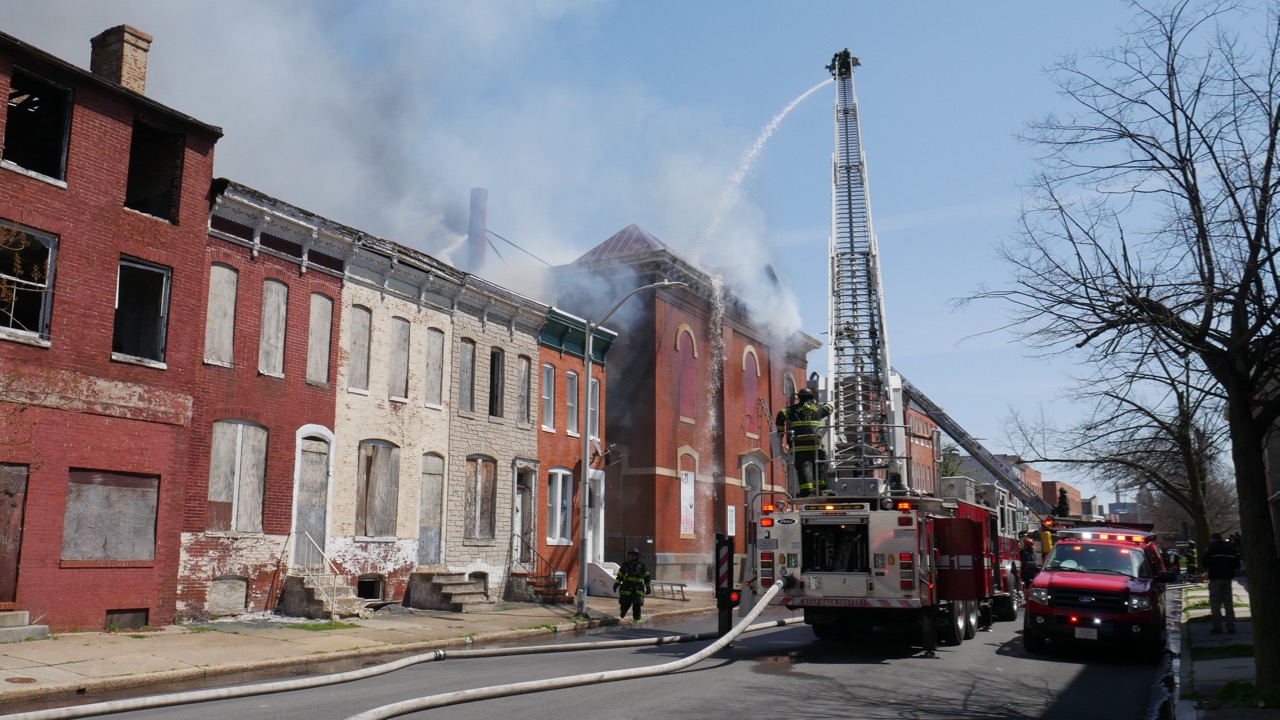
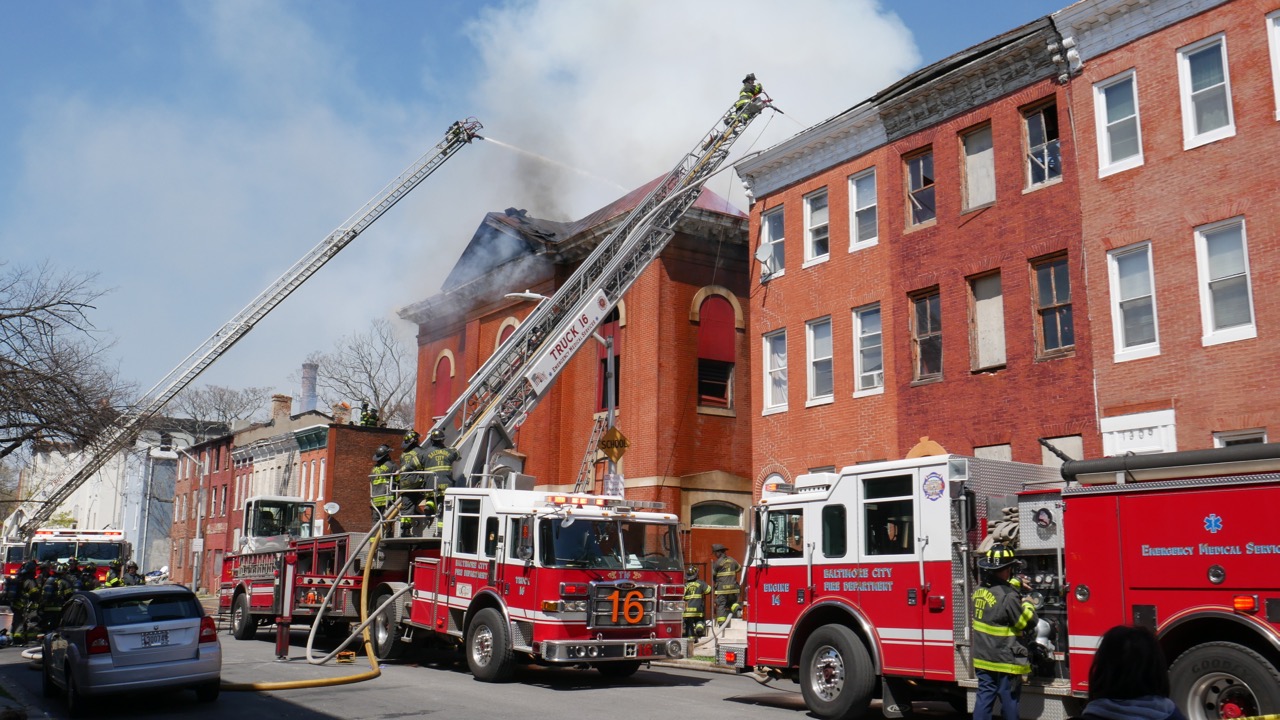
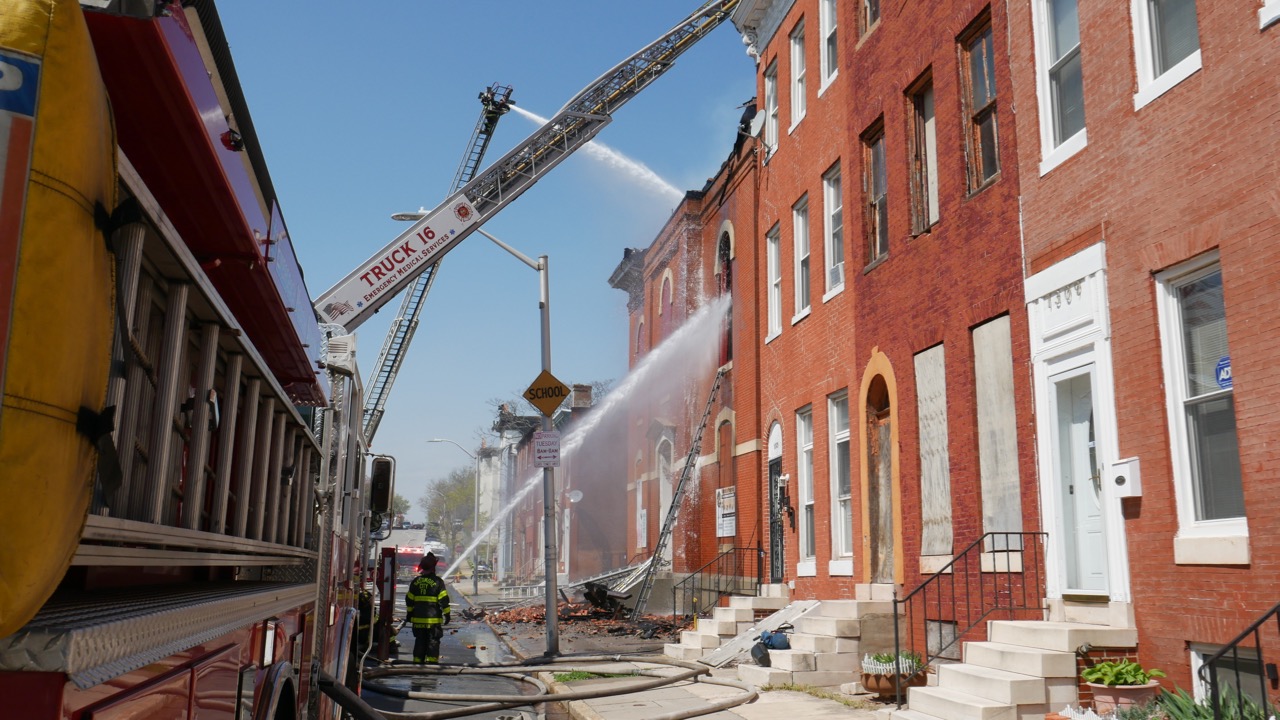
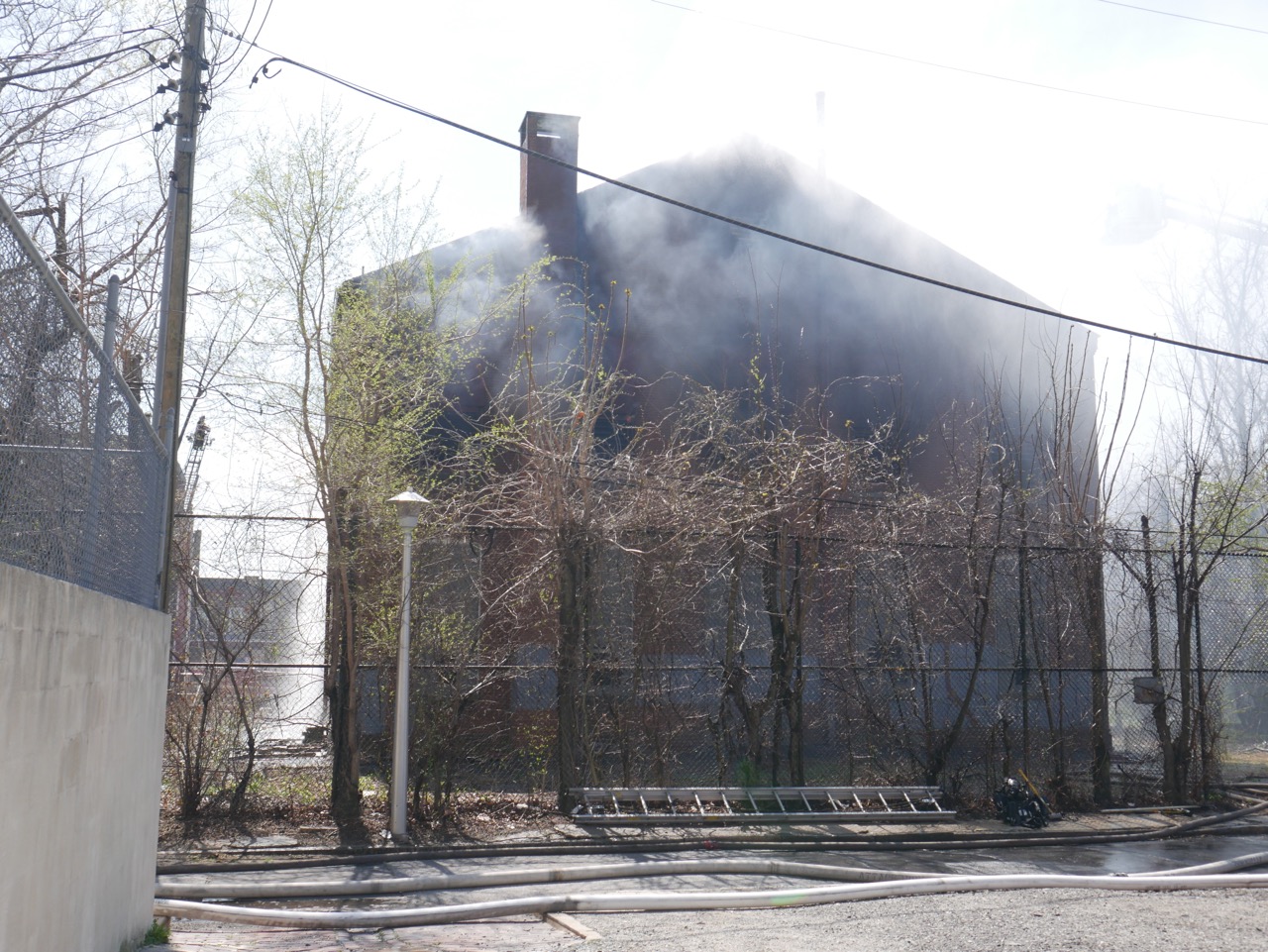
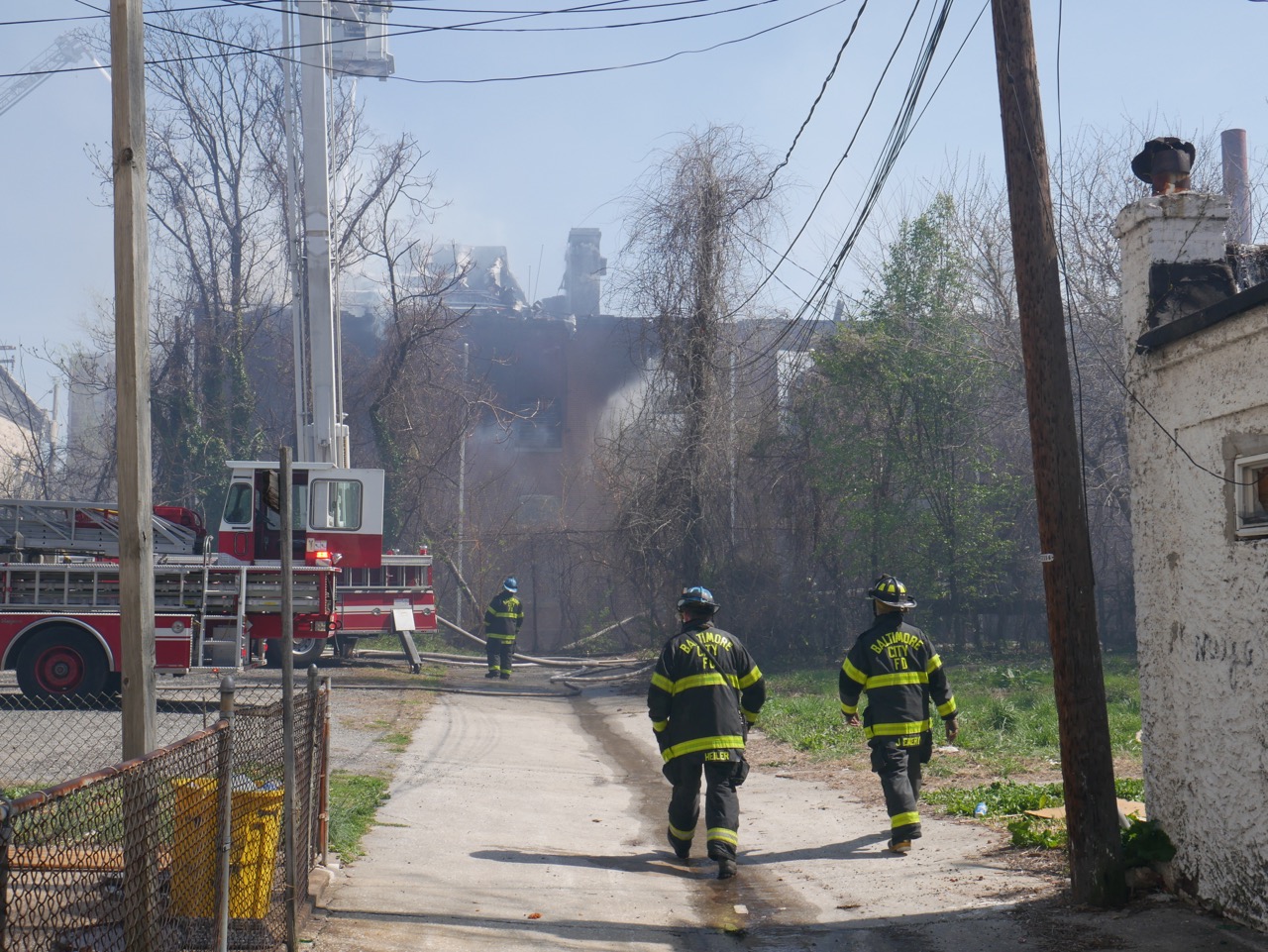
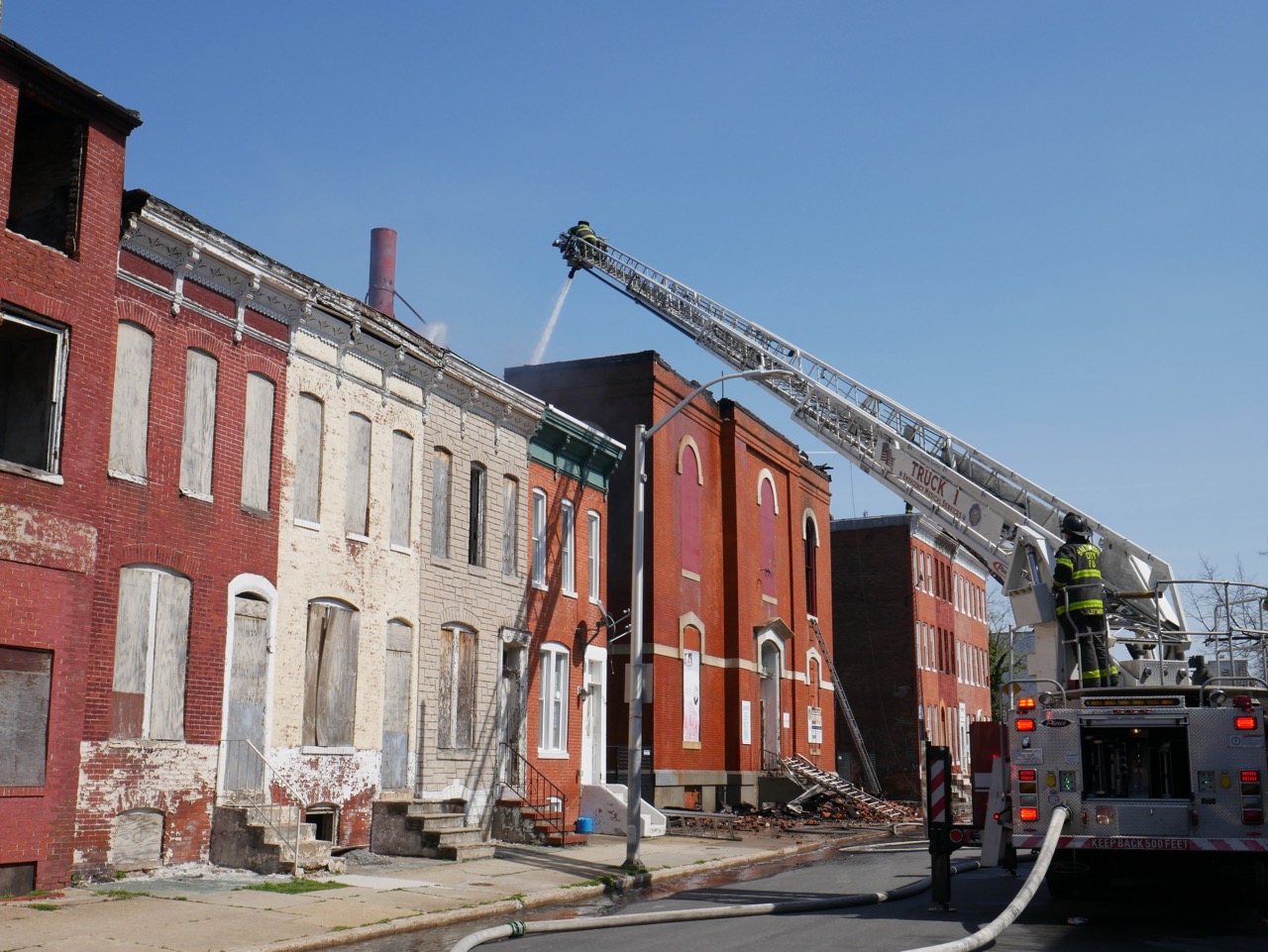
Early this afternoon we got a call from a neighbor in Upton’s Marble Hill, alerting us that Public School 103, Thurgood Marshall’s elementary school, was on fire. The Baltimore City Fire Department is still working to contain the fire but the damage is clearly devastating. The roof is destroyed across large portions of the building and the interior has suffered terrible damage.
Photograph by Eli Pousson, 2016 April 6.
Public School 103 was built on Division Street in 1877. The school changed from serving white to black students in 1910 when it was first used for students from nearby Public School No. 112. In March 1911, the school was officially designated Public School 103. Thurgood Marshall began attending the school just three years later and continued as a student up through 8th grade in 1921. Today, many Baltimoreans remember it as the “Division Street School” or Henry Highland Garnet Elementary School. After the school closed in the early 1970s, the Upton Planning Committee moved in. The Upton Planning Committee continued to use the structure for arts and cultural programs and community meetings up until they vacated the building in the 1990s.
While the building had stood vacant for many years, Baltimore City and the Baltimore National Heritage Area had been working to promote the reuse and rehabilitation of the building. Building on the work of a Mayoral Commission established in 2008, the Heritage Area led efforts to repair the building’s roof and remove asbestos. Baltimore Housing solicited development proposals for the building last year as part of the Vacants to Value surplus surplus property sale.
Photograph by Eli Pousson, 2016 April 6.
Photograph by Eli Pousson, 2016 April 6.Photograph by Eli Pousson, 2016 April 6.Photograph by Eli Pousson, 2016 April 6.Photograph by Eli Pousson, 2016 April 6.Photograph by Eli Pousson, 2016 April 6.
Read more about today’s fire from the Baltimore Sun or read the PS 103 Commission reports for more on the history of the building. We are will continue working with the Baltimore National Heritage Area, Upton residents, and supporters of Baltimore’s Civil Rights heritage to preserve Public School 103 and recover from this difficult setback.
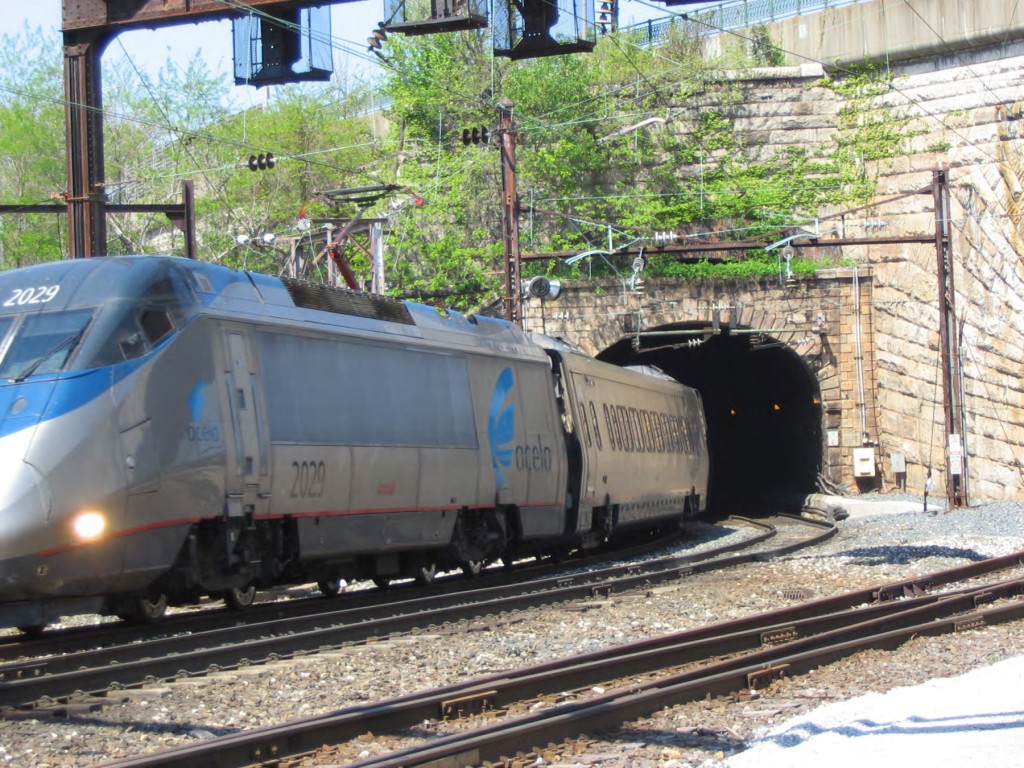
After a year of input from Baltimore residents and our continued work through the Section 106 preservation review process, we are seeing real changes to the B&P Tunnel Project. Two public meetings this month are an opportunity for you to get an update on the project including new alternatives for the ventilation plant sited for Reservoir Hill.
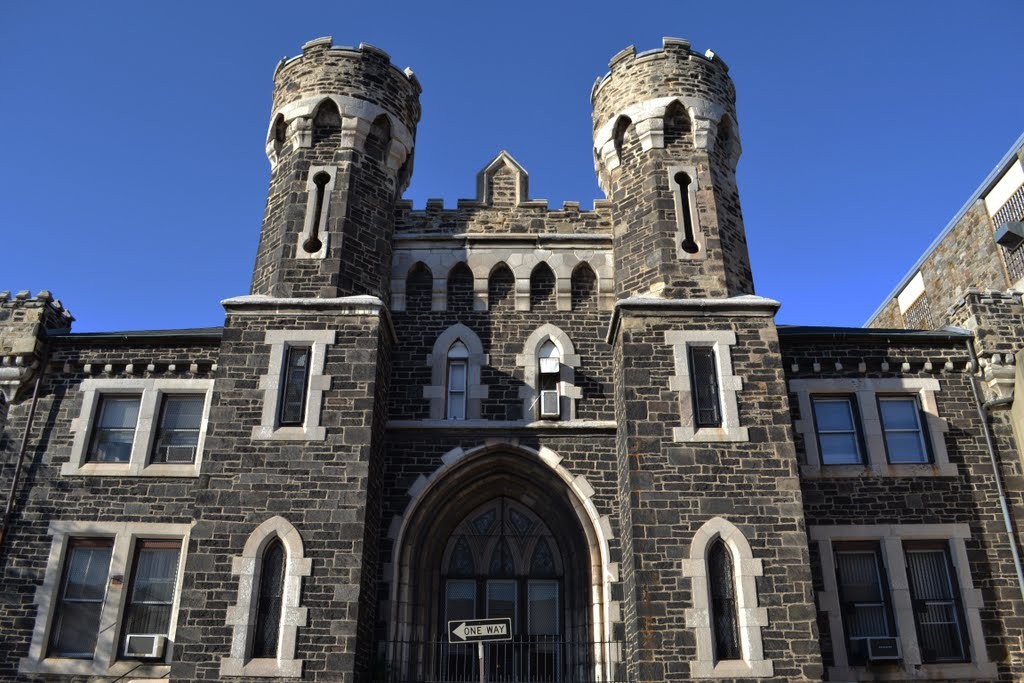
Last month, the Maryland Department of Corrections (MDC) released their preliminary plan for the demolition of the Baltimore City Detention Center. Governor Larry Hogan announced the immediate closure Baltimore jail last July following years of concerns and controversy over conditions for inmates and corrections officers. MDC is now seeking to tear down several significant historic buildings including the 157-year-old Warden’s House and the west wing of the iconic Maryland Penitentiary whose turrets have stood out in the Baltimore skyline since the early 1890s. If the Maryland General Assembly funds the project, estimated to cost $482 million, MDC hopes to start design work in July 2016 and start demolition in March 2017.
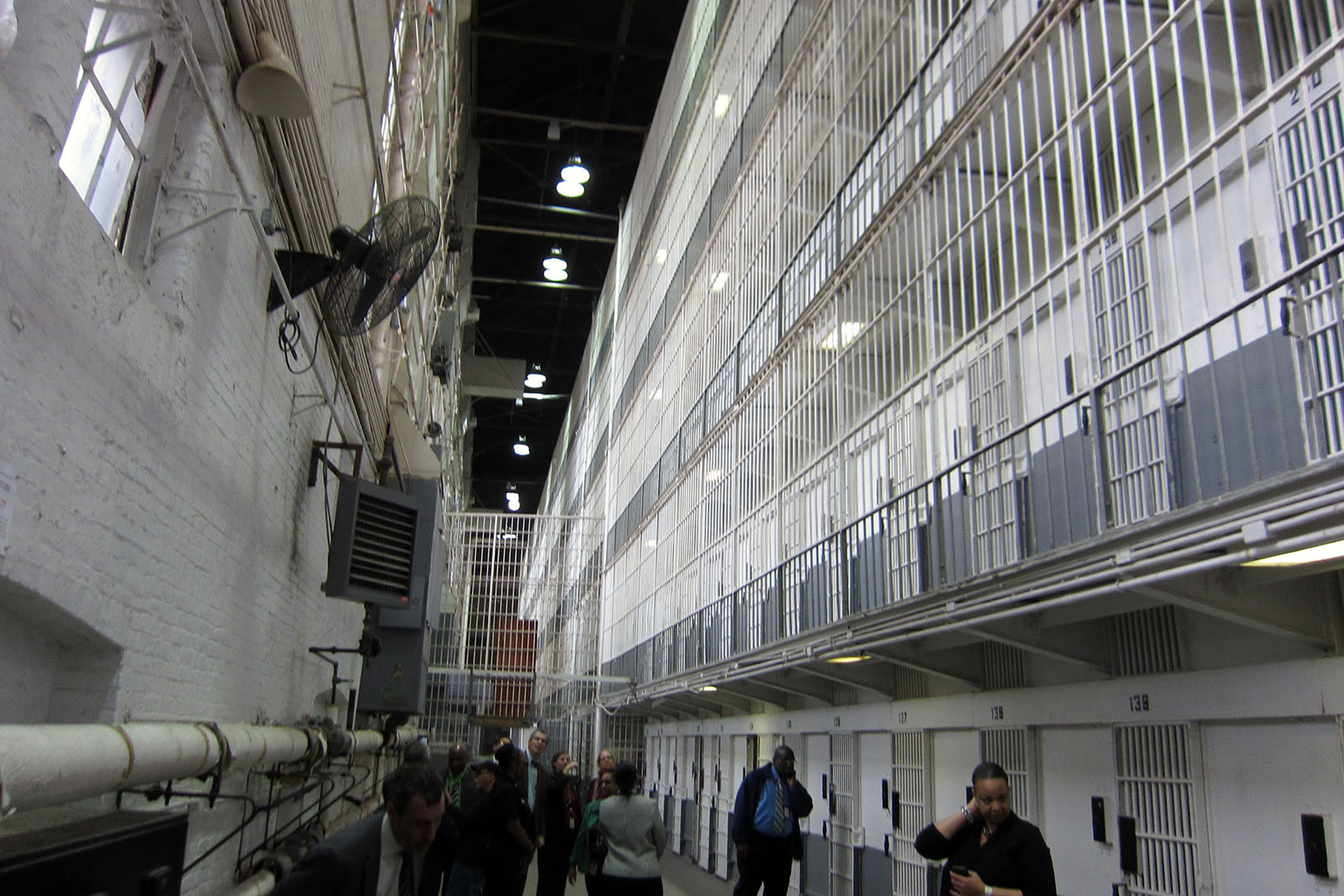
Interior of the west wing of the Maryland Penitentiary, March 2016. Photograph by Johns Hopkins.
We recognize the urgent need to fix the long-standing issues at the facility but we believe both the Warden’s House and Maryland Penitentiary building can be reused by the Maryland Department of Corrections or partner organizations. Baltimore Heritage is opposed to the current plan to tear down these significant buildings and we are committed to seeking alternatives to demolition.
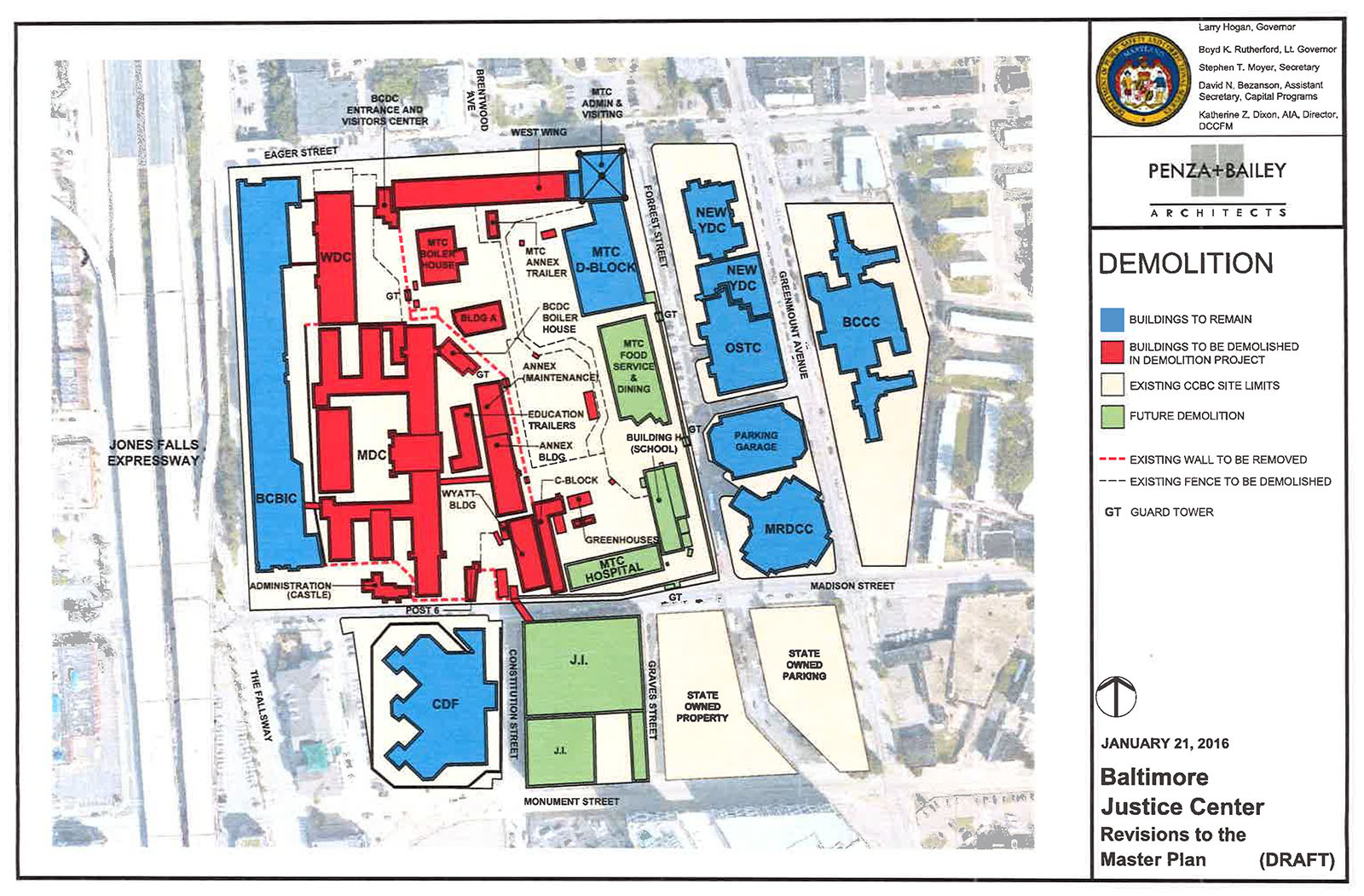
Buildings proposed for demolition in 2017 in red. Courtesy Maryland Department of Corrections.
The Baltimore Jail is a complex of buildings occupying the block between Madison and Eager Streets just east of the Jones Falls Expressway. In addition to the Warden’s House on East Madison Street and the west wing of the Maryland Penitentiary on East Eager Street, the demolition proposal also includes tearing down the Men and Women’s Detention Center Buildings completed in 1967, and a historic laundry, school, and power plant all dating back to the 19th century.
Warden’s House (1855-1859)
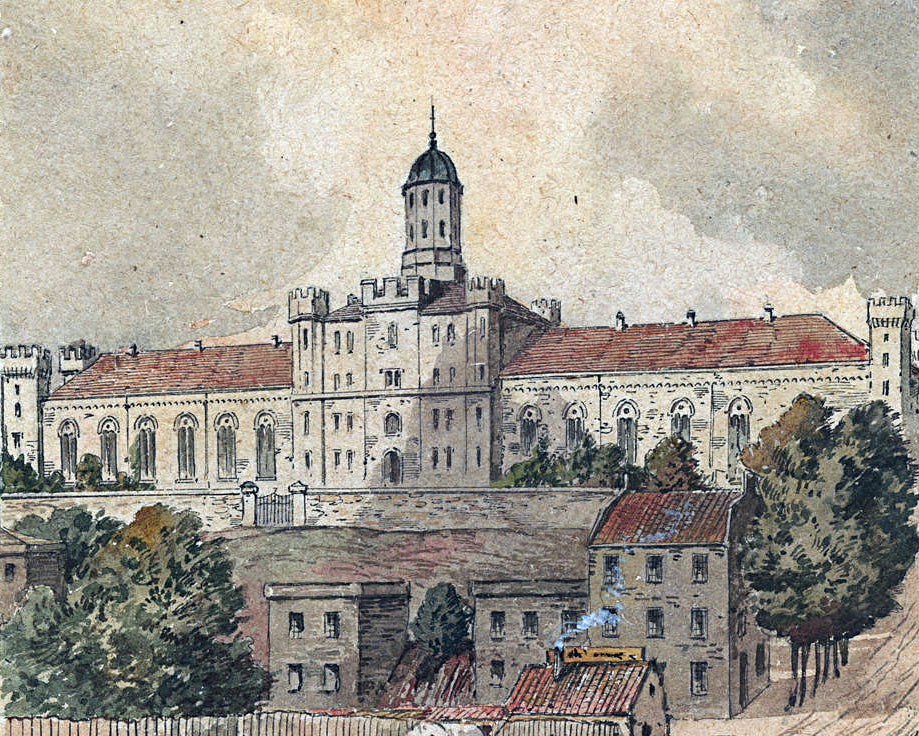
View of the City Jail, c. 1855-1860. Courtesy Enoch Pratt Free Library, mdcp030.
Known to many simply as the “Castle”, the Warden’s House won recognition for its unique Gothic design when it was designated a Baltimore City landmark in 1986. Despite the designation, state agencies like the Maryland Department of Corrections are not bound by local protections for landmark structures. Noted as the work of local architects James and Thomas Dixon, the Warden’s House is perhaps even more important as a reminder of Baltimore’s antebellum history of slavery.
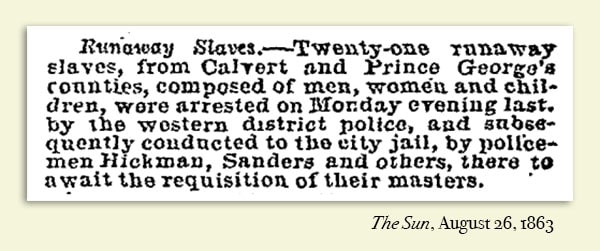
From 1859 to 1864, the Baltimore Jail was used to hold hundreds of “runaways” along with Marylanders, both white and black, who assisted enslaved people as they fled to freedom. At the time, a number of private slave jails operated around the Baltimore Harbor but none of those buildings have survived through the present. Today, the Warden’s House is a rare physical reminder of how the slave trade and resistance to slavery dominated Baltimore’s civic life.
Maryland Penitentiary (1897)
The Maryland Penitentiary on Eager Street is remarkable in other ways. Completed in 1897, as part of a prison reform building boom, the building was designed by architect Jackson C. Gott. Gott served as one of eight founding members of Baltimore’s chapter of the American Institute of Architects in 1870. He designed the Masonic Temple and Eastern Pumping Station in Baltimore, as well as Western Maryland College (now McDaniel College) in Westminster. For the Penitentiary, Gott’s Romanesque Revival design and his choice of heavy Port Deposit granite created a landmark whose appearance truly reflects its somber purpose.
MDC cited structural concerns in their proposal to demolish the west wing of this structure but, based on our recent site tour, the issues only affect the interior metal structure that makes up the cells. State officials acknowledged that they have not seen any structural issues with the exterior stone walls.
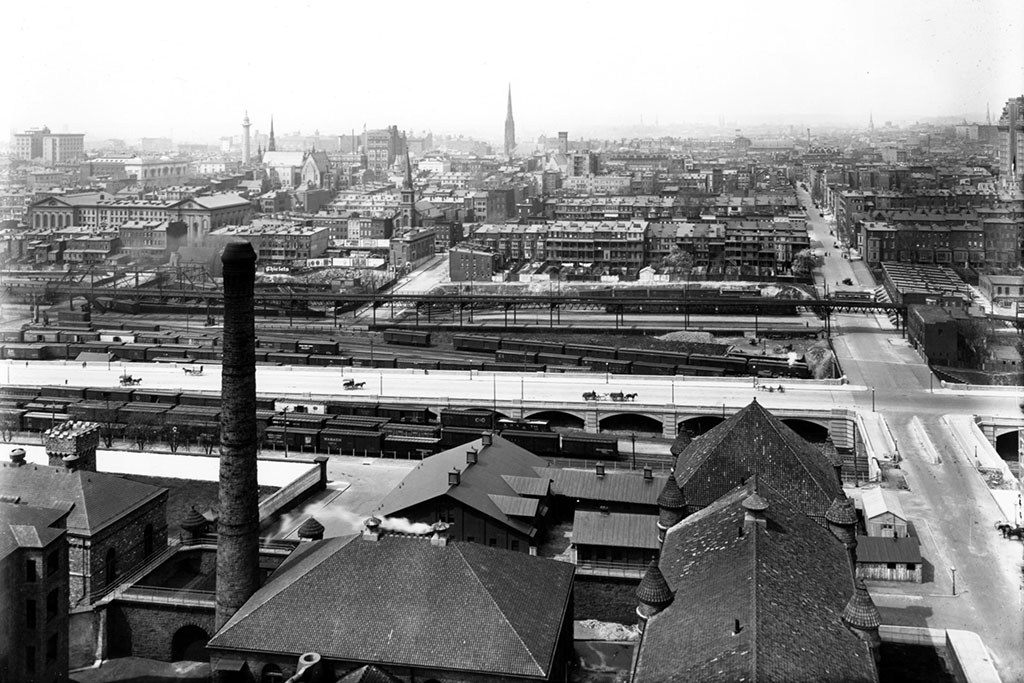
View west from the roof of the Maryland Penitentiary showing the west wing, April 1914. Courtesy Maryland State Archives, SC 1477-1-5932.
What happens next?
State law requires the Maryland Department of Corrections to participate in a preservation review process administered by the Maryland Historical Trust. Baltimore Heritage, along with Preservation Maryland, is working through the review process to seek a revised proposal that preserves these important landmarks. We want to hear your comments, questions and concerns. Please get in touch or sign up below for updates as we continue work on this issue throughout the year.
Our upcoming tours give you an insider’s look at one of the most talked about projects in Baltimore, let you step into an often overlooked gem at the Maryland Zoo and tell the love stories of Mount Vernon. We are also bringing back our popular Monumental City tours on Sundays from April to November!
On April 14, our Port Covington tour offers a behind-the-scenes tour of the City Garage and a chance to talk with Sagamore Development about their vision for the future of South Baltimore. Originally developed in 1904 around the end line of the B&O Railroad, the Port Covington area is today poised to become Baltimore’s largest urban redevelopment project.
For our Maryland House tour, Tony Azola of the Azola Companies and Lori Finkelstein of the Maryland Zoo will guide you through an architectural gem located just next to the Rogers Mansion. The Maryland House was built for the 1876 Centennial Exhibition in Philadelphia and then rebuilt on the Zoo grounds. Special thanks to Preservation Maryland for co-hosting this tour! We also will hold our Mount Vernon Love Stories tours (rescheduled from a very cold Valentine’s Day weekend) on April 9 at 11:00 am and 1:00 pm.
Finally, our Monumental City tours return starting April. These tours are a great way to explore Baltimore on Sunday mornings. Join us for as we explore Jonestown and the Shot Tower (1st Sunday); Landmarks and Lions Downtown (2nd Sunday); Mount Vernon and the Washington Monument (3rd Sunday); and the Patterson Park Observatory (4th Sunday).