Accepting Ideas for 2020 Micro Grants for Preservation Work

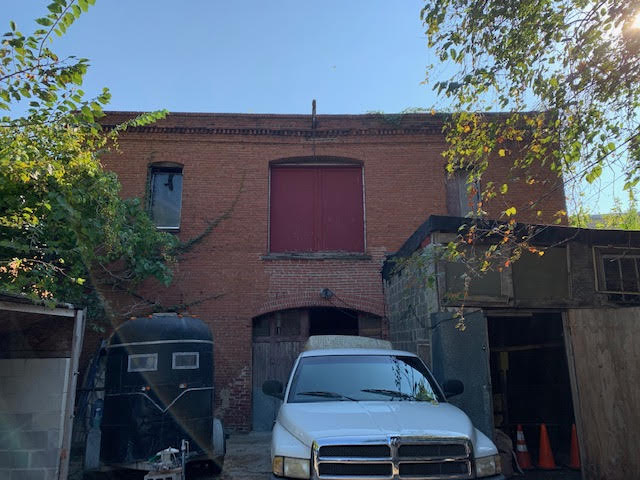
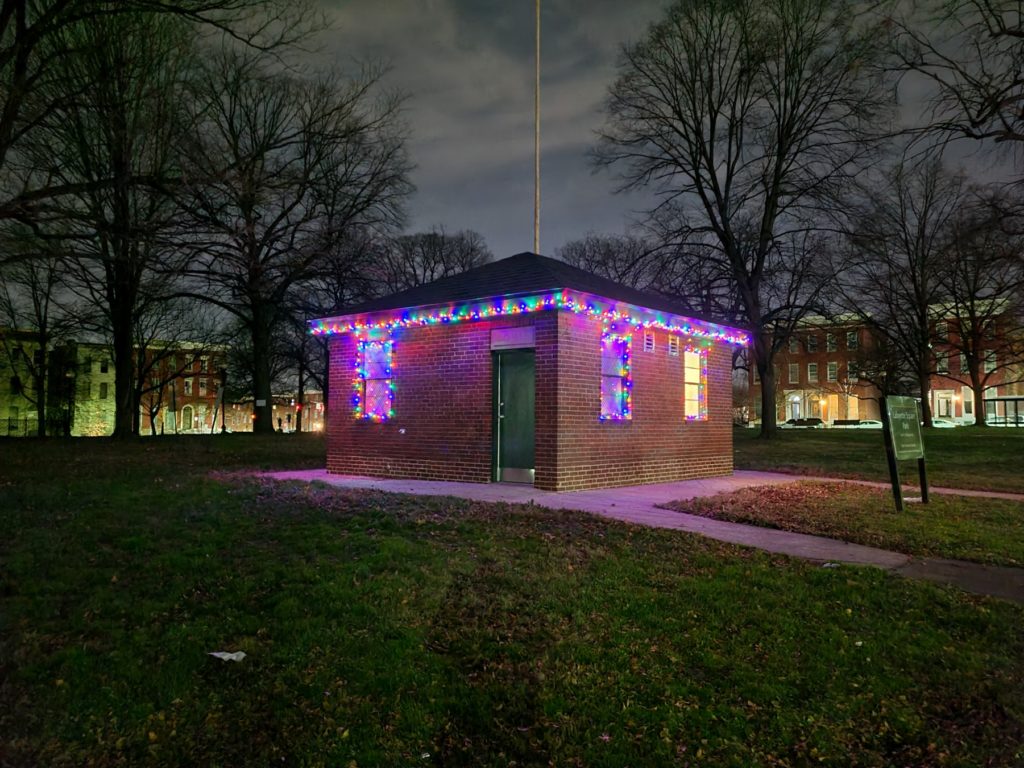
We’re in our 5th year of giving away micro-grants to help fund preservation work in the city. If you have a good idea to help preserve a historic building or place in Baltimore or help revitalize a historic neighborhood, we’d love to hear from you! The process is easy: simply fill out the online application and hit send by Wednesday, September 23, 2020.

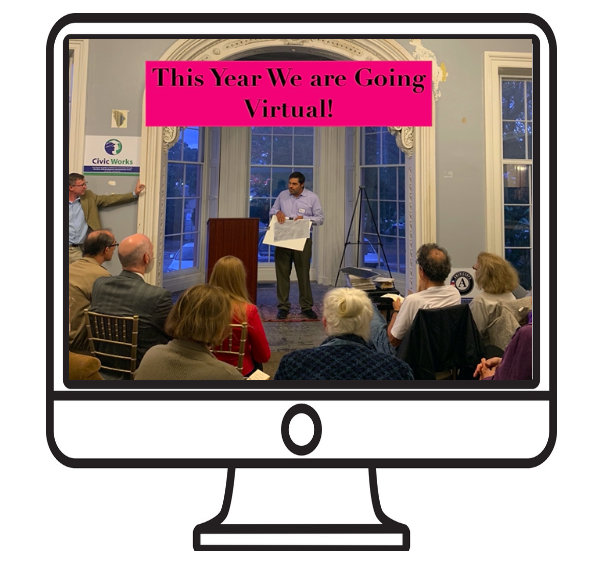
We’ll pick the five most promising ideas and give them a chance for one of two $500 grants, two $250 grants, or one $50 grant. The awards will be made on October 22, 2020 at a virtual pitch party. Over Zoom, supporters of each idea will get three minutes to pitch them and at the end, the crowd will cast virtual ballots to decide which ideas receive the micro grants. Whether funded or not, we will promote all the ideas and projects to help them garner attention and volunteers.

The types of eligible projects are endless, and as long as they relate to Baltimore’s history, heritage, historic buildings or historic neighborhoods we will consider them. Past award winners include: restoring leaking masonry at a historic church, launching an after school arts-based safe space program in a historic neighborhood, supporting archaeological efforts at a historic furnace, and providing supplies for a community trying to provide access to a neighboring park. The sky’s the limit!

The amount of the award ($50, $250, or $500) may not be enough to complete an entire project. That’s OK. The goal is to help spark new and support existing neighborhood-level preservation work. You don’t need to be a nonprofit organization or even a formalized group to be eligible. Individuals and small groups are welcome! Complete rules can be found on the application.

And you can now register for October 22’s Virtual Preservation Pitch Party! 

Seeking Proposals for Contract Researcher

Baltimore Heritage is seeking proposals to undertake a survey of African American heritage sites within the Old West Baltimore National Register Historic District. The work will include documenting historic sites in a spreadsheet format and preparing Maryland Inventory of Historic Places forms for five places.

Update: With regard to COVID-19, this position does not require in-person contact or in-person meetings. It does require research that could include accessing physical collections and archives at places like the Pratt Library, the Afro-American archives, and other repositories. Currently, these are closed to visitors and re-opening schedules have not been announced. If it is determined that accessing physical collections is a necessary part of this research, and these places remain closed for an extended period of time, we will work with the contractor to adjust schedules and expectations.

The deadline to apply in August 21, 2020.

To apply, please follow the instructions in our Request for Proposals. 

For questions, please contact Baltimore Heritage director Johns Hopkins at 410-332-9992 or hopkins@baltimoreheritage.org.


Read our position on this issue

In 2017 then Mayor Catherine Pugh removed three memorials to the Confederacy and one statue of the author of the infamous Dred Scott decision that were erected with racist motivations and caused pain for many in our Baltimore community. Standing in our city today, there are other public monuments whose presence memorialize the oppression of Black people and people of color. These are also painful. For too long, too many people in the historic preservation movement have either discounted the ongoing harsh suffering that some public memorials are causing, or have remained silent. Since 1960, Baltimore Heritage has been Baltimore’s city-wide historic preservation nonprofit organization. We believe that we have an obligation to address this issue directly and that now is the time to speak out clearly. Below is our position.

  • We support the removal of public monuments that were erected with racist intent to memorialize white supremacy.
  • We believe that there are monuments standing in Baltimore today that continue to cause pain for many.
  • We support a process to discuss steps that we as Baltimoreans can take regarding our public memorials that is open to all, validates different points of view, considers creative approaches, and has goals of fostering reconciliation and creating a public realm where all feel welcome.
  • We believe that any actions taken to standing monuments should be done by city officials to ensure public safety.
  • We believe that our elected officials in Baltimore City have an obligation to lead a discussion over public memorials and we as an organization commit to participating.

—Johns Hopkins, Executive Director

Mapping Sites of Baltimore’s Slave Trade

Baltimore Heritage would like to share some information on the city’s role in the slave-trade in the 19th century. One of our dedicated volunteers, Richard Messick, has spearheaded this research and in his guest blog below, he gives us some insight into what he has found. Thank you Richard!

I once took a tour at Hampton National Historic Site lead by Park Ranger Anokwale Anansesemfo, called “Forced Servitude at Hampton.” The tour described the variety of labor used by the Ridgely family to operate their estate: indentured servants, prisoners of war, and enslaved people. It was a profound and moving experience that sent me on a research project to learn more about slavery in Baltimore.

After its incorporation in the late 18th century, the population of Baltimore grew very quickly along with the expansion of the new country. One of the many “trades” that grew along with the city was the sale of people. Several things contributed to this development. First, local farmers had shifted from a labor-intensive tobacco crop to the growing of cereal grains, which required less work and contributed to a surplus of slave labor in the area. Secondly, Eli Whitney invented the cotton gin in 1793, which quickly and easily separated cotton fibers from their seeds. The cotton industry then became incredibly profitable and that fueled a desire for more land and forced labor in the South. The third factor was that the importation of people for sale was outlawed in 1808.

The market for the sale of people that grew up in the Mid-Atlantic region was extensive. This map focuses on where enslaved people were sold in Baltimore. I have used a number or sources for my research, but my primary resource was Ralph Clayton’s book, Cash for Blood: The Baltimore to New Orleans Domestic Slave Trade.  Although many of the associated buildings no longer exist, the overall map shows the deeply interwoven relationship between the trade of human beings and our streets of Baltimore.

— Richard Messick

Baltimore Heritage 2020 Preservation Award Winners

On behalf of all of us at Baltimore Heritage, we would like to congratulate the winners of our 2020 Historic Preservation Awards. These people and their work are saving some of Baltimore’s most important historic places and transforming our city’s neighborhoods. Thank you!

We had been planning an in-person celebration for June to recognize the winners, but are canceling it because of the coronavirus. We are still thinking through how to celebrate this year’s awardees virtually and please stay tuned for that. In the meantime, take a look at the list below and if you know any of them, please reach out and say congratulations. They deserve it.

*If you were part of an award-winning project, and you were not listed below, please let us know.

Restoration and Rehabilitation Awards:

113 West Ostend Street

  • Mr. Joshua Parker
  • Labyrinth Properties LLC
  • Cole Builders LLC

421 George Street

  • Matthew and Megan Strott

500 South Ann Street Store Front

  • David H. Gleason Associates
  • Contraction Administration Services

2318 Mount Royal Terrace

  • Ruth Wright

3840 Bank Street

  • Urban Design Group LLC

Beth Am Synagogue

  • Beth Am Synagogue
  • Alexander Design Studio
  • Red Sketch Landscape Architecture
  • Colbert, Matz Rosenfelt, Inc
  • Acoustical Design Collaborative, LTD
  • Carney Engineering
  • Henry Adams, LLC
  • Flux Studio
  • CapEx Advisory Group
  • Southway Builders
  • David Hess 

Clifton Mansion Dining Room

  • Thomas Moore Studio
  • Gillian Quinn
  • Laurie Timm
  • Mariah Gillis
  • Sue Crawford
  • Bridget Cimino
  • Ewa Pohl
  • Vincent Greene Architects
  • Matthew Mosca
  • Henry Johnson
  • Tom McCracken
  • Friends of Clifton Mansion
  • C&H Restoration
  • Brough Schamp
  • Erik Kvalsvik

H.L. Mencken House and Museum

  • Society to Preserve H.L. Mencken’s Legacy, Inc.
  • Azola Building Rehab, Inc.
  • Manifold Design
  • Baltimore National Heritage Area
  • Baltimore City Department of General Services
  • Baltimore Office of the Mayor
  • Washington Place Equities
  • Baltimore Commission for Historical and Architectural Preservation
  • P & E Engineering & Consulting, LLC
  • JLR Design Consultants, Inc.

Johns Hopkins University Maryland Hall Cupola

  • Johns Hopkins University
  • SM+P Architects
  • Lewis Contractors
  • Worcester Eisenbrandt

Ministry of Brewing

Adaptive Reuse and Compatible Design Awards:

Hoen & Co Lithograph

  • 2101 East Biddle LLC
  • Cross Street Partners
  • City Life Historic Properties
  • Ziger/Snead LLP
  • 1200 Architectural Engineers Pllc
  • Kovacs Whitney & Associates
  • James Posey Associates
    STV, Inc
  • Michael S. Walkley, P.A.
  • Budova Engineering
  • Froehling & Robertson, Inc
  • Urban Green Environmental
  • Betty Bird & Associates LLC
  • EHT Traceries Historic Preservation
  • Cohn Reznick LLP
  • Reinvestment Fund (TRF)
  • Best Fence
  • Ruppert Landscape
  • Watchmen, LLC
  • H. J. Poist Gas Co
  • KMT Disposal
  • C. L McCoy Framing Co, Inc.

  • City First Bank
  • PCG
  • Department of Commerce
  • U.S. Bancorp Community Development Corporation
  • City First New Markets Fund II, LLC
  • National Trust Community Investment Corp
  • Telesis Corporation
  • Baltimore City
  • Ace Environmental Services, Inc
  • Fence Masters
  • Knockorp LLC
  • SHE Excavating, Inc
  • English Concrete, Inc
  • D.A. Drenner Concrete Construction, Inc
  • Quiet Floors Systems LLC
  • Elite Restoration of Maryland
  • Worcester Eisenbrandt, Inc.
  • Neuner Masonry Company Inc
  • Wilson Point Steel, Inc.
  • Slaghammer’s Welding
  • Majer Metal Works

  • Loudoun Stairs
  • Reisterstown Lumber
  • Heidler Roofing
  • North American Roofing
  • CNC Roofing LLC
  • ACW Inc
  • Fullview Aluminum & Glass
  • Revolution Windows Systems
  • Tegeler Construction & Supply
  • Unified Door & Hardward Group, LLC
  • CEV Building Systems LTD
  • Eastwood Painting & Contracting, Inc
  • Business Flooring
  • Polished Concrete Systems, Inc.
  • MD Partitions
  • Mats Inc
  • Livingston Fire Protection Inc.
  • Scaffold Resources LLC
  • Delaware Elevator
  • Fidelity Mechanical Services
  • Benchmark Automation & Controls
  • Fleet Electric Inc.
  • Kevson Services Group

Ministry of Brewing

  • Michael Powell
  • St. Michael’s Redevelopment Partners
  • Present Company
  • Wiss, Janney, Elstner Associates
  • ThermalTech Engineering
  • F.M. Harvey Construction Co., Inc
  • Fleet Electric

A. Hoen & Co Lithograph

Special Recognition for Once-in-a-Lifetime Restoration and Rehabilitation Work:

Center for Health Care and Healthy Living at the Baltimore Hebrew Orphan Asylum

  • Ballard Spahr LLC
  • Baltimore City Health Department
  • Behavioral Health System of Baltimore
  • C.L. McCoy Framing Co.
  • Coppin Heights Community Development Corporation
  • Cross Street Partners
  • Reinvestment Fund
  • Southway Builders
  • Waldon Studios Architects

Enoch Pratt Free Library

  • Enoch Pratt Free Library
  • Beyer Blinder Belle
  • Ayers Saint Gross
  • Mueller
  • Sustainable Building Partners
  • WFT
  • AMT Engineering
  • Jensen Hughs
  • Spexsys
  • Restl
  • VDA
  • Tillotson Design
  • ASSA ABLOY
  • Cerami & Associates
  • Gilbane
  • Baltimore Department of General Services
  • SVA 

Heritage Preservation Awards:

Henry Holt Hopkins, for leadership in restoring the Washington Monument, Clifton Mansion, and the Clifton Gardener’s Cottage

Charlie Duff, for helping us understand Baltimore’s historic and contemporary development through his book North Atlantic Cities 

Doors Open Baltimore, for helping thousands of people appreciate Baltimore’s historic places through its annual Doors Open Baltimore event

Dr. Gary Rodwell, for dedication to completing the renovation of the Baltimore Hebrew Orphan Asylum and commitment to revitalizing historic communities in West Baltimore

Douglas Gordon Lifetime Achievement Award:

David H. Gleason, FAI

David Gleason has been a preservation leader in Baltimore for over 50 years, including serving on the board of directors of Baltimore Heritage, as president of the Fell’s Point Preservation Society, as a commissioner at CHAP, as a volunteer in efforts to preserve neighborhoods like Lafayette Square and Market Center, and in countless historic restoration projects he undertook as a professional architect. 

Thank you to our sponsors!

Lead Sponsors

  • GLB Concrete
  • Hord Coplan Macht
  • Lewis Contractors
  • PNC
  • Quinn Evans Architects
  • Southway Builders
  • Zeskind’s Hardware and Millwork

Sponsors

  • AGM Financial
  • brennan + company architects
  • Discern Health
  • GWWO, Inc.
  • Roland Park Place
  • Poverni Sheikh Group
  • Murphy & Dittenhafer
  • Terra Nova Ventures
  • Whiting Turner
  • Ziger Snead