Author: Molly Ricks

New Preservation Project: Announcing Partnership to Support the Bruce Street Arabber Stable, and a Baltimore Tradition Too!

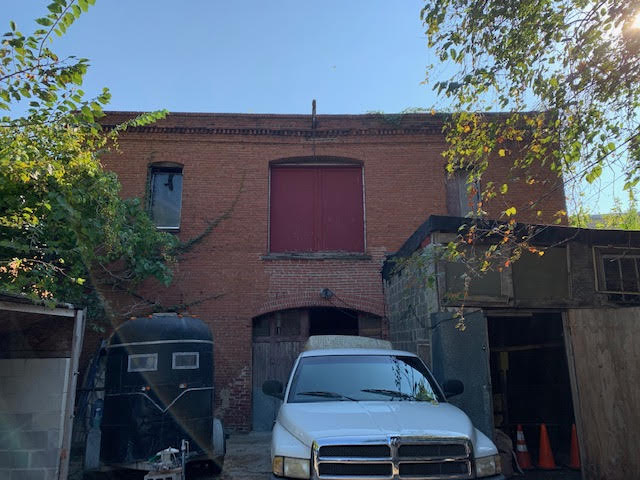
Baltimore Heritage is delighted to be partnering with the Southwest Partnership and the Bruce Street Arabber Stable to help keep the historic stable on Bruce Street from collapsing.

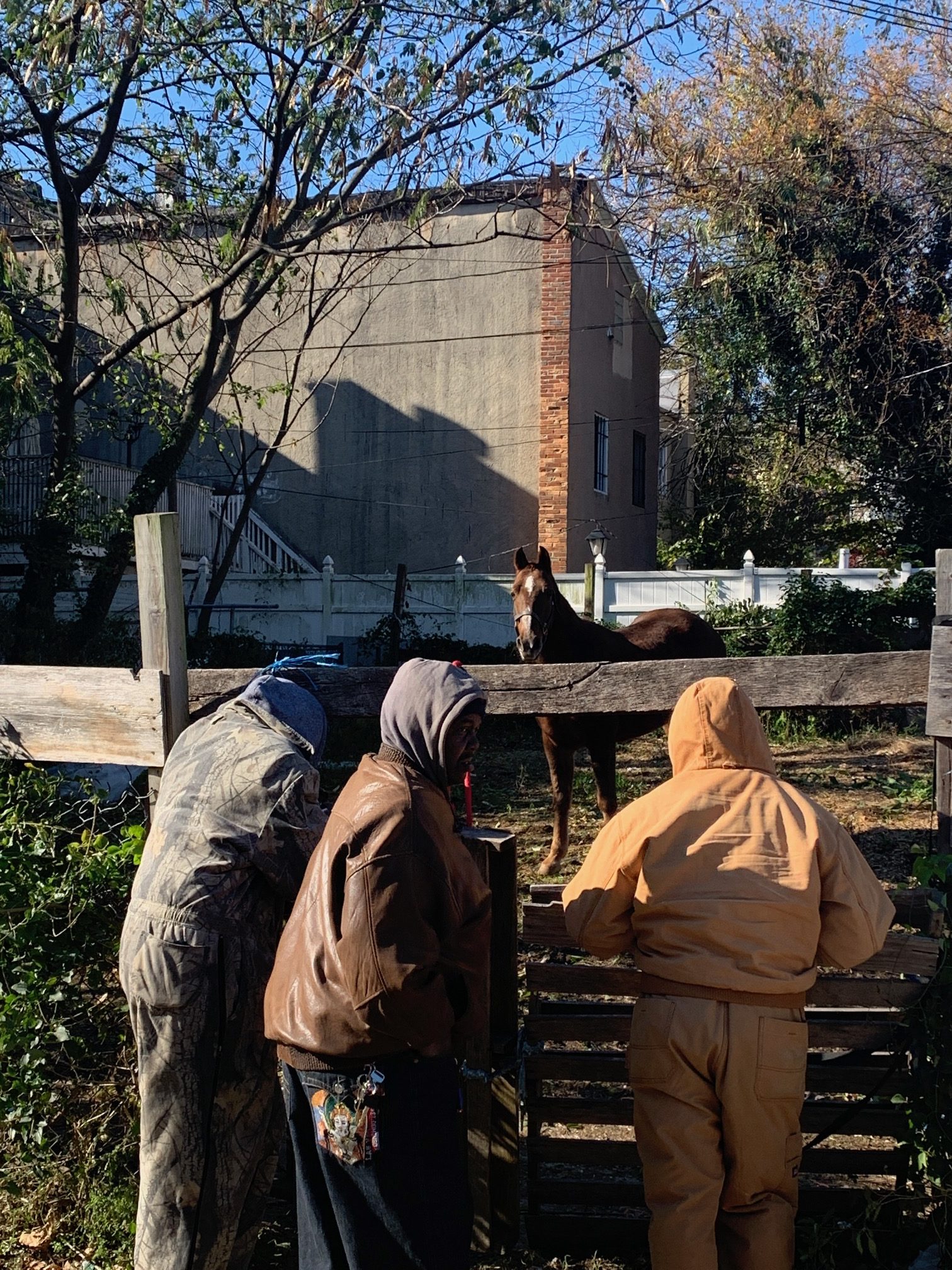
Current owners Dorothy and David Johns wish to continue the tradition of arabbing (a-rab-bing)–in which melodious vendors sell fruit and vegetables from colorful, horse-drawn wagons–out of this stable, but their endeavors are threatened by a tree growing in the rear wall. This project will help protect the stable and allow it to continue growing into a vital community gathering place. 

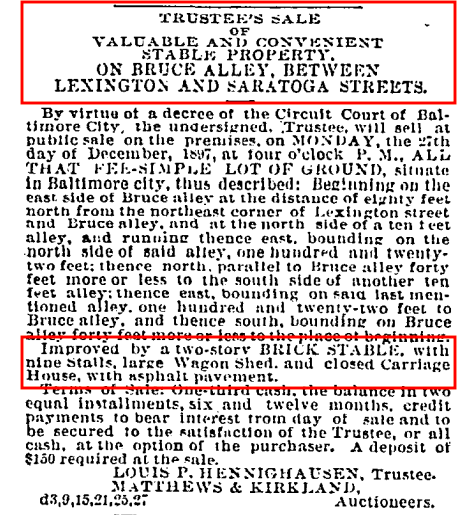
This two-story, brick stable has been in operation since at least 1897 when this street was still called Bruce Alley. Since then the property has changed owners more than seven times before landing in the hands of Dorothy and David Johns. Dorothy’s grandmother, Mildred Allen, was one of Baltimore’s most successful arabbers, and the first female stable owner in Baltimore. Dorothy wants to celebrate her family’s past, and Baltimore’s unique arabbing culture, by continuing to shelter horses and wagons at the Bruce Street stable. 

The Baltimore Sun, December 9, 1897

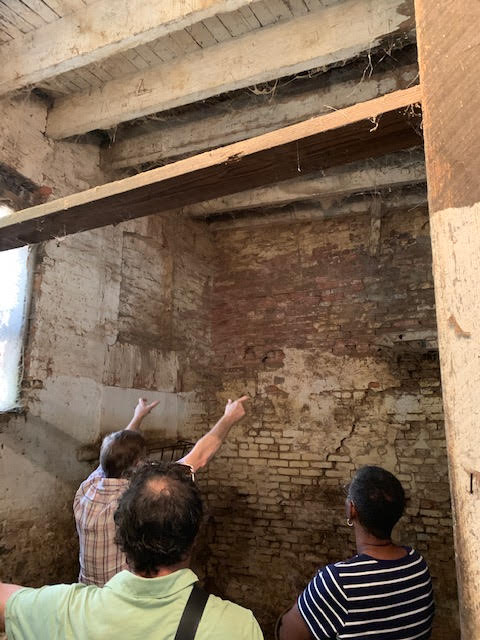
Last year, Baltimore Heritage became aware of the need for stabilization of the building. After a site visit in November 2019 with staff from Baltimore Heritage and the Southwest Partnership, the Southwest Partnership retained a structural engineer to provide a preliminary assessment of the necessary work. The engineer concluded that there were three primary areas that needed to be addressed: the rear wall, the roof, and the internal support joists. 

We worked with Dorothy and David and the State of Maryland to secure funds and now work has begun. Check back to get periodic updates on its progress! 


For more on Baltimore arabbing: 

The Arabbers of Baltimore: A Photo Essay by Roland Freeman

The Arabbers of Baltimore City: A Market on Wheels by Madeline Ross

2020 Virtual Pitch Party: Help Us Give Away Five Micro-Grants!

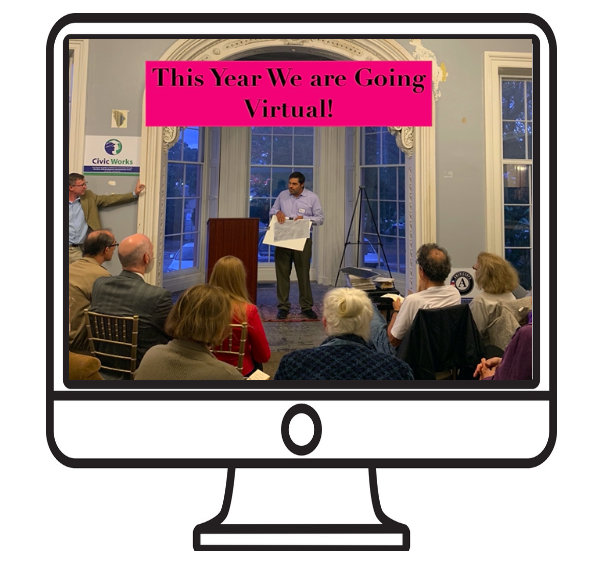
Preservation in Baltimore is a participatory sport and we hope you will join in at our 2020 micro-grant giveaway on Thursday, October 22! At this free and virtual event, you’ll get to help us give away five micro-grants to help great projects in Baltimore. Based on your votes, we will give out two $500 grants, two $250 grants, and one $50 grant. Here are the finalists:

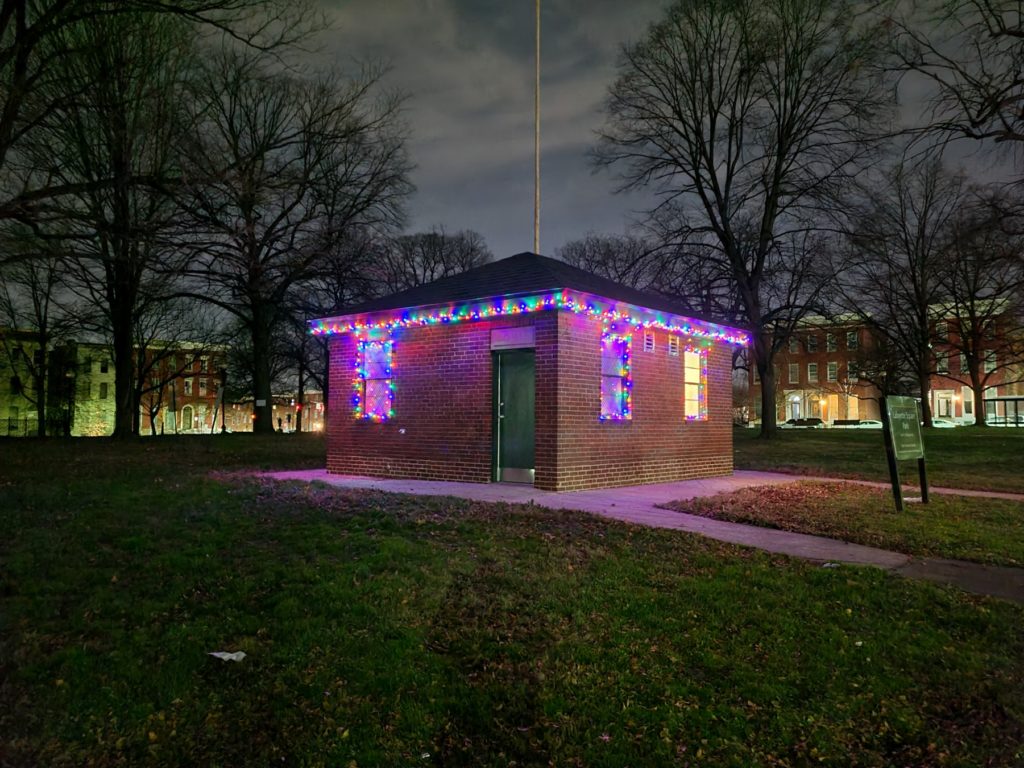
Jean Lee Cole, Friends of Contee-Parago Park
Hope Ford, ImagineIN
Matt Hood, The Baltimore Crime Museum
Nneka Nnamdi, Fight Blight Baltimore
Steven Skerritt-Davis, The Linden Avenue Association

We will count the results and let the winners know on the spot which grant they have won! It will be an exciting night and we can’t wait to “see” you there! Questions? Email ricks@baltimoreheritage.org

Accepting Ideas for 2020 Micro Grants for Preservation Work

We’re in our 5th year of giving away micro-grants to help fund preservation work in the city. If you have a good idea to help preserve a historic building or place in Baltimore or help revitalize a historic neighborhood, we’d love to hear from you! The process is easy: simply fill out the online application and hit send by Wednesday, September 23, 2020.

We’ll pick the five most promising ideas and give them a chance for one of two $500 grants, two $250 grants, or one $50 grant. The awards will be made on October 22, 2020 at a virtual pitch party. Over Zoom, supporters of each idea will get three minutes to pitch them and at the end, the crowd will cast virtual ballots to decide which ideas receive the micro grants. Whether funded or not, we will promote all the ideas and projects to help them garner attention and volunteers.

The types of eligible projects are endless, and as long as they relate to Baltimore’s history, heritage, historic buildings or historic neighborhoods we will consider them. Past award winners include: restoring leaking masonry at a historic church, launching an after school arts-based safe space program in a historic neighborhood, supporting archaeological efforts at a historic furnace, and providing supplies for a community trying to provide access to a neighboring park. The sky’s the limit!

The amount of the award ($50, $250, or $500) may not be enough to complete an entire project. That’s OK. The goal is to help spark new and support existing neighborhood-level preservation work. You don’t need to be a nonprofit organization or even a formalized group to be eligible. Individuals and small groups are welcome! Complete rules can be found on the application.

And you can now register for October 22’s Virtual Preservation Pitch Party! 

Mapping Sites of Baltimore’s Slave Trade

Baltimore Heritage would like to share some information on the city’s role in the slave-trade in the 19th century. One of our dedicated volunteers, Richard Messick, has spearheaded this research and in his guest blog below, he gives us some insight into what he has found. Thank you Richard!

I once took a tour at Hampton National Historic Site lead by Park Ranger Anokwale Anansesemfo, called “Forced Servitude at Hampton.” The tour described the variety of labor used by the Ridgely family to operate their estate: indentured servants, prisoners of war, and enslaved people. It was a profound and moving experience that sent me on a research project to learn more about slavery in Baltimore.

After its incorporation in the late 18th century, the population of Baltimore grew very quickly along with the expansion of the new country. One of the many “trades” that grew along with the city was the sale of people. Several things contributed to this development. First, local farmers had shifted from a labor-intensive tobacco crop to the growing of cereal grains, which required less work and contributed to a surplus of slave labor in the area. Secondly, Eli Whitney invented the cotton gin in 1793, which quickly and easily separated cotton fibers from their seeds. The cotton industry then became incredibly profitable and that fueled a desire for more land and forced labor in the South. The third factor was that the importation of people for sale was outlawed in 1808.

The market for the sale of people that grew up in the Mid-Atlantic region was extensive. This map focuses on where enslaved people were sold in Baltimore. I have used a number or sources for my research, but my primary resource was Ralph Clayton’s book, Cash for Blood: The Baltimore to New Orleans Domestic Slave Trade.  Although many of the associated buildings no longer exist, the overall map shows the deeply interwoven relationship between the trade of human beings and our streets of Baltimore.

— Richard Messick