When Francis Scott Key witnessed the bombardment of Fort McHenry as a captive aboard a British ship, he was one of thousands of Baltimoreans who waited anxiously through the night uncertain if the city would fall before the British attack. Baltimore’s endurance through the battle is remembered still today in the Star-Spangled Banner and in Maryland’s annual observance of Defender’s Day.
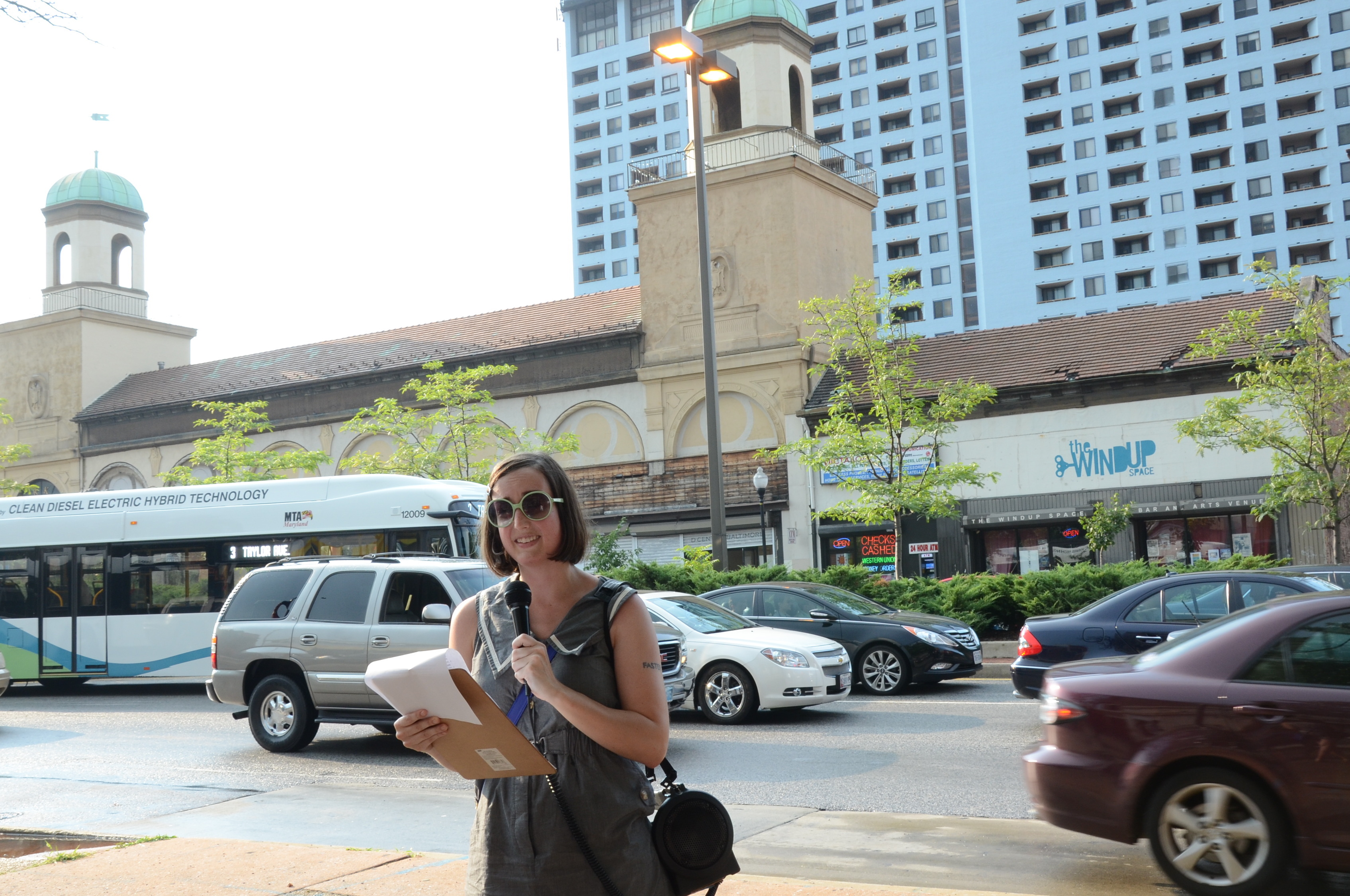
On our second annual Baltimore by Bike Defender’s Day Ride and our first ever heritage running tour, we’ll explore the people and places of Baltimore touched by that night in 1814. Enslaved men worked on the massive fortifications that still stand in today’s Patterson Park. Recently arrived German immigrants heard the warning bells ring out from Old Otterbein Church on the news of the British approach. An enterprising seamstress on Pratt Street sewed the famous flag that became our nation’s Star-Spangled Banner. Follow us beyond the ramparts of Fort McHenry and join our Defender’s Day Ride & Run past the landmarks that tell the story of how the city lived and fought through the Battle of Baltimore and the War of 1812.
Defender’s Day Ride!
Sunday, September 8, 2013 9:00 am to 11:30 am
Fort McHenry National Monument & Historic Shrine
2400 East Fort Avenue, Baltimore, MD 21230 Register – $10 for members, $15 for non-members
Love to learn history on two wheels? Ride along with local scholar and cyclist Dr. Kate Drabinksi on our 10-mile route of quiet streets and mixed-used paths from Fort McHenry to Hampstead Hill in Patterson Park and back again
Defender’s Day Run!
Sunday, September 8, 2013 9:00 am to 10:30 am
Fort McHenry National Monument & Historic Shrine
2400 East Fort Avenue, Baltimore, MD 21230 Register – $10 for members, $15 for non-members
Update:The Defender’s Day Run has been cancelled! If you are interested in learning more about future heritage running tours, please contact Eli Pousson at pousson@baltimoreheritage.org.
At a moderate pace of a 10 minute mile, our guide Dustin Meeker will take us around Baltimore’s once fortified harbor up to the Battle Monument and back to Fort McHenry on an energetic 10K tour. Dustin is doubly prepared for the task as a former ranger at Fort McHenry and a competitive distance runner.
After a bit of a summer break, we have our latest guest blog post by Tom Hobbs, President of the Guilford Association from his series on Guilford’s 100 years of history. Find out more about upcoming events in Guilford on the Guilford Centennial Facebook page including our September house tour with historian Ann Giroux!
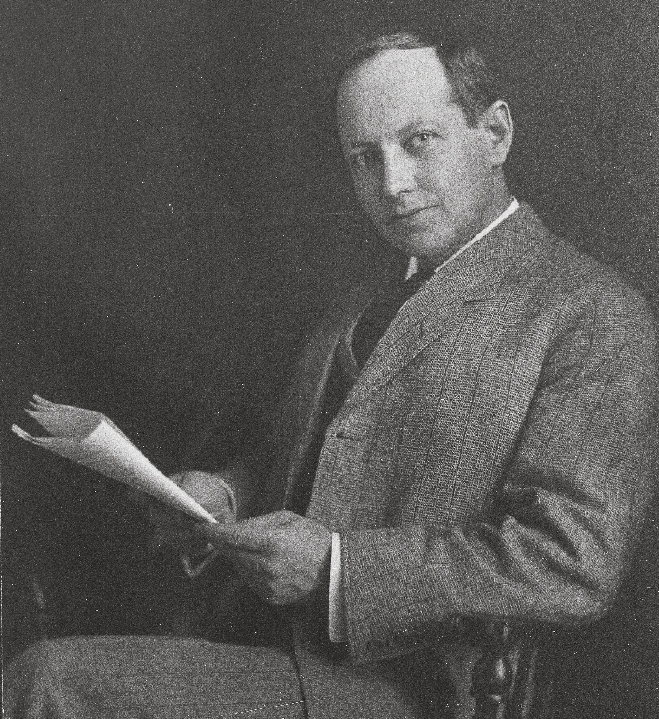
Frederick Law Olmsted, Jr., courtesy U.S. Commission of Fine Arts
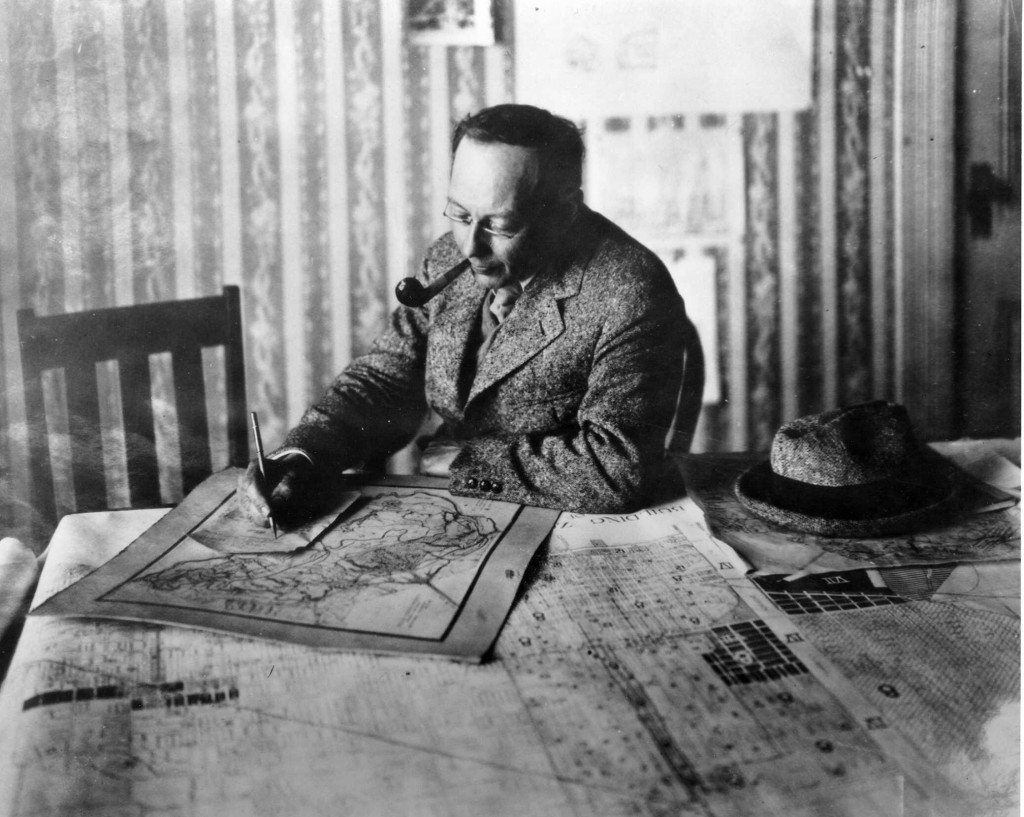
The Directors of the Guilford Park Company, determined to create a garden suburb of the highest quality, engaged the Olmsted Brothers to prepare the plan for development of the Guilford community. The Olmsted Brothers company was the foremost landscape firm in the country. Its principals were Frederick Law Olmsted, Jr. and John Charles Olmsted, the son and stepson of the late Frederick Law Olmsted, the dean of American landscape architects and founder of the firm, designer of Central Park, numerous other city park systems, great estates and plans for many noted institutions.
Frederick Law Olmsted, Jr. was the principal who primarily worked on the Guilford plan and landscape design. He was a highly respected designer, widely regarded as the intellectual leader of the American city planning movement in the early twentieth century. In 1901, he was appointed by President Theodore Roosevelt as a member of the McMillan Commission to plan for the restoration of the Washington Mall and other aspects of the L’Enfant plan for Washington. He had a lifetime commitment to national parks and planned many of them; he designed park systems for many cities, including Baltimore and he designed a number of planned communities.
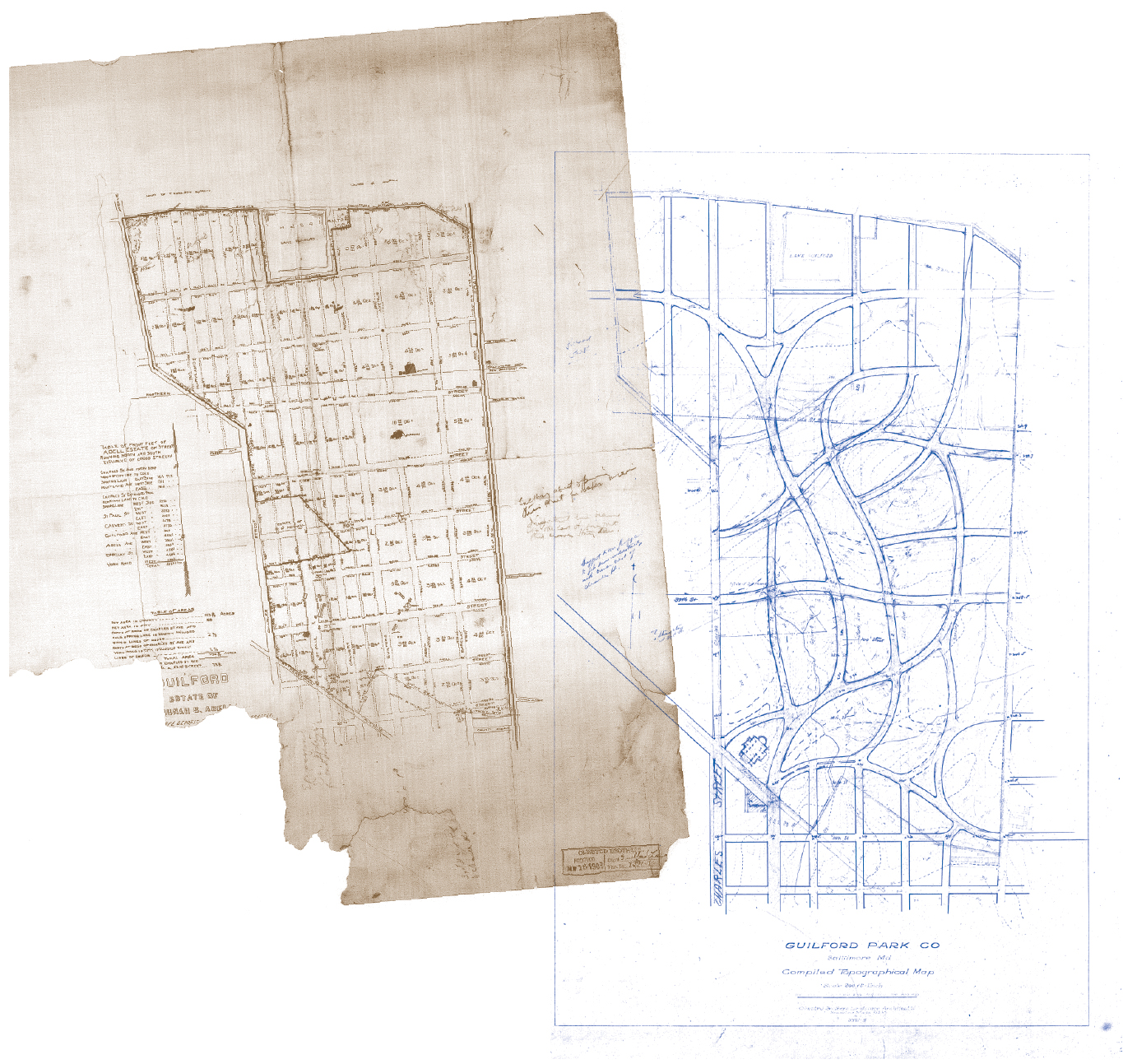
Illustration comparing a 1908 map projecting the Baltimore City grid through the Guilford area with an early street plan prepared by Olmsted for the Guilford Park Company prior to 1911 when it merged with the Roland Park Company, courtesy the Frederick Law Olmsted National Historic Site, NPS/Guilford Association.
When the Guilford Park Company acquired the Abell estate, the City already had on paper a plan to continue the grid street system north throughout the estate property. Such a plan would have disregarded the topography and devastated the lush forested areas. The Directors rejected such a plan and were determined that there should be a green garden suburb reflecting the value of the countryside supplied with urban conveniences but removed from the city’s “congestion, noise, crime and vice.”
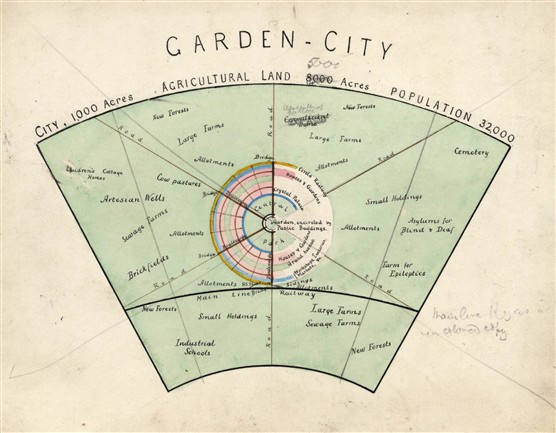
Illustration of Ebenezer Howard’s Garden City plan, Hertfordshire Archives and Local Studies
Olmsted was a proponent of garden suburbs in America where people live harmoniously together with nature, a concept advocated by Ebenezer Howard in England. The Guilford site was surveyed and existing trees and vegetation were inventoried in detail. He laid out streets to follow contours of the land, preserve stately trees and valued vegetation and generally enhance the natural beauty. Traffic was to be concentrated on a few wide streets with pedestrian walks along well planted areas. Most roadways were to be quiet and safe with traffic channeled to the thoroughfares.
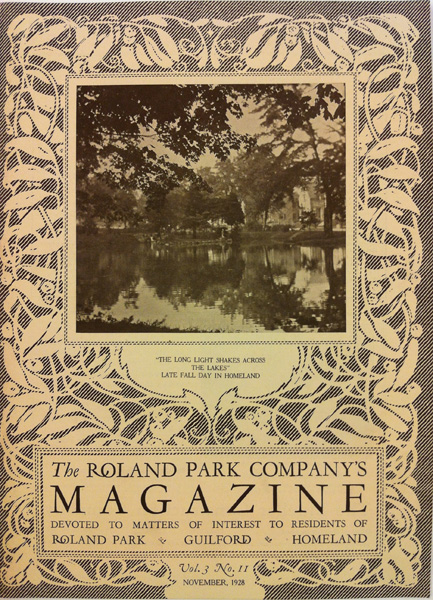
When the Guilford Park Company merged with the Roland Park Company there was no question that Frederick Law Olmsted, Jr. would continue as planner and landscape designer. He had designed the western portion of Roland Park and he and Edward Bouton, now the president of the Roland Park Company, had consistent ideas about the development of the garden suburb and specifically the objectives for Guilford. They also were working together on Forest Hills Gardens, the Russell Sage Foundation developed planned community, outside of New York City. There Bouton was general manager, concurrent with his role as president of the Roland Park Company, and Olmsted was the planner and landscape designer. Olmsted also was engaged in other Baltimore projects, including the design for the Johns Hopkins Homewood campus, the Charles Street approach to Guilford and a plan for the Baltimore park system.
Detail from the Olmsted Plan, courtesy Frederick Law Olmsted National Historic Site, NPS
When the Roland Park Company took over the development of Guilford in 1911 plans were sufficiently prepared for the company’s engineers to design the infrastructure systems and begin detailed designs for the roadways. Olmsted continued to refine the design and prepared road and landscape designs for each block of Guilford. As the Roland Park Company information brochure for potential buyers indicates: “The planting of trees and shrubs in the parks and sidewalk lawns, along slopes and in other unoccupied spaces, has been made a distinctive feature of Guilford. The plans for this planting have been developed by Mr. Olmsted in the form of a carefully studied unified design for the whole property… Unusual care has been taken in the designation of the trees and shrubs to be used.”
Of great importance to Olmsted in his designs for new communities was “the separateness and internal integrity that would promote tranquility and give rise to the development of a sense of ‘shared community’ among their residents.” In addition to the general lush planting and walkway system, three community parks were planned (the Sunken Park, Stratford Green and the Little Park). In addition, Olmsted introduced private parks, little parcels of land spotted in the centers of many Guilford blocks as further evocations of “natural” land.
There were other conditions unique to the Guilford site that required careful consideration by Olmsted and Bouton. The Episcopal Diocese had purchased a site at the southwest edge of Guilford on which it planned to build a large, twin-towered cathedral, requiring Olmsted to plan options for both the cathedral site and the important southern entrance to Guilford. All along the eastern edge of the site on the east side of Greenmount Avenue/York Road was the grid street pattern and unplanned development; on the north was Cold Spring Lane and uncertain development. To address the issue of the north edge of the site that abutted Cold Spring Lane, Olmsted used “back-turning” streets at Whitfield Road, Bedford Place and Charlcote Place. English cottage houses were built along the eastern end surrounding a private “close.”
Courtesy Sheridan Libraries JHU
The eastern edge of the Guilford site presented a greater challenge. It was here that the Roland Park Company undertook initial development, building the architecturally admired Tudoresque houses of Bretton Place and Chancery Square, creating an internally focused English village-like environment. Handsome and setback row houses were built along Greenmount Avenue to the south and the homes of York Courts surrounding private green spaces were built to the north. At the Olmsted National Historic Site in Brookline, Massachusetts there are over 500 drawings and records covering the Guilford plans. In addition there are relevant Olmsted records at the Smithsonian and many additional records related to the planning among the Roland Park Company files now at the Johns Hopkins Library. These all are being searched for the planned book on Guilford.
Both Olmsted and Bouton were committed to the importance of protective covenants as the best means for assuring “stability” and “permanence.” Without control on development, they had observed high quality single family communities transformed by conversion to multi-dwelling and commercial uses and value change and character loss. Nuisance laws and design guidelines had proven to be insufficient protection against decline and change. Deed restricted covenants, including design controls, they argued protect purchasers against unwanted change that might “destroy the setting and they assure long-term well-being.” The collaborative work of Bouton and Olmsted in refining protective covenants became a model for similar provisions that are still widely used.
At the presentation of the Pugsley Gold Medal Award in 1953 honoring champions of parks and conservation, it was observed:
“Carrying on the ideals of his father, and with many of his father’s special qualities and characteristics, Olmsted was an outstanding leader in advancing landscape architecture to a status of honor and recognition among the professions. Indeed, for over a half-century Olmsted was the preeminent practitioner and spokesman for landscape architecture and comprehensive planning both interested in the interrelationship of people and their environment.”
Olmsted summarized his philosophy about landscape architecture in the following terms:
“In dealing with existing real landscapes, I have been guided by an injunction impressed on me by my distinguished father: namely, that when one becomes responsible for what is to happen to such a landscape his prime duty is to protect and perpetuate whatever of beauty and inspirational value, inherent in that landscape, is due to nature and to circumstances not of one’s contriving, and to humbly subordinate to that purpose any impulse to exercise upon it one’s own skill as a creative designer.”
Guilford residents and the City of Baltimore are the fortunate beneficiaries of Olmsted’s insight and design skills, living in and with one of the country’s most admired and lasting communities.
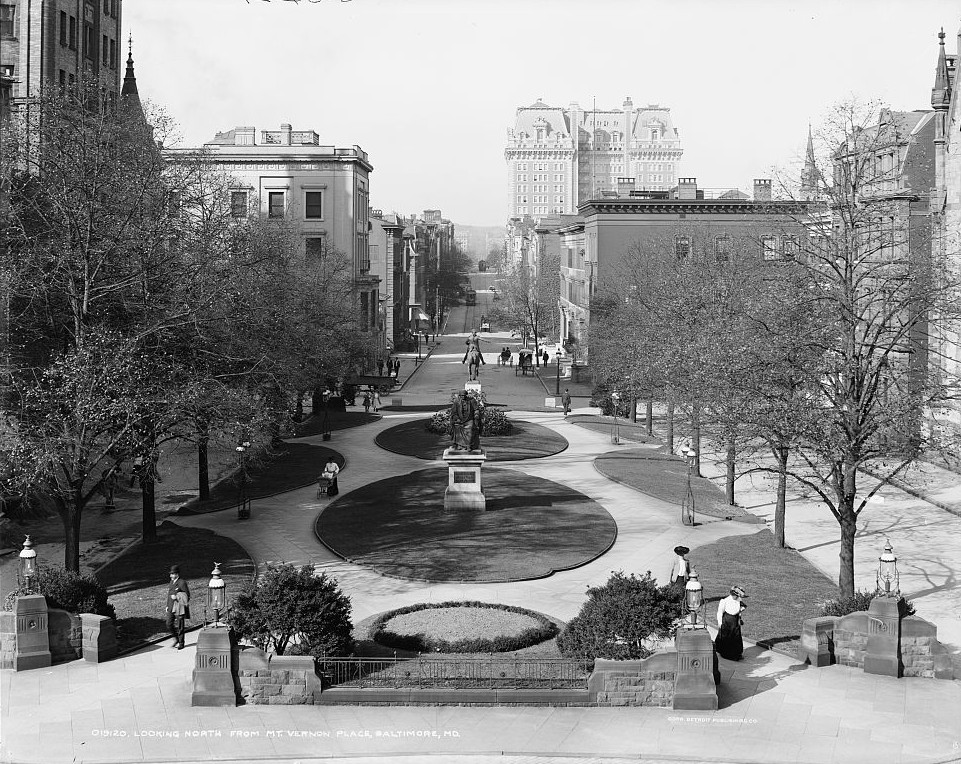
In partnership with the Mount Vernon Place Conservancy, we are glad to present a new series of walking tours exploring the rich history and architecture of one of Baltimore’s true treasures – Mount Vernon Place. Each month this fall, we’ll be meeting on the south side of the Washington Monument and leading a short tour around new theme – the history of the park squares, the fight to preserve Mount Vernon Place in the face of urban renewal, and the hidden histories of slavery and emancipation.
Mount Vernon Place: A History of the Squares
Saturday, September 7, 2013, 9:30am to 10:45am – Register today!
When the four squares of Mount Vernon Place were laid out in 1831, George Washington had only sat at the top of the monument for a few years and locals still knew the neighborhood as Howard’s Woods for the forested country estate that long occupied the hills north of the harbor. As the city grew up around the parks, their design was shaped by two luminaries in landscape architecture: Frederick Law Olmsted, Sr. contracted in 1876 to carry out improvements to the north and south squares and the architectural firm of Carrère & Hastings who designed the parks’ handsome Beaux Arts fountains, stairs and balustrades in 1917.
Since 2008, the Mount Vernon Place Conservancy has been working on a new vision to restore and maintain the parks as renewed world-class urban spaces. On our first Mount Vernon Place walking tour this fall, we’ll share nearly 200 years of history in these four squares and consider their promising future.
Mount Vernon Place: Architecture, Urban Renewal & Preservation
Saturday, October 5, 2013, 9:30am to 10:45am – Register today!
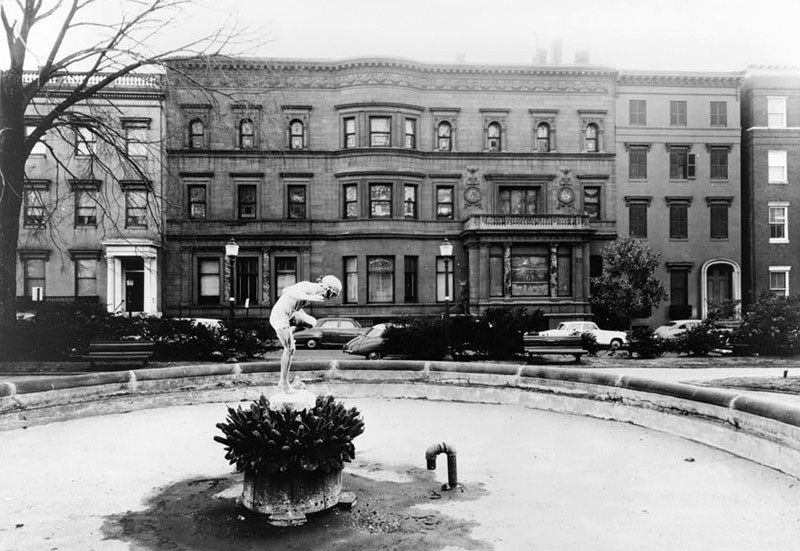
Far removed from the city’s bustling harbor, Mount Vernon Place developed as an affluent suburb in the mid 19th century. It was home to men like William Walters, a successful wholesale merchant whose legacy helped to establish the Walters Art Museum, and Robert Garrettt II, the first born son and heir of John Work Garrett, the founder of the Baltimore and Ohio Railroad. Robert and his wife Mary Frick Garrett made the perfect high society couple and engaged architect Stanford White to turn an already grand townhouse into a palatial 40-room mansion.
With such a distinguished history and stylish architecture, it is hard to believe that the neighborhood narrowly avoided being flattened for the development of an east-west highway in the 1960s and the Garrett-Jacobs Mansion itself was lucky to escape demolition in the face of urban renewal. On our second Mount Vernon Place walking tour this fall, we’ll highlight the rich architecture around the Squares and how preservationists saved these unique blocks from destruction.
Mount Vernon Place: Stories of Slavery & Emancipation
Saturday, November 9, 2013, 9:30am to 10:45am – Register today!
Around Mount Vernon Place, memorials in bronze and marble honor slave-holders – George Washington, John Eager Howard, and Roger B. Taney. No statute recognizes the labor of the enslaved people who worked and lived in the neighborhood’s handsome antebellum houses. No plaque recalls Frederick Douglass’ response to Taney’s notorious Dred Scott decision – “All that is merciful and just, on earth and in Heaven, will execrate and despise this edict of Taney” – or preserves the stories of men like Richard Mack, born into slavery and employed as a butler in a the Garrett-Jacobs Mansion at the turn of the century.
The stories of slavery and emancipation on Mount Vernon Place are far from simple, however, including the monument to the Marquis de Lafayette, a hero of the American Revolution who personally urged George Washington and Thomas Jefferson to emancipate their slaves and abolish slavery in the United States. On our third and final Mount Vernon Place walking tour this fall, we’ll uncover the lives of enslaved people and slave-owners with stories from violent politics of the Civil War and the revolutionary changes of emancipation.
Tickets are $10 per person for adults and free for children under the age of 16. All tours proceed rain or shine and advance registration is encouraged.
Last month, the leadership of the Senate Finance Committee adopted a “blank slate approach” to tax reform where all tax expenditures for both corporations and individuals including the Federal Historic Tax Credit would be eliminated from the tax code. Under this plan, preserving the historic tax credit requires Senators to make a case for it directly with an argument that the historic tax credit helps the economy grow, make the tax code fairer, or effectively promotes other important policy objectives.
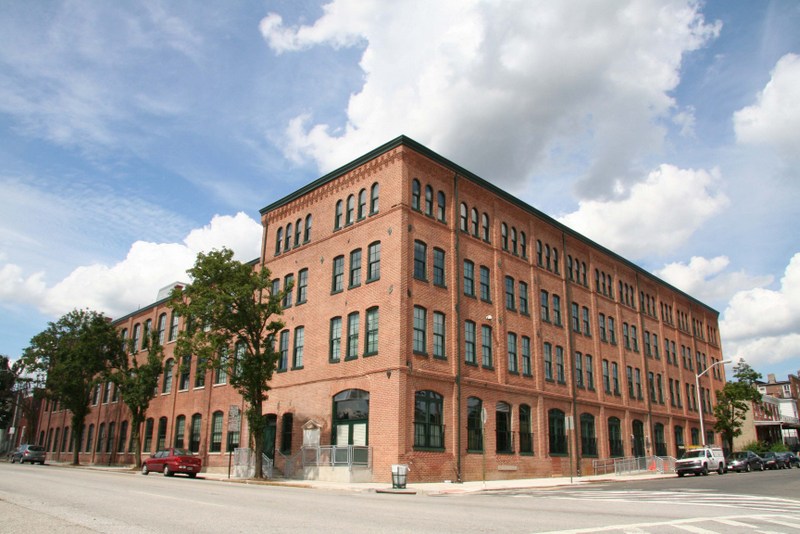
We know that the historic tax credit is an important economic driver supporting private investment and creating good jobs. The tax credit is essential to level the playing field for rehabilitating existing buildings when comparing costs and incentives with new construction. By supporting investments in historic preservation, like Miller’s Court, the American Brewery Building, or Mill No. 1, helps to revitalize neighborhoods, support local economies, and create lasting improvementsin Baltimore and around the country.
Please reach out now – before July 26 – by phone or email to Senators Cardin and Mikulski and ask that they include the Historic Tax Credit as a priority in their letters to the Senate Finance Committee.

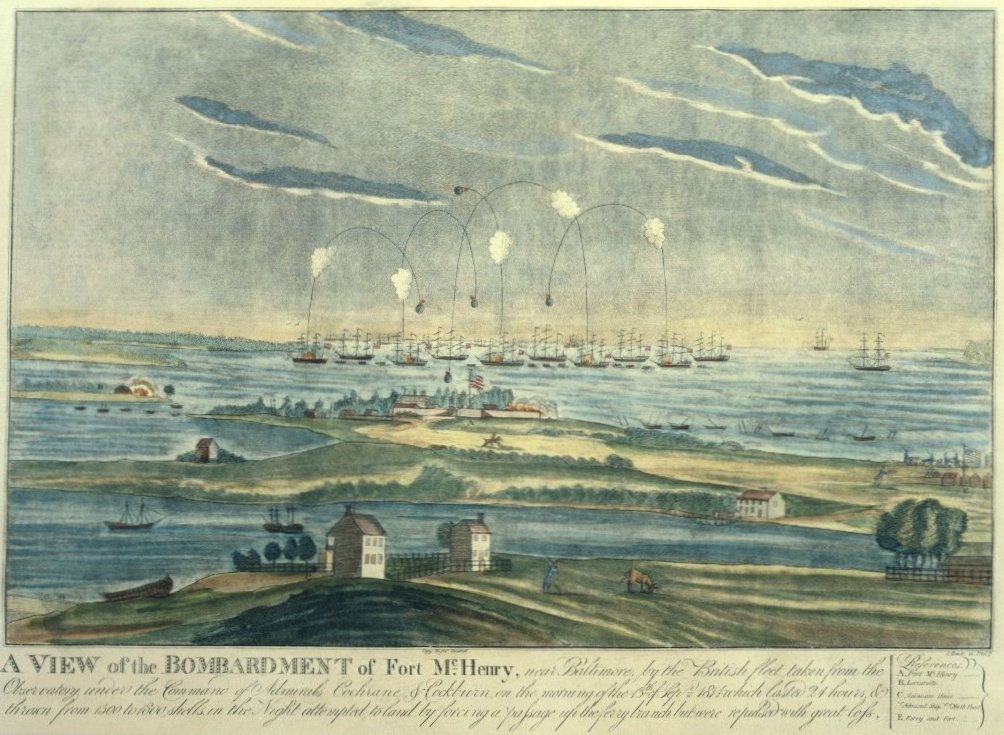 When Francis Scott Key witnessed the bombardment of Fort McHenry as a captive aboard a British ship, he was one of thousands of Baltimoreans who waited anxiously through the night uncertain if the city would fall before the British attack. Baltimore’s endurance through the battle is remembered still today in the Star-Spangled Banner and in Maryland’s annual observance of Defender’s Day.