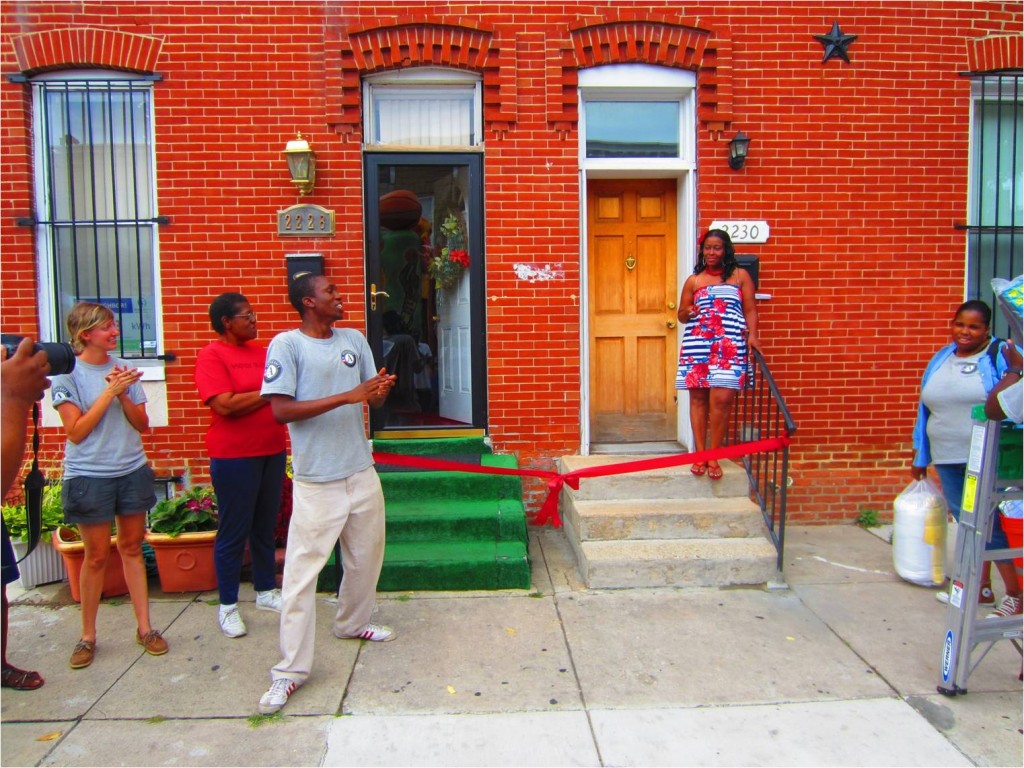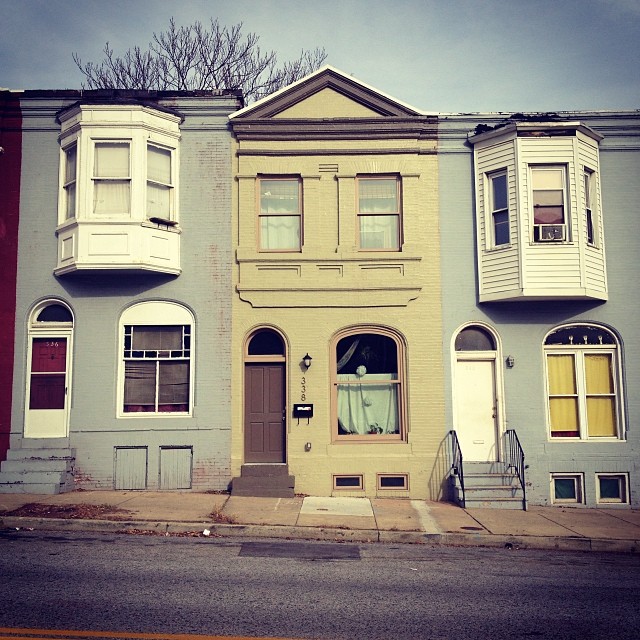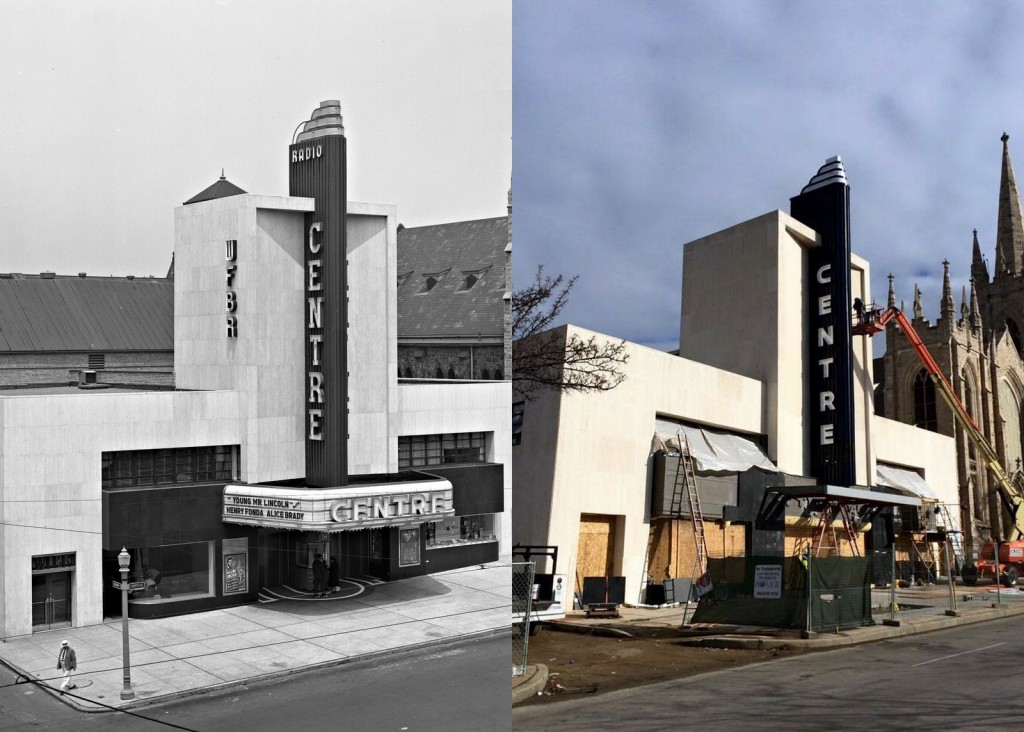
As we head into the new year, we put together a short video to say thank you for participating, volunteering, supporting, and being a part of all of our work for Baltimore and our historic places. We’re pleased to feature three of our partners this year: Jennifer Robinson and the Friends of Patterson Park, Gary Rodwell and the Coppin Heights Community Development Corporation, and Paula Hankins at the Carroll Museums and Shot Tower. Each is working hard to preserve our rich history and revitalize our neighborhoods, and we are proud to call them partners.
Earlier this month, Maryland Traditions recognized Baltimore’s famous painted screens and the stewards of this unique rowhouse art at the 2014 ALTA Awards. Please enjoy a few photographs from the evening by Edwin Remsberg Photographs and join us in congratulations Elaine Eff and all of the screen painters who sustain this tradition today! Read on for more details about this essential Baltimore tradition.
Photograph by Edwin Remsberg, 6 December 2014.Photograph by Edwin Remsberg, 6 December 2014.
The Painted Screens of Baltimore is one of the most iconic and well-known living traditions unique to Baltimore City, celebrating its 101st birthday this year. Rooted in the vibrant neighborhoods of early 20th century East Baltimore, where they dotted the streets of endless row homes, the screens provided a decorative means of ensuring privacy: the painted exteriors “trapped” the vision of onlookers, preventing them from seeing inside. Such privacy was especially important during the warmer months when open windows provided much-needed ventilation. This clever invention is credited to William Oktavec, a storeowner on the East side from the Czech Republic (as it is known now).
Photograph by Edwin Remsberg, 6 December 2014.Photograph by Edwin Remsberg, 6 December 2014.
While Oktavec painted his first screen in 1913, the tradition continues today through a variety of forms – from window screens to fly swatters and outdoor patio furniture – that reflect an evolution of innovations and tastes. Roughly a dozen screen painters, many of who have learned from the older generation, including John Oktavec, William’s grandson, are active in teaching the skills and meanings to younger enthusiasts.
In 1985, the Painted Screen Society was founded by folklorist Elaine Eff, co-founder of Maryland Traditions and author of The Painted Screens of Baltimore: an Urban Folk Art Revealed, and Dee Herget, who has been painting screens since the late 1970s, having learned “the secret” from the “old masters” of the time. The Society is active in promoting the living tradition to the public through demonstration events, classes, and museum and gallery exhibitions, and has helped to keep it alive within the city and beyond.
On Wednesday, December 10, the Maryland Historical Trust announced the exciting preservation projects receiving the Sustainable Communities Tax Credit in 2015. Next year, the historic tax credit program will invest ten million dollars in nine projects from Western Maryland to the Eastern Shore. In Baltimore, four projects received historic tax credits—supporting a planned investment of over sixty million in the Fell’s Point, Stone Hill, Broadway East and Charles North neighborhoods.
Eastern Pumping Station/Baltimore Food Hub: Conversion of former pumping station to a mixed-use food center business incubator. Credit: $3 million; Estimated project cost: $15 million
Fell’s Point Recreation Pier: Conversion of the former municipal pier building for use as a hotel and restaurant facility. Credit: $3 million; Estimated project cost: $39.8 million
Florence Crittenton Home: Conversion of former mill owner’s mansion/social services campus for use as rental apartments. Credit: $520,000; Estimated project cost: $2.6 million
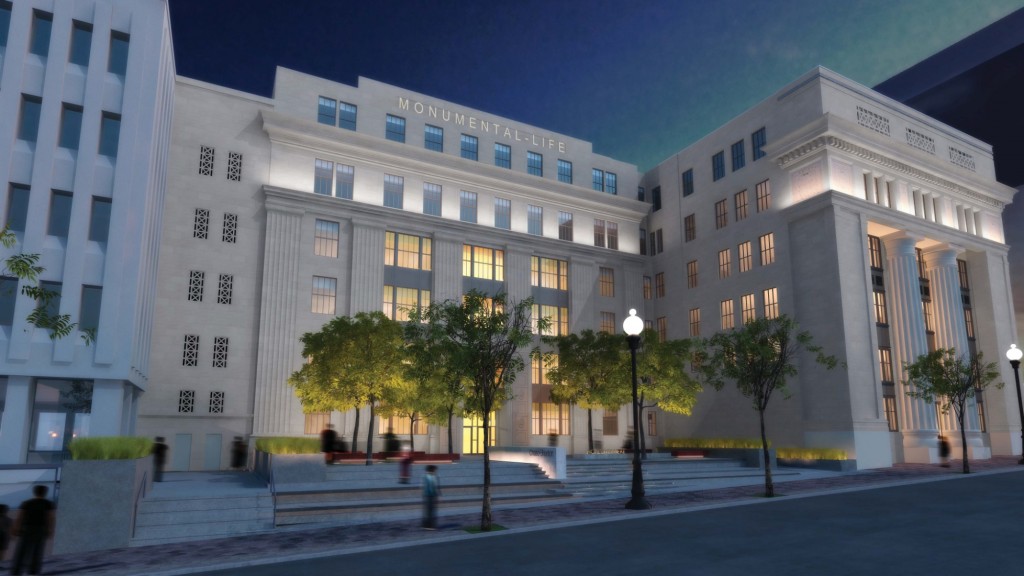
Eastwick Motor Company: Conversion of a 1914 Ford dealership for use as an arts organization center and restaurant. Credit: $453,968; Estimated project cost: $6.1 million
Rendering of planned rehabilitation for former Eastwick Motor Company.
You may remember the Eastern Pumping Station from our Behind the Scenes tour last summer. We’ll also be visiting the Eastwick Motor Company next month—a building better known as the former home to Load of Fun and now known as the Motor House. According to a March 2009 study funded by the Abell Foundation, the state historic tax credit program has helped to create more than 26,000 jobs throughout the state. The Baltimore Sun quoted Elizabeth Hughes of the Maryland Historical Trust, “One of the things that they all share, the common thread, is good preservation practices, combined with promise of local economic return.”
Learn more about how you can advocate for continued investments in Baltimore’s historic neighborhoods at the Preservation Priorities Forum hosted by Preservation Maryland on January 13.
The Greater Hampden Heritage Alliance holiday celebration at Church & Company last Friday was a great success! Thank you to everyone who came out for the evening and special thanks to Anastasia Tantaros of Side A Photography for capturing the event.
As we head towards the end of the year, we want to thank all of our volunteers and members for your support. If you are not a member or have not yet renewed, please consider signing up today. And please get in touch to let us know how we are doing!
We wanted to take the opportunity to share a look back at our work for historic preservation in Baltimore over the past year. We think our heritage tours, new educational efforts and dedicated preservation advocacy are the best reflection of the strength of our board, the creativity of our volunteers, and the generosity of our members. Learn more about what we were able to accomplish in our 2014 year in review.
With your help, the year ahead looks just as promising. We are planning to expand our work with public schools around Patterson Park, offer even more new heritage tours, and launch an important initiative to document and preserve Civil Rights sites in Baltimore.
Membership giving is a substantial share of our operating budget. Our annual memberships start at $35 for individuals and $50 for families but donations of any size are valued. You can even set up a recurring donation to support preservation every month.
Thank you for volunteering and donating. Your commitment is making a difference. Please do not hesitate to call or email with any questions or if we can be of assistance. Have a happy holiday season and I look forward to seeing you in the new year.