Preserving and promoting Baltimore's historic buildings and neighborhoods.
Category: Education
Our education programs include technical assistance to property owners, heritage education around the Civil War Sequicentennial and the Bi-Centennial of the War of 1812, and our ongoing Race and Place in Baltimore Neighborhoods project.
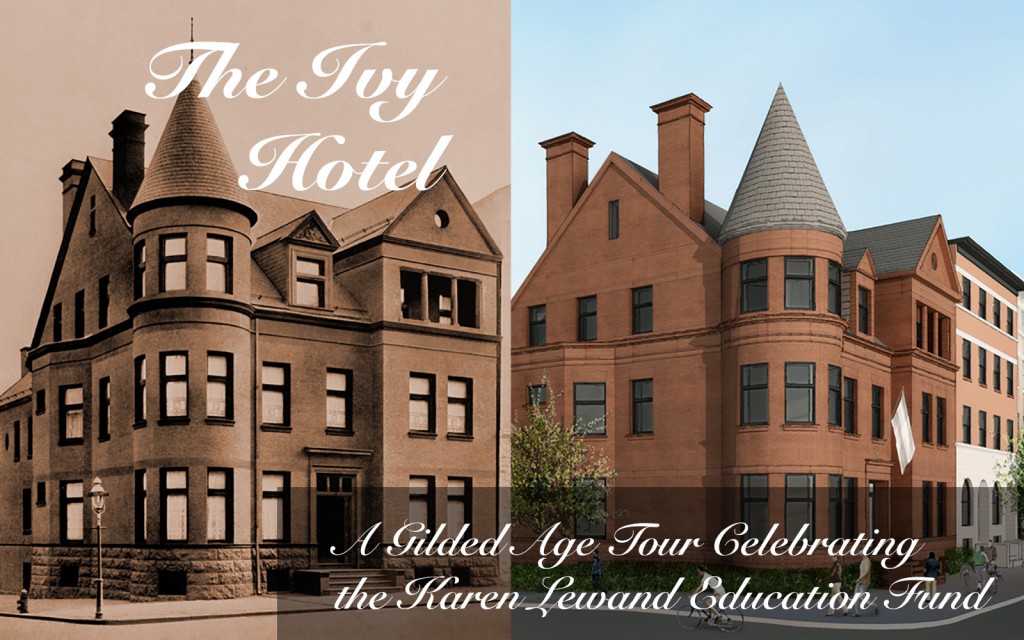
It has been two years since our colleague, friend and inspiration Karen Lewand passed away. The historic preservation education fund that she created is almost two years old as well, and it is our privilege to celebrate Karen’s legacy and the ongoing good work that she made possible at Baltimore Heritage. As a way to say thank you for the over two hundred individuals and businesses who contributed to the education fund in 2012 and 2013, we are throwing a party and inviting you to join us for a reception and tour of the Ivy Hotel in Mount Vernon on the evening of Wednesday, December 3.
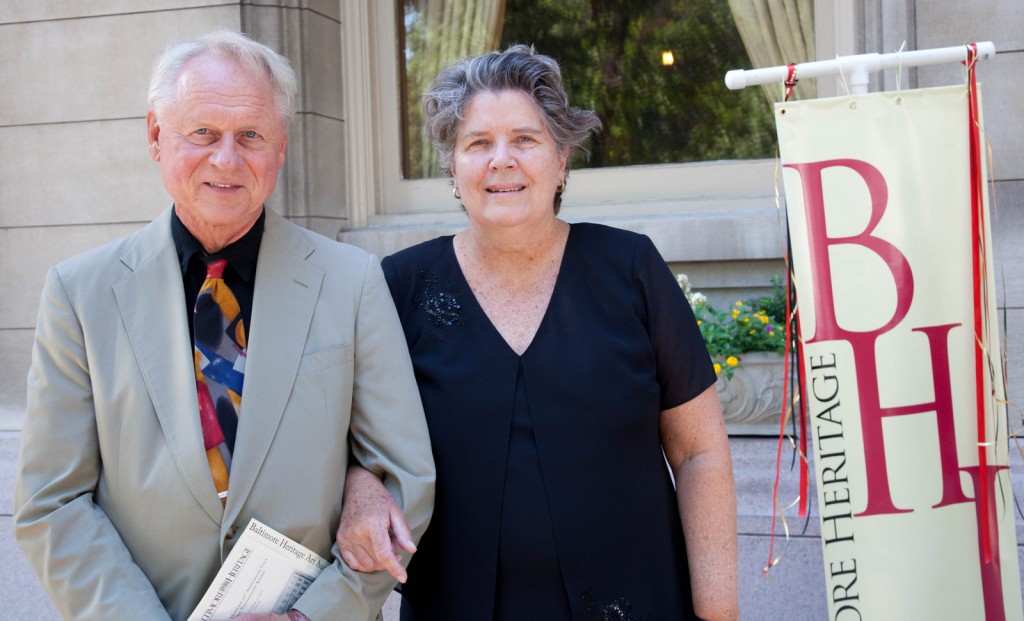
Karen and Bob Lewand, June 2010
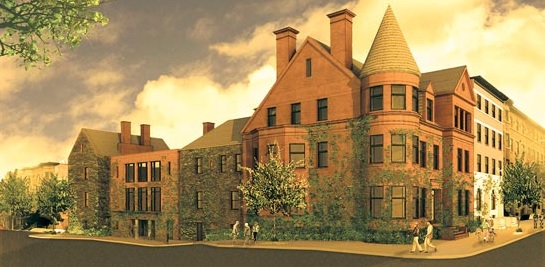
The Ivy is in the middle of a comprehensive restoration to turn the neighborhood landmark into a first-class boutique inn. The 1889 mansion started its life on Calvert Street as a home for John Gilman. William Painter, inventor of the bottle cap and founder of the Crown Cork and Seal Company, and Robert Garrett, double gold medalist at the first modern Olympics in 1896, also took turns owning and enjoying the mansion. The Ivy is a fantastic place and with the help of the Azola Companies, our host and the building’s owner, and Ziger/Snead Architects are returning to its full Gilded Age glory.
Image courtesy Azola Companies
Special thanks to everyone who has supported the Karen Lewand Historic Preservation Education Fund and for making our work in Baltimore possible.
Have you ever walked past a local landmark and wondered who wrote the plaque? For the historic buildings at Johns Hopkins University’s Homewood Campus, the students themselves are telling the stories! The students undertook this ambitious project as part of a course taught by Beth Maloney for the Program in Museums and Society at Johns Hopkins University in partnership with the Homewood Museum, Johns Hopkins University Archives and MICA’s Environmental Graphic Design class. Thank you to Beth for sharing this great case study in education and interpretation!
As a consultant to museums and historic sites, I partner with working professionals to address challenges, create new material and generate strategies for programming and visitor engagement. In addition to my consulting work, lately I’ve been teaching undergraduate students in a course through the Program in Museums and Society at Johns Hopkins University. I love how this teaching experience gives me the time to work with and learn from students as we explore informal learning and museum interpretation. And, because the class I teach is a practicum, students work through their ideas by collaborating with a local museum or organization on a hands-on project. This kind of collaborative work is not just valuable for students. For partner organizations, it’s a chance to gain new perspective on material, themes and practice – and leverage fresh energy and people-power to accomplish projects that may not have been possible alone.
Courtesy Maryland Institute College of Art
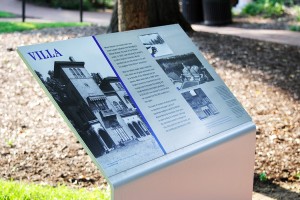
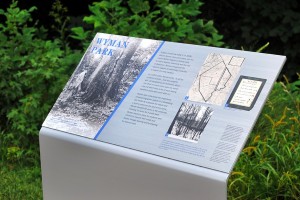
In the Spring of 2014, we partnered with staff from the Homewood Museum and Johns Hopkins University Archives to create interpretive signage for ten sites throughout the University’s Homewood campus. The broad goal for the project, as defined by the students, was to reveal stories about the property where the Homewood campus now sits in order to draw attention to the layers of history that are around us and prompt a dialog that would nurture a deeper “sense of place.”
Developing the signs was a collaborative and iterative process. Each student researched a site – discovering stories of the people who lived and worked there, identifying primary sources, and developing interpretive text. Once these main ingredients were gathered, students tested and refined their text with peers, faculty, scholars, and visitors to campus.
Courtesy Maryland Institute College of Art
When content and visuals were in final draft form, we partnered with Jeremy Hoffman’s exhibit design course at the Maryland Institute College of Art. Hopkins and MICA students reviewed the sites and stories together and then MICA students developed proposals for both the graphic and structural design of the signs. Over the summer, with funding from the Andrew W. Mellon Foundation and the support of the University, the Program in Museums and Society produced and installed the signs according to the students’ vision. A web presence for this work is in the planning as part of the university’s Hopkins Retrospective project, as are related programs on campus.
But most importantly, these signs will only be up for the academic year, so come over to campus and take a look!
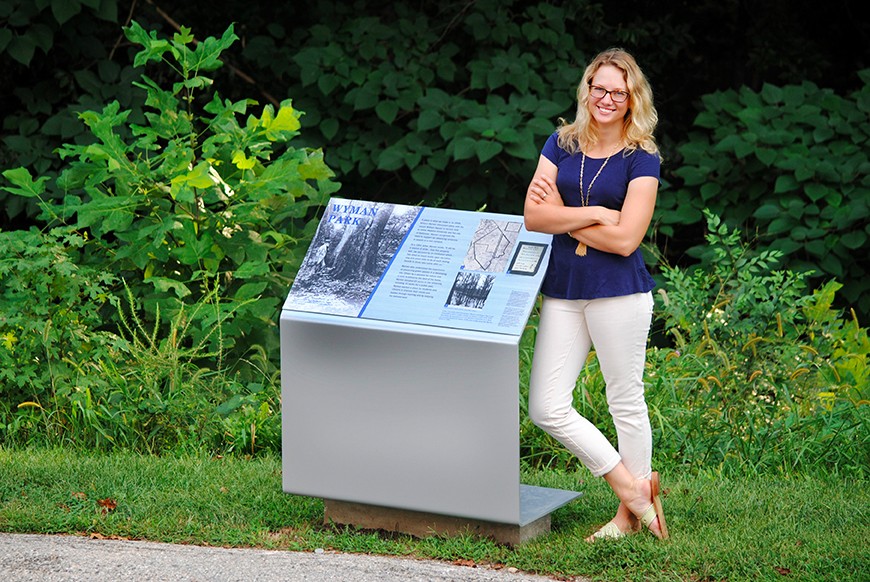
MICA design student Katie Doherty. Courtesy Maryland Institute College of Art
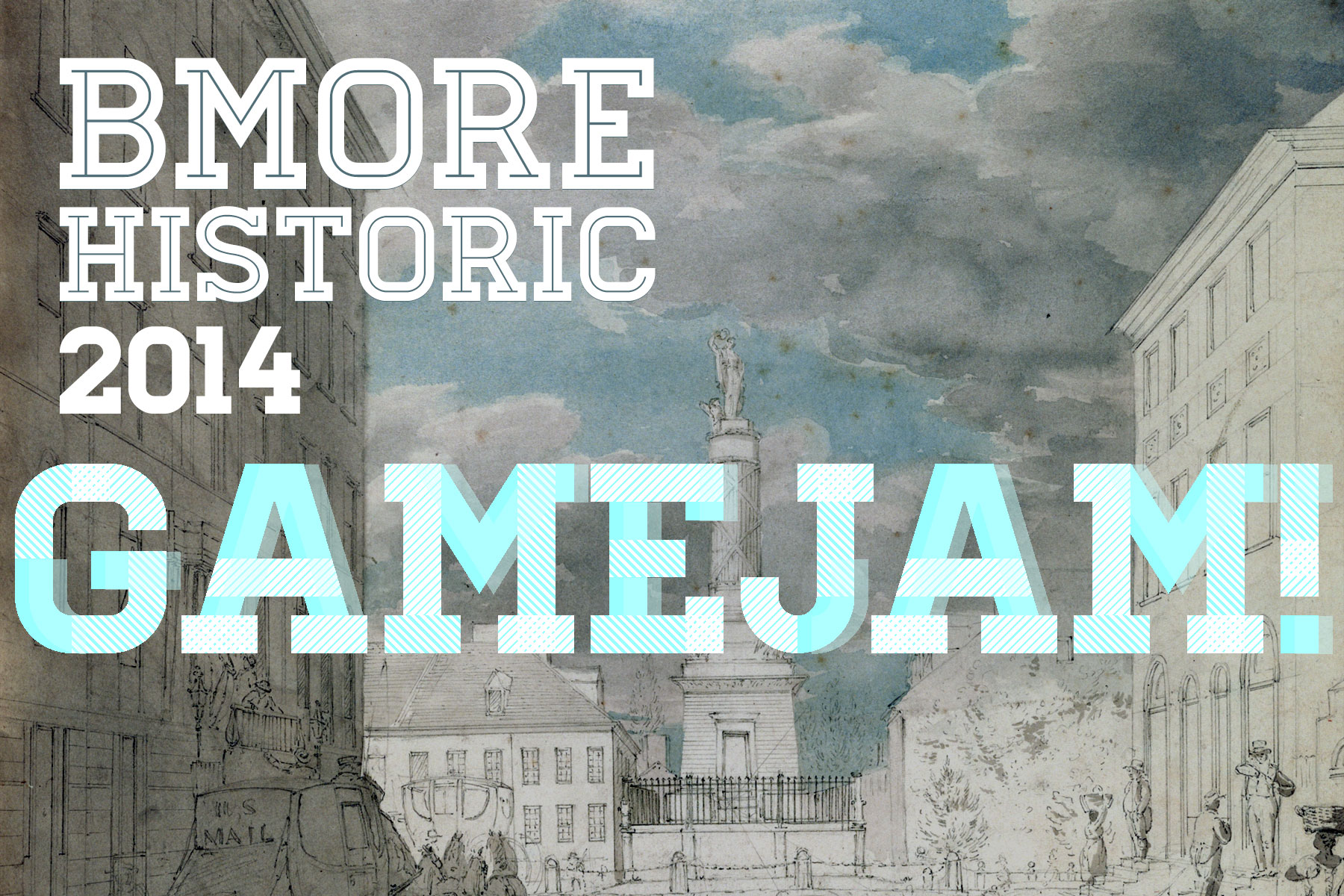
Do you work at a museum or library? Volunteer for your neighborhood design review committee or preservation commission? Teach history at a local public school or college? Then we invite you to join us for Bmore Historic unconference at the Maryland Historical Society on Friday, October 10!
Bmore Historic is a unique opportunity to connect with students, scholars and professionals in public history and historic preservation for discussions, workshops and creative presentations on the issues that you care about.
How do we know you will like Bmore Historic? Because you set the agenda! Bmore Historic is an unconference where participants work together to propose the topics, set the schedule and facilitate the sessions throughout the day. An unconference is an alternative to a typical professional or academic conference where the schedule is set months in advance. Participants share session ideas online before the event and the schedule isn’t set until morning of October 10. Session leaders are encouraged to facilitate a conversation, not deliver a PowerPoint presentation! Registration is only $10 for students and $15 for professionals including breakfast and lunch.
Bmore Historic is also a great opportunity to build skills thanks to volunteer-led workshops running throughout the day. We are currently planning workshops on topics including managing digital archives and new approaches to engaged scholarship. Please let us know if there is a topic, skill or tool you want to see included.
This year, we’re especially excited to share a fun program for anyone interested in exploring the intersections of history, education, and games: the Bmore Historic Game Jam. The game jam will be a lively and experimental dive into the potential of games to bring history to life in new ways organized in partnership with THATCamp Games – an unconference on humanities, technology, games, and learning taking place at the Baltimore Harbor Hotel on October 11-12.
Eli Pousson, Director of Preservation and Outreach at Baltimore Heritage shares his perspective on heritage and preservation and tells us how digital platforms have expanded the number of stories they can tell about Charm City.
1814 is much like the present in many ways. Women became mothers, men became grandparents, and others passed away leaving family behind. Here are two births and one death we’re remembering this week:
With the birth of Ramsay McHenry, James McHenry, the namesake of Fort McHenry, became a grandfather. At the beginning of 1814, the elder McHenry suffered an attack of paralysis that left him home-bound in West Baltimore.