Good news for Baltimore’s Hebrew Orphan Asylum in 2013

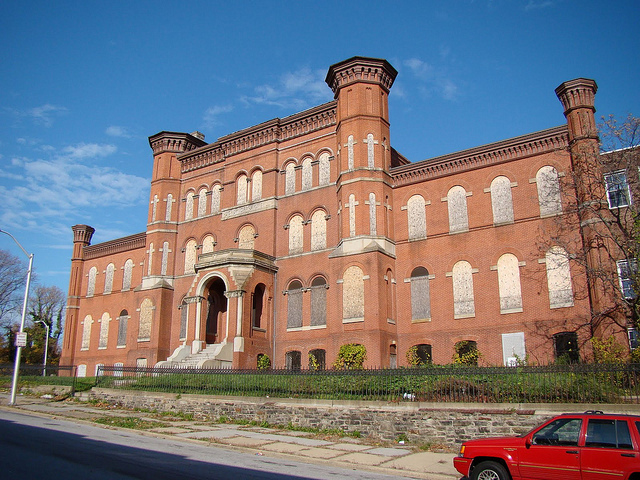
We are excited to begin the year with some good news for the future of Baltimore’s Hebrew Orphan Asylum. With the Coppin Heights Community Development Corporation taking the lead, we have made great strides towards the preservation and reuse of this important West Baltimore landmark.

  • Maryland’s Department of Housing and Community Development has granted the Coppin Heights CDC $100,000 to stabilize the building. Not only does stabilization address the building’s severely compromised roof but it also allows architects and engineers to work safely inside to assess conditions and complete redevelopment plans.
  • Coppin Heights CDC has now secured $10 million in state and federal funding with support from the Maryland Sustainable Communities Tax Credit program, the Federal Historic Preservation Tax Credit program, and the New Markets Tax Credit program. This is great progress towards securing the resources necessary to restore the building and bring it back as an asset to the neighborhoods of Greater Rosemont.
  • Finally, just this afternoon, Lt. Gov. Anthony Brown announced that West Baltimore, including the area around the Hebrew Orphan Asylum,  one of five new Health Enterprise Zones across the state—a program that opens up new incentives for providing medical care to residents in under served neighborhoods like West Baltimore. The announcement comes as a welcome news, as the Hebrew Orphan Asylum is slated to be transformed into the Center for Health Care and Healthy Living to help address the same health disparities that the new Health Enterprise Zone is designed to reduce.

At Coppin State University, the building’s current owner, Dr. Mortimer Neufville is stepping in to serve as interim president after the resignation of Dr. Reginald Avery. Dr. Neufville takes the helm in a new day for the Hebrew Orphan Asylum as both CSU and the larger University of Maryland system have expressed their strong support for the project and are working together to make sure the building is restored and reused. Things are moving quickly for the Hebrew Orphan Asylum and we are more than optimistic that 2013 will see great steps forward for its preservation and reuse as a center for revitalization in West Baltimore.

My morning nose-to-nose with plaster up in the scaffolding at the Baltimore Basilica

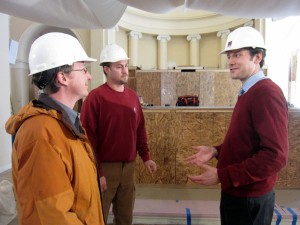
IMG_9165Yesterday morning, Tyler Tate from Lewis Contractors gave my colleague Eli and me a real treat: a visit up into the scaffolding that has been standing in the main sanctuary of the Baltimore Basilica to repair damage from the summer’s earthquake. The scaffolding, almost miraculously, spans the pews below and reaches to the top of the dome. The earthquake cracked plaster, compromised arches, and caused damage throughout the building, and the scaffolding essentially allowed the work crews to reach every inch of the interior. Weekend services (and even weddings) have bravely continued throughout the restoration thanks to the draperies that have hidden much of the scaffolding. The project is now winding down and the scaffolding is being removed, but we wanted to share some photos of our visit and what the ceiling of the Basilica looks like from up-close. I think that after our nose-to-nose look at the plaster, paint and stabilization work, the Basilica will be more stunning following this restoration than it was even after the major restoration work a few years ago.

In addition to Lewis Contractors and the Archdiocese of Baltimore, the project team includes architects Cho Benn Holback, plaster repair experts Hayles and Howe, and paint specialist Thomas Moore Studios. Fandango Productions provided the drapes over the scaffolding – a first for their business.

Restoration in process at the Basilica of the Assumption, January 10, 2013

Clifton Mansion set for a $7 million restoration

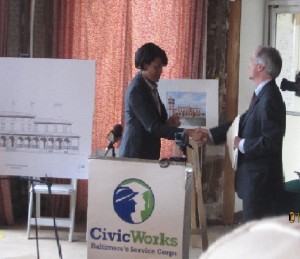
Mayor Rawlings-Blake signs Clifton renovation rendering with Civic Works Director Dana Stein

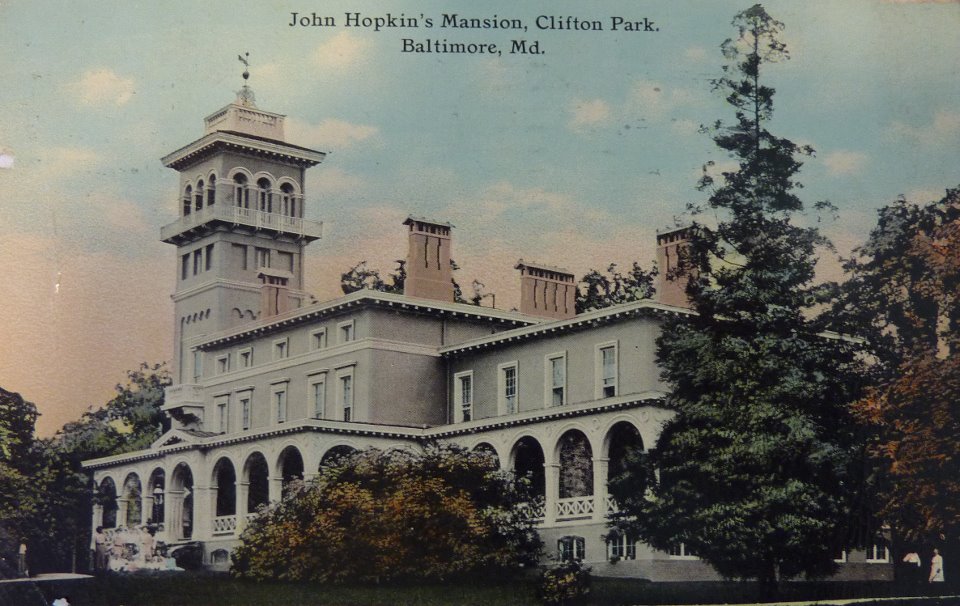
On January 7, the nonprofit youth training organization Civic Works announced that it has met its fundraising goal and is launching a $7 million restoration campaign for Clifton Mansion.  The Mansion was home to Henry Thompson, a War of 1812 hero, and the summer home of philanthropist Johns Hopkins. It is now owned by Baltimore City with Civic Works as a long-term tenant.

For me as the executive director of Baltimore Heritage and a board member of Civic Works, and, yes, with a name strongly associated with Clifton, one great part of this project is the tie between the past and the future. Hopkins – the philanthropist – gave his fortune to start the college and hospital that bear his name based on his belief that the future of Baltimore lay in educating our youth and providing basic services for all.  Civic Works today carries out that same vision by educating and training Baltimore youth and working to improve our neighborhoods. In fact, a number of young Baltimore apprentice carpenters from Civic Works will have the opportunity to work alongside master carpenters as part of the Clifton renovation project. What better place to bring past, present, and future together than Clifton?

The restoration work, which will take place over the next year, is a whole building project. It will include fully rebuilding the signature porches that surround the house, putting the main front stairs leading to the building back to their location in the mid-1800s, and renovating the interior throughout. And, thankfully, there is no talk of turning the building into another house museum. At the end, the Mansion will continue its dual role as office space for Civic Works and public space open for all of Baltimore. Stay tuned for a tour of this grand place as soon as the construction work allows.

305546_122931154507719_1068258424_n

Learn more about the history of Clifton Mansion and the War of 1812 on Explore Baltimore Heritage!

Upcoming workshops on weatherization and historic tax credits in Roland Park and Mt. Washington

We’re partnering with Retrofit Baltimore to bring you two great workshops on how to combine historic tax credits with weatherization in your historic house. An energy retrofit makes your home more energy efficient, environmentally friendly and comfortable. Through measures such as insulating and air-sealing, you can drastically lower your energy use and save money on utility bills while eliminating uncomfortable drafts and decreasing your home’s impact on the environment. You can save even more if your project is eligible for historic tax credits from the Maryland Historical Trust! Check out our resources on city and state historic tax credits for more information or RSVP today for the first workshop in Roland Park next week. No RSVP is required for the free Baltimore Green Fest on February 2.

Weatherization & Historic Tax Credits Workshop

Wednesday, January 16, 7:00pm to 8:00pm
Roland Park Branch Library, 5108 Roland Avenue, Baltimore, MD 21210

This free one hour workshop provides a quick introduction to energy retrofits and how they can be combined with city and state historic tax credits. RSVP today!

Baltimore Green Fest

Saturday, February 2, 12:00pm to 4:00pm
The Mt. Washington School, 1801 Sulgrave Avenue, Baltimore, MD 21209
Introduction to Historic Tax Credits Workshop – 1:30pm to 2:00pm

Learn how local nonprofits and businesses are working to create a greener, more sustainable Baltimore through interactive workshops with Rebuilding Together Baltimore, Back River Restoration Committee, Baltimore Heritage, and more! Be sure to sample delicious food from local restaurants including Clementine and don’t forget to bring your bike for a road safety bike ride with Bikemore. Free – no RSVP required! More details from Retrofit Baltimore.

Behind the Scenes Tour at Rogers Mansion on January 8

3b08134r

The Mansion House, built by Revolutionary War Colonel Nicholas Rogers, has stood in what is now Druid Hill Park since 1801. The house is the third to stand in this location. Originally a castle known as “Auchentorolie,” built by Rogers’ ancestors, occupied the hill but had burned sometime during the war. Rogers studied architecture in Scotland and most likely became familiar with Druids’ love of nature and hilltops and selected the name “Druid Hill” for his estate. The house was initially planned to be a summer home but during its construction the family home at Baltimore and Light Streets burned and it was decided to use the Druid Hill house year-round. The Mansion remained in the Rogers family until the mid-1800s, when Rogers’ grandson sold the house and lot to Baltimore City for $121,000 in cash and $363,000 in City of Baltimore stock. One stipulation of the sale was that the family burial plot remain property of the family, and the plot is still in place today in the park.

The Mansion House has seen many rebirths. In 1863, during the park movement in Baltimore City, the house was greatly modified. Under the direction of John H. B. Latrobe, it was turned into a pavilion and updated in the Victorian style. By 1935, the porches were enclosed and the house became a restaurant. In the 1940s, the building was used as a day school for the Young Men and Women’s Hebrew Association.  The Zoo, which had begun developing around the mansion beginning in 1867, used the building as its bird house from the 1950s until its restoration in 1978. The restoration efforts took the house back to its 1860s design. Just last year, the Mansion underwent its most recent restoration and repair work, including much needed wood restoration and structural shoring. The building today house’s the Maryland Zoo in Baltimore’s administrative offices and event rental space. Please join us on a tour of the nooks and crannies of the Mansion by the restoration contractor, Tony Azola of The Azola Companies, and a short walk through the history of the Mansion and the Zoo by Ms. Lori Finkelstein, Vice President of Education, Interpretation, and Volunteer Programs (and unofficial historian) at the Zoo.

Behind the Scenes Tour at Rogers Mansion

Tuesday, January 8, 2013, 5:30 pm – 7:00 pm
1876 Mansion House Drive, Baltimore, MD 21217
RSVP Today! $15 members | $25 non-members (wine & cheese will be served)
Follow signs to the administration building. Parking is available in front of the mansion and along the drive.