Baltimore Building of the Week: Clifton Mansion

This edition of our Baltimore Building of the Week series with Dr. John Breihan is a few days late but still a stunning landmark of Baltimore history and architecture: Clifton Mansion,
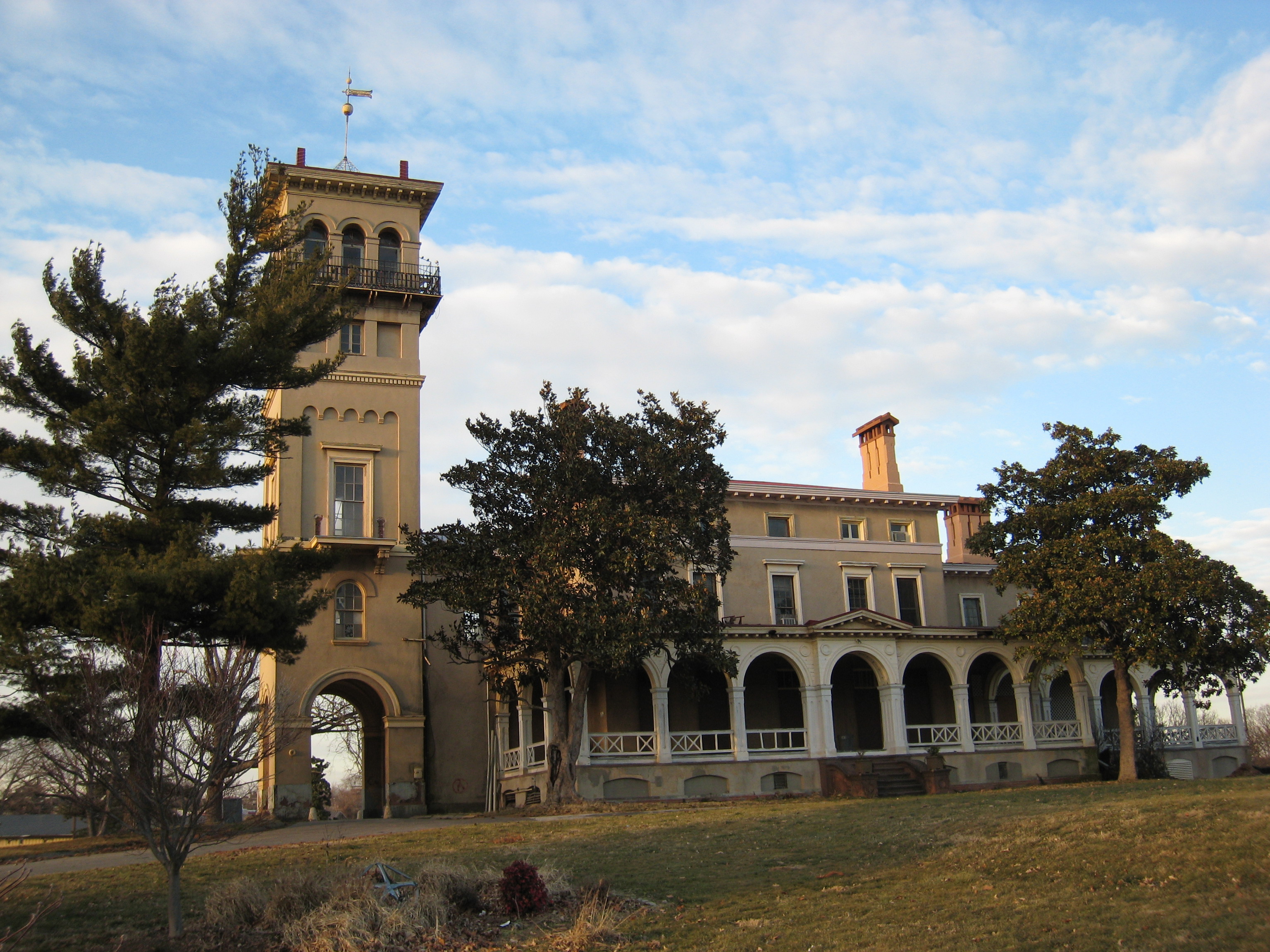
Image courtesy Jack Breihan

The country home of Baltimore’s premier philanthropist, the wealthy merchant Johns Hopkins, Clifton represents another variation on the Italianate architectural style so popular in the middle of the 19th century. Besides their massive symmetrical town palaces with heavy overhanging cornices, the merchant princes of the Italian Renaissance also built less formal suburban villas. The layout was deliberately asymmetrical, especially evident in a tall tower placed at an off-center location in the design. Johns Hopkins certainly qualified as a merchant prince. In addition to his town mansion on Saratoga Street (since demolished), Hopkins in the 1840s began to remodel an older Federal-style house situated on a suburban hilltop, once the home of an 1814 Baltimore Defender. The architectural firm of Niernsee and Neilson incorporated the old house into a much larger mansion, including various Italianate elements – particularly bracketed cornices and arched windows and porch arcades – combined with the asymmetrical layout and 80-foot tower that mark the Italian Villa style.
Read more

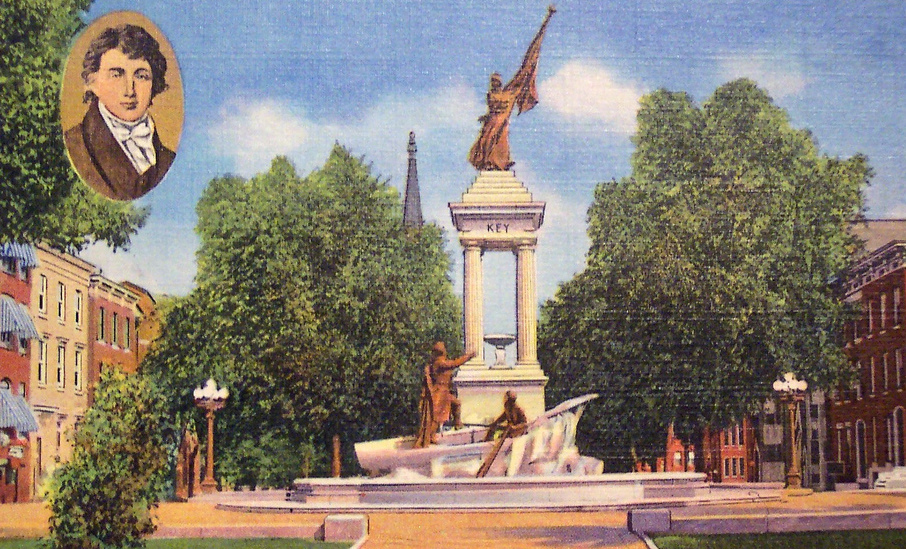
Behind the Scenes Tour: Monuments in Bolton Hill

Image courtesy Dave/Flickr

Why is the Francis Scott Key Monument on Eutaw Place sometimes called the monument that cigars built? Who was Baltimore’s great hero in the Mexican War of 1846-7 and how is he connected to the Maryland State Song, James Ryder Randall’s poem “Maryland My Maryland”? Please join us for stroll through historic Bolton Hill and an evening of Baltimore history as told through these and other stories of our public monuments. Our tour guides will be Cindy Kelly, author of a soon-to-be-published book on Baltimore’s monuments, and monument preservation leader Sandy Sparks.

Tour Information

Date: Tuesday, August 10, 2010
Time: 6:00 to 7:15 p.m.
Place: Meet at the Francis Scott Key Monument at Eutaw Place and Lanvale St.
Park along the street
Cost: $10 for members / $20 for non-members (cold water included!)
Registration: Click Here to Register

Read more

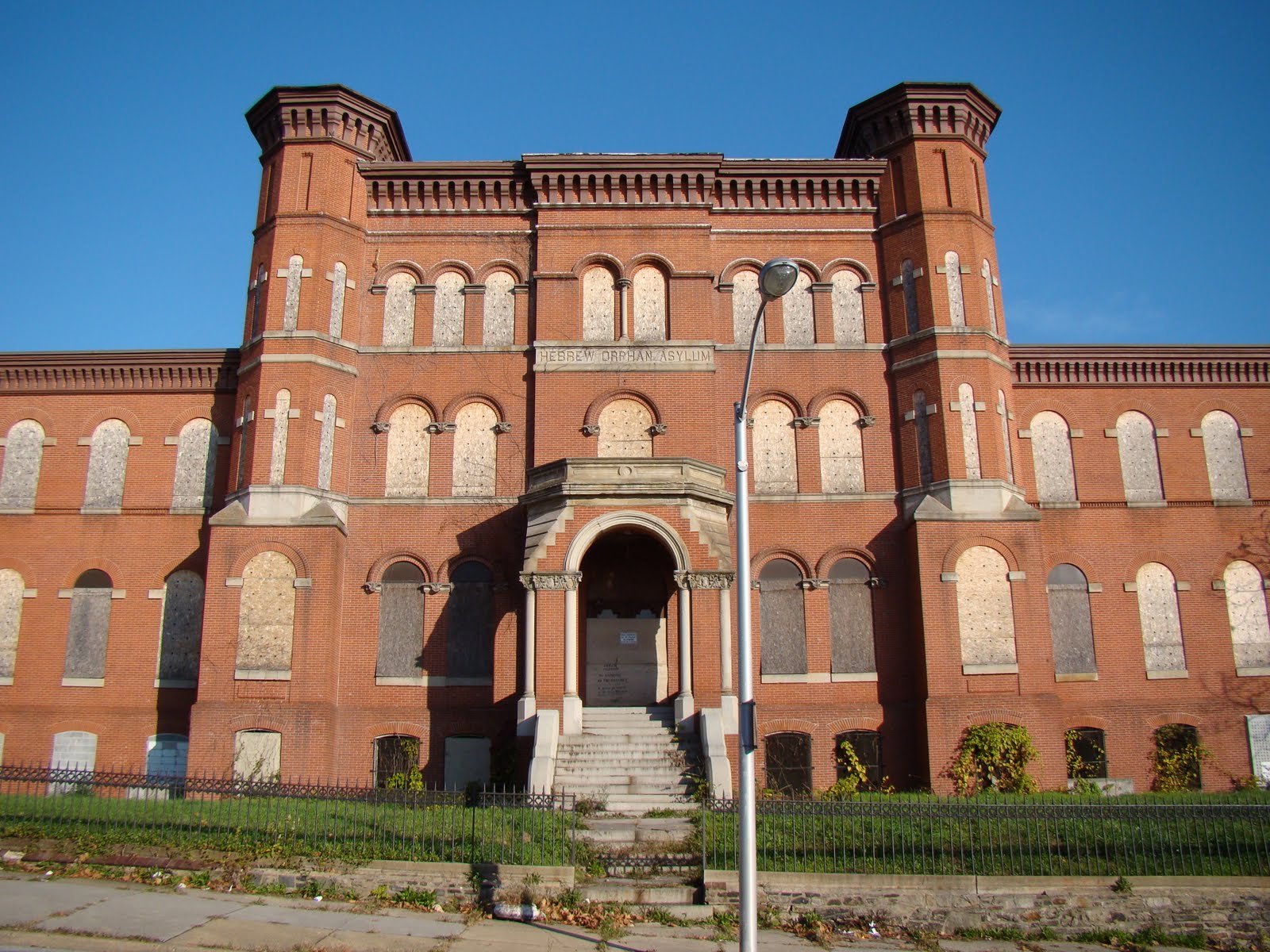
Statewide and National Support for the Preservation of the Hebrew Orphan Asylum

Over the past several months Baltimore Heritage worked closely with the Coppin Heights Community Development Corporation and Coppin State University to support their efforts to preserve the Hebrew Orphan Asylum in West Baltimore. Built in 1876, the Hebrew Orphan Asylum is not only the first Jewish orphanage in Baltimore, it is now the oldest standing Jewish orphanage in the United States.

Today we are glad to share the news that with our assistance the Coppin Heights CDC has received grants for preservation planning from both Preservation Maryland and the National Trust for Historic Preservation. Their generous support is a strong vote of confidence in the future of this remarkable Romanesque landmark and a testament to the importance of the building, not only to Baltimore, but also to the state of Maryland and the nation as a whole. These funds will help enable  the Coppin Heights CDC to prepare a redevelopment plan with a step-by-step guide to return the structure to an economic use and restore the site to its historic role as a vital asset to the broader West Baltimore region. Read more on the history of the Hebrew Orphan Asylum and our partnership with the Coppin Heights CDC in our update this past May.

Our work to preserve the Hebrew Orphan Asylum and our broader West Baltimore initiative is supported by the Partners in the Field program of the National Trust for Historic Preservation.

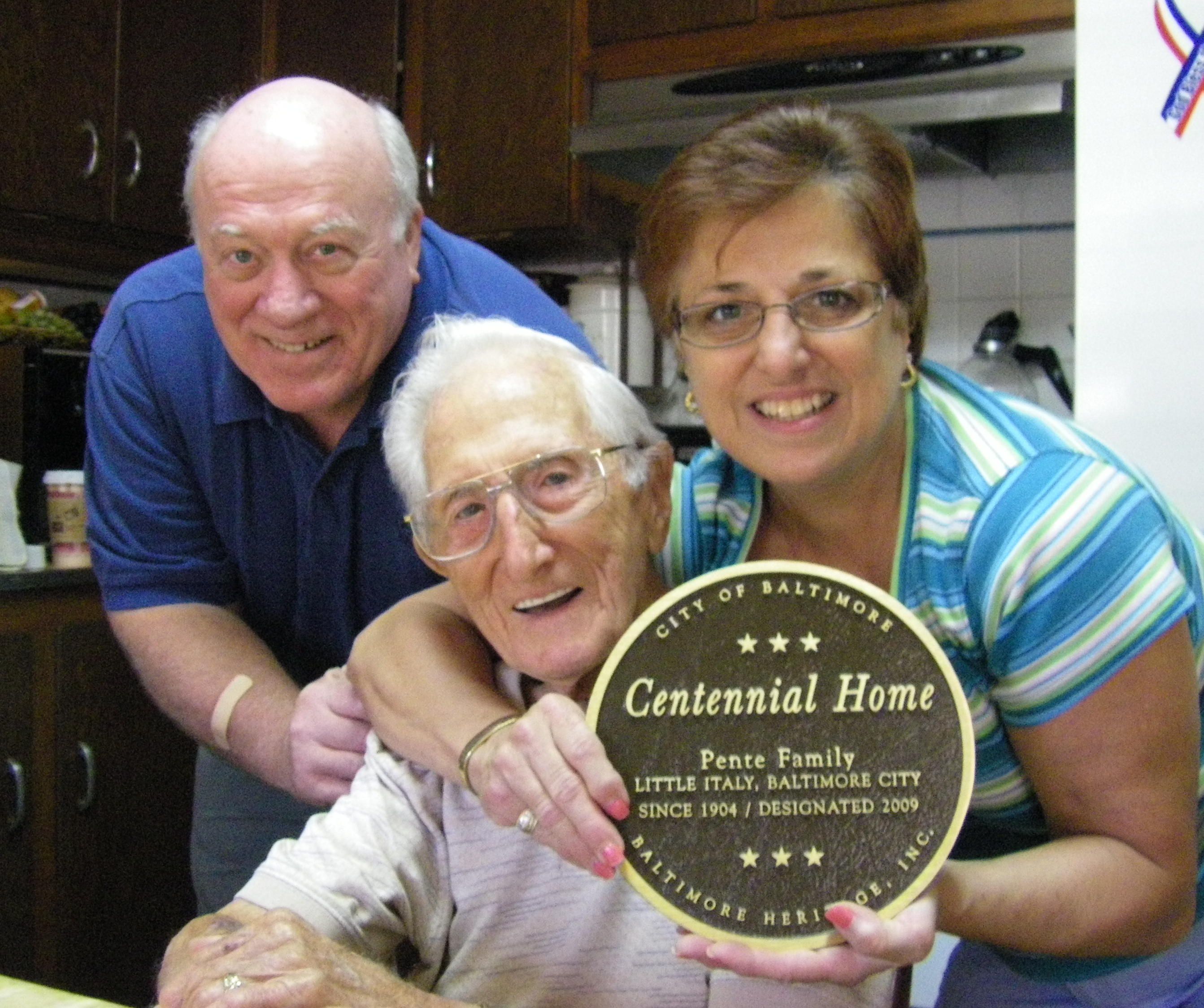
Pente Family: 100 Years in Little Italy

John Pente with daughter Margaret Schwartz and son-in-law Al Schwartz celebrate over 100 years in Little Italy. Photo by Lisa Doyle.

Sadly, Little Italy’s John Pente passed away earlier this week at age 100. Mr. Pente was a lifelong resident of Little Italy and Baltimore Heritage’s first honoree in the Centennial Homes program. Mr. Pente’s family moved into the house on High Street in 1904, and Mr. Pente lived there almost his entire life. His grandfather settled along President Street in Baltimore as an immigrant from Abruzzi, Italy in the 1890s when “Little Italy” was more German and English than Italian.  The area became known as “Little Italy” in the 1920s after the first Italian restaurant opened then. As part of Baltimore’s growing Italian community in the area, the Pente family found work where they could and carried on a family tradition as musicians in various local Italian bands. As a volunteer with St. Leo’s Church, the Sons of Italy, and the ambassador for the Little Italy Film Festival (which projected from a window on his second floor), John Pente was an active participant for decades in helping neighborhood grow and prosper. Part of this remarkable man’s legacy is certainly the Little Italy neighborhood that he took such good care of.

Click here to download a brief profile of the Pente Family by Cristina Ambroselli for our Centennial Homes program.

The Baltimore Sun ran a nice article on Mr. Pente in today’s paper.  Also, WYPR will re-broadcast an interview with Mr. Pente from 2009 when he helped launch the Centennial Homes program.  The interview will air on Friday, July 30, between 9:15 and 9:30 a.m. A viewing will be held at Zanino’s Funeral Home in Highlandtown on Friday between 2:00 and 9:00 p.m. and a funeral mass will be held at St. Leo’s Church in Little Italy on Sunday at 10:00 a.m.