“The place to live in the city” – Edward H. Bouton’s visionary plan for the Roland Park-Guilford District

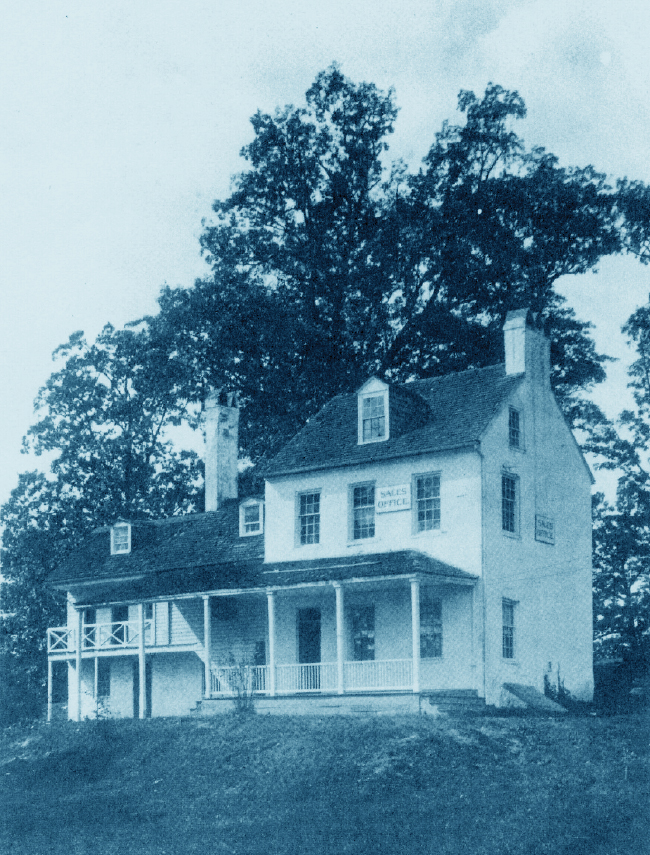
Roland Park Company's Guilford Sales Office, ourtesy the Guilford Association
Roland Park Company’s Guilford Sales Office, courtesy the Guilford Association

We’re excited to share our latest guest blog post from Tom Hobbs, President of the Guilford Association in a series on Guilford’s 100 years of history. The Guilford Association is planning many great events this year to recognize the centennial anniversary which you can find on their website or on the Guilford Centennial Facebook page. 

When the Guilford Park Company merged with the Roland Park Company in 1911, Roland Park had been under development for 20 years. The venture to develop the 800 acres that originally constituted Roland Park was made possible by a syndicate of the Lands Trust Company of London, the source of most of the initial capital, Jarvis and Conklin, their agents in a Kansas City trust company, and a group of Baltimore land owners and investors. Following the market crash of 1893 Jarvis and Conklin filed receivership and shortly after local Baltimore investors bought out the interest of the Lands Trust Company.

Through the restructure of the Roland Park Company and the change in ownership and directors, Edward H. Bouton, the secretary of the original syndicate and overseer and planner of the development, remained the visionary force. He became the general manager, developed Roland Park plat by plat, laid out the streets, installed the water, sewer and electric lines, devised the controls on development and sold property lots.
fall_2011_02
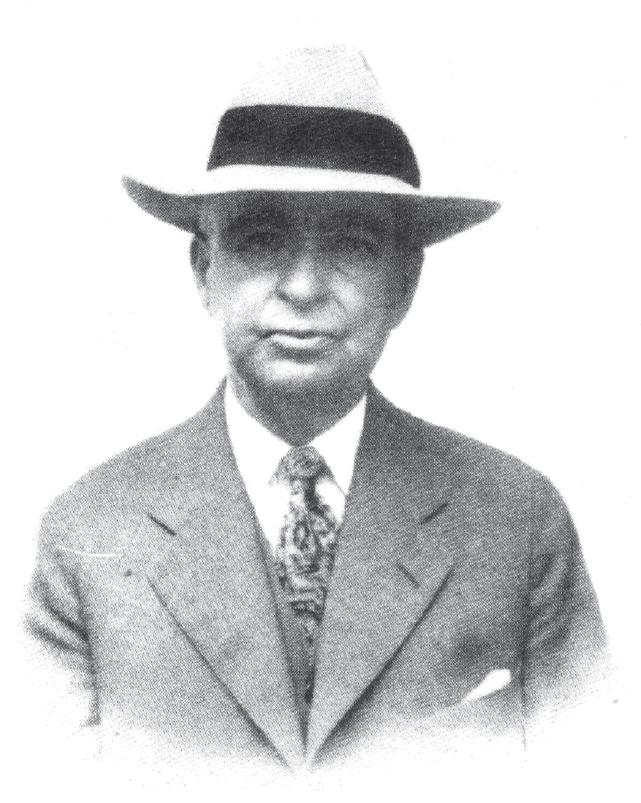
Edward H. Bouton, courtesy Guilford Association

He engaged Frederick Law Olmsted, Jr., son of the preeminent landscape architect, to design the plat west of Roland Avenue, and was the force behind the extensive planning and innovative ideas that had gained for Roland Park the reputation as a premier example of site design, land use and architectural controls that were modeled in the growing garden suburb movement in America. As observed in the Roland Park History, the planners “were less than innovative in the social dimensions of development, advocating the deliberate exclusion of economic and racial diversity.” Born in Kansas City, Bouton had a varied career before his focus on Baltimore land development. He was in the grocery business after high school and studied law at night. He moved to Colorado to raise sheep and cattle. He returned to Kansas City to marry and there became involved in land development.

How Bouton was selected to steer the development of Roland Park is unclear. His vision for the area evolved as he better understood the Baltimore market, the great attractiveness of the land north of the City and as he interacted with the designers the company had engaged. “Our land is the most fashionable, as well as, naturally the most beautiful part of the suburbs of Baltimore,” he wrote. Clearly Bouton saw the potential of the Guilford estate and the directors of the Guilford Park Company no doubt were impressed with the success of Roland Park. Bouton wrote to Olmsted, asking for a map to be prepared showing the consolidation of the lands of Roland Park and Guilford before it was decided to merge the developments.
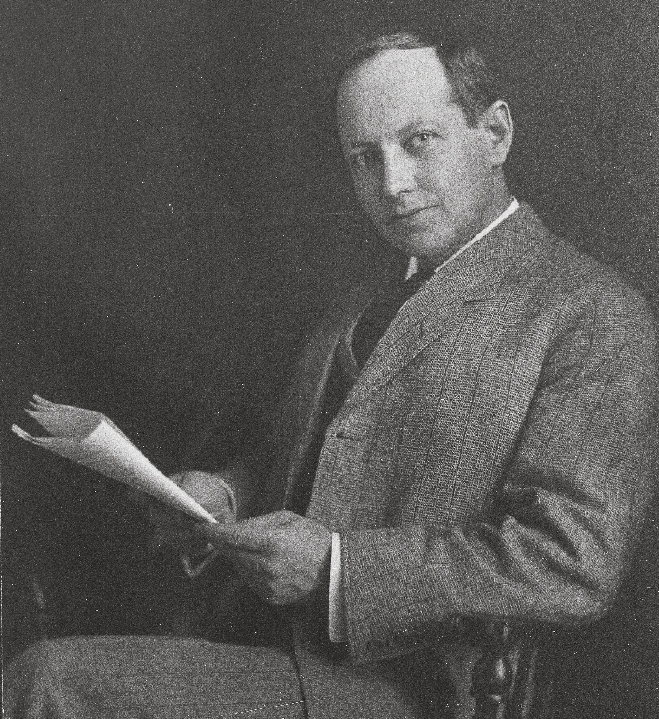
Frederick Law Olmsted, Jr., courtesy U.S. Commission of Fine Arts

The Guilford Park Company had started planning for development of the Abell estate by hiring T. T. Tongue, a real estate expert, but Tongue died before much progress was made. They then hired Frederick Law Olmsted, Jr. to prepare the master plan and landscape plans. Obviously Bouton had established a relationship with Olmsted and likely was fully familiar with the Guilford proposals. When the consolidation of the Guilford and Roland Park Companies took place in 1911 the plans were available and development could shortly begin. Site work started in the spring of 1912.

The directors of the new entity were a formidable force of Baltimore influence: Henry F. Baker, Charles C. Fawcett and Robert Garrett, all members of Robert Garrett & Sons; Douglas H. Gordon, president of the Baltimore Trust Company; William H. Grafflin, business man and investor; George Miller, president of the Mar-Del Mobile Company; and Edward H. Bouton, the visionary planner. Bouton was at the helm as president.

Bouton determined to market Guilford as an extension of Roland Park and ads generally referred to this desirable swath of north Baltimore as the Roland Park-Guilford District. While Guilford was to be developed with housing of various sizes Bouton and the company envisioned a community of the highest architectural style and quality. The restrictions developed in Roland Park were expanded by strengthening the design review process, giving the company the right to reject plans “for aesthetic and other reasons” and to take into account whether the proposed house was in “harmony” with its surroundings.

Guilford Association
Boulton Memorial , courtesy Guilford Association

Bouton and Edward L. Palmer, the Roland Park Company’s architect and later designer of many of Guilford’s most noteworthy homes, traveled to Europe in 1911 looking for ideas and studying the domestic architecture. Together they designed a community that was to become the most desirable suburb in Baltimore, “filled with impressive Georgian revival, Spanish colonial, Tudor and Jacobean revival mansions,” as well as romantic cottages “making it the place to live in the city.”

This piece was originally published in the Fall 2011 issue of The Guilford News. Fourteen years after Bouton’s death in 1941, the Guilford community dedicated a memorial at the Gateway Park to the planner and developer who contributed so much to the development of the neighborhood. Look out for our next guest post from Tom on the history of Guilford soon!
St. John’s Has Left the Building: Congregation Puts Church Up For Sale

Mary Valle writing for the Baltimore Fishbowl shared a thoughtful reflection on St. John’s Mt. Washington Episcopal Church and their decision to put their 1928 Romanesque Revival church on the market for $1.8 million. St. John’s Has Left the Building: Congregation Puts Church Up For Sale:

Like many congregations, St. John’s was faced with a gigantic, resource-eating building that swallowed more of its endowment every year. Senior Warden (that’s like being the chair of a board of directors) Sara Fawcett-Lee said that, when she took the job seven years ago, the outgoing Warden told her that the church was going to have to be sold. The vestry (which is like a nonprofit board: members are nominated and elected, serve specific terms and follow bylaws) decided to offer the building for rent, and when no renters came, put it up for sale.

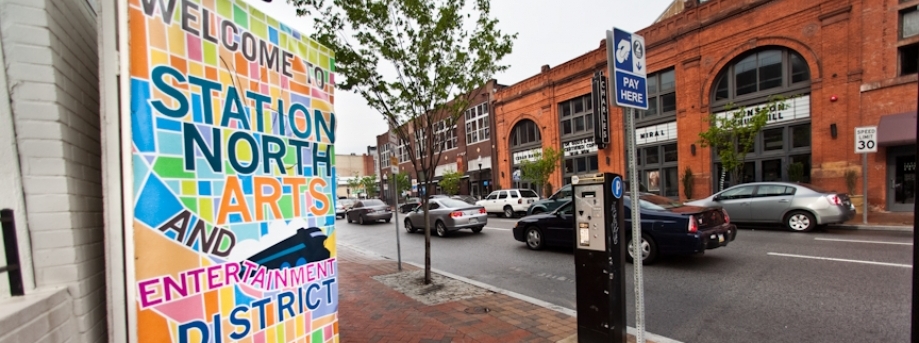
Art, architecture and invention and more! Station North by Foot returns to Artscape this July

Baltimore Office of Promotion and the Arts

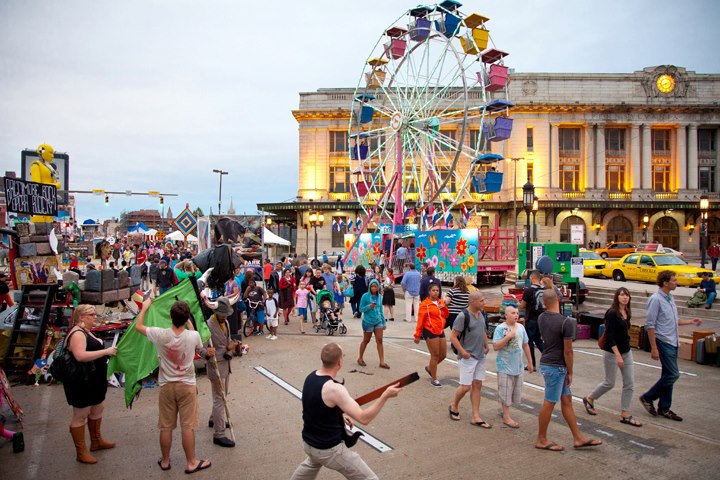
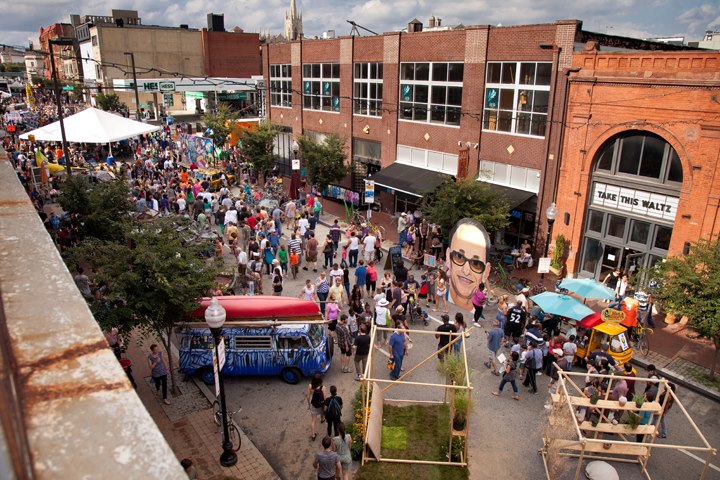
Baltimore Heritage is back at Artscape—America’s largest free arts festival—with free walking tours of historic Station North on every day of the festival! Innovation in art, design, movies and music has always had a place on North Avenue. In the 1910s, Parkway’s vaudeville stage screened some of the nation’s earliest “talking pictures.” In the 1960s, the Left Bank Jazz Society hosted jazz greats like Dizzy Gillespie, Herbie Hancock and John Coltrane at Charles Street’s Famous Ballroom.

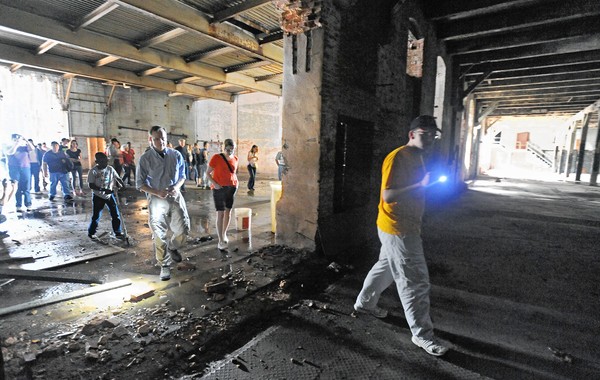
Our one-hour Station North by Foot tours explore the history of buildings from the North Avenue Market (now home to the Wind-Up Space and Liam’s Ale House) to the former Guilford Avenue factory complex of the Crown Cork & Seal Company (today used as Copycat Building and the new Baltimore Design School). Walk along with us and discover stories from the vibrant past and bright future of Station North landmarks.

Station North by Foot – Free historic walking tours at Artscape

Sign up today! Tours go rain or shine and start at the Station North Arts & Entertainment District offices, 1 West North Avenue.

  • Friday, July 19 – 6:00pm
  • Saturday, July 20 – 3:00pm and 6:00pm
  • Sunday, July 21 – 3:00 pm

Find more programs at the festival on the Artscape website or download the new Artscape app on your smartphone. You can also use your smartphone to learn more about Station North with our tour of Arts and Industry in Station North on Explore Baltimore Heritage.

Baltimore Office of Promotion and the Arts

Charles Village Pride! Talk and tour on the early history of Baltimore’s LGBT Community

Together with the Baltimore City Historical Society, we are excited to present two upcoming programs on Baltimore’s LGBT history with a talk by historian John Wood on Thursday, June 20 and a walking tour of Charles Village with Richard Oloizia, Louis Hughes and many more special guests on Saturday, June 22.

The Baltimore Gay Community: The Early Years

Thursday, June 20, 2013, Reception at 7:00 PM, lecture at 7:30 PM
2521 St. Paul Street, Baltimore, MD 21218

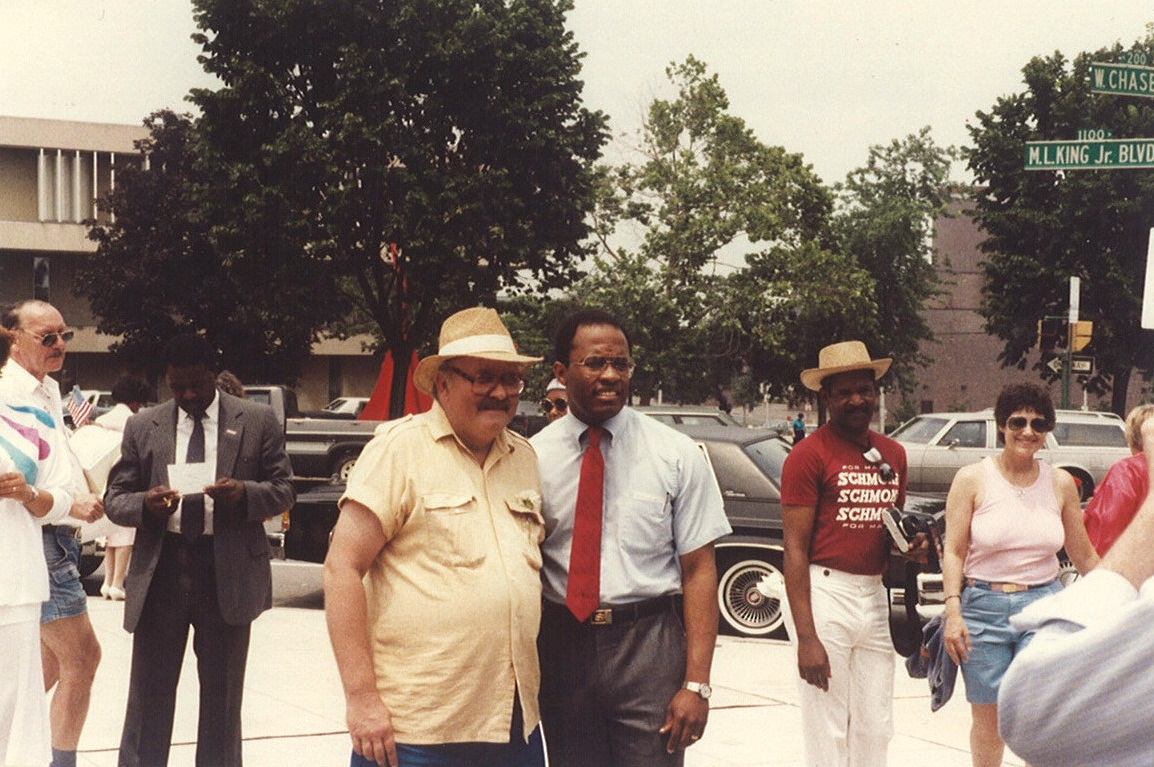
Mayor Kurt Schmoke at Gay Pride after Gay Rights Bill passed, 1988

The Baltimore City Historical Society & Village Learning Place are hosting the final spring Baltimore History Evening with a presentation by John Wood, a local historian and teacher at the McDonogh School on the early history of Baltimore’s gay community. Wood will share how members of the city’s LGBT community organized and fought for civil rights from 1975 up through the passage of the city’s landmark gay and lesbian civil-rights bill in 1988. The period was shaped by the growth of pride in gay and lesbian identity, tensions between gay men and lesbians, the impact of AIDS, and the professionalization of the equal rights campaign during the 1980s. The program will include special guest Jody Landers, a City Council member at the time the bill passed, talking about the impact that negative opposition testimony during the bill’s hearing had upon his vote.

Charles Village Pride! LGBT Heritage Walking Tour

Saturday, June 22, 2013, 10:00 AM through 12:00 PM
Meet at Normal’s Books & Records, 425 East 31st Street, Baltimore, MD 21218
Sign up online today! Tickets are $10 for Baltimore Heritage members, $15 for non-members

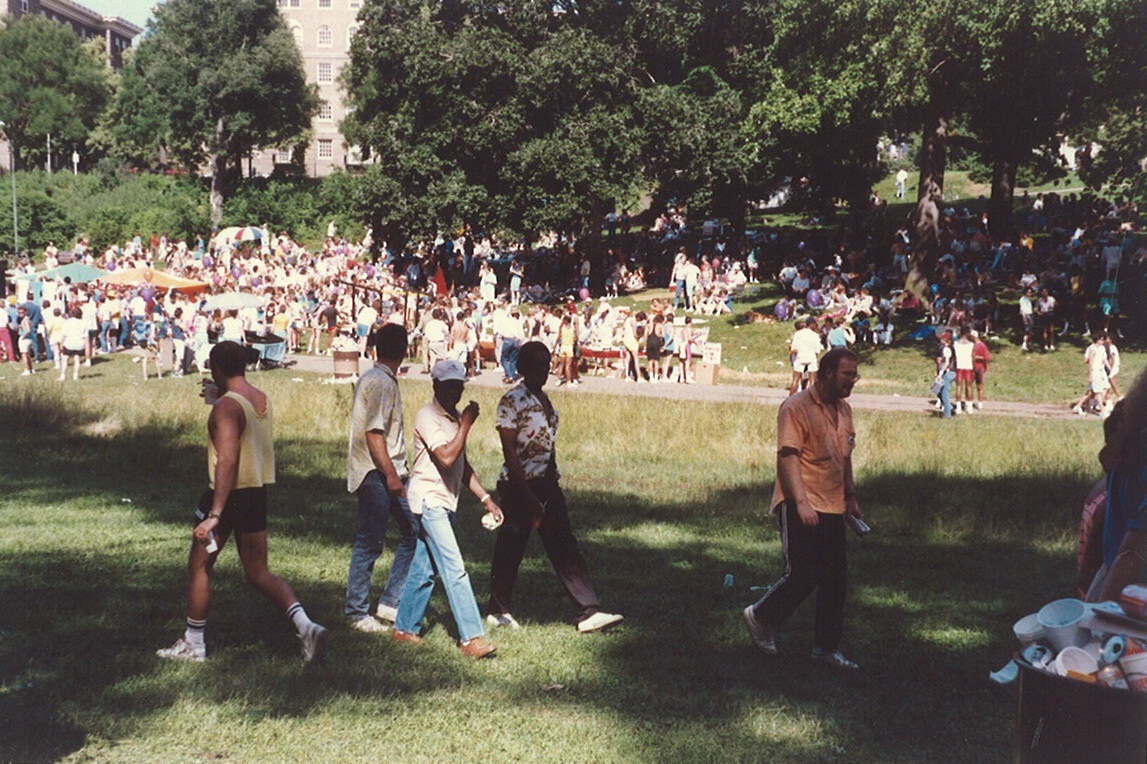
Gay Pride in Wyman Park, June 1988

Although Charles Village is better known for its colorful “painted ladies,” the neighborhood was home to many of the activists and institutions at the heart of the city’s LGBT community in the 1970s and 1980s. Historian Richard Oloizia and activists Shirley Parry and Louis Hughes will take us on a walk past local landmarks from the original home of the Gay Community Center of Baltimore, now the GLCCB, to the St. Paul Street church that supported the growth of the Metropolitan Community Church, Baltimore’s oldest LGBT religious organization, and the radical feminist publishers, writers and activists that gave a voice to lesbian authors who might not otherwise have been read. Whether you lived this history or are learning it for the first time, this tour is a unique opportunity to explore the places that shaped the growth of Baltimore’s LGBT community and civil rights movement.