
News: Baltimore’s Venerable Buildings Imperiled by Increasing Seas

Lauren Loricchio highlights the urgent issue of climate change’s impact of historic buildings and neighborhoods with her article Baltimore’s Venerable Buildings Imperiled by Increasing Seas:

From fragile wooden houses in Fells Point, along the city’s oldest blocks, to Fort McHenry, which inspired “The Star-Spangled Banner,” Baltimore’s waterfront historic places are at risk of being lost forever as sea levels rise and storm surges grow more powerful.

For a city founded because of the water—the Port of Baltimore was officially designated at Locust Point in 1706—much of its history rings the harbor. And though the state is cataloging Maryland’s treasures, neither the state nor City Hall has a plan to protect them…

“Some of the oldest houses in Baltimore are in the potential path of sea-level rise and storm surges,” said Johns Hopkins, executive director of Baltimore Heritage… “The last couple of hurricanes that came through really hurt.  I don’t know how many times the area can withstand that,” Hopkins said.  “And if it gets worse, who knows what will happen.”

The issues of historic preservation and rising sea level is not limited to Baltimore and is perhaps even more urgent on the Eastern Shore where rising sea levels threaten the new Harriet Tubman Underground Railroad National Monument:

Harriet Tubman led slaves to freedom through the thick reeds and marshes of her hometown on the Eastern Shore of the Chesapeake Bay. In an effort to preserve that history, President Barack Obama recently designated the area the Harriet Tubman Underground Railroad National Monument. But even a presidential proclamation can’t halt natural forces. Sea levels have been rising in the Chesapeake Bay at more than twice the global rate — and one of the most important stops on the Underground Railroad likely will be largely underwater within the next 50 years.
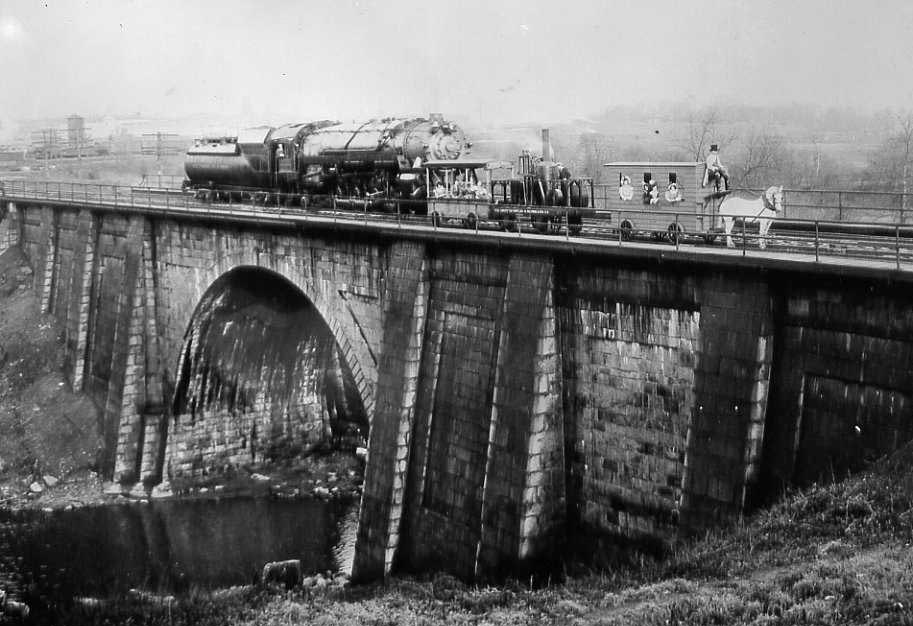
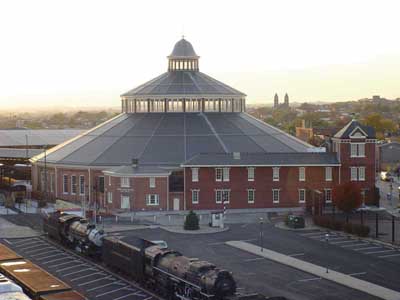
Photo: Carrollton Viadcut

Robert Vogel, Maryland Historical Trust
Carrollton Viaduct, photograph courtesy Robert Vogel, Maryland Historical Trust

On July 4, 1828, Charles Carroll of Carrollton, the last living signer of the Declaration of Independence and a director of the Baltimore and Ohio Railroad, laid the cornerstone for the Carrollton Viaduct, with the remark, “I consider this among the most important acts of my life, second only to my signing the Declaration of Independence.” Learn more at Explore Baltimore Heritage.

B&O Railroad Museum

Stories of railroading, Roundhouses and recovering from a roof collapse at the B&O Railroad Museum on June 24

The birthplace of American railroading. The site of the first telegraph message in history. The largest collection of 19th-century locomotives in the United States. A National Historic Landmark treasured by every parent of a train-loving child in Baltimore. With this long list of superlatives you don’t need to be a kid to love the B&O Railroad Museum! The nearly 60-year-old museum opened on July 4, 1953 as the Baltimore & Ohio Transportation Museum in the B&O Roundhouse. The Roundhouse, designed by E. Francis Baldwin,was the largest circular industrial building in the world when completed covering more than an acre of ground and rising 125 feet into the air. Regrettably, on an early winter morning just over 10 years ago, disaster struck when the roof of the Roundhouse collapsed under a record-breaking snowfall devastating both the building and the collection.

In the decade since, the B&O has come back stronger than ever and remains a must-see historic site for all Baltimoreans. The museum’s collection includes 250 pieces of railroad rolling stock, 15,000 artifacts, 5000 cubic feet of archival material, four significant 19th-century buildings, including the historic roundhouse, and a mile of track, considered the most historic mile of railroad track in the United States. Join Baltimore Heritage for some wine and cheese and the fascinating history of the B&O Railroad Museum on our latest Behind the Scenes Tour.