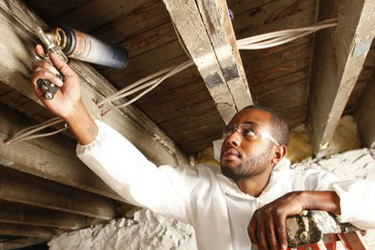
Your old house should not be cold this winter! Join Baltimore Heritage and Retrofit Baltimore for a free one-hour workshop to learn how to save money retrofitting your historic home for energy efficiency. If you are a home-owner in a historic district like Mount Washington, Roland Park, Guilford, or Hampden, you may be eligible for city and state historic tax credits for your next home repair or rehabilitation project. Many of the improvements that can help keep your home warm and lower your heating bills, including replacement HVAC systems, insulation, and wood window restoration, qualify for these tax credits.
Not sure if you are eligible? Take a look at our tax credits resource page for more information about the city and state tax credit programs then join us at Baltimore Clayworks in Mt. Washington on Thursday, November 29 for a quick introduction to how to weatherize your home while saving money with incentives for energy efficiency and historic tax credits. RSVP today!
Weatherization & Historic Tax Credits Workshop
Thursday, November 29, 7:00 pm to 8:00 pm
Baltimore Clayworks – Mt. Washington, 5707 Smith Avenue, Baltimore, MD 21209
Questions? Contact Eli Pousson, Baltimore Heritage at pousson@baltimoreheritage.org or Evie Schwartz, Retrofit Baltimore at eschwartz@retrofitbaltimore.org.
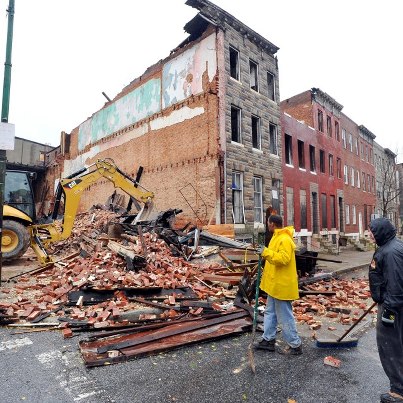
Baltimore avoided major damage from Hurricane Sandy, especially in comparison to more seriously affected communities on Maryland’s Eastern Shore, New Jersey and New York. Unfortunately, the storm did result in damage to at least a few of our city’s historic buildings and landscapes: four vacant rowhouses collapsed in West Baltimore’s historic Harlem Park neighborhood and the storm uprooted a storied Osage Orange tree in Druid Hill Park believed to be around 400 years old.
The Maryland Historical Trust is working to gather information about properties affected by this disaster so if you own a historic property that sustained damage please visit the MHT Hurricane Preparedness and Disaster Recovery page and fill out a Hurricane Damage Report form to alert MHT staff to your property’s condition. MHT plans to use these forms for recovery efforts and work in consultation with both FEMA and MEMA to help connect property owners with recovery resources as they become available.
The Maryland Historical Trust has also prepared an Historic Structures Emergency Assessment Form for available for download as a Microsoft Word Document that you can use to assess and inventory damaged historic resources in Baltimore or around the region. Finally, rehabilitation tax credits are available through MHT for qualified projects and FEMA will likely have low interest loans available. Baltimore Heritage also offers our own resources, including regular workshops, to help home-owners learn more about city and state historic tax credit programs. The Maryland Historical Trust is working to identify other available resources to help with damage recovery costs and will make the information available as soon as possible.
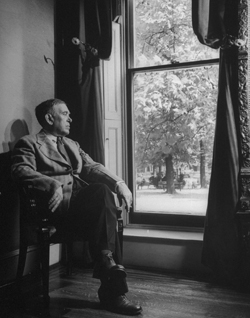
Our last Baltimore by Bike ride of the year offers a chance to see the city through the eyes of Baltimore’s own H.L. Mencken – one of the most influential American writers of the 20th century. H.L. Mencken grew up and spent most of his life in a handsome brick rowhouse on Union Square but he never hesitated to explore the city he loved (and loved to skewer) as he walked, reported, and even rode a bike through Baltimore neighborhoods from Mount Vernon to Bolton Hill and beyond.
Mencken’s Baltimore by Bike
Sunday, November 11, 9:30am to 12:00pm
Meet at Union Square Park, Hollins Street and South Stricker Street RSVP online today! $15 per person.
Photo courtesy the The Smart Set.
Join us for a easy fall ride through H.L. Mencken’s Baltimore. The eldest son of August Mencken, a successful local cigar manufacturer, Mencken grew from roaming the alleys and vacant lots with gangs of West Baltimore boys to become one of the youngest reporters at the Baltimore Herald, launching a career in journalism and writing that endured for nearly 50 years.
We’ll ride along the streets that Mencken knew best as we discover the site of Little Joe’s Bike Shop where Mencken learned to ride a bicycle in the 1890s, imagine the fine meals Mencken enjoyed with friends at Marconi’s on Cathedral Street, stop by F. Scott Fitzgerald’s home in Bolton Hill and stop by the Poe House, just around the corner from Mencken’s birthplace on Lexington Street. Our tour ends with a chance to tour the H.L. Mencken House and enjoy light refreshments.
This tour is presented in partnership with the Friends of the H.L. Mencken House and proceeds help to support their ongoing efforts to restore and re-open the H.L. Mencken House. Learn more about events around West Baltimore neighborhoods from the Friends of West Baltimore Squares.
Who’s Who in Baltimore: Greenmount Cemetery and Famous Marylanders Lunch, Talk and Tour
Saturday, October 27, 2012, 12:00 pm to 2:30 pm RSVP today! $40 per person (includes lunch)
Tour begins with lunch and a talk at the Baltimore Montessori Public Charter School, 1600 Guilford Avenue
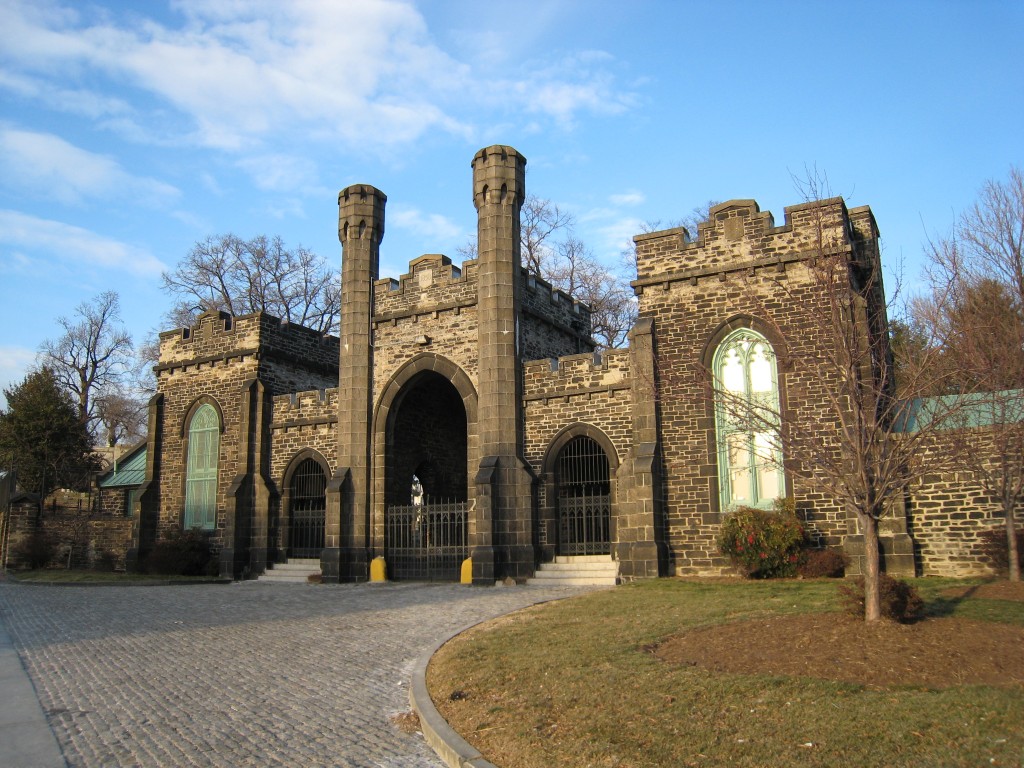
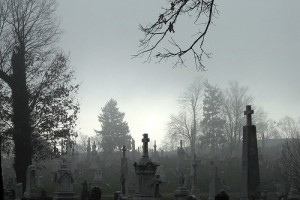
Greenmount Cemetery, image courtesy Jack Breihan
From elites like William and Henry Walters, Johns Hopkins, and Enoch Pratt, to extraordinary slaves like Patty Atavis, and even the infamous assassin John Wilkes Booth, the dead at Greenmount Cemetery tell a rich and fascinating story of the growth of Baltimore. For this tour, we’re pleased to be partnering with the Maryland Historical Society and Greenmount Cemetery tour guide Wayne Schaumburg.
The program will begin with lunch and a discussion of some of the Marylanders buried at Greenmount led by curators at the Maryland Historical Society using items in the Society’s collections. After lunch, we’ll drive over to the cemetery to join Baltimore historian and Greenmount guide Wayne Schaumburg for a tour of the cemetery, its ornate grave stones, and its notable inhabitants. Space is limited!
Behind the Scenes at New Cathedral Cemetery
Saturday, November 10, 2012, 10:00 am to 12:00 pm RSVP today! $10 per person
Meet at the Cemetery’s main entrance – 4300 Old Frederick Road, 21229
New Cathedral Cemetery, courtesy jomiwi/Flickr.
Covering 125 acres in West Baltimore and with its origins dating to St. Peter’s Kirkyard at Saratoga and Cathedral Streets in the 1770s, New Cathedral Cemetery is a historic gem that is surprisingly hidden. Among other things, it is the resting place of more Hall of Fame baseball players than any other cemetery in the country, including Orioles greats from the 1890s Ned Hanlon, Joe Kelley, and John McGraw. It is also the resting place of Baltimore mayors Solomon Hillen, Thomas D’Alesandro, Jr., and Clarence (du) Burns, entrepreneur and philanthropist Reginald F. Lewis, and Mother Mary Lange, founder of the Oblate Sisters of Providence, the first ever congregation of women religious of African descent. Charles Carroll of Carrollton was originally buried here until he was reinterred at Doughoregan, the family estate in Howard County, but the cemetery still claims at least two other Carroll family members: Charles Carroll of Homewood and Governor John Lee Carroll.
With three centuries of wonderful headstones and statuary, the cemetery is also rich with sculpture and art, and of course stories about Baltimore. Please join us and cemetery historian Susan Schmidt on this trip through Baltimore history as told through New Cathedral Cemetery.
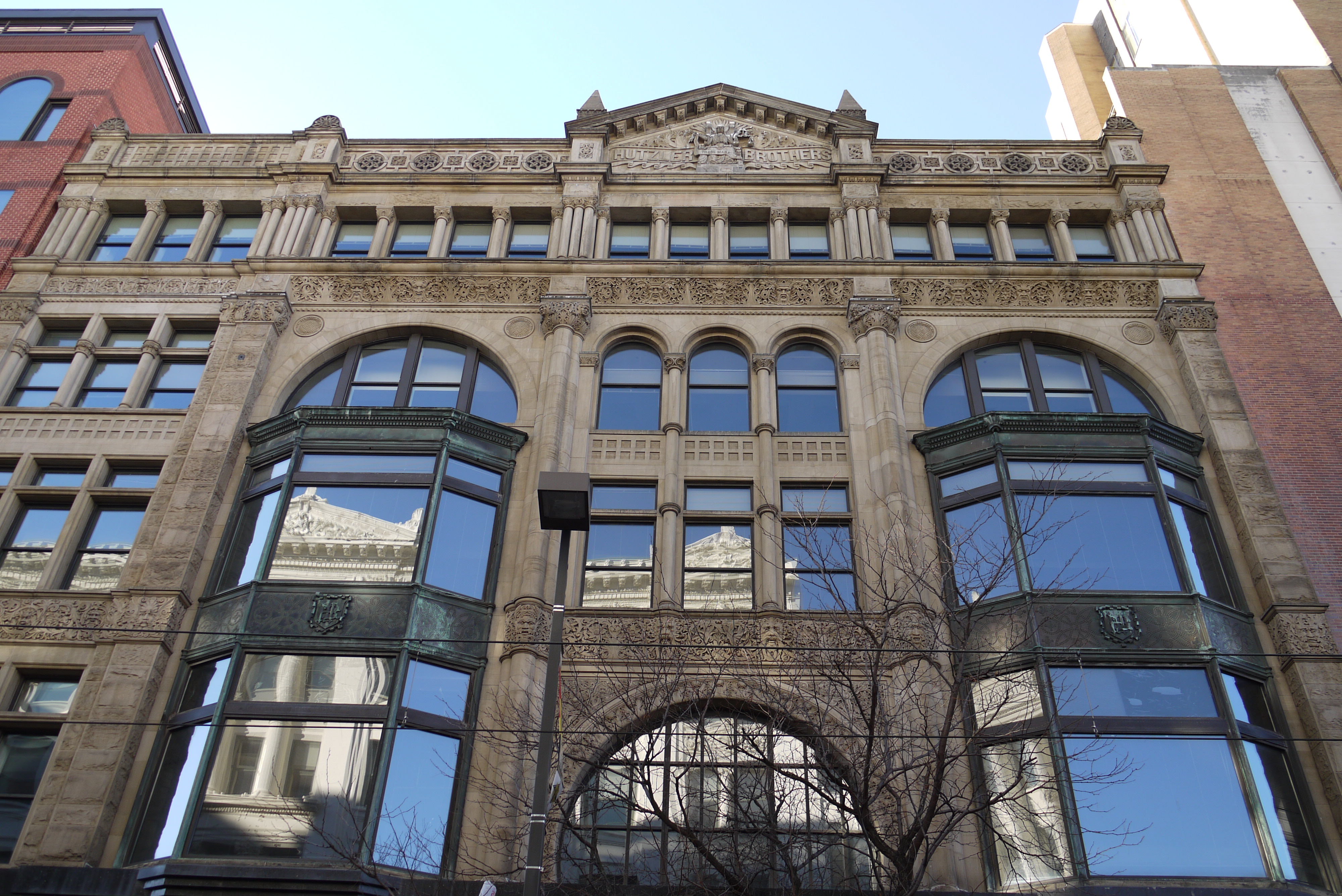
Baltimore residents of all backgrounds remember the bustling shops of Howard and Lexington Streets but a handful of Jewish-owned businesses – Hutzler’s, Hecht’s, and Read’s Drug Store just to name a few – stand out in stories and memories from the history of downtown’s west side. Bring your camera and join Baltimore Heritage for a free photo walk and tour exploring the history of Jewish entrepreneurs and workers – making clothes, selling furniture, and more – who made Howard and Lexington a place to remember.
We deeply appreciate the support of our donors who make Free Fall Baltimore possible. Special thanks goes to Susquehanna Bank, The Abell Foundation and the National Endowment for the Arts, with additional support provided by American Trading and Production Corporation, William G. Baker, Jr. Memorial Fund, and the Henry and Ruth Blaustein Rosenberg Foundation.