For over 50 years, Baltimore Heritage has granted awards from small rowhouse rehabs to major redevelopment and adaptive reuse projects. We’d love to hear from you this year with nominations for any people or organizations you think have worked especially hard to preserve our heritage or revitalize our historic neighborhoods. To give you a few ideas about the great projects that have won in the past, look out for more posts highlighting 2011 award winners over the next few weeks.
Take a look at our award categories and nomination guidelines or go ahead and make a nomination today. It only takes a few minutes to submit a nomination with a brief description of the project and contact information for project participants. Photographs (the more the better!) can be submitted by e-mail to awards@baltimoreheritage.org or by mail on a CD sent to 11 1/2 West Chase Street. The deadline for submissions is April 4, 2012. Contact Johns Hopkins, Executive Director at hopkins@baltimoreheritage.org or 410-332-9992 for more information.
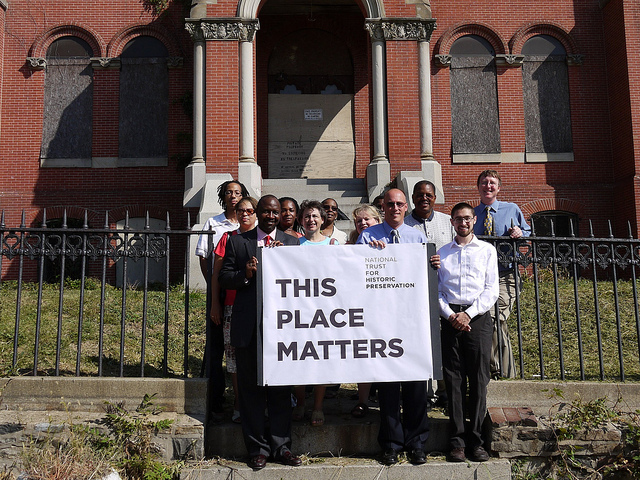
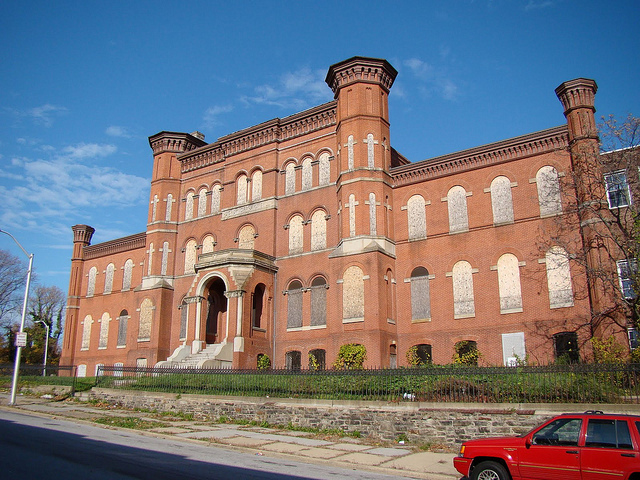
We are very pleased to share the news that the Baltimore Hebrew Orphan Asylum has received over $2.5 million in support from the Maryland Sustainable Communities Tax Credit program. We are honored to have helped draft the tax credit application and to be one of the many partners working towards the building’s restoration. The state’s generous funding for the project is a major step forward in our efforts to see this building preserved and reused as an anchor for a revitalized Greater Rosemont community. We particularly appreciate the leadership of Coppin State University for their support of the tax credit application prepared by the Coppin Heights Community Development Corporation with assistance from Baltimore Heritage and Kann Partners. Working together we’ve established a vision for the future of this building that matches the key goals of the Sustainable Communities Tax Credit program: to promote revitalization, restore historic places, and advance Smart Growth and sustainability while creating jobs in communities across the state of Maryland.
Although the Hebrew Orphan Asylum is just one of of many projects receiving the tax credit across the State, this project received the largest allocation from the nearly $7 million in tax credits offered to projects across the state, including the Senator Theatre and Mount Vernon Mill No. 1 here in Baltimore. These funds will leverage additional public and private support as we work to help the Coppin Heights CDC raise the full amount required for a complete stabilization and rehabilitation of the building. With the building still in seriously distressed condition, these next steps are an urgent priority for Baltimore Heritage and the Friends of the Hebrew Orphan Asylum.
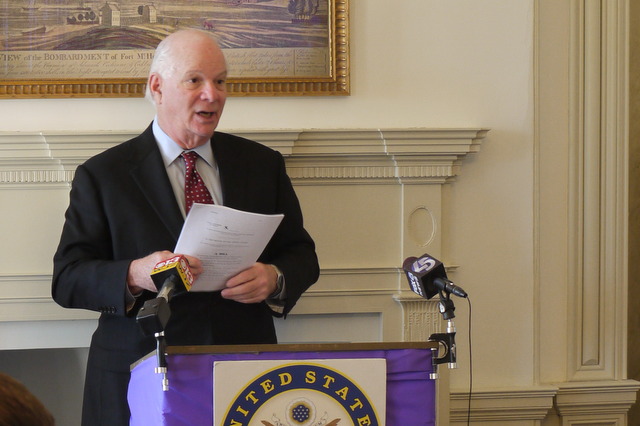
Yesterday afternoon, Senator Ben Cardin announced the introduction of new legislation in Congress to expand the reach of the federal historic rehabilitation tax credit program. This would be great news for us in Baltimore, and in fact Senator Cardin chose Baltimore’s own Clifton Mansion, which the nonprofit Civic Works is restoring with the help of the current federal program, as the location to make his announcement.
Senator Cardin’s bill, the Creating American Prosperity through Preservation (CAPP) Act, helps smaller projects by increasing the tax credit on projects of $5 million or less and promote energy-efficiency. By supporting historic preservation across the nation, this bill also has tremendous potential to create jobs as Senator Cardin said yesterday:
“I am extremely proud of this bill because it will help ensure that historic properties are restored and made useful once again, while creating jobs that will stimulate greater economic activity. The Historic Tax Credit has created some 2 million jobs nationwide since 1978 and by expanding the program to include energy-efficient improvements and additional restoration projects, we can create thousands of new jobs in renovating historic properties.”
In Baltimore, the federal credit has been instrumental in numerous historic rehab projects including the American Can Company, Tide Point, the Hippodrome Theater, Clipper Mill, and Montgomery Park, just to name a few. The National Trust for Historic Preservation joined Senator Cardin in announcing that the CAPP Act is their top legislative priority for 2012. Republican Senator Olympia Snowe from Maine is a co-sponsor of Senator Cardin’s bill and with bi-partisan support in the Senate we hope that Senator Cardin is successful and that the bill will become law.
Thanks to Baltimore Heritage intern Elise Hoffman for her research on the history of the Upton Mansion. Do you want to share your photos or stories of West Baltimore landmarks? Please get in touch with Eli Pousson at pousson@baltimoreheritage.org or 301-204-337.
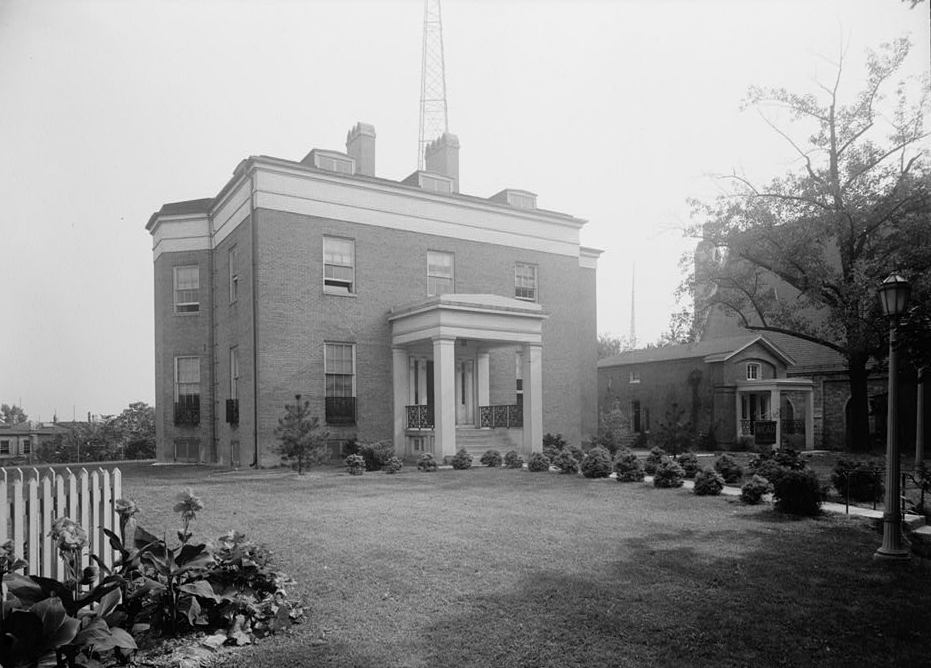
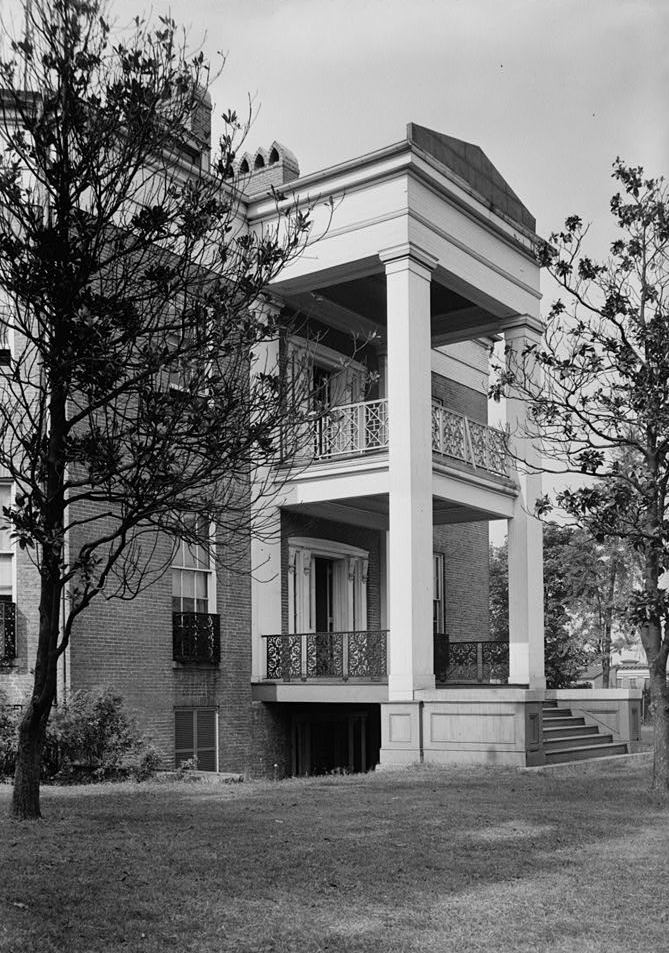
Upton Mansion photographed in September 1936, courtesy LOC/HABS
High on a hill at 811 West Lanvale Street, behind a chain link fence and past the overgrown yard, is the grand Upton Mansion— an architectural treasure by one of Baltimore’s earliest architects that has witnessed nearly 200 years of change in the Upton neighborhood that shares the building’s name. In the 1830s, Baltimore lawyer David Stewart hired architect Robert Carey Long, Jr., to design his country house. R. Cary (as he liked to call himself) was one of Baltimore’s first professionally trained architects designing the Lloyd Street Synagogue (now part of the Jewish Museum of Maryland), the Patapsco Female Institute in Ellicott City, and the main gate of Greenmount Cemetery among more than 80 buildings across the country. Son of a Baltimore merchant who armed seven schooners and two brigantines as privateers during the Revolutionary War, Stewart became a prominent local lawyer and got involved in politics, serving a brief month as a US Senator in 1849.
September 1936, courtesy LOC/HABS
The mansion is widely recognized as the last surviving Greek Revival country house in Baltimore. It remains secluded in urban West Baltimore, sitting high above the neighboring buildings and surrounded by brick and stone walls. In the mid-19th century, you would have seen a grand porch with Doric columns and ironwork bearing the Stewart family crest. Inside the building, you could have observed more than a dozen marble and onyx fireplaces, a main entrance hall, a curved oak staircase, and a banquet room that was so large it has since been divided into multiple rooms. David Stewart enjoyed entertaining guests in his mansion and hosted lavish, indulgent parties there so frequently that he developed gout.
After Stewart’s death in 1858, the house was purchased by the Dammann family, who owned the house for so many generations that it became known as “the old Dammann mansion.” The family left in 1901, and the house found itself empty for the first time, but not the last. The mansion’s next owner, musician Robert Young, took a cue from David Stewart and used the spacious and opulent mansion to host “several brilliant social affairs where hundreds of guests moved about in the spacious rooms.” Young would be the last owner to use the building as a home, and his time there was short-lived – he found the mansion too drafty and abandoned after less than 3 years.
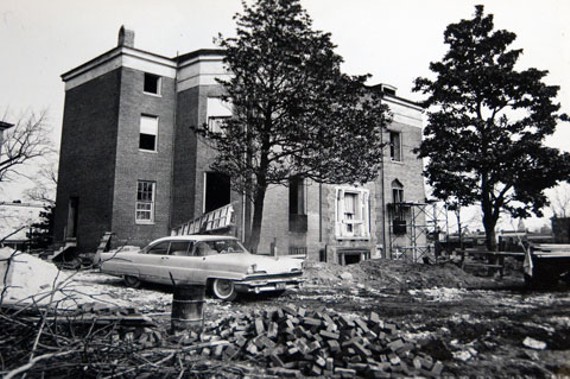
The commercial life of the Upton mansion began in 1930 when one of Baltimore’s first radio stations, WCAO, moved into the building. Extensive alterations were made to accommodate WCAO – tall twin radio towers were added to the roof, walls were torn down and rooms partitioned off to create studios and equipment rooms. The next commercial venture in the Upton mansion came in 1947, when WCAO sold it to the Baltimore Institute of Musical Arts. The school was originally opened with the intentions of creating a parallel program to that offered at Peabody, a renowned music school not open to African-American students at the time, though it eventually closed in the mid-1950s after desegregation granted black students equal access to public music schools. In 1957 the Baltimore City School System moved in to the building and used it first as the special education “Upton School for Trainable Children No. 303,” and then the headquarters for Baltimore City Public School’s Home and Hospital Services program. Unfortunately, Upton Mansion has sat empty since BCPS left in 2006.
Upton Mansion under renovation to become a school, courtesy Urbanite Magazine
The Upton mansion has a rich cultural legacy that extends beyond its use as a social hot spot, a radio station, and a school. In the 1960s, the mansion was chosen as the community namesake during an urban renewal project going on in the neighborhood at the time. As a physical landmark of the neighborhood for more than a century, the Upton mansion’s name was intended to serve as “the symbol of a physical and human renewal in West Baltimore.” Despite its presence on the National Register of Historic Places and the Baltimore Landmark List, the city-owned building remains empty and unmaintained in west Baltimore. In 2009, Preservation Maryland included in on a list of the state’s most endangered historic places, and the building is threatened by vandalism and neglect. Today, the mansion awaits a new owner, someone willing to restore the beautiful building to its historic potential.

 For over 50 years, Baltimore Heritage has granted awards from small rowhouse rehabs to major redevelopment and adaptive reuse projects. We’d love to hear from you this year with nominations for any people or organizations you think have worked especially hard to preserve our heritage or revitalize our historic neighborhoods. To give you a few ideas about the great projects that have won in the past, look out for more posts highlighting 2011 award winners over the next few weeks.