Category: Tours

Let’s Go O’s (and adpative reuse)! Join us for a Behind the Scenes tour of Camden Yards

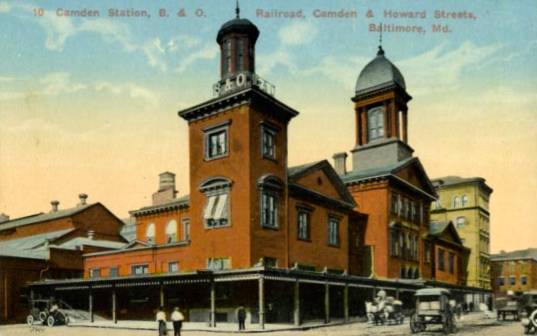
Camden Station
Camden Station

Camden Yards, home to the Baltimore Orioles, is much more than a ballpark. When the park first opened as the new home of our Baltimore’s baseball team in 1992, the buildings had already served the people of Baltimore for over 130 years. Many of us have visited Camden Yards on game day amid the crowds of enthusiastic sports fans. Here is a chance to see the ballpark at a quieter time and to visit places that are not typically open to the public. Our tour will include the dugout, umpires tunnel, press box, club level, and the JumboTron control room. We will hear about the history of baseball in Baltimore while gaining an appreciation for all that goes into making a home for a great team like the Orioles.

Behind the Scenes Tour of Camden Yards
Saturday, March 9, 10:15 am or
Sunday, March 24, 12:30 pm
333 W. Camden Street, Baltimore, 21201
RSVP Today!  $15 members | $25 non-members
Parking is available at lots B & C located between Oriole Park and Ravens Stadium for a fee or visit the MTA website for details on transit options.

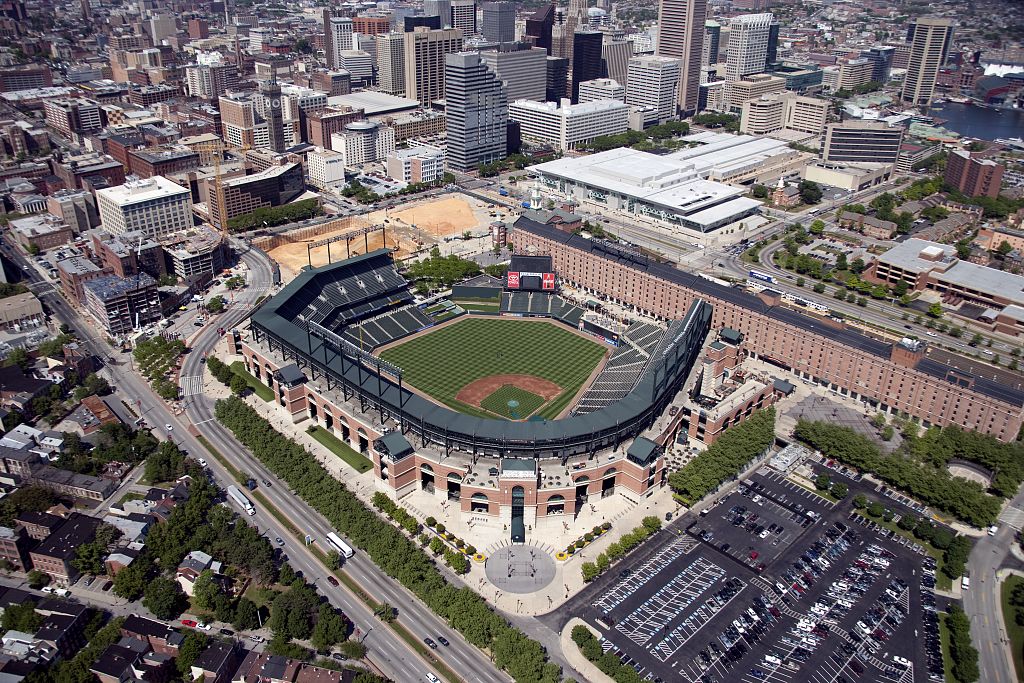
The history of Camden Yards began in 1855 when the B&O Railroad started construction on Camden Station. The iconic B&O warehouse  that frames the west side of the stadium today was built between 1899 and 1905. The warehouse is over eight stories tall and over 1,100 feet long – large enough to hold the freight from 1,000 railroad cars. The station remained in active use by the B&O’s passenger trains until the 1980s making it one of the longest continuously operated railroad terminals in the United States. The building has gone through many changes since its original design of a castle-like façade to today’s ballpark. Today, Camden Yards and Camden Station are a nationally known success story for adaptive reuse and a great place to catch a game!

Photograph of Camden Yards, 2006 by Carol Highsmith. Courtesy LOC, LC-DIG-highsm-04854

Discover a mysterious history at the Masonic Grand Lodge of Maryland’s Museum and Library

In addition to invoking more than a little mystery of rituals and clandestine meetings, Maryland’s Masons have been collecting important pieces of history for hundreds of years. Maryland Masons established a collection in the 1830’s to preserve relics associated with heroes of the American Revolution. The collection parameters were later expanded and the museum accumulated a vast array of material that encompasses not only Masonic-related objects, but also items that were deemed important to preserve for posterity.

Masonic Grand Lodge Museum and Library
Wednesday, March 6, 2013, 6:00 pm – 7:30 pm
Update: Due to predictions of continued severe weather, we have rescheduled tonight’s tour for Wednesday, April 10th, 6:00 pm
304 International Circle, Cockeysville, MD 21030
RSVP today! $15 members | $25 non-members

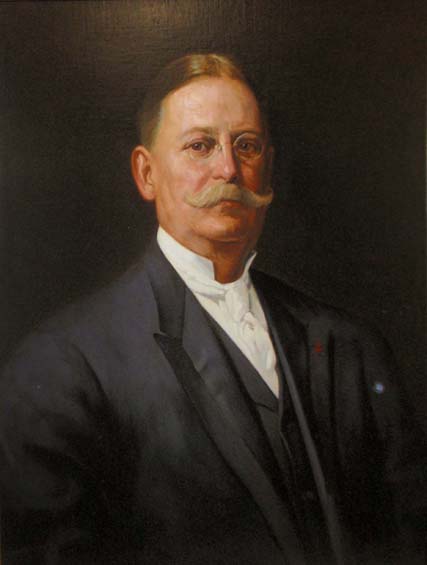
Painting of Thomas Shyrock by Meredith Janvier, c. 1910-20. Image courtesy Maryland State Archives,  MSA SC 1545-1214.
Painting of Thomas Shyrock by Meredith Janvier, c. 1910-20. Image courtesy Maryland State Archives, MSA SC 1545-1214.

Highlights of the collection include the desk that George Washington used to resign his commission as Commander-in-Chief of the U.S. Army in 1783 in the Old Senate Chamber of the Maryland State House, as well as a rich collection of items that belonged to Baltimore philanthropist and Maryland State Treasurer Thomas J. Shryock (1851-1918). The museum also boasts one of the most extensive and comprehensive collections of Masonic regalia in North America, dating back to 1775. As a result of an ongoing inventorying of the collection, many items have been rediscovered, including Thomas Jefferson’s paper knife given to the museum in 1959 by the widower of Jefferson’s great granddaughter, Sarah Randolph Hammerslough (1871-1959). Museum Curator Edward Heimiller will lead our tour and will help us better understand the origins, beliefs, and history of the freemasons.

Behind the Scenes tour of the G. Krug & Son Ironworks next week

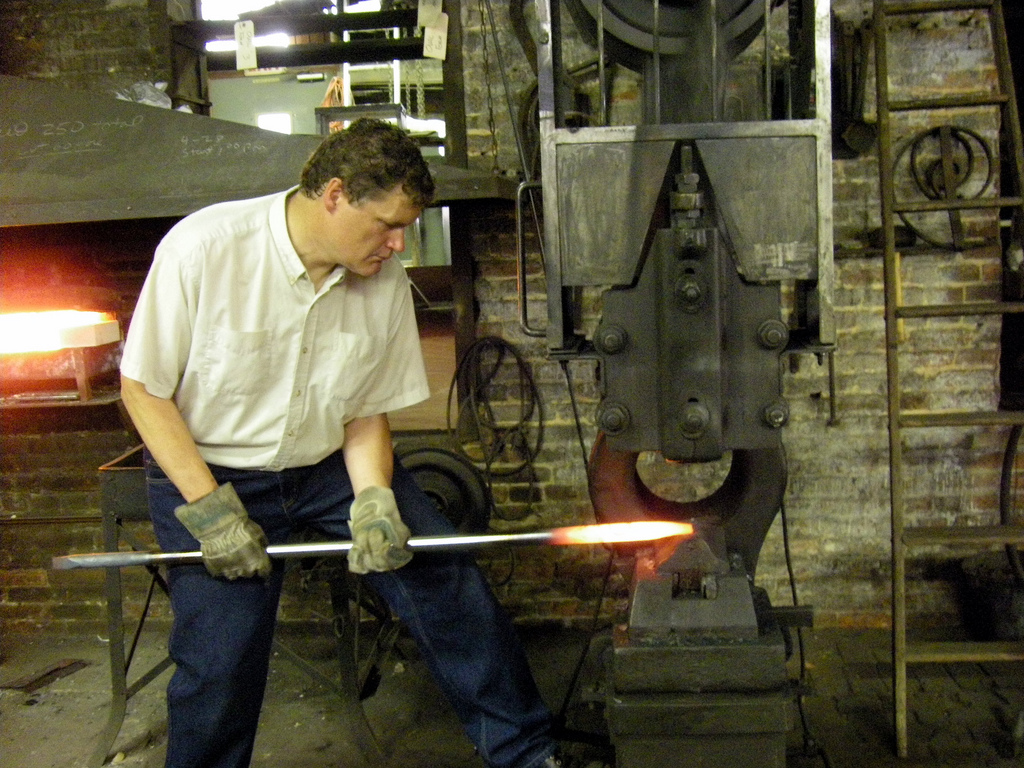
Join us next Wednesday for a tour of G. Krug & Son Ironworks and new museum. G. Krug is the nation’s oldest operating ironworks, and after 200 years has added an ironworks museum to its ongoing iron working business. G. Krug’s original work (and newer restoration work) can be found on local landmarks like the Otterbein Church, Baltimore Basilica, Washington Monument, and the Baltimore Zoo. In 2012, the fifth generation Krug family that now owns and operates the business added a museum to highlight the rich history of the family business and a collection that includes archival ironworks blueprints and rare pieces of century-old ironwork. Please join us for a tour of this 200 year old ironworking facility and new museum space on Saratoga Street.

G. Krug & Son Ironworks and Museum
Wednesday, February 20, 2013, 5:30 pm to 6:30 pm
415 West Saratoga Street, Baltimore, MD 21201
RSVP today! $15 per person for Baltimore Heritage members / $25 for non-members

On-street parking available nearby or find off-street parking at the surface lot at 112 N. Eutaw Street or the garage at 208 N. Paca Street. The shop is also a short walk from the Lexington Market Metro Station or Lexington Market Light Rail stop.

4942094169_5c69155b35_bMaryland first began to flourish as an ironworking center in the 1720s when the Principio Furnace opened in Cecil County and another furnace opened along the Gwynn’s Falls in Baltimore County. With the availability of iron and skilled labor to work it, G. Krug & Son was started in 1810 by Augustas Schwatka. In 1830, Andrew Merker bought the company and listed it as a “bell hanger and locksmith” firm. Gustav Krug, the Krug family ironworking progenitor, came to Baltimore in 1848 and began working for Merker. In 1871, Krug became the sole proprietor of the business and eventually changed its name to the current G. Krug & Son. The firm is the oldest continuously operating ironworks in the country, and it still fabricates artistic ironwork in the same building where it was founded in 1810. Krug staff, including Peter Krug, a fifth generation Krug ironworker, will lead our tour of this 200 year old facility and introduce us to their new Baltimore museum!

200 Years of Love Stories: Mt. Vernon Valentine’s Tour

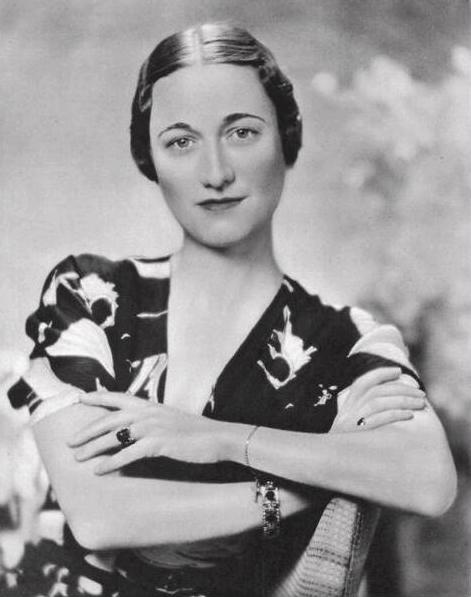
Wallis_Simpson c. 1936
Wallis Simpson c. 1936

Love, romance, jealousy… Mt. Vernon is the home not only of great architecture but also of great love stories. After a six-year hiatus, historian Jamie Hunt is back with a tour of historic romance in Mt. Vernon this Sunday. What better way to gear up for Valentine’s Day? We hope you can join us!

Tour Information

Sunday, February 10, 2013
1:00 pm to 2:30 pm or 3:00 pm to 4:30 pm (tours are the same, choose just one)
Meet at 14 West Mt. Vernon Place (Agora / Marburg Mansion), Baltimore, MD 21201
RSVP today! $10 per person for Baltimore Heritage members / $20 for non-members

For two centuries, Mt. Vernon has seen spectacular love stories, bitter feuds, and more than a few juicy trysts. The neighborhood’s earliest days inlclude the patriot and Mt. Vernon landowner John Eager Howard marrying a charming young Philadelphian, Harriet Chew, after her first love was hanged for treason in a plot that involved Benedict Arnold. Fast forward 200 years and Mt. Vernon saw a 20th century gradutate of its Baltimore School for the Arts, actress Jada Pinkett Smith, fall in love with and marry another noted Philadelphian, actor Will Smith.

In between these two sets of lovers are the royal tales of Betsy Patterson Bonaparte, who died wealthy but bitter in Mt. Vernon years after an annulled marriage to Napoleon’s brother Jerome, and Bessie Wallis Warfield, who was christened in a neighborhood church (just across the street from where Betsy died) and grew up to become the Duchess of Windsor. Not to be outdone by royalty, some of Baltimore’s most storied authors have ties to Mt. Vernon along with their beautful, sad marriages, including Edgar Allan Poe, H.L. Mencken, and F. Scott Fitzgerald. And of course the rich and famous of Baltimore’s Gilded Age include more than a few with offbeat love lives. Please join us and historian Jamie Hunt as we uncover historic loves won and lost in Baltimore’s great Mt. Vernon neighborhood.

St. Mark’s Evangelical Lutheran Church celebrates Baltimore’s religious heritage with a free open house this Saturday

image001

While several churches and residences in Baltimore have Tiffany stained-glass windows, St. Mark’s Evangelical Lutheran Church is the only building with a Tiffany interior. Louis Comfort Tiffany was one of America’s most famous interior designers and artists of the late 19th – early 20th century. Today, he is best known for his stained-glass. Built in 1898, St. Mark’s (featured on Explore Baltimore Heritage) is one of only a few intact Tiffany-designed interiors left in the world. The Tiffany Glass and Decorating Company designed and produced the ornately decorated walls, mosaics, stained-glass windows, and lamps in the church.

Along with celebration the designation of St. Marks and celebrating Baltimore’s religious heritage, we’re also hoping this event will encourage other religious institutions to consider landmark designation, particularly interior designations.

St. Mark’s Evangelical Lutheran Church Open House

Saturday, February 2, 2013, 10:00 am – 1:00 pm – Remarks at 10:30am
St. Mark’s Evangelical Lutheran Church, 1900 Saint Paul Street, Baltimore, MD 21218
Sanctuary tours and light refreshments offered throughout the morning.

The open house is hosted by St. Mark’s Evangelical Lutheran Church and the Commission for Historical and Architectural Preservation (CHAP). For questions or to RSVP, please contact Lauren Schiszik, CHAP staff at lauren.schiszik@baltimorecity.gov or at 410-396-5796.