Category: Education

Our education programs include technical assistance to property owners, heritage education around the Civil War Sequicentennial and the Bi-Centennial of the War of 1812, and our ongoing Race and Place in Baltimore Neighborhoods project.

Civil War 150: Slavery and Historic Places in Baltimore

In recognition of the 150th anniversary of the beginning of the Civil War, Baltimore Heritage is sponsoring a two-part program to explore sites in Baltimore with important ties to slavery and to learn about what historic sites around the country are doing to tell the story of slavery in America. The first part of the program is a walking tour of FrederickDouglass’s Fell’s Point, led by historian Louis Fields. The second part will be a talk by Ms. Nell Ziehl of the National Trust for Historic Preservation, on interpretation of slavery at historic sites nationally. Both are free, and I hope you can join us.

Frederick Douglass’s Fell’s Point Walking Tour

Saturday, October 1, 2011, 10:00 am to 12:00 pm
Free, RSVP
RSVP is required.  Expect confirmation with additional details.

Slavery and Historic Sites

Ms. Nell Ziehl, National Trust for Historic Preservation

Thursday, October 6, 2011, 7:00 pm to 8:00 pm
Ebenezer Church, 20 West Montgomery Street, Baltimore 21230
Free, RSVP not required

Frederick Douglass is quoted as saying that knowledge is the pathway from slavery to freedom, and he certainly grabbed a good dose of it as a youngster in Fell’s Point. It was here that he learned to read and write, and from here that he escaped to freedom. In a two hour walking tour, local historian Louis Fields will lead us through Fell’s Point as experienced and shaped by Frederick Douglass in the years leading up to the Civil War and immediately after it. Mr. Fields was a driving force behind the creation of the plaques and monuments to Frederick Douglass that are now located throughout the area.

In the second part of our Civil War commemoration series, Ms. Nell Ziehl will lead a discussion on how sites owned by the National Trust for Historic Preservation across the country preserve and interpret slavery. The interpretation and presentation of history involving slavery has evolved quickly over the last several years, with richer information and more accurate accounts in the forefront. The National Trust owns several sites with strong ties to slavery and the Civil War and has been a leader in this movement, and Ms. Ziehl will share some of the challenges and successes in this ongoing endeavor. Please join us for either or both of these free events.

These events are made possible by Free Fall Baltimore and its sponsors: Susquehanna Bank and the Baltimore Office of Promotion & The Arts, Joseph and Harvey Meyerhoff Family Charitable Funds, The Abell Foundation, William G. Baker, Jr. Memorial Fund, American Trading and Production Corporation (Atapco) and Baltimore Community Foundation. Thanks also to Free Fall media sponsors: The AFRO-American Newspapers, The Baltimore Sun, The City Paper, The Urbanite, The Jewish Times, , Maryland Public Television, WBAL-TV, WJZ-TV, WBFF/Fox45-TV, CW/Baltimore-TV, WMAR-TV, WUTB-TV, WYPR Radio, WEAA Radio, WWMX Radio , Radio One: Magic 95.9; Spirit 1400; WOLB; 92Q, and CityPeek.

Young Preservationist Happy Hour in Fell’s Point on September 29

Baltimore’s Young Preservationist Happy Hour is headed down to southeast Baltimore (finally!) on Thursday, September 29. Fell’s Point has been a vibrant historic neighborhood for nearly 300 years and we’re sure that it has had its share of great bars since the early 1700s. Located in a building dating from 1858, One-Eyed Mike’s on Bond Street still has an 1860s hand-carved back bar and the original tin ceiling. Their Thursday happy hour includes specials on draft beer, call cocktails and wine by the glass through 7:00 pm. We’ll be enjoying the start of fall out on the back patio, which Baltimore City Paper declared the place for Baltimore’s Best Outdoor Dining.

Young Preservationist Happy Hour in Fell’s Point

One-Eyed Mike’s, 708 South Bond Street
Thursday, September 29, 6:00pm – 8:00pm
RSVP today!

This month’s Happy Hour is co-hosted by the Preservation Society– the historic preservation nonprofit for Fell’s Point and Federal Hill. Among other things, the Preservation Society is at the heart of why Fell’s Point is a great neighborhood and not an interstate highway, so be sure to check the box to learn more about their work and upcoming programs. If this is your first Baltimore Heritage event, we’ll give you a free membership with discounts on tours and a subscription to our quarterly newsletter. Please RSVP for a chance to win pair of Behind the Scenes Tour tickets.

Civil War Archeology in Lafayette Square

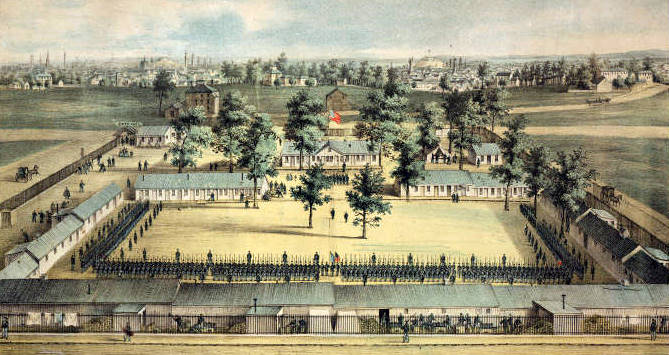
The markings of Baltimore’s Civil War heritage are all around us, from downtown landmarks like President Street Station, to military buttons, ceramic ware, and bits of metal of every variety that lie literally under our feet. To help commemorate the 150th anniversary of the beginning of the Civil War this year, please join Baltimore Heritage and the Friends of West Baltimore Squares on July 9 as we dig into the history of Civil War-era Baltimore with an archeological investigation in Lafayette Square. We’re not sure what we’ll find under the topsoil, but we do know that the Square was the site of Lafayette Barracks during the civil war, a military camp and hospital that housed 1000 people strong. With support from the Archaeological Society of Maryland, the Maryland Historical Trust, and the local community, we are conducting an archaeological investigation of Lafayette Barracks, the military camp and hospital located in the park during the Civil War. Please stop by to talk to the archeologists, learn about urban archeology, and West Baltimore’s Civil War history. Throughout the afternoon, we will be offering walking tours, exhibits on the architectural history of the Square, and even grilled hotdogs!

Civil War Archeology in Lafayette Square

Saturday, July 9, 2011
Lafayette Square Park (West Lafayette Avenue & North Arlington Street)
11:00 AM to 3:00 PM
Tours, talks, and exhibits throughout the day and hotdogs at noon. On-street parking available. to look up directions, use 1100 W. Lafayette Avenue, Baltimore 21217.
RSVP Today!

From 1861 through 1865, as the United States were split by civil war, Lafayette Square in West Baltimore became a bustling military encampment and a rich scene of Baltimore’s Civil War life. Originally known as Camp Hoffman–named for Henry W. Hoffman, collector for the Port of Baltimore–the camp housed at least five Maryland Union regiments as well as troops from New York and other northern states. The Camp, including a hospital, sutler’s store, kitchen and parade grounds, served as a rendezvous point for Maryland and Delaware Union troops with as many as to 1,000 soldiers preparing for active duty at a time. In the blocks around the camp, one could find military bands marching down to Jarvis Hospital on Baltimore Street, drunken brawls at local bars between soldiers and civilians, deserters escaping through Druid Hill Park shot down by cavalrymen, and escaped slaves from the Eastern Shore taking refuge with Union troops before seeking freedom to the north. John Scharf, Baltimore’s foremost historian during the late 19th century, described Lafayette Square in 1865 as “filled with ugly wooden sheds, swarming with rough troops, while not one of the elegant mansions now surrounding it had been reared.”

Our archaeological investigation, led by archeologists Brandon Bies, MAA and Dr. David Gadsby, seeks to learn more about people who lived and worked at Lafayette Barracks during the Civil War by searching for any artifacts or surviving physical evidence that they left behind. With a dozen trained volunteers, our team will use metal detectors to search out metal artifacts, such as buttons or bullets, and open up a small area of excavation to search for the remains of Camp Hoffman. Stop by on July 9 to learn more about West Baltimore’s Civil War history and the process of historical archeology. We’ll be leading short walking tours every hour, sharing exhibits on the history and community of Lafayette Square, and hosting the Baltimore Civil War Museum with exhibits on archeology at President Street Station. Please RSVP if you’re planning to join us! Questions? Contact Eli Pousson at pousson@baltimoreheritage.org or 301-204-3337.

Baltimore’s Young Preservationist Happy Hour in the Station North Arts District

Start your Memorial Day weekend with a happy crowd of architects, archivists, planners and folks who just love old buildings and join us us for our third Young Preservationist Happy Hour at Joe Squared on North Avenue.

Young Preservationist Happy Hour | 133 W. North Avenue

Friday, May 27, 2010
6:00 pm to 8:00 pm
RSVP Today!

Since 2005, Joe Squared has anchored the corner of Howard Street and West North Avenue in an early 20th century block first used as a tavern back in the 1950s. No specials on tap this time but with outdoor seating and a menu of unique pizzas, salads, and sandwiches, Joe’s is a can’t miss destination on North Avenue. If this is your first Baltimore Heritage event, we’ll give you a free membership with discounts on tours and a subscription to our quarterly newsletter. Please RSVP for a chance to win discounted tickets to the 2011 Baltimore Heritage Awards Celebration in historic Union Square Park.

Take a tour of the Station North Arts District with the Central Baltimore Partnership


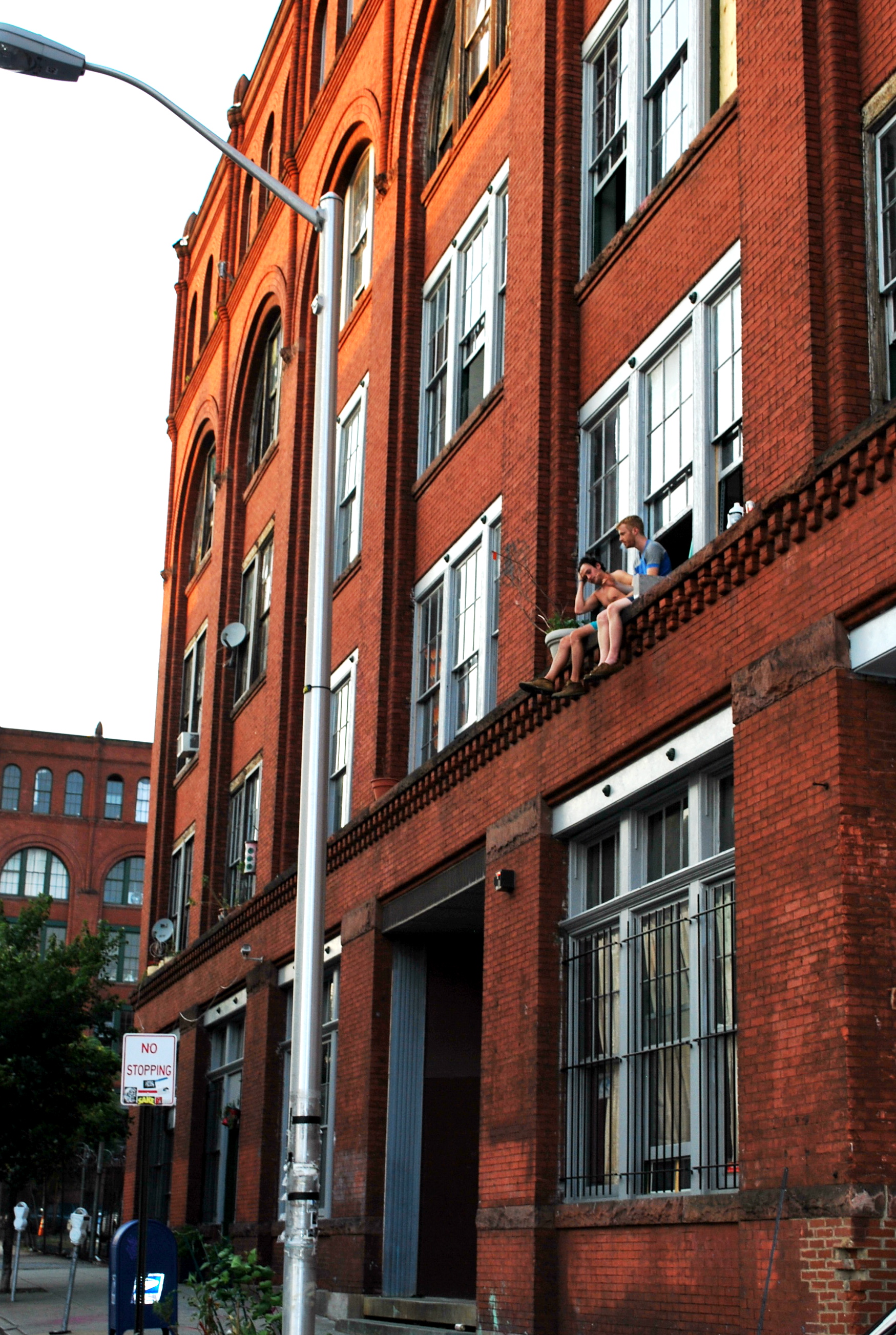
Joe Squared isn’t the only exciting new business and neat historic building on North Avenue. Join Ashley Wallace, Community Planner for the Central Baltimore Partnership, on a quick 30 minute walking tour starting at the Charles Theater at 5:25 PM. We’ll stop by the Crown Cork & Seal Co. Building (better known at the Copycat) where William Painter invented the bottle cap in 1891 along with new arts spaces like the Load of Fun Gallery. When you RSVP just let us know if you’re coming early for the tour.

Remembering William Donald Schaefer

William Donald Schaefer shaped the Baltimore we have today perhaps as much as anyone. Baltimore Heritage did not always see eye-to-eye with the former mayor and governor, and indeed we fought vehemently against projects he supported, including highways proposed for Baltimore’s waterfront and the east-west connector in West Baltimore that threatened and demolished historic buildings and neighborhoods. On other issues, Governor Schaefer was a friend and leader for preservation, including the Dollar House Program and preserving the West Side of downtown. Former Baltimore Heritage President Fred Shoken joins us in remembering William Donald Schaefer with a guest post–

The highlight of my career as President of Baltimore Heritage was presenting William Donald Schaefer with the 1993 Douglas H. Gordon Award for Preservation Advocacy.

When the Board of Directors first considered Governor Schaefer for this honor, we envisioned giving the award to someone who after many years of public service ultimately became convinced that preservation was important. We would honor an individual who championed our cause and carried it forward. After reviewing his career in more detail, we realized the opposite was true. William Donald Schaefer was the leader in creating the foundations upon which Baltimore’s preservation movement was built.

While preservationists were busy fighting individual concerns, trying to save one building or the next, William Donald Schaefer saw the big picture. He realized that nothing could be preserved and no community could be revitalized without convincing people to take pride in their neighborhoods. He made it his mission to restore neighborhood pride in Baltimore City, and he was effective.

He knew that people who are not proud of their history, of their community, of their city, will do nothing to preserve their heritage. Without pride of place, there is no preservation. People who are not proud of themselves or of their neighborhoods are destructive. They tear down rather than build up. People who are proud of their history and heritage will preserve the symbols of the past and work to improve the future. William Donald Schaefer worked harder than anyone to restore pride in our neighborhoods. This, more than anything else, allowed preservation to flourish in Baltimore.

There is no doubt that conflicts will exist between preservationists and government officials on particular issues. Preservationists had battles with William Donald Schaefer. Some we won … others we lost, but that was not a factor in honoring the Governor. We honored William Donald Schaefer because deep down he was proud of the history and accomplishments of Baltimore City and the State of Maryland. His pride in Baltimore made him a great advocate in preserving Baltimore’s historic and architectural heritage. In turn he made others proud, which aided the cause of preservation. For this reason William Donald Schaefer deserved recognition from Baltimore Heritage and our thanks.

Fred Shoken, President of Baltimore Heritage, 1988-1994