Baltimore City considering plans to tear down the back of the Mayfair Theatre

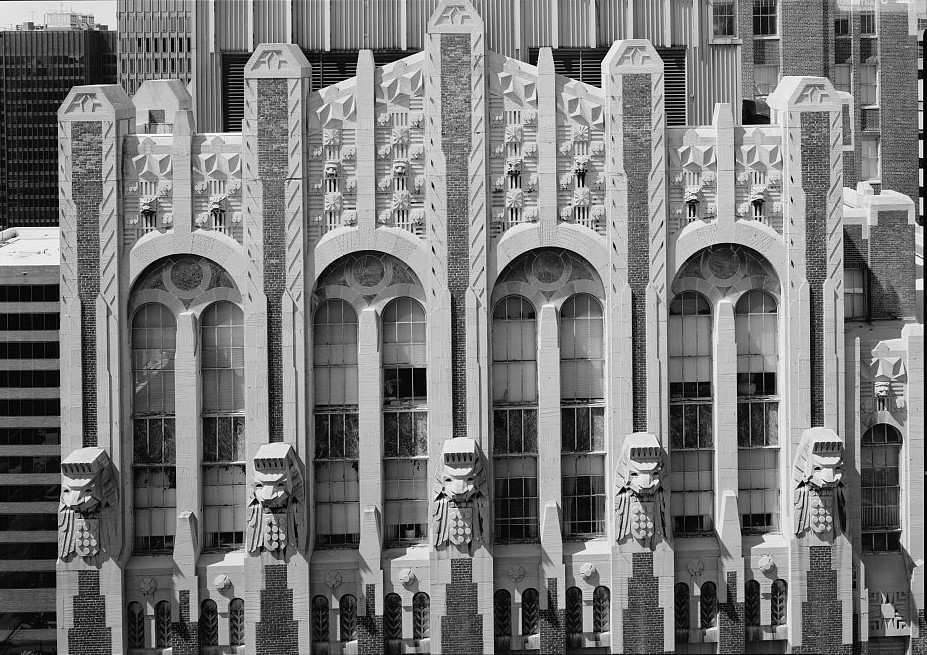
In mid June, Baltimore City posted a emergency condemnation and demolition notice on the front of the Mayfair Theater at 506 North Howard Street. The city, which owns the ornately-detailed 1903 building, is considering a plan to tear down the back portion of the theater where the auditorium was located and retain the front facade and front house. In 1998, the auditorium roof collapsed into the basement and the back portion of the building has remained unsecured and exposed to the elements for nearly two decades since. In contrast, the Mayfair’s front house is about thirty-five feet deep and city engineers have concluded that its roof is tight and it is structurally solid.

Demolition of the Franklin Delphy Hotel. Courtesy Peter Smith, May 19, 2016.

The city’s planning follows the 2014 fire at the building and the demolition of the adjoining Franklin Delphy Hotel in May. The hotel, which stood immediately to the south of the Mayfair, shared a party wall with the theater. Although city planners hoped to stabilize the theater as part of the hotel demolition, inspectors deemed the Franklin Delphy so deteriorated that the building had to come down immediately before any additional work took place.

After the demolition of the Franklin Delphy, the city’s engineers re-assessed the Mayfair. With no beams or joists supporting the side and back walls (these elements were lost along with the roof in the 1990s), they determined that the back portion is structurally unsound and poses a safety hazard.

When the Baltimore Development Corporation (BDC), which oversees this project along with many others in the Howard Street corridor, informed Baltimore Heritage about the status of the Mayfair Theatre we raised the concern that taking down the back of the building could jeopardize the possibility of using historic tax credits to rehabilitate any part of the building in the future. According to federal and state regulations, buildings must retain a significant portion of their historic material to be eligible for historic tax credits. Unfortunately, the theater has already lost so much material with the collapse of the auditorium roof and subsequent exposure that the tax credit team at the Maryland Historical Trust indicated that it the building is likely ineligible for tax credits even with the side and back walls still in place.

Photograph by John Benneman, December 31, 2010. Courtesy Cinema Treasures (CC-BY).
Interior photograph by John Benneman, December 31, 2010. Courtesy Cinema Treasures (CC-BY).

The Mayfair is listed as a city landmark, and thus any demolition work must be coordinated with the Baltimore Commission for Historical and Architectural Preservation. As for redevelopment, BDC has suggested that they will begin the process to find an interested developer. The parcel for the Mayfair will include the front house, which must be retained, and, if demolition moves forward, the cleared lot behind it where the auditorium once was. Right now it is not clear whether the Mayfair lot will be coupled with the now empty Franklin Delphy parcel or offered separately. While this is disappointing news, if not surprising given its decades of neglect, we hope that the redevelopment of the site can save the facade and front house.

Volunteer to help in the lab for the Herring Run Archaeology Project

The Herring Run Park Archaeology Project saw some exciting finds in the field this spring. But archaeologists Lisa Kraus and Jason Shellenhamer will tell you that archaeology isn’t just about what you find, it’s what you find out! Please join the project’s new volunteer lab manager Karen Hutchins-Keim and student intern Lily Roze Annenberg this summer as we clean and process the artifacts recovered during our archaeological dig this past spring. Go ahead and sign up today!

You do not need any previous experience to participate. High school-aged volunteers are welcome. Working in the lab is a great way to learn how archaeologists identify and analyze artifacts whether they are broken pieces of brick or delicate shards of pottery.

Lab work is scheduled for Saturday afternoons, 12:00pm to 3:00pm, between July 9 and August 13 at the Natural History Society of Maryland at 6908 Belair Road, Baltimore, MD 21206. Space for volunteers is currently limited to five people on each date so sign up soon with your interest.

You can also support the project by making a donation online to help cover the costs of the materials we use to conserve the artifacts. Finally, you can learn more about the dig with series of “Field Notes from Herring Run” that Lisa and Jason shared this past spring.

Artifacts from the Herring Run Archaeology Project, 2016 April 26.

Not just a visit! Two chances to see and buy a piece of Baltimore history

Join us this Sunday for Baltimore Meets Florence: Italian Architecture & Desserts by Bike. It’s the next best thing to a trip to an actual trip to Florence. The tour transports you to the Piazza della Signoria, the Ponte Vecchio, the Tempio Maggiore, the Ospedalia deli Innocenti, and the Carrara quarries. Plus, find out why Baltimore is way more important than Florence in the history of frozen desserts. Sorry, but this hypnotic experience only lasts a few hours.

Next week, join the Baltimore Architecture Foundation (BAF) and Baltimore Heritage for a tour of a historic 1856 Victorian home designed by architect Thomas Dixon, founding member of the American Institute of Architects, Baltimore Chapter. In 2004, the home’s owner carefully restored the building and won awards for their efforts from the Maryland Historic Trust, the Mount Washington Improvement Association, and Baltimore Heritage. This Mount Washington landmark is currently up for sale.

Next month, join us and Housewerks owner Ben Riddleberger, for a tour of their showroom and a little wine and cheese. Opened in 1885 as the headquarters of the Chesapeake Gas Works Company, 1415 Bayard Street originally served as the valve house for an immense gas production facility. Housewerks Architectural Salvage now occupies the building as a showroom for salvaged items from historic Baltimore.

Finally, don’t forget that this Sunday, and almost every Sunday until Thanksgiving, our volunteer-led Monumental City Tours will take you on one-hour jaunts to learn more about Baltimore: Jonestown and the Shot Tower, Landmarks and Lions Downtown, Mount Vernon and the Washington Monument, and the Patterson Park Observatory.

Get inspired with the best of Baltimore’s preservation projects

From the restoration of Roland Park’s historic trolley stop to the conversion of City Garage into 60,000 square feet of funky makerspace, our 2016 historic preservation awards showcase the best historic preservation projects of the year and the people behind them. Please join us on June 16 at Baltimore’s Green Street Academy to mix, mingle, and be inspired by the great work happening in the city!

Over the next two months, we’ve also lined up a number of fantastic tours. On June 22, our tour of St. Vincent de Paul Roman Catholic Church tells the story of the evolution of this 175-year-old institution and its deep commitment to charitable work. On June 26, our  Florence Meets Baltimore by Bike tour will transport you to the Piazza della Signoria, the Ponte Vecchio, the Tempio Maggiore, the Ospedalia Deli Innocenti, the Carrara quarries, and take in frozen deserts along the way… all without leaving Baltimore.

In July, we have a special treat: the chance to climb to the top of the scaffolding now filling the interior of the Parkway Theater for an up-close view of the ceiling and a great opportunity to learn what’s going on as the Maryland Film Festival restores this 1915 movie house.

Finally, don’t forget that this Sunday, and almost every Sunday until Thanksgiving, our volunteer-led Monumental City Tours will take you on one-hour jaunts to learn more about Baltimore: Jonestown and the Shot Tower, Landmarks and Lions Downtown, Mount Vernon and the Washington Monument, and the Patterson Park Observatory.

How can we make up for the loss of historic rowhouses under Project CORE?

Last month, Baltimore Heritage and Preservation Maryland proposed a strategy to mitigate the loss of historic rowhouses under Project CORE. Our proposal focuses on:

  • stabilizing historic buildings that can be saved and reused,
  • supporting nonprofit and local government staff positions to guide the implementation the project,
  • and documenting the buildings selected for demolition.
3208-3210 Elgin Avenue. Courtesy DHCD.

Baltimore Heritage and Preservation Maryland, along with our nonprofit partner, the Baltimore National Heritage Area, recently presented our proposal to city and state agencies as part of the ongoing preservation review of Governor Hogan’s Project CORE (Creating Opportunities for Renewal and Enterprise).

As we shared last month, CORE provides around $75 million in state funds for demolishing and stabilizing vacant buildings in Baltimore over four years. The Maryland Department of Housing and Community Development and Baltimore Housing have agreed that 10% of the Project C.O.R.E. funding should go to mitigating the loss of rowhouses proposed for demolition inside designated historic districts.

Read more