Today is your last chance to help Baltimore Heritage with a tax-deductible gift in 2017. Please don’t wait! Join or renew now or make a donation of any size. As a small nonprofit organization, your support goes a long way to help preserve historic places and revitalize historic neighborhoods in Baltimore.
I just took a look back at the programs and events, advocacy, and technical assistance our Baltimore Heritage community accomplished this past year and I am amazed.
I’m amazed by the 2,415 people and organizations that donated, volunteered, and supported our work preserving historic places and promoting historic neighborhoods. With just two-and-a-half staff, we are not the biggest non-profit in Baltimore but we feel fortunate to have so many friends and neighbors who love this city just as much as we do!
Here’s what’s behind that truly extraordinary number:
Three generous donors funded our preservation micro-grants
Three volunteers and three great partners helped launch our new Maintain Civic Spaces project
Seventy-seven people showed up for our Vacant Buildings 101 workshops
Forty-six volunteers led eighty heritage tours of historic places
Over fifteen hundred people came on tours generating over $2,000 for local historic sites
Over eight hundred people supported our work as members
Nineteen corporations and thirteen foundations gave grants or sponsorships
Wow! For all of you who volunteer, come out to our programs and tours, and support our work in Baltimore, please accept a sincere thank you from all of our staff and board of directors at Baltimore Heritage. Here is how your time, talents and financial support make a difference.
Leading tours of thirty unique historic places
In 2017, forty-six people volunteered their time, talent, and knowledge to lead eighty tours of thirty separate historic places around Baltimore. Our annual Baltimore by Foot neighborhood walking tour series took visitors to Stone Hill and Dickeyville. Our Behind the Scenes tours explored historic theaters downtown, the “catacombs” at Lexington Market, and the H.L. Mencken House — just to name a few.
With over fifteen hundred participants, your tour tickets raised nearly $2,000 for preservation of small museums and historic sites across the city. We covered a lot of territory thanks to our tour volunteers:
Melissa Archer, Shelley Arnold, Joanne Baker, Tom Beck, Ralph Brown, Blaine Carvalho, Marianne Colimore, Graham Coreil-Allen, Sally Craig, Kate Creamer, Kate Drabinski, Bill Dunn, Patricia Foster, Rose Gallenberger, Marjorie Goodman, Virginia Green, Francesca Guerin, Patricia Hawthorne, Robert Headley, Duncan Hodge, Guy Hollyday, Matthew Hood, Louis Hughes, Lesley Humphreys, Jamie Hunt, Lisa Kraus, Sarah Krum, Lindsey Loeper, Alvin Manger, Richard Messick, Stephanie Moore, Peter Morrill, Richard Oloizia, Stacy Pack, Shirley Perry, Wayne Schaumburg, Doris Sharkey, Jason Shellenhamer, Terry Shepard, Lisa Simeone, Rick Smith, Willy Sydnor, Debra Thomas, Dave Tirschman, Tom Walker, Gregory Weidman, and Debra Wiener.
Teaching Vacant Buildings 101 to neighborhood advocates
Vacant buildings cause problems for residents all across Baltimore City. But residents can also work to solve these problems! Baltimore Heritage and the Community Law Center teamed up to lead three workshops and publish a new online resource for Baltimore residents, property owners, and community leaders to take action on this issue. Thanks to our colleagues Becky Witt and Kristine Dunkerton at the Community Law Center for working with us.
Giving away micro-grants for preservation projects
With the generous support of one of our members, Ms. Brigid Goody, and surprise gifts from FreedomCar and Southway Builders, in the second year of our preservation micro-grant program we offered six grants totaling $3,000 to the Preservation Society of Fell’s Point, the Beloved Community Services Corporation at Union Baptist Church, Mount Clare House Museum, Poe Baltimore, H.L. Mencken House, Lillie Carroll Jackson Civil Rights Museum, and Civic Works.
Maintaining historic buildings as civic spaces
This year, we partnered with the Neighborhood Design Center’s Community Design Works program to recruit volunteer architects and conduct conditions assessments of the Village Learning Place and the Hodge House at First & Franklin Church. We’re now interviewing local nonprofit leaders with the Friends of Patterson Park and McKim Center to understand best practices for maintaining community-serving buildings. Thanks to Laura Wheaton at NDC, volunteer architects Darragh Brady, Andrew Chaveas, and Jay Orr, PNC Bank for its support, and everyone who has helped us to launch this exciting new initiative.
Sustaining our work and mission as members
Over eight hundred individuals and families contributed as members, nineteen corporations provided sponsorship support, and thirteen foundations and organizations supported our programs and events. These contributions make up over fifty percent of our operating budget and provide the critical funding for all we do, from advocating for places like the Sellers Mansion to providing technical assistance on historic preservation projects.
Corporate & Business Supporters: Agora, Brennan and Company Architects, Cho Benn Holback, a Quinn Evans Company, Delbert Adams Construction Group, FreedomCar, GLB Concrete Construction, GWWO Architects, McLain Wiesand, Michael J. Walkley, PA, Murdoch Architects, O’Connell & Associates, PNC, Rohrer Studio, SM+P Architects, Southway Builders, Terra Nova Ventures, The Whiting-Turner Contracting Company, Zeskinds Hardware and Millwork, Ziger/Snead Architects
Foundation Supporters: Abell Foundation Matching Grant, Annie Casey Matching Grant, Baltimore Office of Promotion and Arts, Greater Cincinnati Foundation, Kaiser Foundation Matching Grant, Marino Foundation, Maryland Association of History Museums, Mount Washington Garden Club, National Recreation Foundation, Preservation Maryland, University of Maryland, University of Maryland Foundation, Van Buren Family Foundation
I wish you a wonderful holiday season and I look forward to working with you in the new year.
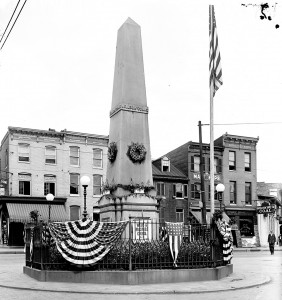
For any historical event, landmark anniversaries provide an opportunity for reflection. The very first anniversary of the Battle of Baltimore could be described as both solemn and triumphant, as survivors honored those lost during the fighting and cheered the steadfast defense of their city. Newspaper accounts of the first Defenders’ Day in 1815 recall the occasion as pious and full of “pomp.” As the Battle of Baltimore faded from living memory over the course of the 19th century—and as the North and South attempted to reconcile after the Civil War—commemorations became more celebratory in nature. The civic leaders who planned the 1914 centennial, on the eve of World War I, infused the program with patriotism. They emphasized Baltimore as a place of national significance because of its association with the Star-Spangled Banner, although it wouldn’t become the national anthem until 1931.
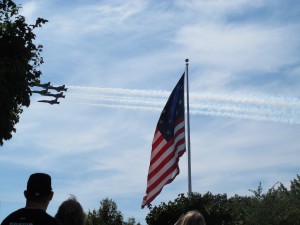
The navy stunt planes, the Blue Angels, pictured from the Smith and Armistead monuments on Federal Hill during the Star-Spangled Spectacular in September 2014
For those of us who recently experienced the bicentennial of the Battle of Baltimore, the laudatory spirit might still be felt. The Star-Spangled Spectacular in September 2014 included a massive fireworks display, a festival of tall ships from across the world, an aerial performance by the Blue Angels, and visits to Fort McHenry by President Barack Obama and Vice President Joe Biden. While some locals and visitors challenged themselves to learn more about the War of 1812 through exhibits and programs at many local museums, critical thinking was by no means required during the bicentennial commemorations.
Perhaps large-scale public festivals—whether in 1914 or 2014—do not offer the ideal opportunity to dive deeply into the history of the Battle of Baltimore. However, this does not mean the events of September 12, 1814, have gone forgotten. While the printed centennial program (which you can access here) included a detailed account of the battle, we in the 21st century have many more opportunities to discover stories of the War of 1812. The Star-Spangled Banner bicentennial generated a great deal of online content—videos, websites, interactive maps, blogs, and digitized archival materials—free and accessible to anyone with an internet connection.
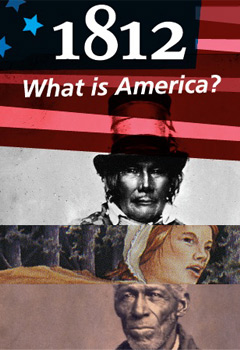
Diversity is a theme of the National Park Service’s bicentennial commemoration
While several of these digital projects have continued to examine military history and the actions of Francis Scott Key (the main areas of focus during the centennial), the scholarship has also widened its lens to include more cultural history. Representing a range of diverse historical actors and their contributions to the city’s defense has been a priority in some of these projects. The Battle of Baltimore website and app embodies this bicentennial moment by examining places of worship, commercial centers, and sites of commemoration as well as defensive positions and troop movements. Stories relating to the generals and militiamen who participated in the Battle of Baltimore can certainly be found, but the project seeks to sketch a more complete picture of Baltimore in the early 19th century by also discussing everyday activities such as shopping, learning, praying, and working.
Selected Battle of Baltimore digital projects emerging from the bicentennial:
Prize of the Chesapeake: The Story of Fells Point: The nonprofit Preservation Society produced this website with support from two state agencies: the Maryland Heritage Areas Authority and the Maryland War of 1812 Bicentennial Commission. The project includes a ten minute film for young audiences, a very detailed walking tour, a series of essays, and a selected archive all focused on Fells Point in the War of 1812. The content emphasizes Fells Point as a center for shipbuilding and caulking, and addresses its racial and ethnic diversity.
The state’s suite of interactive battle maps utilize new tools to tell familiar stories
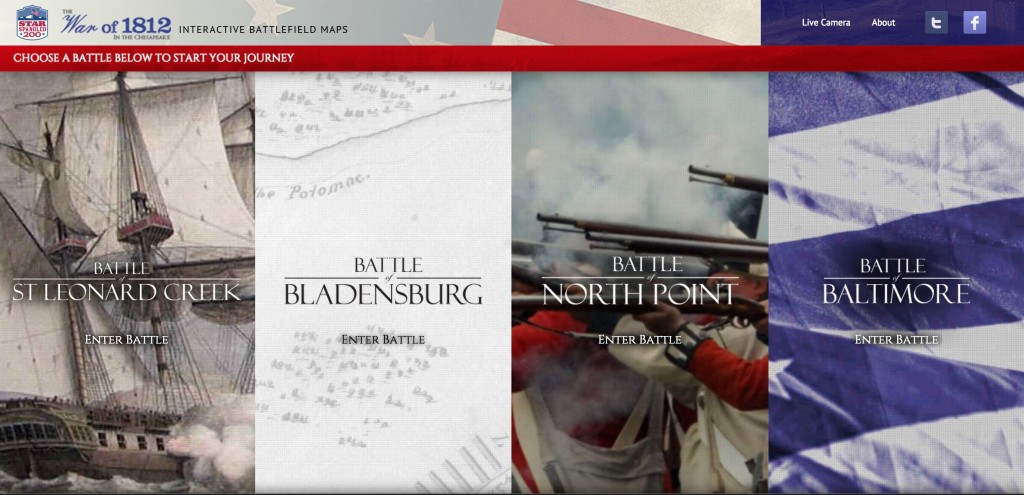
The War of 1812 in the Chesapeake: Interactive Battle Maps: this project of the state bicentennial commission identifies four stories related to the War of 1812 in the Chesapeake: St. Leonard Creek, Bladensburg, North Point and Baltimore. Brief videos introduce users to each place with footage of living history reenactments, “talking heads” from experts at the National Park Service, period maps and drawings, and computer-generated graphics. High-tech animated battle maps then provide a personalized approach for exploring each story in depth. While the focus is on military history, the content addresses the contributions of everyday citizens from all backgrounds.
Maryland in the War of 1812 blog: Scott Sheads, a longtime ranger at Fort McHenry and a foremost expert on the Battle of Baltimore, maintained this detailed, scholarly blog devoted to the military history of the War of 1812 in Maryland during the bicentennial period. Through original research and transcriptions of primary sources, Sheads brought to light many individuals, engagements, and correspondence through this digital platform. Some of the information published on this blog has been reproduced (with permission) on Battle of Baltimore.
The 2.5 billion pixel model of Baltimore circa 1815 demonstrates the bicentennial push for exploring more than military history
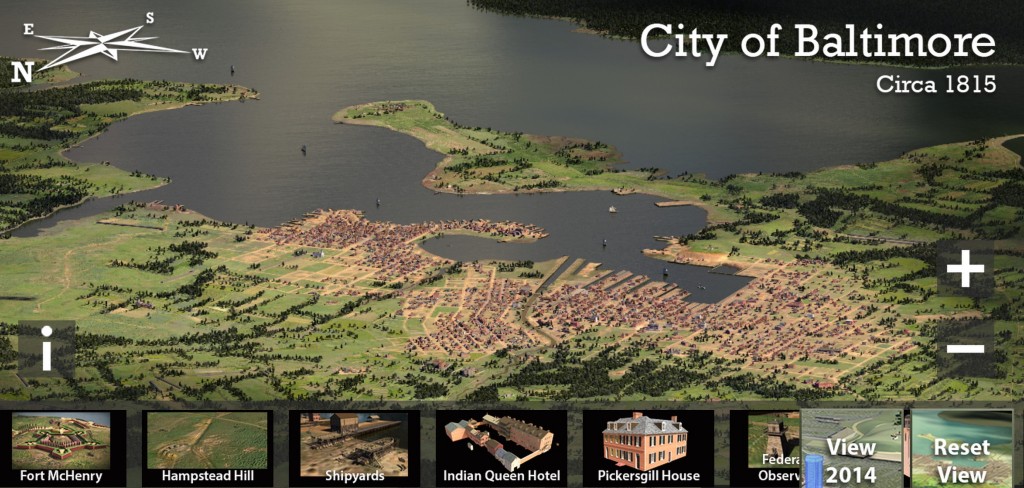
BEARINGS map of Baltimore circa 1815: The Imaging Research Center at the University of Maryland, Baltimore County created an interactive, three-dimensional map of the city around 1815 for an exhibit at the Maryland Historical Society. The map shows a south-facing view of Baltimore, including ships in the harbor, hundreds of structures along city streets, outlying forested areas, and the meandering path of the Jones Falls. An enormous amount of historical research and computer programming went into creating this map, which could serve as a valuable tool for students and adults alike.
War of 1812 Classroom Resources: Maryland Public Television produced this Thinkport project in collaboration with the Friends of Fort McHenry and the National Park Service. K-12 educators can filter over 100 classroom resources by grade level, format, and keyword. They will also find a list of interactives, including quizzes, and suggested field trip itineraries. Although the site covers all of the War of 1812, the focus remains in Maryland.
War of 1812 in the Collections of the Lilly Library: The Indiana University at Bloomington Libraries have opened their War of 1812-related collections to a national audience through this digital exhibit using the Omeka platform. Organized chronologically and then thematically, each topic features a short essay followed by related primary sources. The site integrates social media using the hashtag #War1812.
National Park Service War of 1812 portal: This national project offers users various entry points into the War of 1812. Users can explore the history thematically by choosing Stories, People, Places or Resources, and then Voices, Moments, Perspectives and Narratives. The content does not center exclusively on military history or policy, but offer insights into civilian life and the home front for American, British and indigenous people.
Key Cam: KeyCam, another state initiative from the bicentennial, provides live video streams from four cameras in Baltimore’s harbor. Two of the cameras are positioned where Key spent the night of September 12, 1814, offering 21st century viewers an opportunity to see Fort McHenry and the city from his perspective. This initiative ties directly into the enduring fascination with Francis Scott Key and the Star-Spangled Banner story. While Key is not depicted as a hero—“slavery and slaveholding” is one of the five chapters in the biography section—this project might have been as well-received during the centennial as the bicentennial.
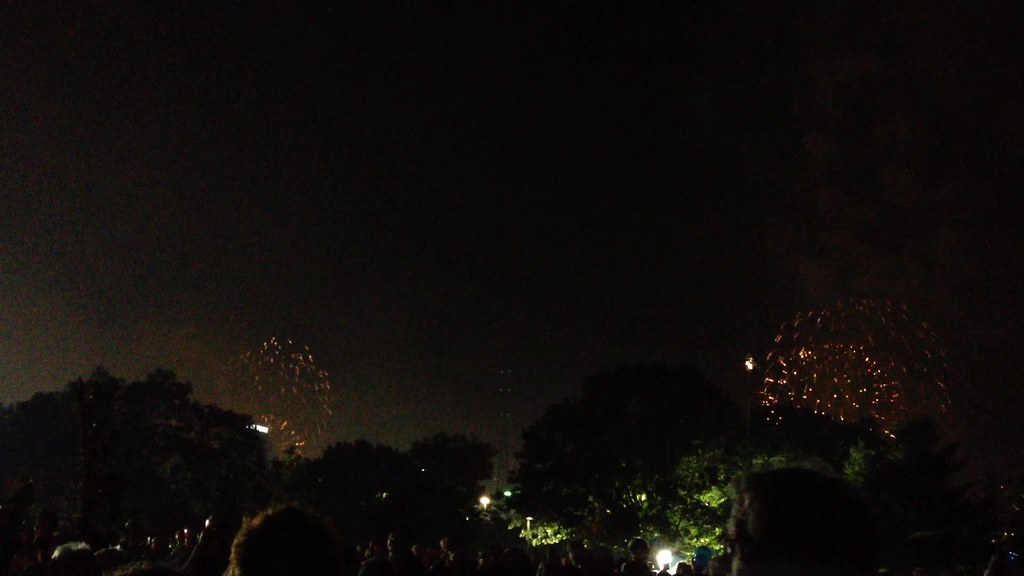
The capstone of bicentennial commemorations in 2014: a fireworks display accompanied by patriotic music at Fort McHenry
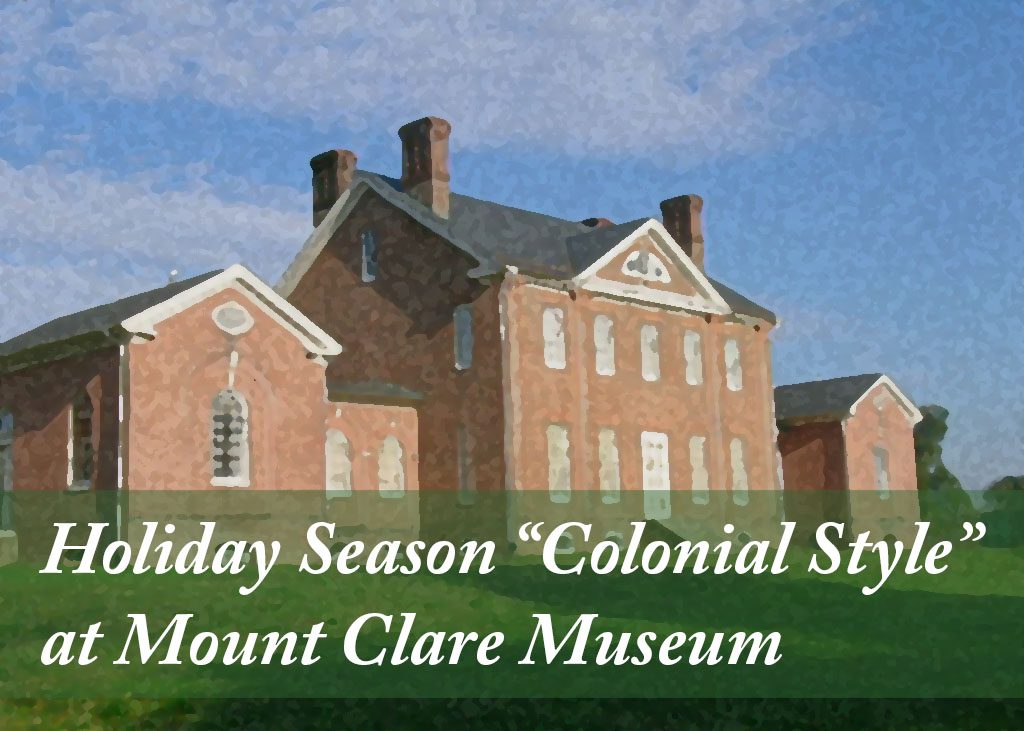
As we head into the holidays, we hope you can join us on our two remaining heritage tours of 2017. On Saturday December 16, we’re heading to the Carroll Park home of Charles Carroll the Barrister for The Holiday Season “Colonial Style”: Mount Clare Museum House Decorated for December. In addition to touring one of Maryland’s best preserved Colonial-era residences, we hope you’ll enjoy the building’s holiday decorating glory.
Our final tour of the year is a visit to the Mother Seton House and Godefroy Chapel on the afternoon of Wednesday, December 27. The Mother Seton House is the former residence of America’s first saint and the original St. Mary’s Seminary Chapel was designed by noted early American architect Maximilian Godefroy. We hope you can include this tour in your plans for the final week of 2017!
Finally, we still need your help to save the federal historic tax credit program from elimination by the tax bill now before Congress. This federal tax credit has been critical to fostering investment in Baltimore’s historic buildings and neighborhoods and Congress is now threatening to cut off this key source of support. Developers have used federal historic tax credits on everything from the American Can Company to Clipper Mill, from Montgomery Ward to Tide Point. Learn more about the program from our partners at Preservation Maryland then contact your elected officials to let them know how important this program is.
This Sunday, December 3, we are holding our second and final tour of the War Memorial in partnership with the Johns Hopkins University Symphony. After the guided tour, you can enjoy a concert featuring the symphony and the JHU Choral Arts Society for a performance by Maurice Durufle utilizing the acoustics of the War Memorial’s magnificent large hall.
Over the next few weeks, many local historic sites and neighborhoods are celebrating the holidays by opening their doors for tours and special events. We hope you can check out the open house at G. Krug and Son Ironworks, the annual Union Square Cookie Tour, the Charles Village Snowflake Tour, or another program at a historic site this December!

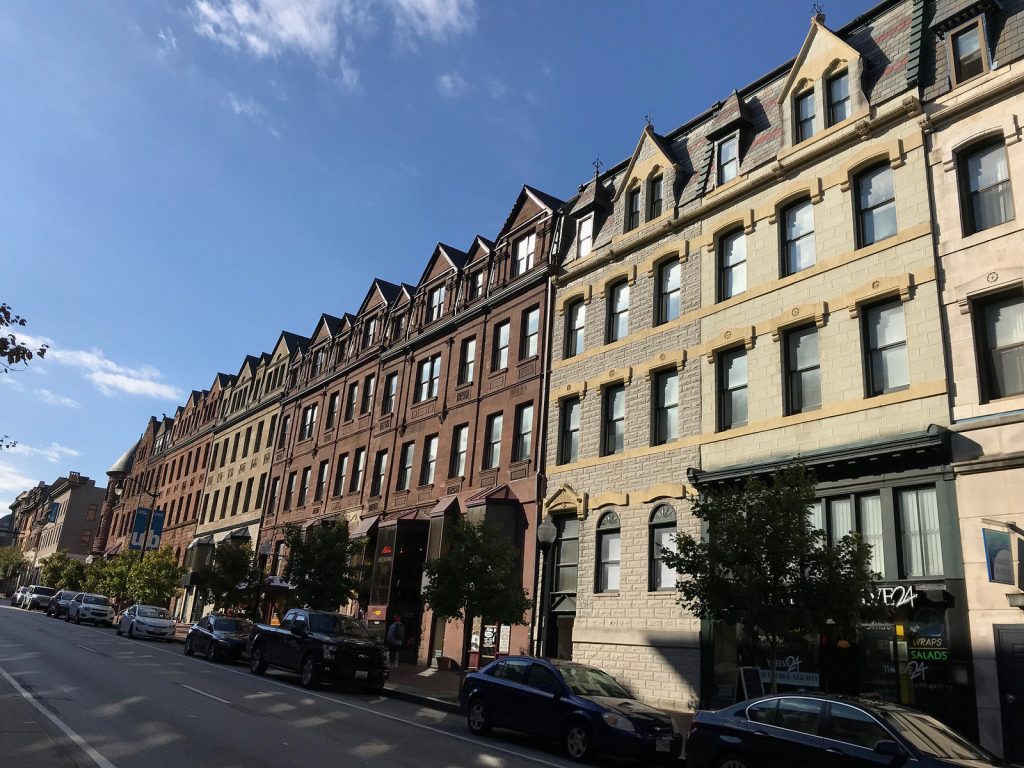
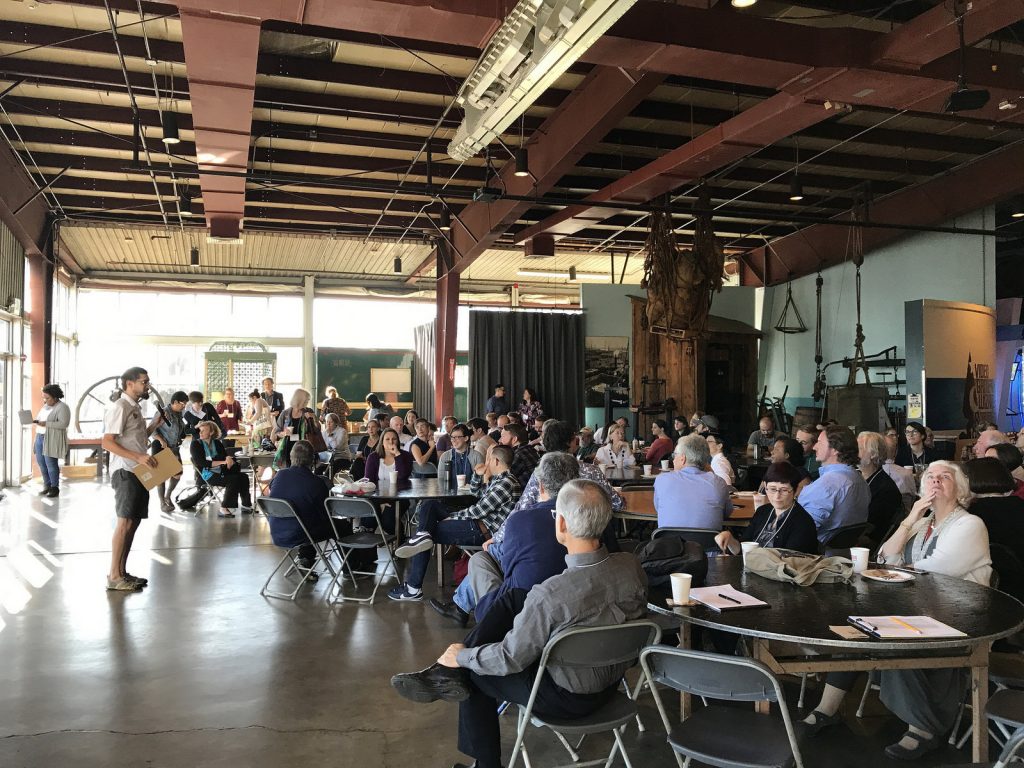
 In 2017, forty-six people volunteered their time, talent, and knowledge to lead eighty tours of thirty separate historic places around Baltimore. Our annual Baltimore by Foot neighborhood walking tour series took visitors to Stone Hill and Dickeyville. Our Behind the Scenes tours explored historic theaters downtown, the “catacombs” at Lexington Market, and the H.L. Mencken House — just to name a few.
 Vacant buildings cause problems for residents all across Baltimore City. But residents can also work to solve these problems! Baltimore Heritage and the Community Law Center teamed up to lead three workshops and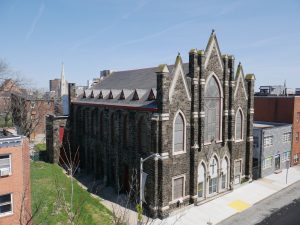
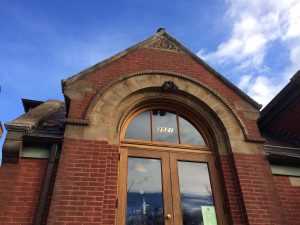 This year, we partnered with the
 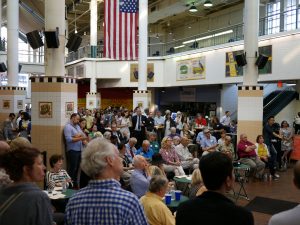 Over eight hundred individuals and families contributed as members, nineteen corporations provided sponsorship support, and thirteen foundations and organizations supported our programs and events. These contributions make up over fifty percent of our operating budget and provide the critical funding for all we do, from advocating for places like the Sellers Mansion to providing technical assistance on historic preservation projects.