In August and September, we’re taking on industrial Baltimore with tours of manufacturing facilities old and new at Parker Metal Decorating and Fashions Unlimited. We’re also resuming our tours of the catacombs and 100-year vendors at Lexington Market, and will host the first of our fall lectures at the Garrett-Jacobs Mansion. Please carve out some time and join us!
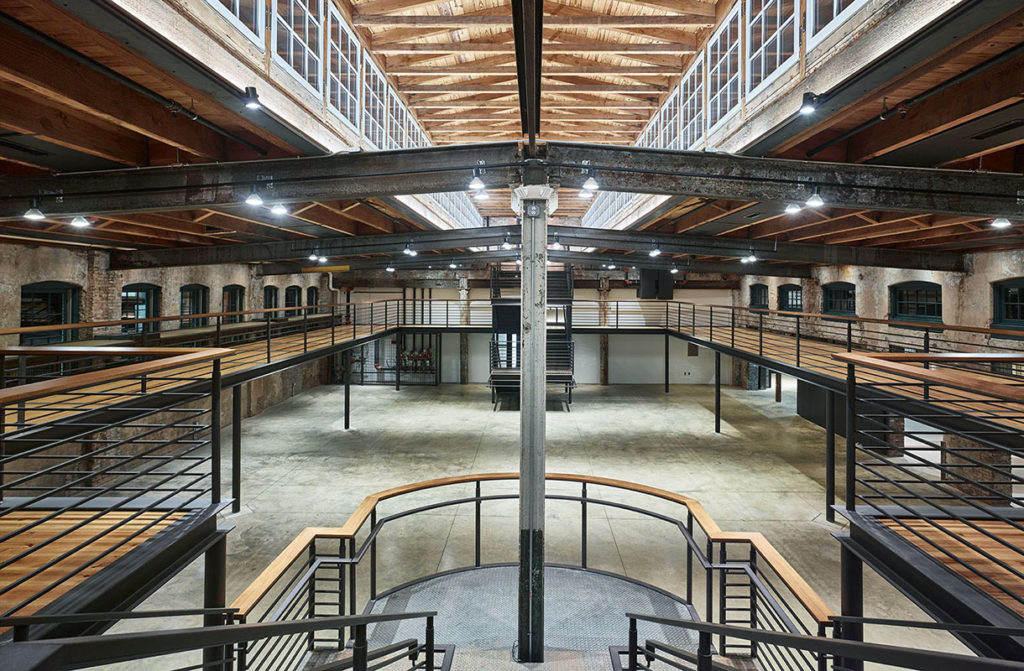
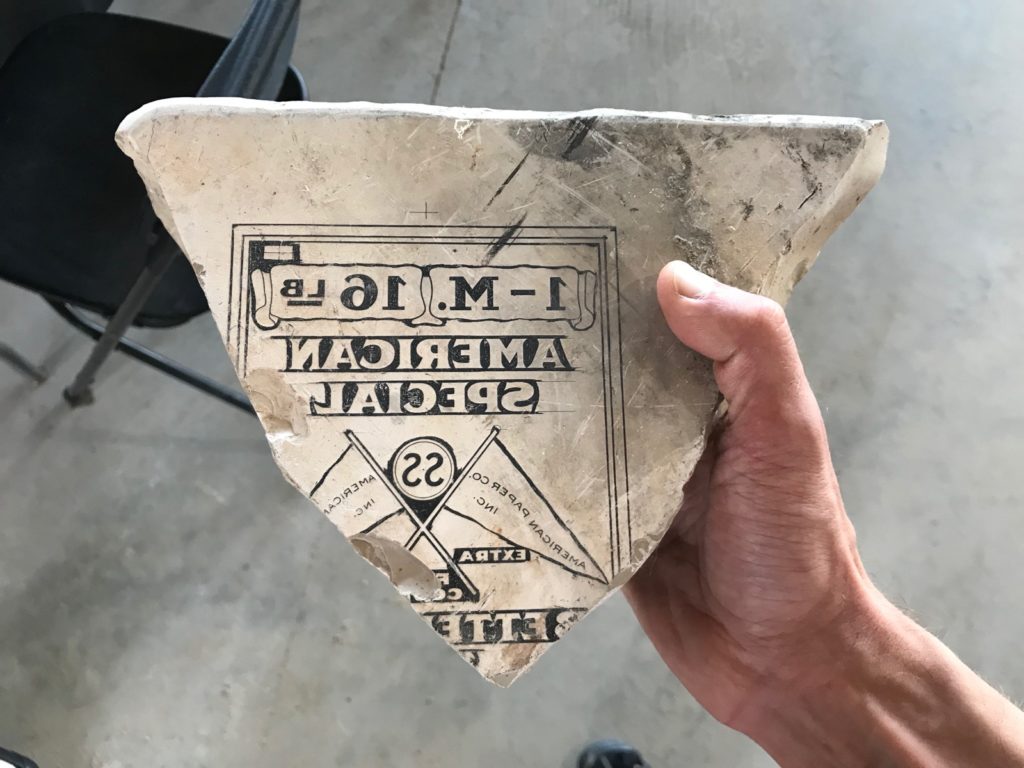
On Monday evening, August 12, we’ll join Sam Himmelrich, the owner and developer of the Parker Metal Decorating Company building, on a tour of this nearly 100 year old former lithography factory turned funky office and event space.
On the morning of September 13, we’re going back to see modern garment manufacturing in action at Fashions Unlimited. Our tour there last year was so popular that we’re repeating it to see how Made In America is happening here in Baltimore in the form of swim suits, Mt. Everest climbers’ parkas, and European League soccer jerseys.
On Saturday September 14, we’re resuming our monthly tours of the catacombs and 100-year merchants at Lexington Market. If you can’t make it on this tour, we’ve lined up additional tours through December!
We’ve also finalized our fall lecture series in partnership with the Garrett-Jacobs Mansion. We’ve got four fabulous authors and historians lined up:
September 15: Rowhouses Near and Far: Historian Charlie Duff on his New Book “The North Atlantic Cities”
October 6: Baltimore in the Golden Age of Radio with Historian Jack Burkert
November 17: Christmas in Old Baltimore with Historian Wayne Schaumburg
December 15: The Woman’s Hour: The Great Fight to Win the Vote with Author Elaine Weiss
And finally, our Sunday morning Monumental City tours are rolling along. The next tour is this Sunday (August 4), where we’ll leave from the Sunday Farmers Market on a one-hour walking tour to explore downtown landmarks and lions.
Happy summer, and we hope to see you sooner AND later.
It’s July in Baltimore and it’s hot. That’s not new. What is new are two upcoming heritage tours visiting a 100 year old family business and exploring parts of Downtown many of us never knew about. Please join us!
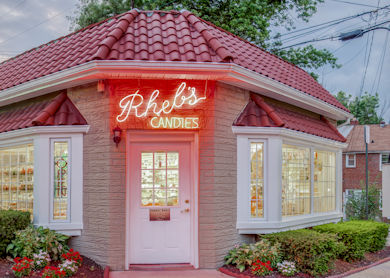
On Thursday July 25, we’re going behind the scenes at Rheb’s Candies to see how they produce their delectable sweets at this 101 year-old business that is still going strong in the Rheb family. The production facility is in the family’s former garage next to their house-turned-shop and here we’ll get an intimate tour of perhaps the sweetest place in Baltimore.
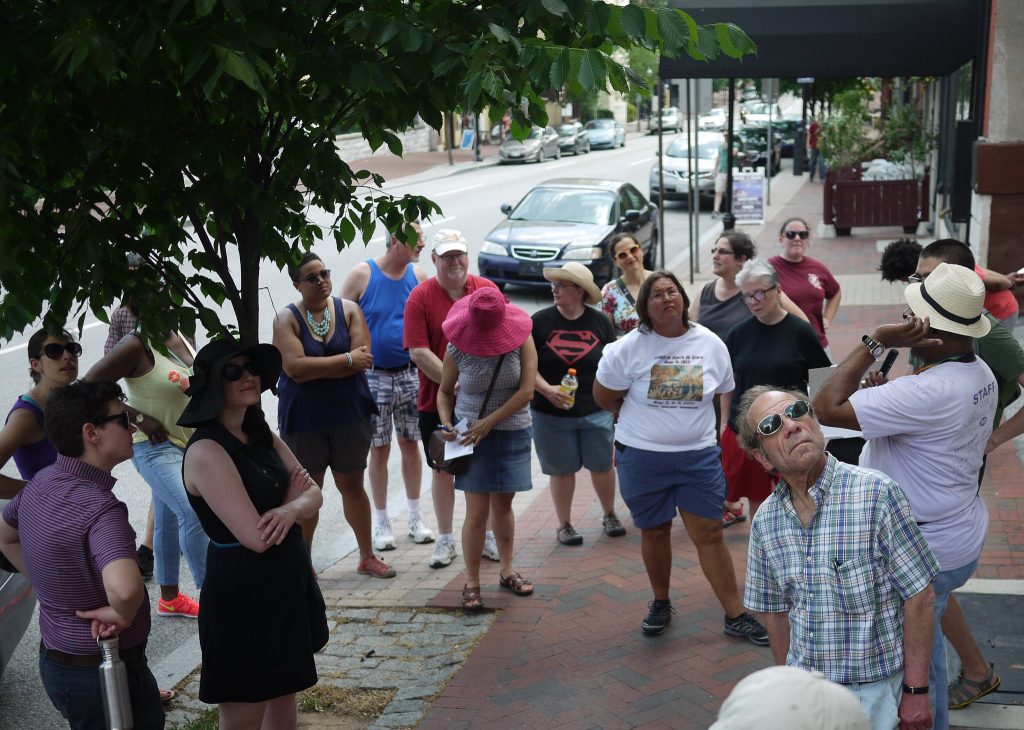
Did you know that the Continental Congress met in downtown Baltimore? Or that German agents plotted sabotage on Charles Street during World War I? If you didn’t (and even if you did!) join tour guide Jefferson Gray on Sunday July 28 for a walking tour of The Downtown You Never Knew to learn about Baltimore’s hidden history in plain sight.
Finally, looking ahead to the fall, we are pleased to be continuing our partnership with the Garrett Jacobs Mansion in a series of Sunday afternoon lectures. We just opened up registration for the first talk on September 15 with historian Charlie Duff on his new book “The North Atlantic Cities” exploring rowhouses around the world. We hope to see you there!
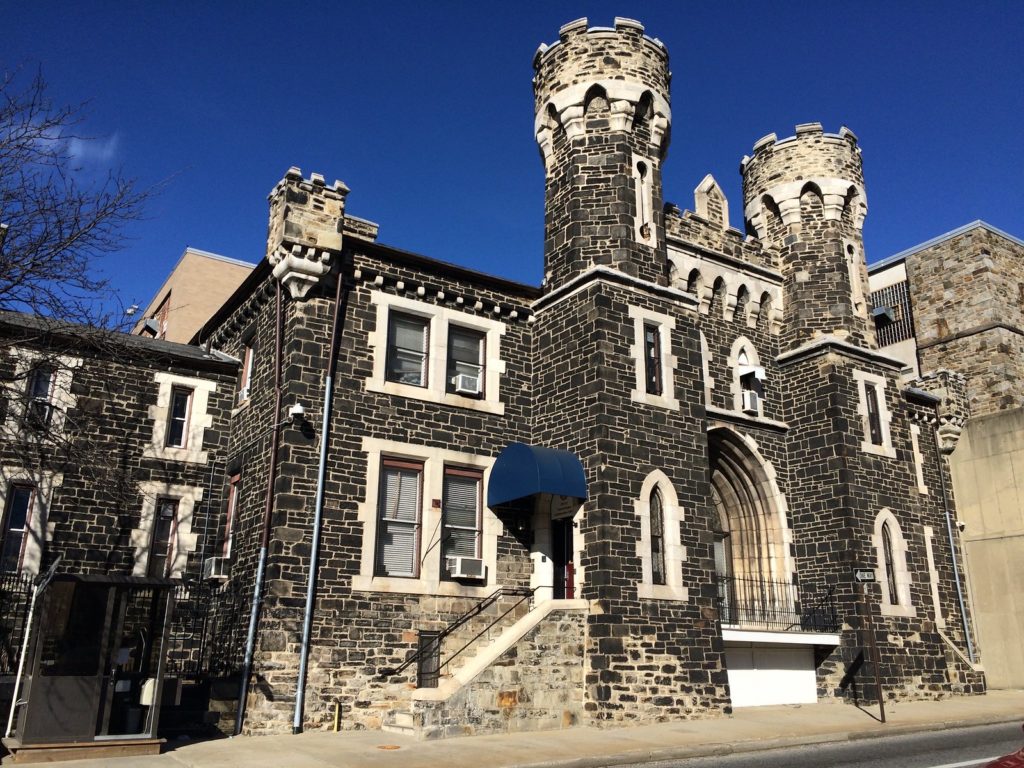
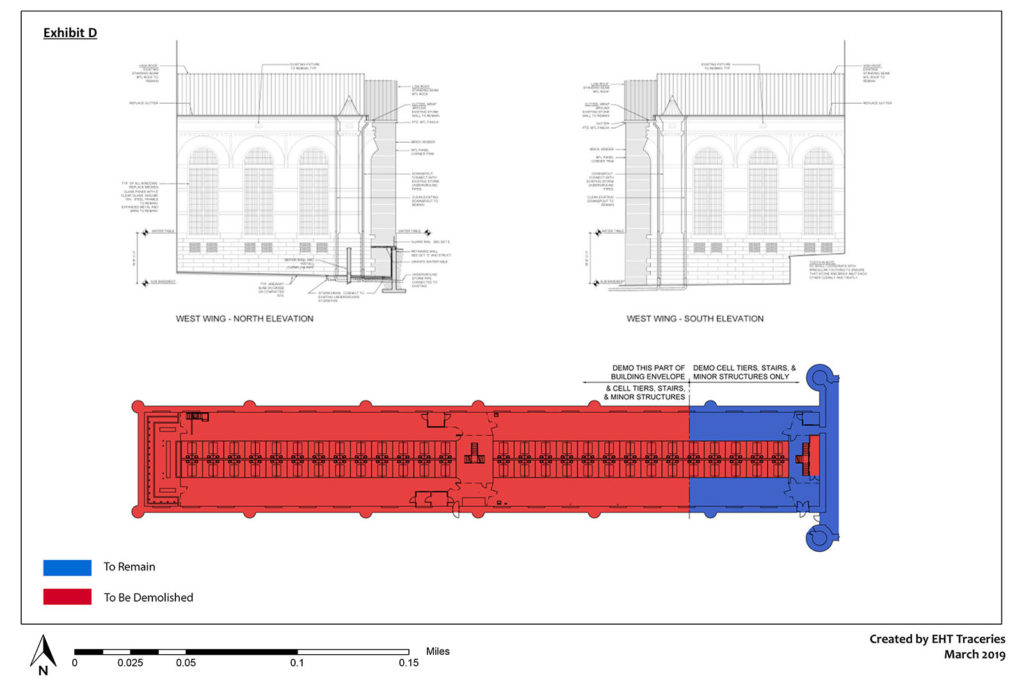
Earlier this week the Maryland Board of Public Works approved a multi-million dollar contract clearing the way for the state Division of Corrections to move forward with the demolition of a large part of the Baltimore City Correctional Complex located just east of the Jones Falls Expressway. For now, the scope of demolition doesnot include the historic Warden’s House, the per-Civil War “castle” on Madison Street.
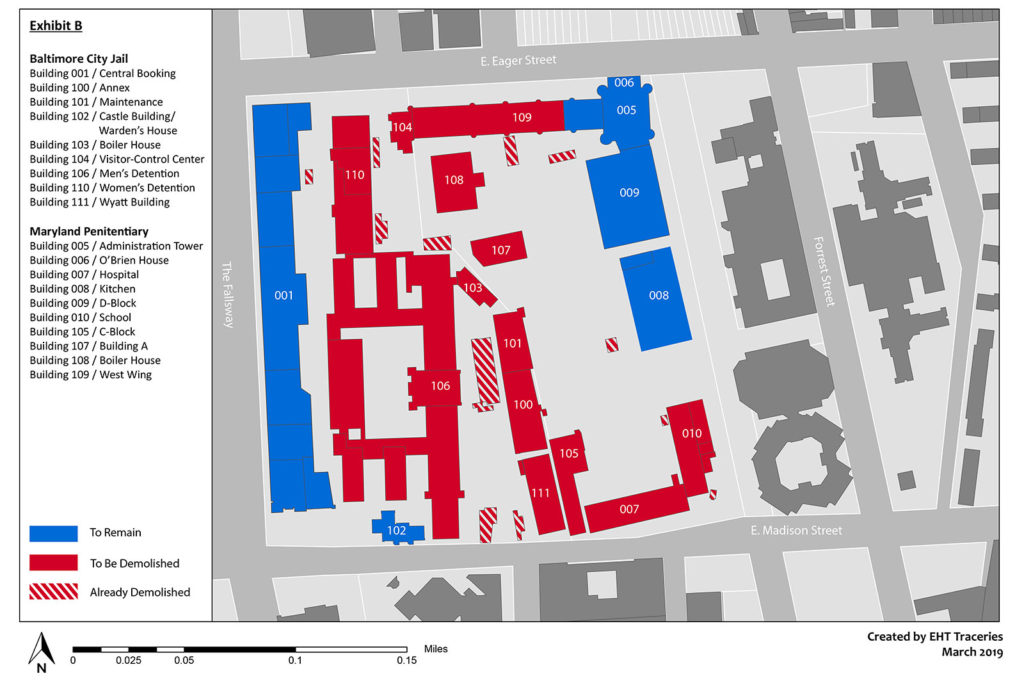
Thanks to an agreement between the Maryland Department of Public Safety and Correctional Services and the Maryland Historical Trust, the state will wait to make a final decision on the Warden’s House and a small portion of the west wing of the former Maryland Penitentiary along Eager Street. The plan does preserve the Penitentiary’s iconic central tower which has never been considered for demolition.
Exhibit illustrating the scope of demolition in the Baltimore City Correctional Complex. Buildings to be retained under the current agreement are marked in blue and buildings to be demolished are marked in red.
The Board of Public Works’ recent approval comes four years after Governor Hogan closed the facility and two years after the General Assembly allocated funds for the demolition of the complex. Since the state allocated those funds, the Corrections Department developed a plan that includes the demolition of over a dozen buildings on the site. Work under the new contract will begin soon.
The Warden’s House and small portion of the west wing of the Maryland Penitentiary are not included in this round of demolition but they are also not yet relieved from the threat of being razed. The Division of Corrections has only agreed to defer a decision on the demolition of these structures and consult with the Maryland Historical Trust on the future of these buildings.
Exhibit illustrating the partial demolition of the west wing of the former Maryland Penitentiary building.
While the demolition of the historic buildings within this complex is a loss for the city’s architectural heritage, our advocacy, along with Preservation Maryland, AIA Baltimore, and the Baltimore Commission for Historical and Architectural Preservation, helped to secure more time to seek the preservation of the Warden’s House and a portion of the West Wing. We and our partners will continue to push for permanently preserving the these two historic buildings and better incorporate the Maryland Penitentiary into whatever new plans are eventually adopted.
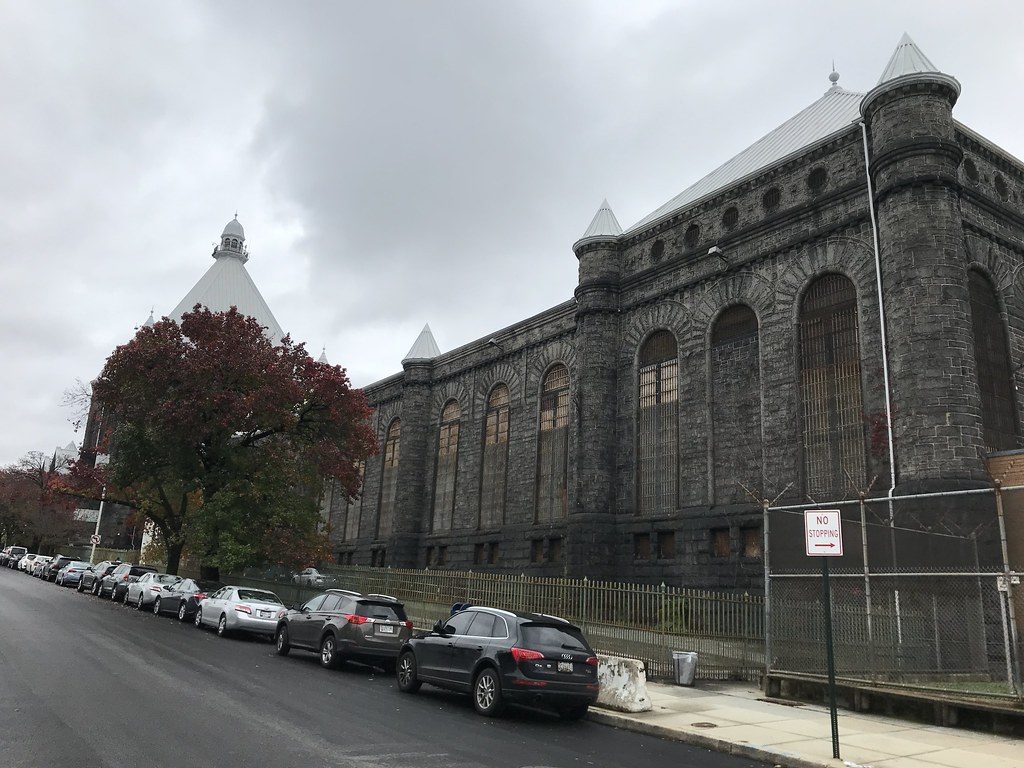
The west wing of the former Maryland Penitentiary planned for partial demolition. November 13, 2018.
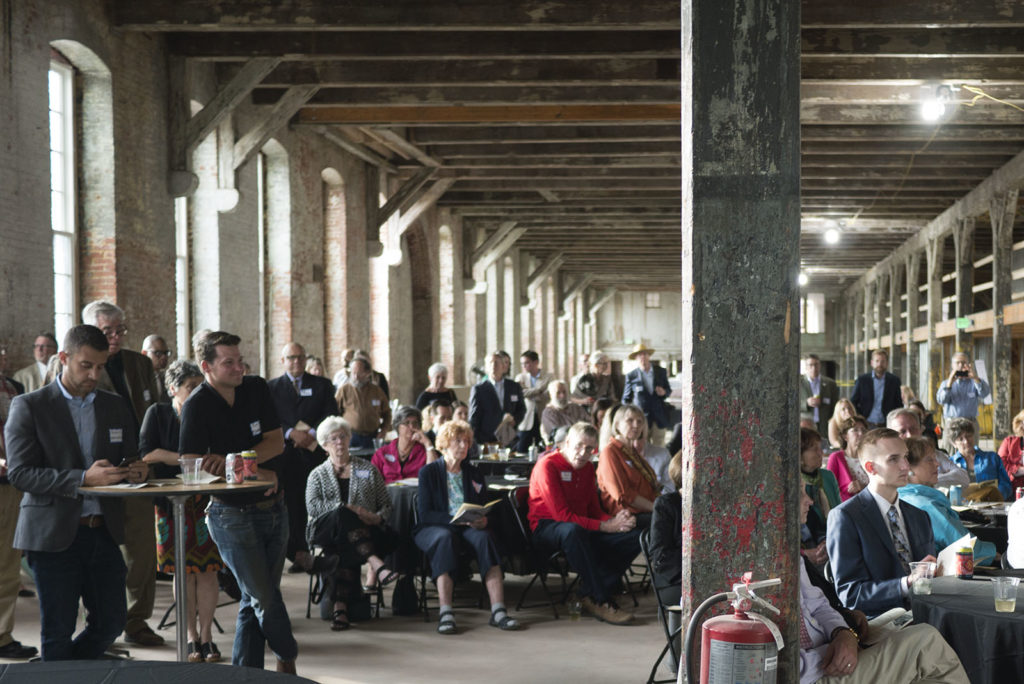
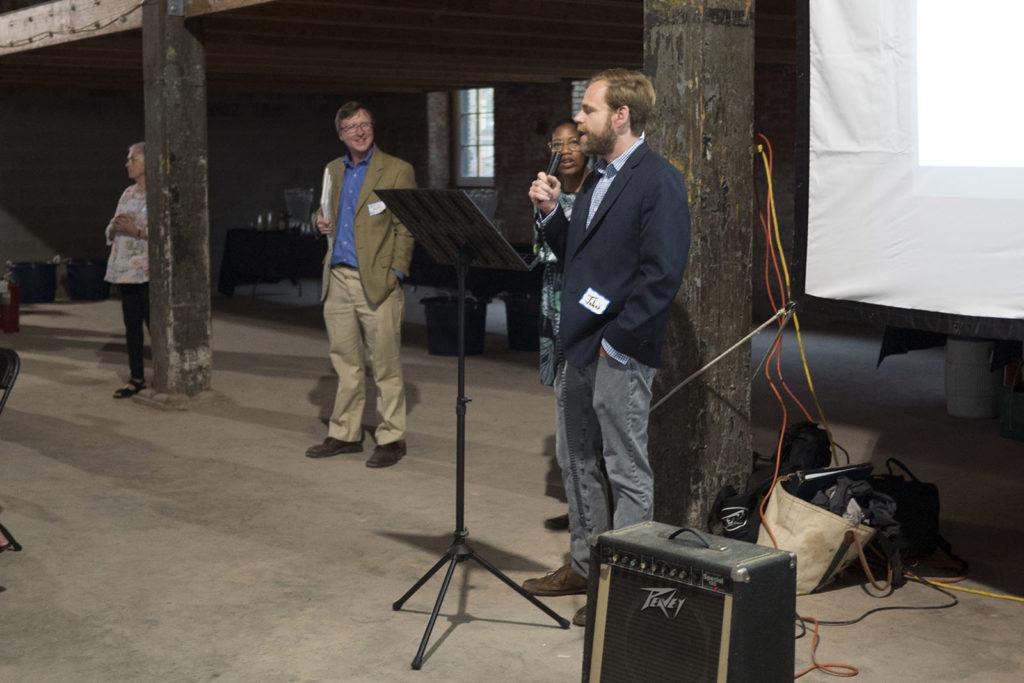
We had a wonderful evening last Thursday in a fabulous space at the A. Hoen & Co. Lithograph Building. Thanks to everyone who attended our 2019 Preservation Awards Celebration and made it a success. Special thanks to our hosts and sponsors—you can find the full list of sponsors below.
With awards including converted churches and schools, remarkable rowhouse restorations, innovative exhibits interpreting our shared history, and even the revival of an antique street car, this year’s awardees covered a lot of ground. Take a look at the award winners below and please make sure to congratulate them the next time you see them around the city!
June 13, 2019.
Restoration & Rehabilitation Awards
2229 Callow Avenue
Druid Heights Community Development Corporation, Edgemont Builders, SM+P Architects
Marburg House, 6 E. Eager Street
Charles Belfoure, J.C. Porter Construction, Marburg House LLC, SM+P Architects
3522 Elm Avenue
April Gilkey and David Rachamim, O’Connell & Associates, Zeskind’s Hardware & Millwork
2431 Eutaw Place
Amazonia Flooring, Druid Heights Community Development Corporation, Edgemont Builders, Froehling & Robertson, Inc., G&C Environmental Services, Inc., Healthy Neighborhoods, Maryland Department of Housing and Community Development, Pando Alliance, Skarda and Associates, Inc., SM+P Architects, SRBR Engineers, Inc., The Dulin Group of Long and Foster, Zeskind’s Hardware & Millwork
First German United Evangelical Church Conversion, 1728 Eastern Avenue
Carriage House Renovation & Addition (The Brown/Thaddeus Residence), 2214 E. Pratt Street
21st Century Power Solutions, Architecture & Urban Views, Bromin Construction, Noel Brown and Sereen Thaddeus
St. Brigid’s School & Convent Conversion, 900 S. East Avenue
900 Southeast LLC, AB Associates, Charles Belfoure, Fanny Zigdon Interior Designs, One Source Contracting, Poverni Sheikh Group, SETO Architects, Zeskind’s Hardware & Millwork
Fleet Street Lofts, 3801 Fleet Street
J. Cole Builders, SETO Architects, Walid Hajj
The Fox Building, 3100 Falls Cliff Road
Alexander Design Studio, Carney Engineering Group, Henry Adams LLC, Macrostie Historic Advisors, Morris Ritchie & Associates, Red Sketch Landscape Architecture, The Time Group, Whiting-Turner Contracting Company
Recreation Bowling Alley Conversion, 602 N. Howard Street
ATI, Inc., Poverni Sheikh Group
Heritage Preservation Awards
Car 554 Restoration at the Baltimore Streetcar Museum
Baltimore Streetcar Museum
Baltimore City Historic Tax Credit Program
Baltimore Commission for Historical and Architectural Preservation, Baltimore Department of Planning
Chinatown Collective
Ephrem Abebe, Daniel Ahn, Marisa Dobson, Julie Eugenio, Stephanie Hsu, Leandro Lagera, Robin Lee, Daniel Pham, Jamie Sumague
Enslaved at Homewood: Research, Exhibit & Programming
Homewood Museum
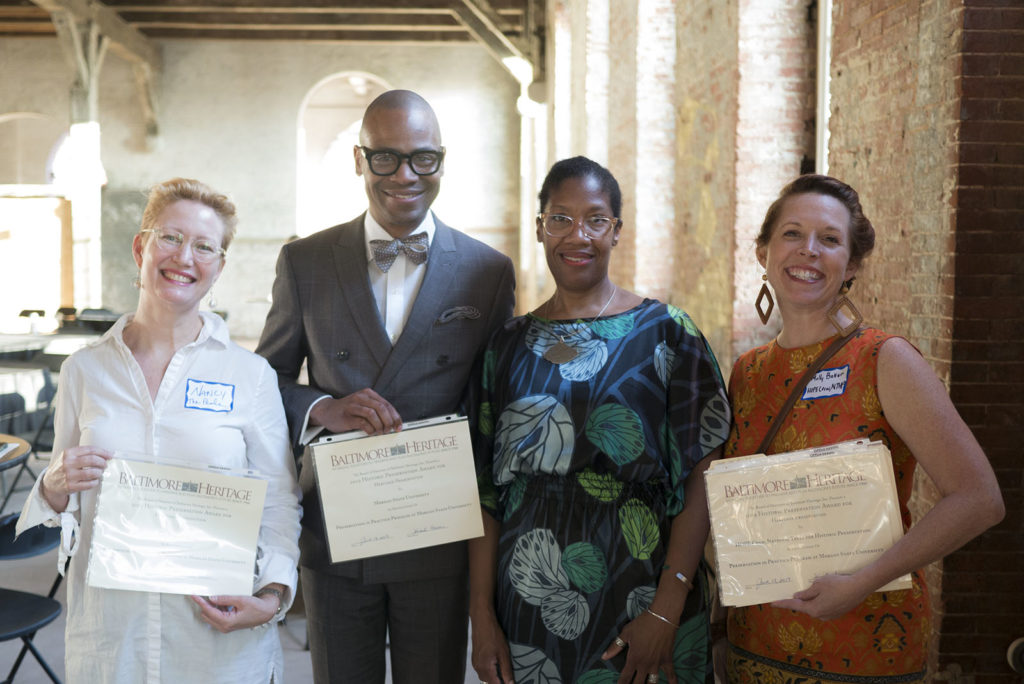
Preservation in Practice Program at Morgan State University
Advisory Council on Historic Preservation, HOPE Crew – National Trust for Historic Preservation, Morgan State University, National Park Service, National Trust’s African American Cultural Heritage Action Fund, The Peale Center
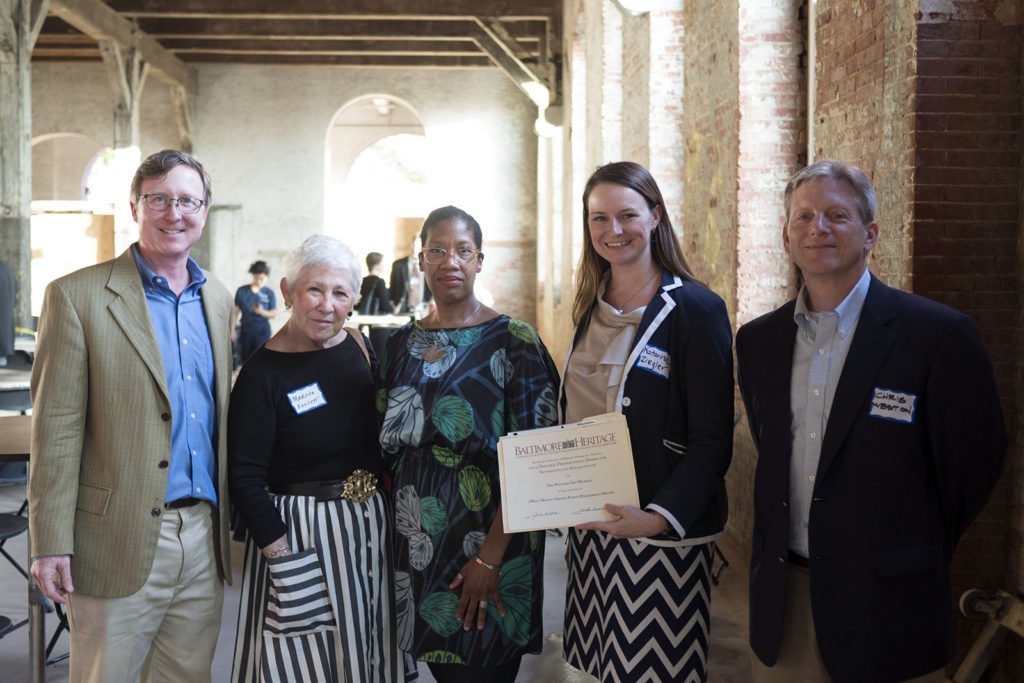
Award recipients from the Peale Center, Morgan State University, and the National Trust’s HOPE Crew with board president Krista Green. June 13, 2019.
Frederick Douglass Bicentennial Banners
C&D Design, Baltimore City Office of the Mayor, Preservation Society
Eutaw Manor and Furley Hall Signs at Herring Run Park
Baltimore Department of Recreation and Parks, Belair Edison Neighborhoods, Inc., Friends of Herring Run Parks, Herring Run Archaeology Project, Katie Mancher, Sarah Hope
Historic Sites of Industry in the Jones Falls Valley
In the early morning hours of June 28, 1969, officers from the New York City Vice Squad raided the Stonewall Inn, a well-known gay bar in New York’s Greenwich Village. A crowd of gay, lesbian, and transgender patrons and bystanders gathered and rose up in violent protest against city police’s harassment and abuse—marking a critical turning point in the nation’s struggle for LGBTQ rights. On June 28, 2019, we are celebrating the 50th anniversary of this historic milestone with our own tour of LGBTQ heritage in Baltimore. We hope you can join us for a Mount Vernon walking tour followed by happy hour at Flavor to discuss this important local and national history.
If more plants and less walking appeals to you, join us this Wednesday, June 12, for a behind-the-scenes look at the Rawlings Conservatory. We’ll go deep in the weeds (ahem!) as we explore this 1888 palace for plants modeled after London’s famous Kew Gardens.
Finally, if you haven’t already signed up for our 2019 Historic Preservation Awards Celebration coming up this Thursday June 13, you still have time to get your tickets! We’ll be celebrating the best work of the year at the former A. Hoen & Co. Lithograph Company building in East Baltimore. In addition to helping us congratulate this year’s award winners, you’ll get to explore this former industrial building during a once-in-a-lifetime transformation into new offices and training spaces.