
Why the West Side Matters: 200 Years of Iron Work at G. Krug and Son

Stephen Krug at G. Krug & Son, January 2011G. Krug and Son, now including daughters as well as sons, opened on Saratoga Street in 1810. One of Baltimore’s oldest businesses and the nation’s oldest continuously operating blacksmith’s shop, G. Krug has been an anchor on the West Side of Downtown for over over 200 years employing hundreds of skilled workers, serving as a retail destination for artistic wrought iron work, and reflecting the unique character of historic businesses on the West Side. G. Krug and Sons is one of the many reasons why the West Side matters to the people of Baltimore.

G. Krug & Son workers, Feburary 2011Originally operated as the blacksmith shop of Augustus Scwanka, Gustav Krug joined the business in 1848, working his way up to journeyman, foreman, partner and then purchased the shop in 1871. At one point, the shop supported 100 artisans and could proudly boast that virtually every building in Baltimore contained something made in the shop, even if that something was only a nail. The business has remained in the skilled hands of his descendants ever since maintaining a dedication to fine craftsmanship G. Krug & Son is one of the few companies left in Baltimore that can claim their ancestors helped in building Baltimore.
The company remains dedicated to providing their customers with ironwork that is beautiful, durable and represents a value that will stand the test of time. You can view a great gallery of a few of their past projects on their website or take a look at photos from a Behind the Scenes Tour of the shop back in 2009. Today the company is run by 5th generation Krugs, Peter and Stephen, who operate the business with the same dedication to craftsmanship and customer satisfaction as their forefathers. Today, Stephen’s daughter Alexandra, and Peter’s son David work in the company and are already skilled in their family’s trade.

Our Why the West Side Matters series is produced with the assistance of Baltimore Heritage volunteer Sally Otto. Read our first post  in the series on Read’s Drug Store and Baltimore’s Civil Rights Heritage.

Behind the Scenes Tour of MICA’s Brown Center

MICA Brown Center, Image courtesy MICA

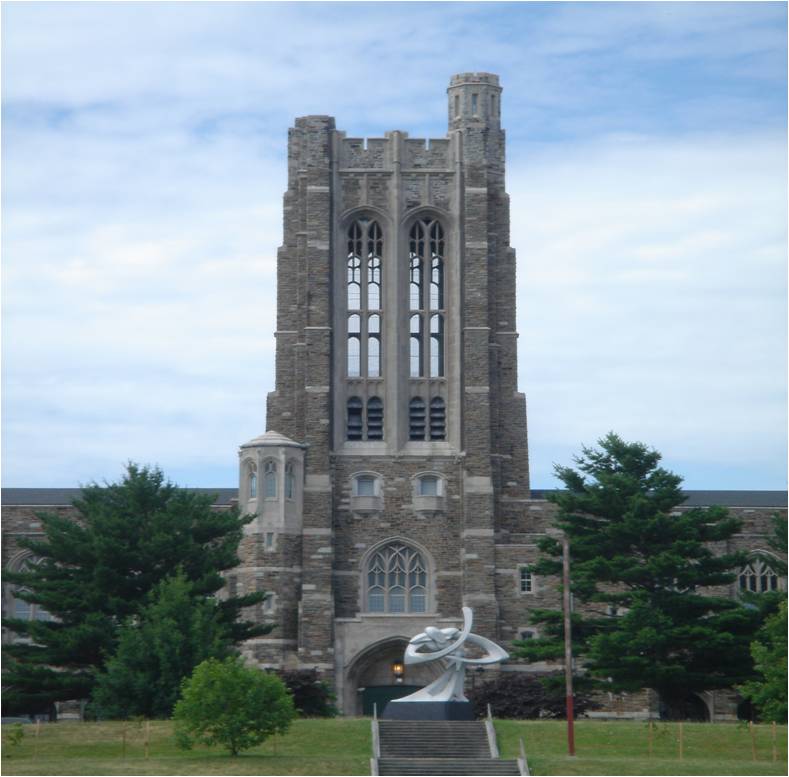
New buildings in historic districts don’t have to be bland or drag down the historic and aesthetic character of the area. The Brown Center at the Maryland Institute College of Art offers a striking example of where first-class modern architecture can add a bold new design while bringing out the best in existing historic buildings. Please join us on a tour of the Brown Center to explore this modern architectural landmark and its relation to MICA’s historic campus.

MICA’s Brown Center | 1301 Mt. Royal Avenue, Baltimore, MD 21217

Thursday, February 10, 5:30 PM to 6:30 PM
$10 for members; $20 for non-members
Register today!

Read more

Preserving Baltimore’s Civil Rights Heritage at the Reginald F. Lewis Museum

Join Baltimore Heritage & the Reginald F. Lewis Museum of Maryland African American History & Culture on the evening of February 9 for “Preserving Baltimore’s Civil Rights Heritage,” a panel discussion and public forum from 7:00 to 8:30 PM moderated & hosted by Dr. David Terry, executive director of the Reginald F. Lewis Museum. Our panelists include Dr. Gabriel Tenabe (Morgan State University) on restoring the home of long-time Baltimore NAACP President Lillie Mae Carroll Jackson, Ms. Tanya Bowers (National Trust for Historic Preservation) on the proposed National Civil Rights Heritage Trail, and Mr. Bill Pencek on the adaptive reuse of PS 103. Finally, we’ll hear the story of the Read’s Drug Store sit-in from Dr. Helena Hicks who, as a freshman at Morgan State in 1955, participated in Baltimore’s first successful sit-in protest at Read’s— a building that is currently threatened with demolition by the development of the “Superblock.”

Preserving Baltimore’s Civil Rights Heritage

The Reginald F. Lewis Museum, 830 E. Pratt Street, Baltimore, MD 21202
Wednesday, February 9, 7:00 PM to 8:30 PM
Free, RSVP today!

Parking for museum visitors is located across the street at the Dodge PMI Garage at 815 E. Pratt St. $6 validated parking is available. Transit options include MTA Bus 10 via President Street, Charm City Circulator Orange Route Stop 201, & the Shot Tower/Market Place Subway Station.
Join us for a second West Side Walking Tour on January 20!

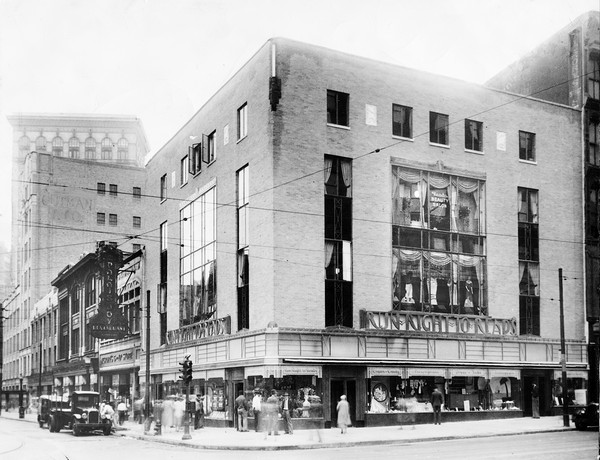
Read's Drug Store in 1934, courtesy Baltimore Sun

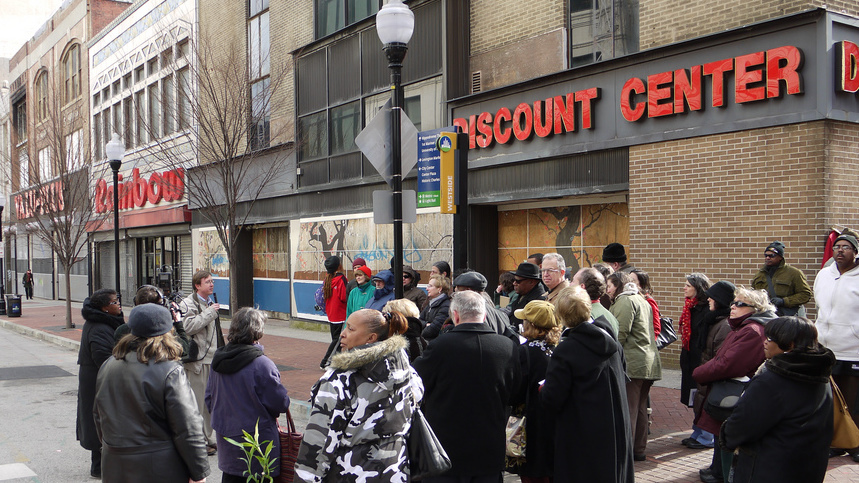
We’re returning to the Superblock this week for a second lunchtime walking tour on why historic buildings matter to the future of a revitalized West Side and how the proposal for the Superblock threatens to demolish that future. The tour takes place on the 50th Anniversary of the 1955 sit-in at the Read’s Drug Store at Howard & Lexington Streets, so we’ll be sharing a few stories about how black and white civil rights advocates fought to provide African Americans with equal rights to shop, work, and eat on Downtown’s West Side. From the Afro American’s Orchid & Onion 1945 campaign against downtown stores that discriminated against African American customers (“Onions” discriminated against black shoppers and “Orchids” did not) to the 1955 sit-in by the Baltimore Committee on Racial Equality and the students and faculty of Morgan State, Baltimore’s Civil Rights heritage can be found throughout the historic buildings of Downtown’s West Side.

West Side Lunchtime Walking Tour | East Entrance to Lexington Market (Lexington & Eutaw Streets)

Please also join us on February 9 from 7:00 to 8:30 PM at the Reginald F. Lewis Museum for a public forum on Preserving Baltimore’s Civil Rights Heritage. We’ll begin the forum with short presentations by Dr. Helena Hicks, a participant in the 1955 Reads Drug Store sit-in, Dr. Gabriel Tenabe on restoring the home of long-time Baltimore NAACP President Lillie Mae Carroll Jackson, Ms. Tanya Bowers from the National Trust for Historic Preservation on the proposed National Civil Rights Heritage Trail, and more. We’ll follow the presentations with an opportunity for attendees to share their own questions and comments on how we can preserve the stories, buildings and neighborhoods tied to Baltimore’s long civil rights fight.  Stay tuned for further details on our February 9 program!