Bmore Historic — Baltimore’s preservation, public history and cultural heritage unconference — is back for 2012! Save the date on your calendar today:
Bmore Historic 2012
Friday, October 12, 8:30 am to 3:30 pm
Maryland Historical Society
201 West Monument Street
More than 100 local historians, humanities scholars, preservation advocates, museum professionals and archivists joined us at the inaugural Bmore Historic unconference in December 2011. Thanks to the continued generosity of the Maryland Historical Society and the hard work of our small organizing committee, we’re coming back on October 12, 2012 for more discussions on public history, historic preservation and community development in the Baltimore region and across the state of Maryland. We’re also pleased to announce our partnership with the Baltimore Cultural Education Roundtable to engage educators from local museums and cultural organizations.
Stay tuned for an update on registration in the next few months or take a look at our about page for more information. Don’t forget to join the Bmore Historic Facebook Group or connect with Bmore Historic on Twitter @bmorehistoric. We look forward to seeing you in the fall!
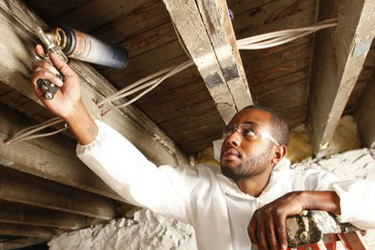
Baltimore Heritage and Retrofit Baltimore are offering a new joint workshop in Charles Village on upgrading your home’s energy efficiency while saving money with city and state historic tax credits. Working with Retrofit Baltimore on energy efficiency upgrades can improve your home’s comfort and reduce your energy bills by up to 40%, minimize your environmental impact and create jobs for underserved Baltimore residents. For homeowners in historic districts, like Charles Village, Homeland, Hampden and more, many of these improvements, including replacement HVAC systems, insulation, and wood window restoration, may also qualify for the city and state historic tax credit programs. Find out how to check if you are in a historic district with our overview of historic districts or learn more with our guide to historic tax credits. Don’t forget to take a look at our collection of resources for historic homeowners.
Join us at the Charles Village Benefits District offices on June 27 for a quick one-hour workshop that offers an introduction to weatherization, energy audits, incentives for energy efficiency, and historic tax credits. RSVP today!
Weatherization & Historic Tax Credits Workshop
Wednesday, June 27, 7:00 pm to 8:00 pm
Charles Village Community Benefits District Office
2434 Saint Paul Street, Baltimore, MD 21218
Questions? Contact Eli Pousson, Baltimore Heritage at pousson@baltimoreheritage.org or Evie Schwartz, Retrofit Baltimore at eschwartz@retrofitbaltimore.org.
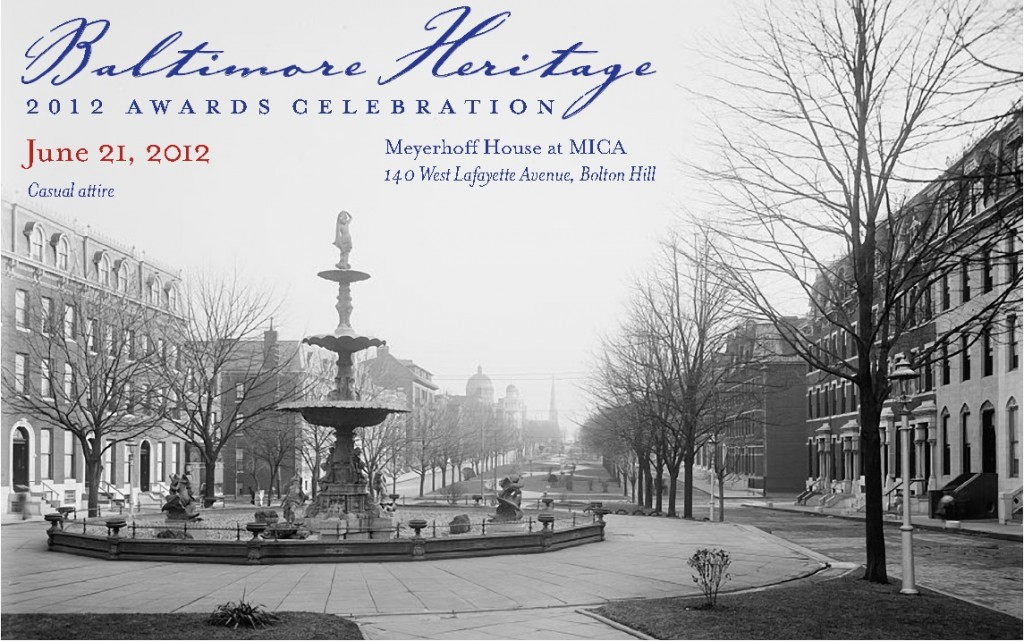
Join in our annual celebration as Baltimore Heritage celebrates the year’s best in preservation, adaptive reuse, and community leadership from neighborhoods across the city! This year we are in historic Bolton Hill with five unique open houses followed by good food, wine, beer, and an awards presentation at the Maryland Institute College of Art Meyerhoff House. Our open houses this year are a few of the neighborhood’s best — can’t miss landmarks from a 1848 country cottage on Lanvale Street to the former home of the Bolton Street Synagogue which was converted to a private residence in 2005.
Find more details or purchase a ticket today!
Tickets are $65 for members and $75 for non-members. Special thanks to our lead sponsor PNC Bank and all of our generous sponsors and supporters who make this celebration possible!
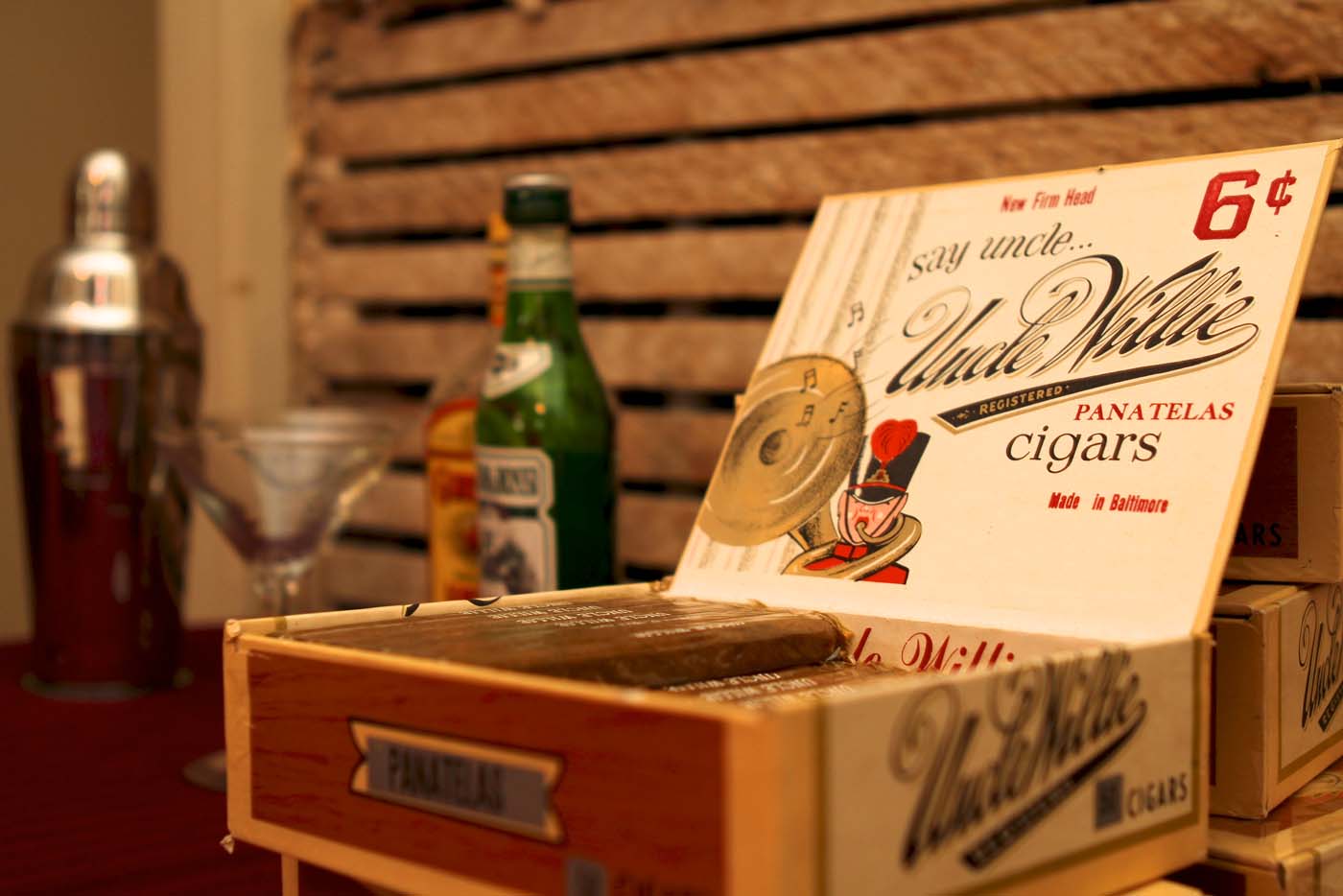
Thanks to everyone who joined us last month for our West Baltimore Squares Photowalk & Tour organized in partnership with the Baltimore Sun’s DarkRoom. Photographers, locals and first-time visitors to Sowebo all had the chance to photograph local landmarks from Hollins Market to Franklin Square with a stop at the H.L. Mencken House on Union Square – where Will Cocks caught this nice shot of Mencken’s cigar box. Find more featured images from the photowalk at the Baltimore Sun DarkRoom blog.
Are you among the many Baltimoreans who have passed Homewood House on the Johns Hopkins University campus and wondered what the construction is about? Wonder no more! Please plan to join us in learning what it takes to renovate a 211-year-old portico and then come inside for a close-up look at this historic and architectural gem. As for the portico, new discoveries during restoration underscore Homewood House’s superlative construction, and may explain why the house ended up costing four times the original $10,000 that Charles Carroll budgeted for it in 1801.
Tour Details
Wednesday, June 13, 5:30 pm – 7:00 pm
3400 N. Charles Street, Baltimore, MD 21218 (on JHU campus)
$15 members | $25 non-members (wine & cheese will be served) RSVP for the tour today!
Check out the Homewood House with Explore Baltimore Heritage!
Homewood House is the former home of Charles Carroll, Jr., son of Maryland’s only Catholic signer of the Declaration of Independence, Charles Carroll of Carrollton. In 1800, the elder Carroll offered his son and new bride, Harriett Chew, the funds to build a country retreat. The original plan was to renovate an existing farmhouse, but Carroll the younger had higher social aspirations and wanted a house to reflect it. With more than a little contention between father and son, Homewood House was completed in 1801 at a cost of $40,000, four times what Father Carroll had wished to spend. The exceedingly high cost, however, went into both great architecture and great craftsmanship.
The current restoration of the south portico has reinforced this, with new discoveries of vaulted arches under the stairs and other construction practices that have helped the building stand straight and true for over two centuries. For the tour, Ms. Catherine Rogers Arthur, Director and Curator of Homewood House Museum, and Mr. Travers Nelson, project manager, will take us through the steps involved in the restoration of the south portico and then into the house itself. Today’s current craftsmen undertaking the restoration work include G. Krug & Son, Baltimore ironmongery in business since 1810, for the original wrought iron railing, and SMG Architects as the lead architect. As an extra bonus, the tour will include Homewood House’s most recent acquisition: Charles Carroll of Carrollton’s architectural drawing desk. With several Atlantic crossings to Ireland and back, this Irish-made desk has quite the story to tell. Please join us for a tour of this preservation project in action and one of Baltimore’s historic treasures.