Baltimore Heritage is teaming up with Read That City — a new book club for The City That Reads dedicated to reading non-fiction, novels and more about Baltimore and by Baltimoreans — to organize our latest Young Preservationist Happy Hour! Join us next Friday evening in Mt. Vernon to celebrate a few of the new books (and local authors) that will be featured at the CityLit Festival on Saturday, April 14.
Pick up a copy of Wicked Baltimore: Charm City and Scandal to peek into the darker corners of Baltimore’s past or check out From Animal House to Our House: A Love Story for a story of the challenges and rewards of a DIY rowhouse rehab. We’ll be joined by both authors of these two new Baltimore books — Lauren Silberman and Ron Tanner — for a informal opportunity to drink and chat about books, buildings and history with fellow Baltimore preservationists (and book lovers)!
The Brewers Art is located in a classy historic building in the heart of Mt. Vernon right on the Charm City Circulator Purple Route. With their affordable happy hour specials and a great selection of house beers, Brewer’s Art gets very crowded early in the evening so please come out early. Don’t forget to RSVP and have a chance to win free Behind the Scenes tour tickets next Friday!
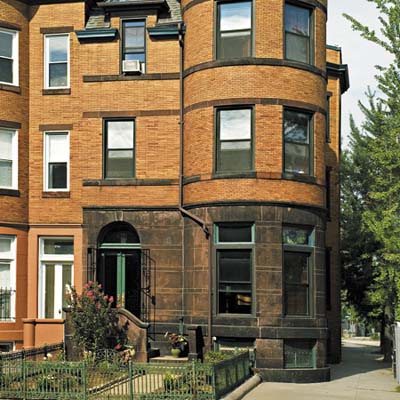
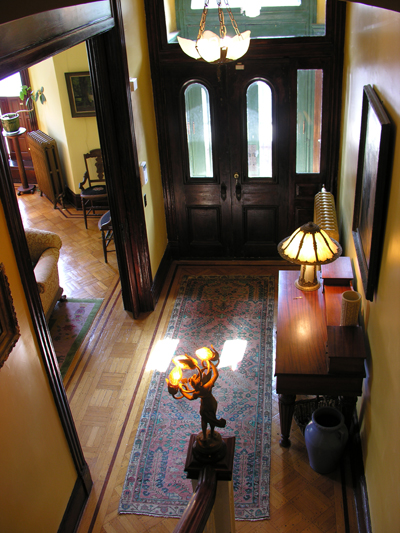
Many of us have seen the 1978 movie “Animal House.” Have you wondered what happened to the chapter house after the mischievous frat boys graduated? Homeowners Ron Tanner and Jill Eicher can pick-up where the story leaves off. They call Charles Village’s version of the infamous Animal House home. Please join us for a tour of this beautifully restored house and hear Mr. Tanner and Ms. Eicher offer tips on managing large projects, including how to stay together even when your house is torn apart.
Tour Details
2746 St. Paul Street, Baltimore, MD 21218
Tuesday, April 3rd | 5:30 pm – 7:30 pm
$15 members | $25 non-members (please join!)
Ron Tanner and Jill Eicher have spent 12 years renovating an 1897 Queen Anne rowhouse that was condemned property when they bought it. A notorious fraternity had all but destroyed the 4,500 square foot Charles Village house. The run-down rowhouse even found itself as the perfect setting for a horror film starring then unknown actresses Dana Delaney and Keri Russell. Undaunted, Mr. Tanner and Ms. Eicher took on a whole-house restoration, beginning with emptying out multiple roll-off dumpsters of trash. They found themselves learning how to re-plaster walls, finish floors, restore windows, and much more. Their work was featured in This Old House magazine in 2008, in Baltimore Magazine in 2012 in an article called “Trashed to Treasured,” and just a few months ago by the National Trust for Historic Preservation. Mr. Tanner, a writer by trade, created a blog about their adventures. The blog was very popular and led to the recently published book, From Animal House to Our House: a Love Story, a must-read for anybody who has struggled through a home renovation project. Mr. Tanner is a wonderful storyteller and the evening is sure to be entertaining as well as informative.
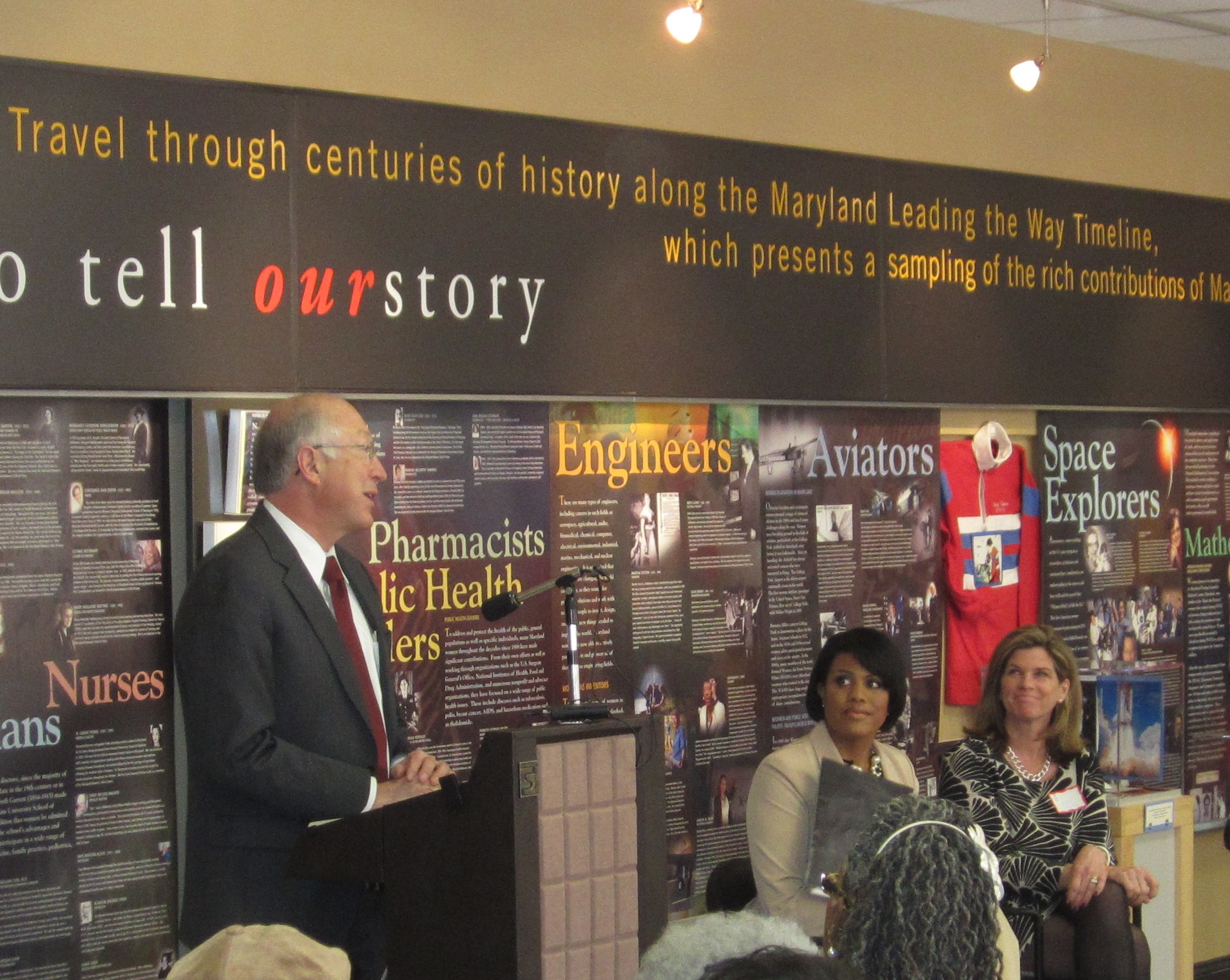
Secretary of Interior Ken Salazar at the Maryland Women's Heritage Center
On Tuesday, the Secretary of the Department of Interior Ken Salazar celebrated Women’s History Month with an appearance in downtown Baltimore at the Maryland Women’s Heritage Center, just one week before Baltimore Heritage’s Behind the Scenes Tour there (Saturday March 31, 2-3 pm). Joined by Mayor Stephanie Rawlings-Blake and Judge and First Lady Katie O’Malley, Secretary Salazar noted a serious underrepresentation of historic sites associated with women’s history, and articulated a vision for getting more of these places designated as National Historic Landmarks and listed on the National Register of Historic Places. In one example, the Secretary noted that of the country’s National Historic Landmarks, a designation that the Department of Interior bestows on buildings with the highest level of national significance, only 4% are places with significance to women’s heritage.
As the Secretary of the Department of Interior, Mr. Salazar oversees numerous agencies that are responsible for heritage sites, including the National Park Service that manages the National Register of Historic Places and the National Historic Landmark program. In his vision for the near future, Secretary Salazar said that as the National Park Service gears up to celebrate its centennial anniversary in 2016, he is committed to launching a national dialogue over women’s heritage sites to create a blue print for how to bring these to a higher level of prominence and visibility.
Citing Maryland as a national leader in the role of state governments to promote women’s heritage, the Secretary also said that he is committed to more full federal funding for State Historic Preservation Offices as a way to make sure that smaller places and ones with more local significance also receive assistance.
Baltimore Heritage will wrap up Women’s History Month with a tour of the Maryland Women’s Heritage Center on Saturday, March 31. The tour is from 2-3 pm at the Center: 39 West Lexington Street, in the historic former BG&E Building. The cost is $10. Register online today.
Last week, the Baltimore Sun and others reported that Baltimore City is hiring an Annapolis-based appraisal firm to determine the “market value” of fifteen city-owned historic properties. Baltimore Heritage has asked the Mayor and the director of the Department of Public Works to make this process open and participatory—ensuring that there is a seat at the table for the many citizens and volunteers who for decades have protected and celebrated these important landmarks.
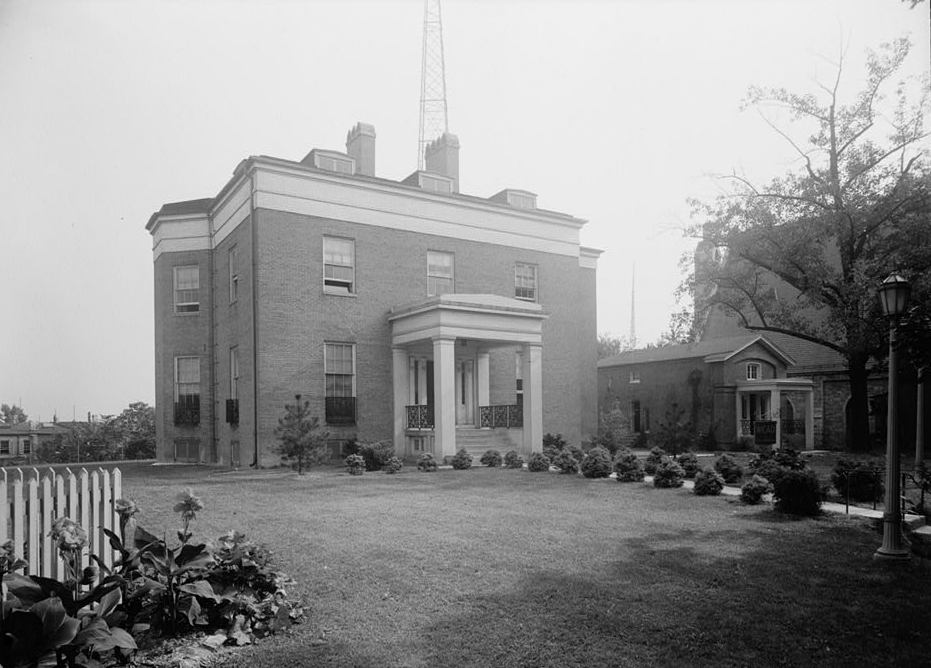
Upton Mansion in 1936, one of fifteen historic landmarks included in city-owned landmark review
Our most important goal must be to make sure the buildings are occupied, well cared for and remain intact as public assets for Baltimore. These fifteen properties are irreplaceable reminders of our city’s long history from the War of 1812 through the development and civic life of Baltimore up through the present. In addition, the ownership for each building should be evaluated based on what is best for its repair and maintenance. There are many different forms of ownership that these properties could have, ranging from public ownership and public use, leasing to nonprofit organizations, or even outright private ownership and private use. These options, and others, should be considered with the long-term care of the building as the guiding principle.
All of the properties should be protected with historic designation to make sure they are preserved, regardless of who owns them. Twelve of the fifteen properties are already on the city’s historic landmark list, requiring the approval of CHAP (the city’s preservation commission) for any exterior changes. Additional protections could include placing historic easements on the properties or including specific preservation requirements in leases or use agreements.
Finally, although the current proposal has targeted fifteen buildings, the city owns dozens more iconic historic structures — The Bromo Seltzer Tower, Patterson Park Observatory, Flag House, H.L. Mencken House, Washington Monument, and Babe Ruth House, are all city-owned historic properties. If nothing else, the attention and concern over this study has put city-owned landmarks in the spotlight. We should seize the opportunity to ensure a future for all of these historic places by creating an inventory of city-owned structures and a rehabilitation and maintenance plan for each.
“This Place Matters” at the McKim Center
For nearly all of these buildings, from the Shot Tower to President Street Station, local residents and preservation organizations have spent years, even decades, working to celebrate their unique stories and preserve them for our city’s future. These leaders understand the importance of this history more than anyone else. They and the city’s preservation commission must be at the center of any consideration for their future.
Baltimore City-Owned landmarks identified for possible lease or sale

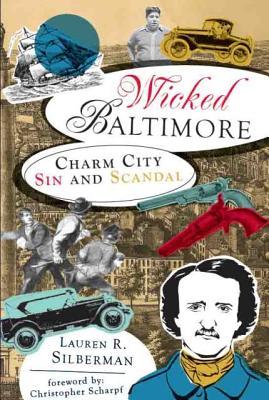 Pick up a copy of Wicked Baltimore: Charm City and Scandal to peek into the darker corners of Baltimore’s past or check out From Animal House to Our House: A Love Story for a story of the challenges and rewards of a DIY rowhouse rehab. We’ll be joined by both authors of these two new Baltimore books — Lauren Silberman and Ron Tanner — for a informal opportunity to drink and chat about books, buildings and history with fellow Baltimore preservationists (and book lovers)!