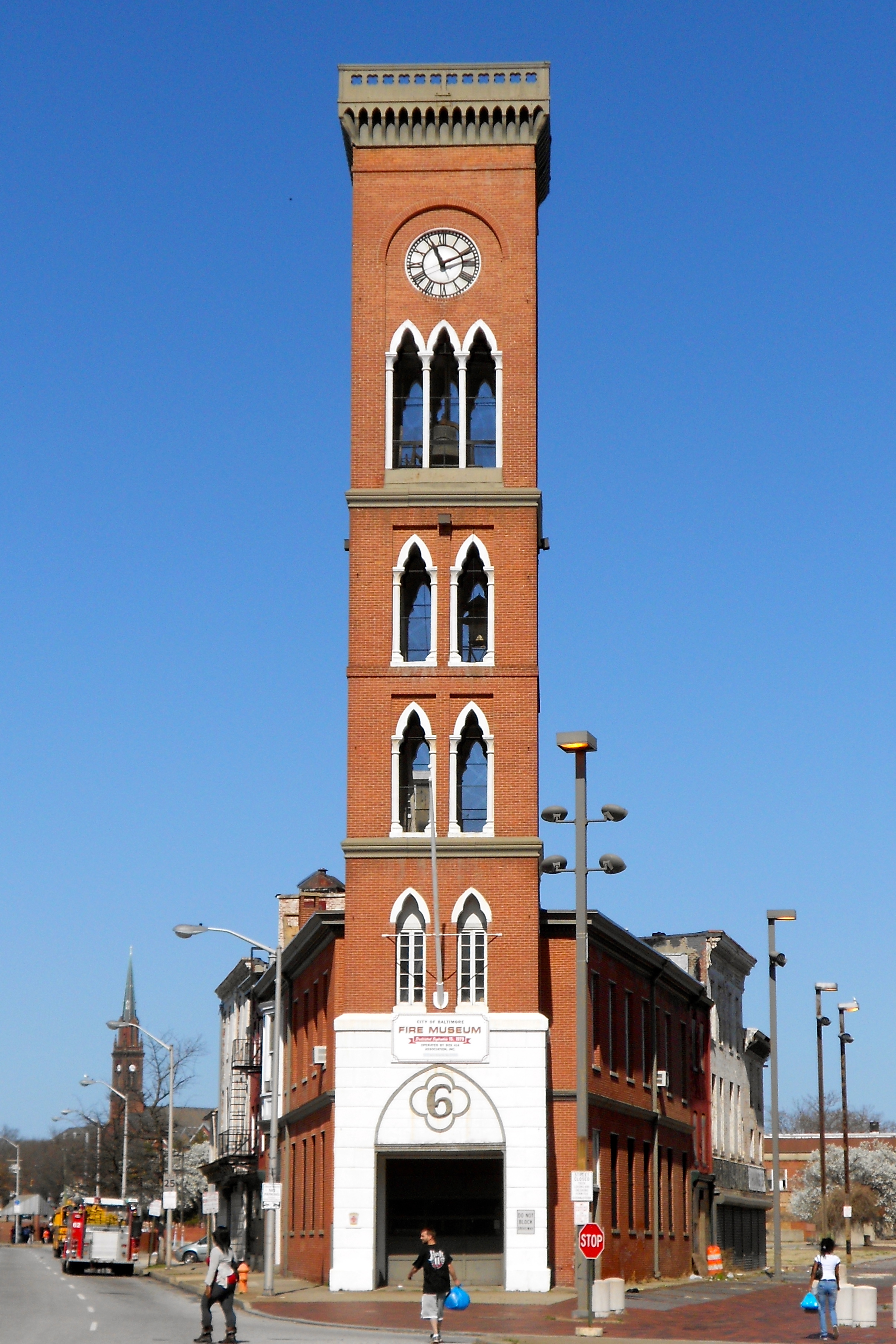
 Which is older, Old Engine House No. 6 or the Baltimore City Fire Department? If you picked the firehouse you would be correct. Completed in 1853, this venerable fire station predates the Baltimore fire department by four years. It is located on Gay Street in the Jonestown neighborhood and was built not for Baltimore City but for the Oldtown Independent Fire Company. In its day, this fire company would fight battles with rival companies over who would have the honor of putting out a blaze, a practice that helped give Baltimore its notorious name, “Mobtown.” In addition to its age, the building boasts notable architecture, especially its 103-foot Italianate-Gothic tower that was copied from Giotto’s campanile in Florence, Italy.
On the inside, Engine House No. 6 was home to a steam engine named, appropriately, the “Deluge,” that weighed 8,600 pounds. During the great 1904 Fire, teams from the firehouse helped pump water from the Jones Falls to prevent the fire from jumping the river and destroying East Baltimore, and also operated as a sort of field hospital for injured firemen. In 1960 Baltimore’s Fire Board recommended razing the tower because it had outlived its usefulness. The tower and the station, however, hung on in active use until 1976 when the building closed as a municipal fire station and transformed into the Baltimore Fire Museum. Today the building is included on the list of landmarks that the city is evaluating with regard to use and ownership. Please join us on a tour this wonderful historic space and its rich collection of artifacts to learn about this fascinating part of Baltimore’s history. We will have the honor of our tour being lead by Deputy Chief/Fire Marshal Raymond C. O’Brocki who will share his research on the firehouse.
Tour Details
Baltimore City Fire Museum
416 N. Gay Street, Baltimore, MD 21202
Thursday, August 9, 5:30 pm – 7:00 pm
$15 members | $25 non-members (wine & cheese will be served)
RSVP for this tour today!