Year: 2010

Next Saturday walking tour at West Baltimore Farmer’s Market!

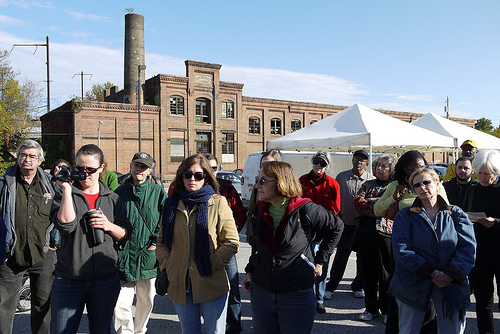
Tour group at the West Baltimore Farmer's Market, Greater Rosemont Walking Tour

Celebrate the end of the inaugural season of the West Baltimore Farmer’s Market and explore the history of the Greater Rosemont neighborhood with a free mile-and-a-half long walking tour on November 20 at 10:00 AM starting from the West Baltimore MARC Station (Southwest corner of the North Smallwood and West Franklin Street). In the early 1950s, the neighborhoods of Greater Rosemont flipped from nearly exclusively white to almost completely African American through a period of rapid “white flight.” The new residents established a stable middle-class community that successfully resisted demolition by the “Highway to Nowhere.”

This short walking tour will take you from the very beginnings of the neighborhood as a streetcar suburb up through the present day and the prospect of the new Red Line light rail route. It is also a chance to celebrate the last day of the West Baltimore Farmers Market which is brining fresh, locally produced food to residents who live in a community that is characterized as an urban “food desert.” Please RSVP for this free walking tour!

Behind the Scenes Tour of Lovely Lane


In 1784 during the “Christmas Conference” at the Lovely Lane Meeting House in Baltimore, American Methodist was born. Surprisingly, this predated the organization of the Methodist community in England where it originated. Please join us on a tour of Baltimore’s signature Methodist building today, the Lovely Lane United Methodist Church, known as the Mother Church of American Methodism and an architectural treasure to boot.

Date: Tuesday, November 23, 2010
Time: 5:30 p.m. to 6:30 p.m.
Place: Lovely Lane United Methodist Church (2200 St. Paul St., Baltimore 21218)
Cost: $10 for members / $20 for non-members (please join!)

Registration: Click here to register.
Read more

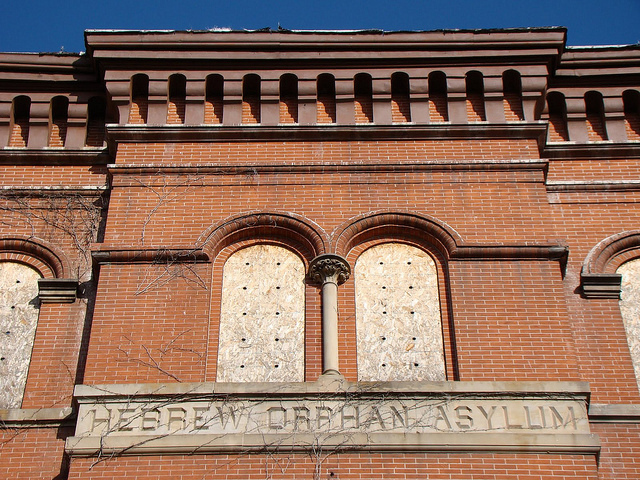
Good news for friends of the Hebrew Orphan Asylum

On October 28, the National Park Service officially added the Asylum to the National Register of Historic Places and is featuring the building as the “Weekly Highlight” on the National Register homepage. We were pleased to work with Coppin State University, the building’s owner, to draft and submit the nomination and want to thank all of you who have supported our work.

To stay informed about the Hebrew Orphan Asylum and its future, please become a fan on our new Friends of the Hebrew Orphan Asylum page on Facebook. We would also like to ask you to help us continue our work on the Asylum and in revitalizing historic West Baltimore by supporting Baltimore Heritage. Please consider donating $20 towards our work. It’s tax deductible and we’ll be glad to add you to our email list to find out about our monthly Behind the Scenes tours, spring neighborhood walking tours, and other programs across the city.

Thank you so much for all of your interest and help in preserving this irreplaceable Baltimore landmark. We look forward to sharing more good news in the weeks and months ahead.

2010 Preservation Awards: Falls Road Residence

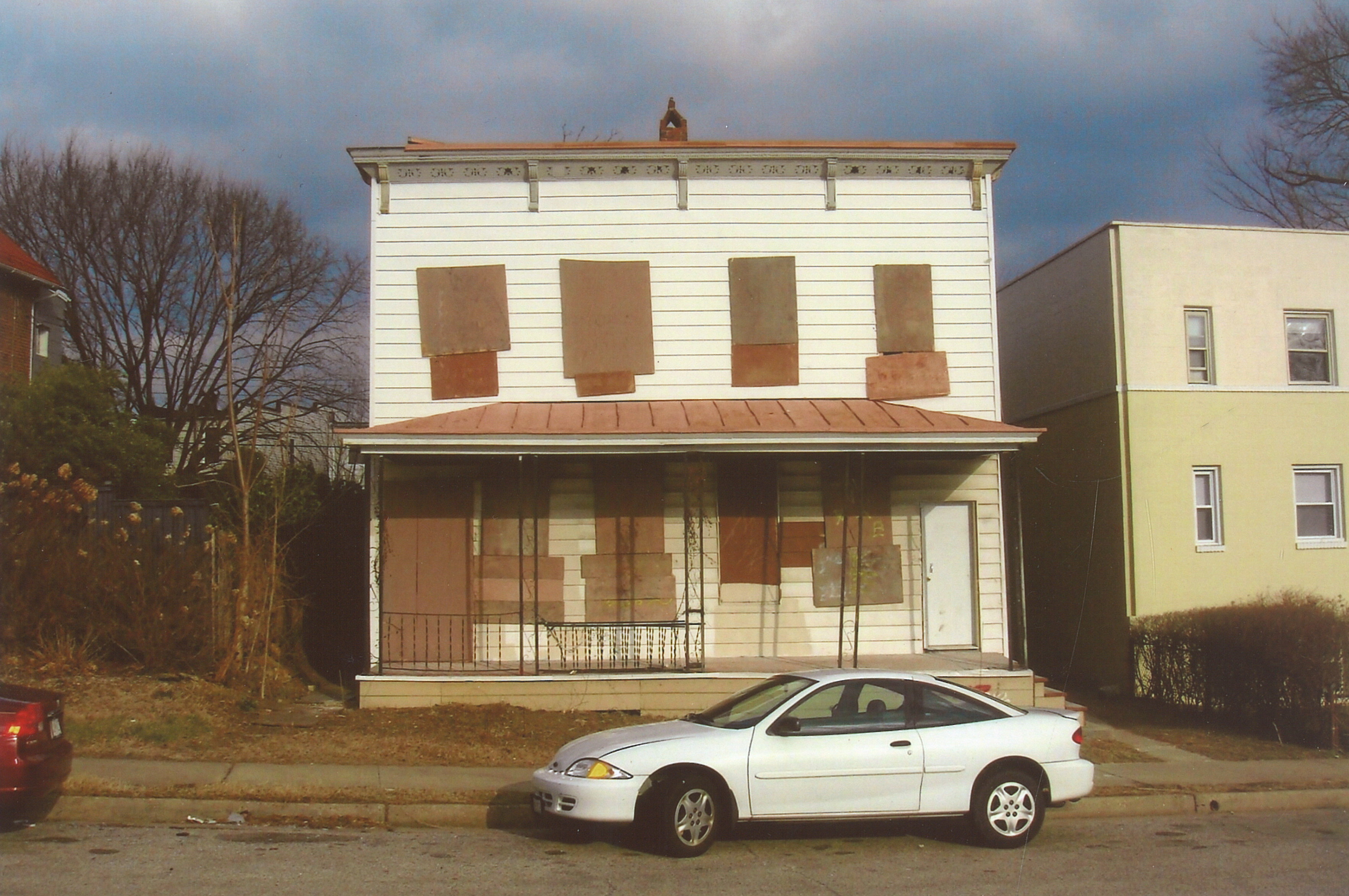
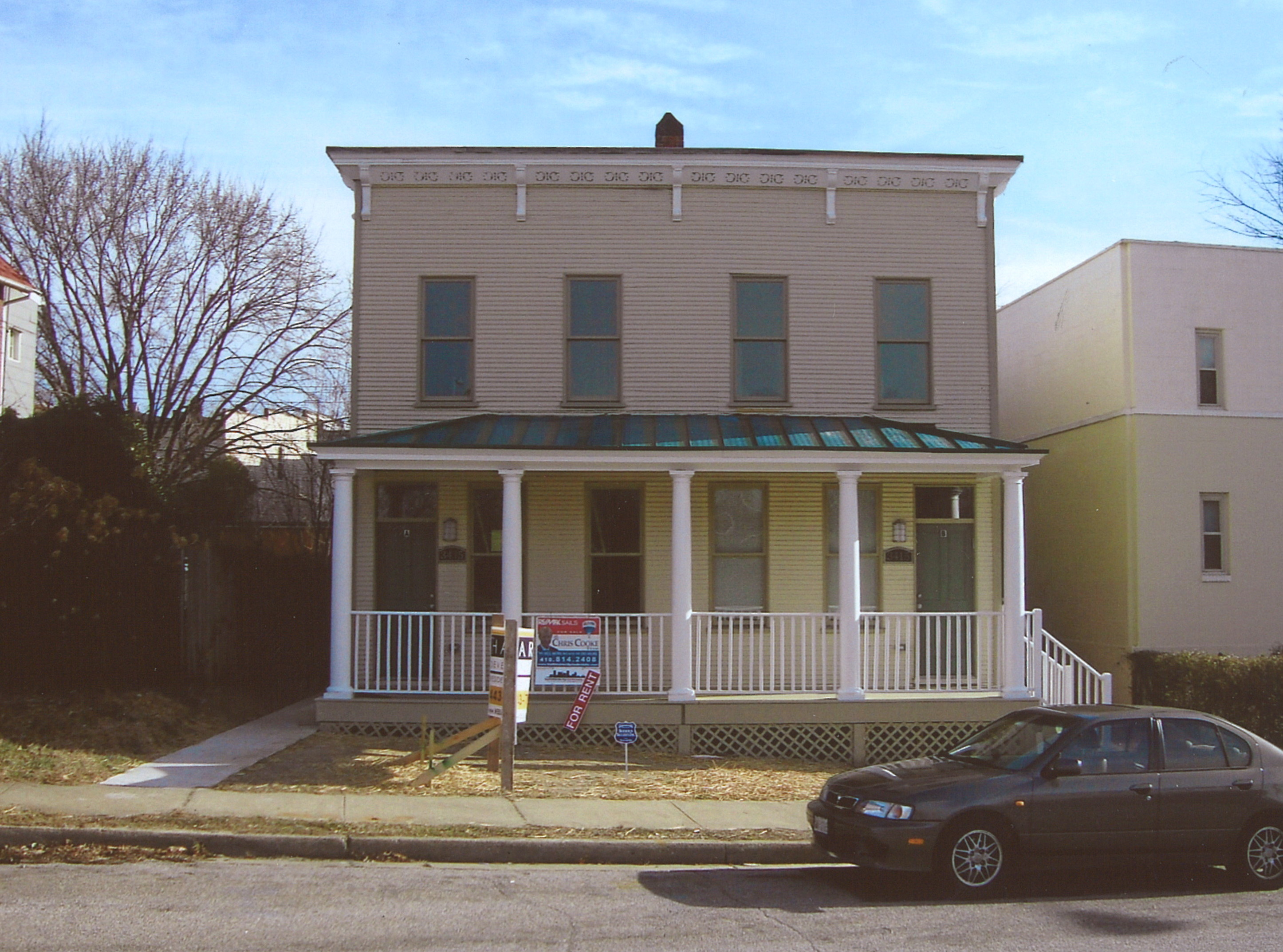
Today’s post is the beginning of a new category for our 2010 Baltimore Heritage Preservation Award winners.  The Restoration and Rehab Award recognizes that restoration or rehabilitation of historic commercial, institutional or residential buildings that have maintained the basic historic function of the building. Our first award-winner in this category is the Hampden Residence of Ezra Hercenberg at 3415 Falls Road.

Image courtesy Julie Tice

With new vinyl siding on the front and every single window missing, the building at 3415 Falls Road appeared an unlikely candidate for any type of historic preservation project.  Undaunted, the owner, Ezra Hercenberg, and his architect Julie Tice, charged in.  They removed the vinyl to reveal original German siding, which they preserved in place.  They repaired the porch, saving as much original material as they could, and they even were able to preserve the original cornice.  The end result is a wonderfully restored historic structure that brings new life to the Hamden historic district.

Image courtesy Julie Tice

Baltimore Building of the Week: Maryland Institute College of Art Main Building

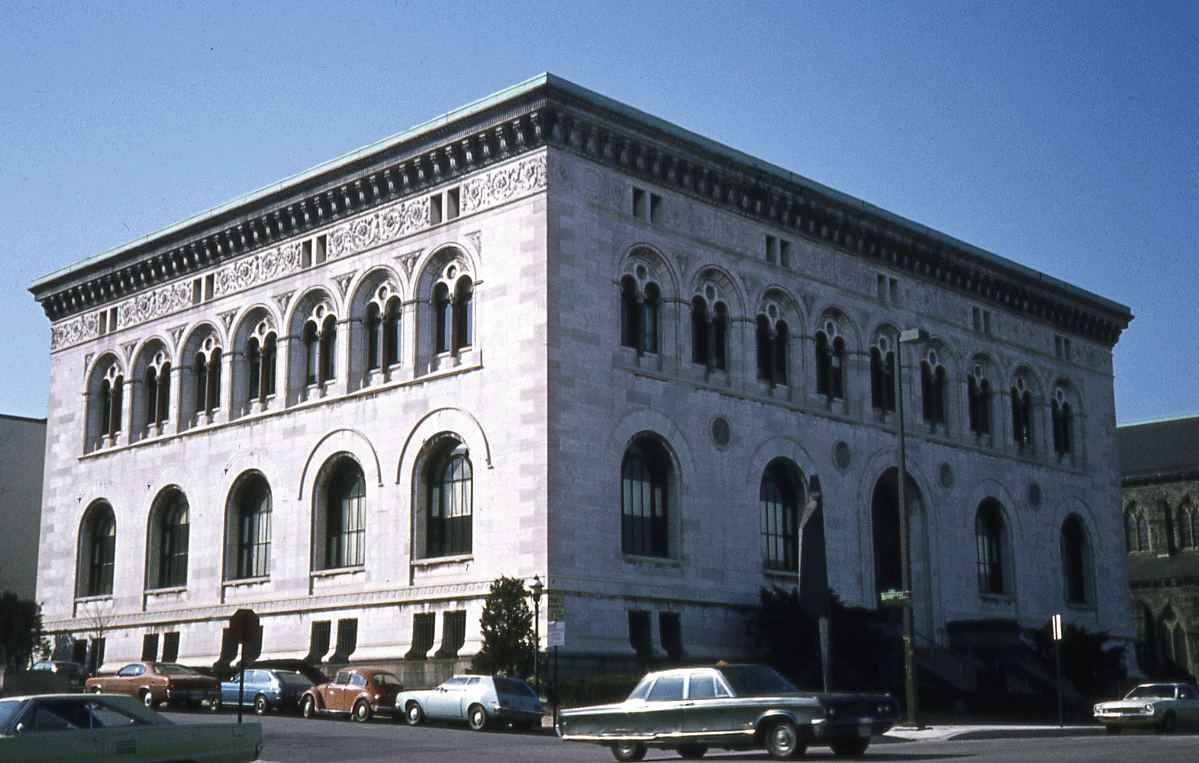
The Baltimore Building of the Week arrives on Mount Royal Avenue and the campus of the Maryland Institute College of Art for a feature on their 1908 Main Building designed by New York architects Pell & Corbett following a design competition sponsored by the New York Association of Independent Architects.

Image courtesy Jack Breihan

The Beaux-Arts movement in architecture used up-to-date technology clothed in various historical styles. Penn Station (featured last week) employed French Neoclassical elements; MICA’s Main Building revives the Italian Renaissance style. Renaissance palazzos were considered most appropriate for art galleries – the Walters Art Museum is another example.