
109 years and counting, Baltimore Guide, April 10, 2013
Finding architecture in the archives with the Roland Park Company collection at JHU
Thanks to Jordon Steele, University Archivist at Johns Hopkins University, Sheridan Libraries for this guest blog post on the Roland Park Company records and an upcoming panel discussion on the Roland Park Company’s lasting legacy in architecture, planning and society. Discover more about this archival adventure through monthly posts by Jordon and his colleagues on the Sheridan Libraries blog.
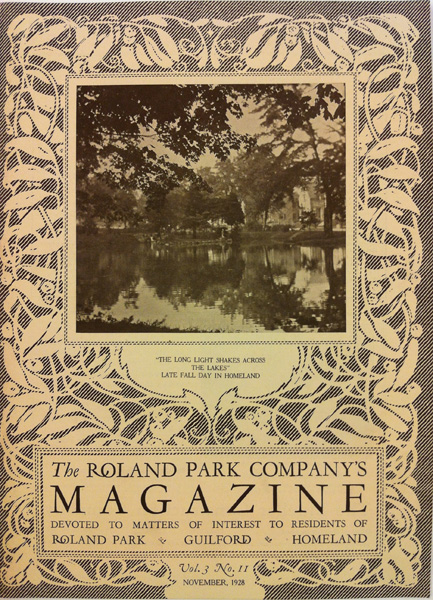
The Roland Park Company Records were donated to Johns Hopkins University’s Sheridan Libraries in 2010. This rich and diverse collection of correspondence, photographs, architectural drawings, and related corporate records provides a window into one of the most important development companies of the 20th century. Upwards of 400 cubic feet, upon arrival only a small portion of the Roland Park Company Records were fully processed and therefore accessible to researchers. Responding to overwhelming research demand from audiences ranging from the local community to international scholars, the Sheridan Libraries successfully applied for a grant from the Council on Library and Information Resources to hire a full-time, professional project archivist to arrange and describe this collection according to archival best practice. The collection will reopen to researchers, fully processed and accessible, in March 2014.
Please join us for an exciting program featuring the only two scholars that have published research based on the collection: Professor Robert Fishman, Taubman College of Architecture and Urban Planning, University of Michigan and Paige Glotzer, PhD Candidate, Department of History, Johns Hopkins University. They will be joined by Garrett Power, Professor Emeritus of Law, University of Maryland School of Law and the panel chair, Mary Ryan, John Martin Vincent Professor of History, Department of History
The Roland Park Company: Building History in Baltimore and Beyond
Tuesday, April 9, 2013, 5:30 pm to 6:30pm
Mason Hall Auditorium, Johns Hopkins University
Find more information on the event from JHU or on Facebook.

This panel will convene urban studies and land planning scholars to discuss the impact of the Roland Park Company’s projects on urban and suburban development, housing policy, race and ethnic relations, and architectural tradition. From the company’s start in 1891 through the mid-20th century, Baltimore’s Roland Park Company made a major impact on the city’s built environment, played a major role in defining the characteristics of suburbs and suburban life that are now second nature, and left behind a checkered legacy that endures to this day.
Spring is here and Looking Up Downtown is back at the Baltimore Farmer’s Market
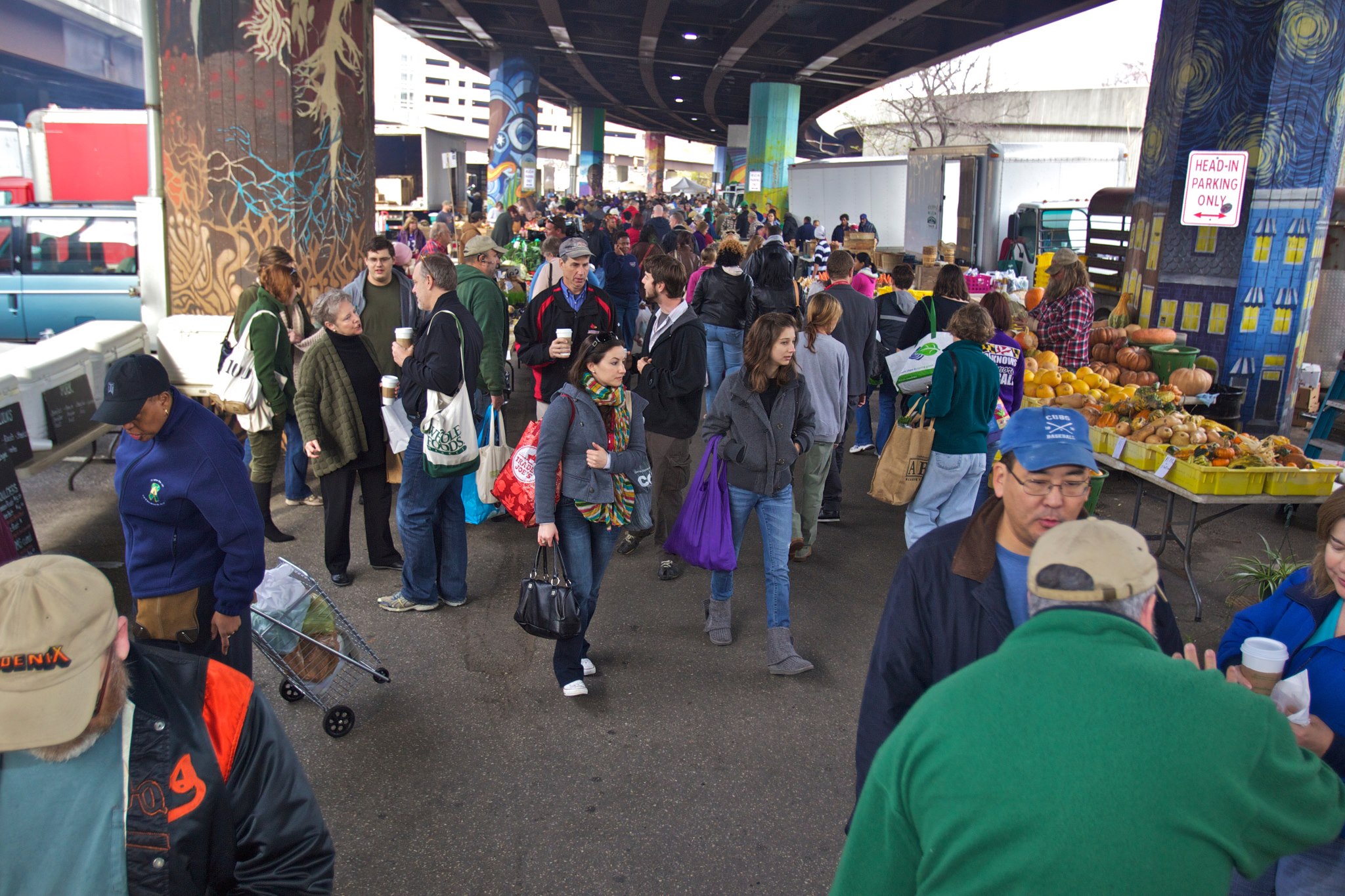
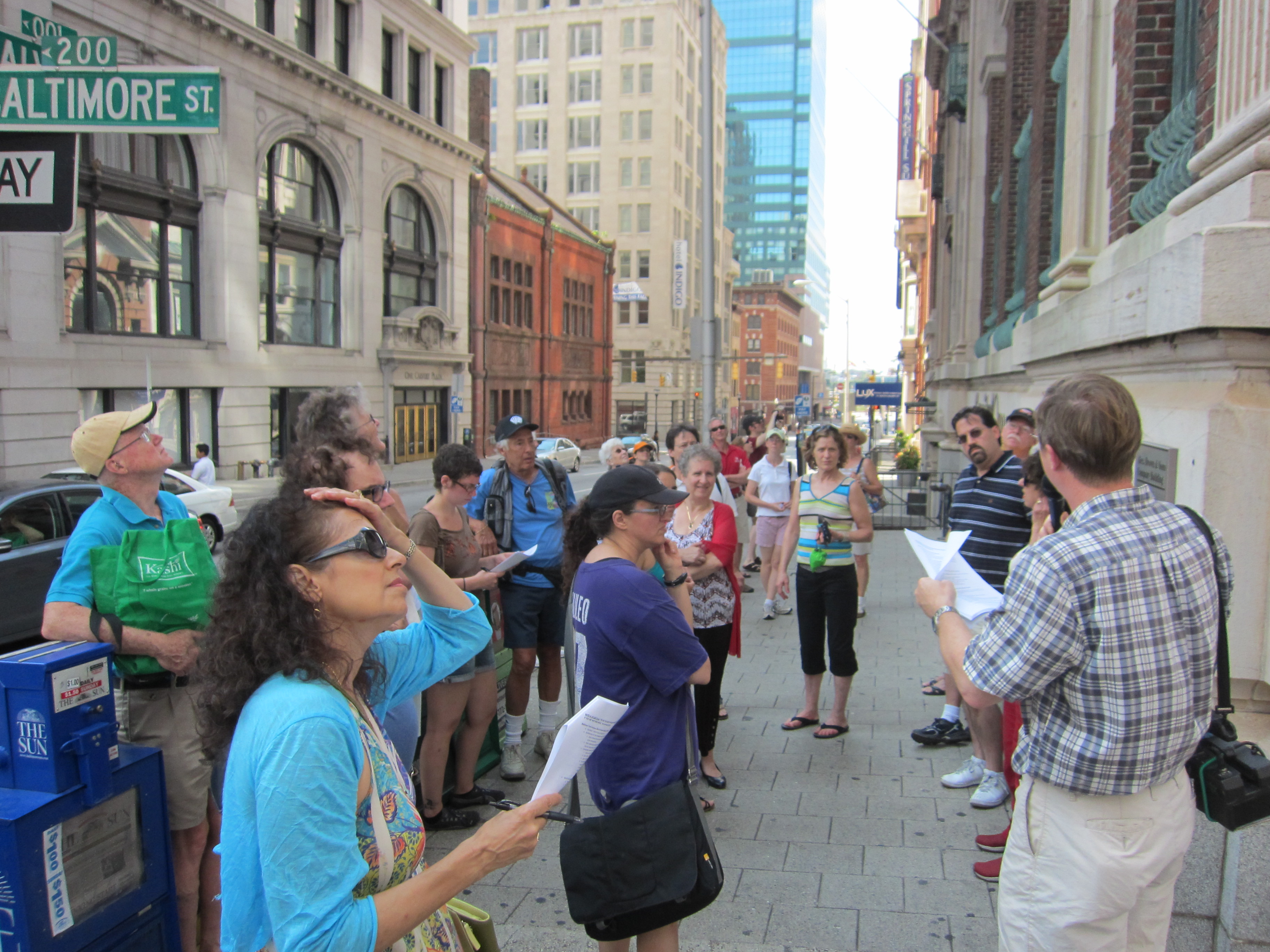
Spring has arrived and our popular Looking Up Downtown Tours are back. This Sunday is your chance to discover a piece of the Berlin Wall in downtown Baltimore, stumble upon a War of 1812 cannon ball, and catch a glimpse of the noble lions, hellish fiends, and neo-Egyptian sphinxes that call the buildings downtown home! With our quick 75-minute guided walking tour you will learn about the architecture and the history of downtown Baltimore. Our route winds through a yard of the early 19th century Zion Lutheran Church, past Baltimore City Hall to pay a visit to the proud survivors of Baltimore’s Great 1904 Fire and return right back where we start at the Baltimore Farmer’s Market!
Looking Up Downtown – Gargoyles & More!
Sunday, April 7, 9:30am to 10:45am
Tours continue twice a month on the first and third Sunday from April through November.
Meet at the Baltimore Farmers’ Market – at the Hollywood Diner, N. Holliday and S. Saratoga Streets
RSVP online today! $5 for adults. Children under 16 are free!
New self-guided tour highlights the history of Baltimore’s Clarence Mitchell, Jr. Courthouse
Thanks to William M. Dunn, Master in Chancery of the Circuit Court for Baltimore City for contributing a guest post on the history of Baltimore’s Clarence Mitchell, Jr. Courthouse. William Dunn and a generous group of volunteers welcome visitors to the Courthouse most weekdays from noon to 1:00pm at the Museum of Baltimore Legal History. Stop in and pick up the museum’s new self-guided walking tour brochure (also available to check out on Facebook or at the Baltimore Bar Library) by Master Dunn and his colleague James Schneider, Judge for the U.S. Bankruptcy Court for the District of Maryland. Small group tours may be available on request – contact William Dunn at 410.396.3304 or william.dunn@mdcourts.gov for more information.
 In 1885, Baltimore City set out to build the most beautiful Courthouse in the country. Fifteen years, and $2.2 million later ($56 million adjusted for inflation), that goal was realized. On January 6, 1900, the Baltimore Sun reported that the City of Baltimore had built a “temple of justice, second to no other in the world.” The building, which is a magnificent exemplification of Renaissance Revival architecture, continues to stand as a monument to the progress of the great city of Baltimore, and to the importance of the rule of law.
Today, this main building in the Baltimore City Circuit Court complex is referred to as the Clarence M. Mitchell, Jr. Courthouse in honor of the local lawyer and nationally respected civil rights leader. Most of the original splendor of this massive building can still be enjoyed, including the granite foundation, marble facades, huge brass doors, mosaic tiled floors, mahogany paneling, two of the world’s most beautiful courtrooms, domed art skylights, gigantic marble columns, and beautifully painted murals. In addition, the Courthouse is home to one of the oldest private law libraries in the country, and to the Museum of Baltimore Legal History.
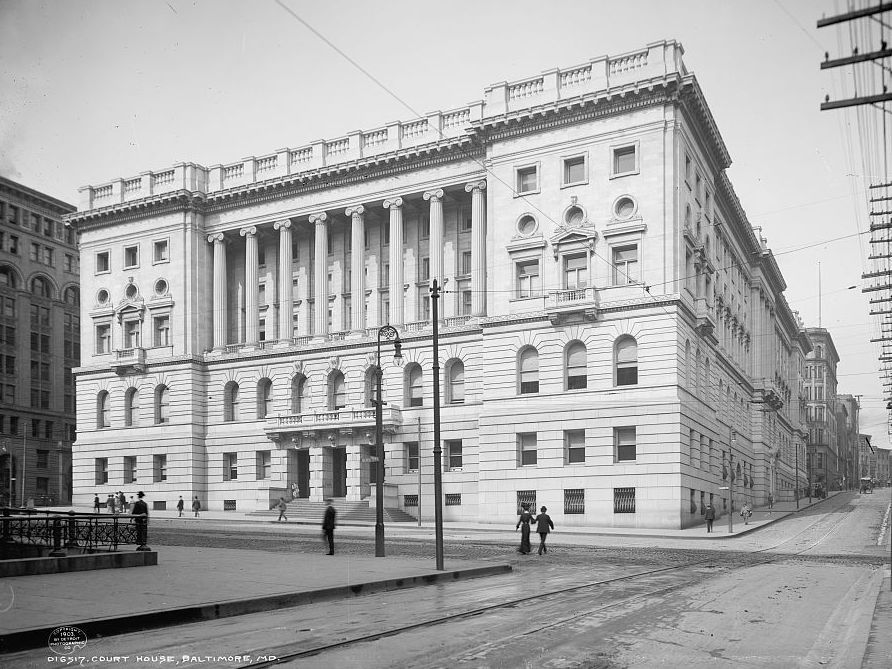
The exterior foundation of the Clarence M. Mitchell, Jr. Courthouse was built from granite quarried in Howard County, while the exterior walls are crafted from white marble quarried in Baltimore County. The Calvert Street exterior façade is especially outstanding, as it displays eight of the largest monolithic columns in the world, each weighing over 35 tons and measuring over 35 feet in height. The interior of the building is even more impressive. Among the many historic spaces, the Supreme Bench Courtroom is one of the finest. The circular courtroom is like no other in the world. It is surmounted by a coffered dome resting upon sixteen columns of Sienna marble from the Vatican Quarry in Rome. Inscribed upon the frieze around the base of the dome are the names of Maryland’s early legal legends.
Other fascinating rooms include the Old Orphans Courtroom (which houses the Museum of Baltimore Legal History); the Ceremonial Courtroom, and the Bar Library (described as one of the most elegant interior spaces in Baltimore, with its paneled English oak walls and barrel-vault ceiling punctuated by forty art glass skylights).
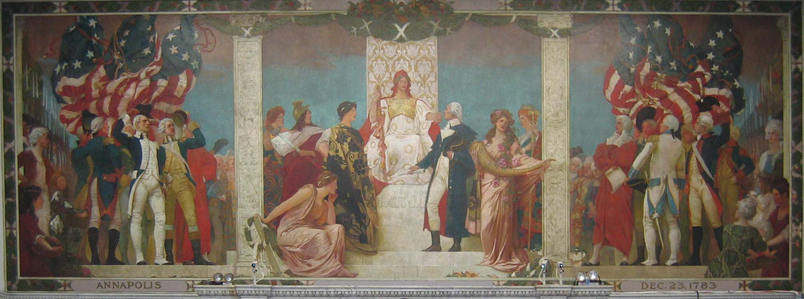
Also noteworthy for its artistic beauty are the two domed stained-glass skylights above the stairs in Kaplan Court which depict the goddesses of Justice, Mercy, Religion, Truth, Courage, Literature, Logic and Peace. In addition, the courthouse has six original murals from world renowned artists depicting various civic and religious scenes. Those murals include: Calvert’s Treaty with the Indians; The Burning of the Peggy Stewart; Washington Surrenders His Commission; Religious Toleration; The Ancient Lawgivers; and The British Surrender at Yorktown.
New historic marker commemorates the 1877 Railroad Strike at Camden Station
Our latest guest blog post comes from Bill Barry, long-time Director of Labor Studies at the
Community College of Baltimore County introducing us to the Great Railroad Strike of 1877 and a new historic marker at Camden Station to commemorate the event. We’re also excited to feature a video on the 1877 strike produced for Explore Baltimore Heritage by UMBC student William Carroll for the course Practices in Public History course with Dr. Denise Meringolo.
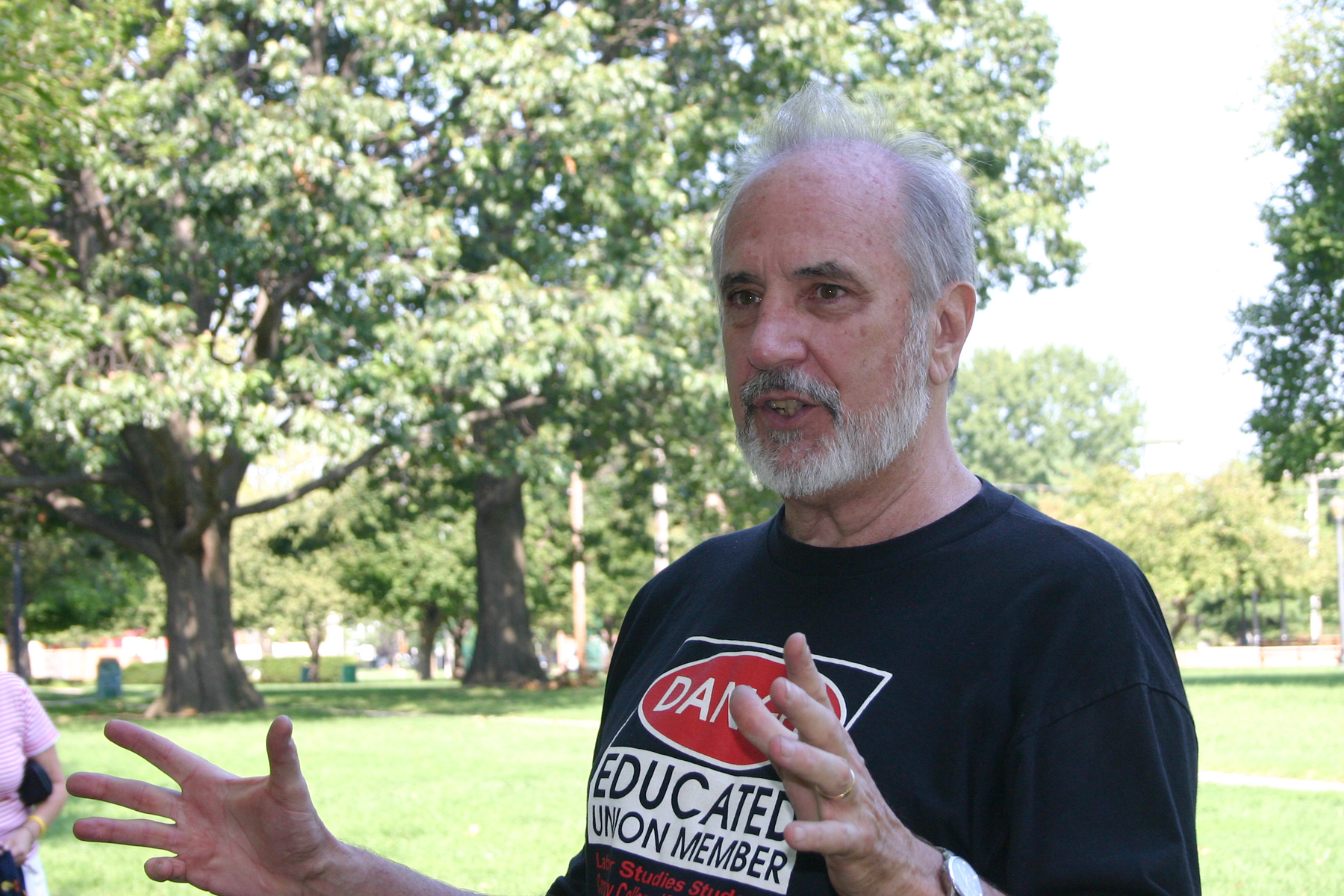
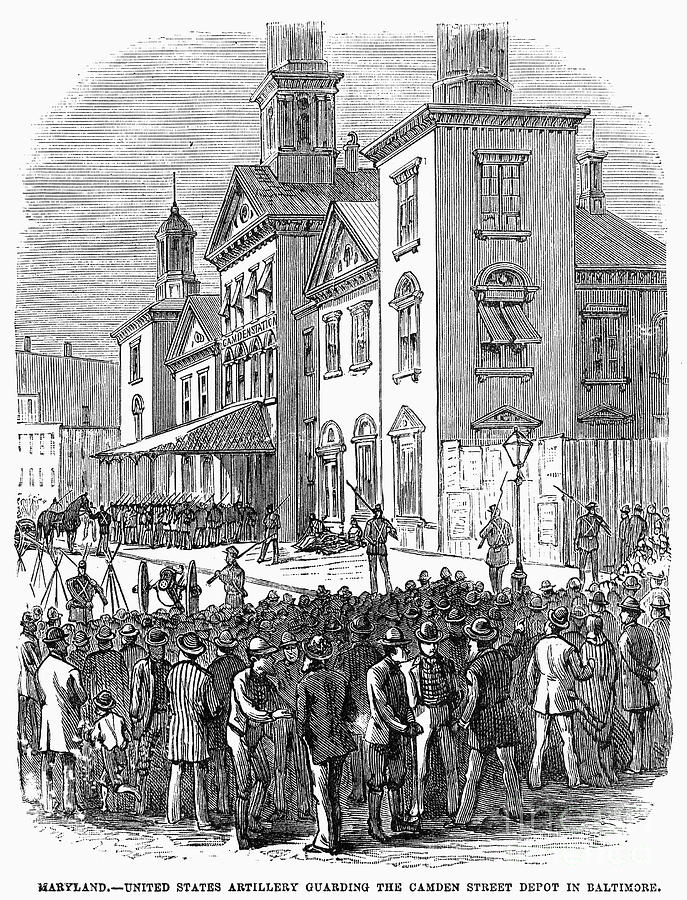
When I spoke at a gathering of the Occupy Movement at the McKeldin Fountain in 2011, I mentioned that we were on hallowed ground because the original “occupy” movement in Baltimore City occurred in 1877, as tens of thousands of railroad workers carried on the first national strike, shutting down all freight traffic and giving new meaning to the term “reconstruction.” The strike started on July 16, 1877, against the B & O Railroad and the first strike demonstrations were in front of the company’s main depot at Camden Yards.
One aspect of the strike was the military opposition to the strikers, first from state militia in Maryland and West Virginia, and then by federal troops ordered out by President Rutherford B. Hayes, who had been elected, in part, for his commitment to withdraw all federal troops from the states. In a devastating moment, eleven citizens were murdered by the militia near City Hall as the troops tried to march from the armory across from the Shot Tower to Camden Yards. Since this movement is virtually unknown—the Pratt Library catalogues its documents under “The Riots of 1877″—I decided to propose a historical marker in front of Camden Yards, honoring the strikers and their community.
 The process for applying for a new marker is available at online at the Maryland Historical Trust website. While proposals generally have to get approval from the State Highway Administration, this one also had to pass the Maryland Stadium Authority because of its unique location. In addition to the usual historical support, I also turned in several dozen letters from high school teachers across the country, who participated in a workshop in July, 2011, about the strike. My partners in this project—Nancy Kurtz from the Maryland Historical Trust and Jan Hardesty, from the Stadium Authority—were wonderful and a process that I was warned could take years was completed in about six months! The state cast (and paid for) the marker, using language I proposed, and the unveiling will be a great event.
1877 Railroad Strike Historical Marker Unveiling
Saturday March 23, 10:30 am
Unveiling at Camden Yards in front of the B&O Warehouse on Howard Street
See the Orioles website for information on parking and transit options. There will be a reception after the unveiling at The Irish Railroad Workers Museum on Lemon Street, across from the B & O Museum. Free parking is available for anyone who RSVPs in advance with Bill Barry at billbarry21214@gmail.com.