Win a week at a private Nicaraguan villa!

Support Baltimore Heritage by buying a chance to win a week’s stay at a privately owned Spanish Colonial villa along Nicaragua’s Pacific coast, courtesy of Baltimore’s own Agora, Inc.  And they make great stocking stuffers! You can experience the privacy of a remote tropical paradise and the luxury of modern accommodations with a private cook, house-keeper, and transportation to and from the airport.  Horseback riding, spa, tennis, restaurant, bar, pool and more are available at the adjacent resort of Rancho Santana.

  • Maximum 500 raffle tickets will be sold
  • $20 for 1 ticket or $50 for 3
  • Drawing at the end of December 2010

Call Baltimore Heritage director Johns W. Hopkins at 410-332-9992 for details and to purchase raffle tickets.

Bittersweet news for the Poe House

This fall has been bittersweet for Baltimore’s Edgar Allan Poe House and Museum. In November, the Poe House was honored by the Maryland Office of Tourism with a 2010 tourism award for its “Nevermore 2009” campaign. The year-long tribute to Poe’s 200th birthday generated $1.9 million in advertising equivalency, over 400 printed articles, and sold out events with people coming from as far away as Europe and Asia.

Unfortunately this fall the Poe House also received news that Baltimore City has decided to no longer provide funding for the city-owned museum. The museum’s sole staff member, director Jeff Jerome, had worked through Baltimore’s Commission for Historical and Architectural Preservation (CHAP) for nearly three decades. The museum and CHAP are now working to find a solution to keep the building open. They have put out a request for proposals to hire a consultant to develop an operating and financial plan for the long-term sustainability of the museum. The deadline for submissions is in early December and CHAP expects to bring on the consultant in early January 2011.

Baltimore Building of the Week: Loyola University Quadrangle

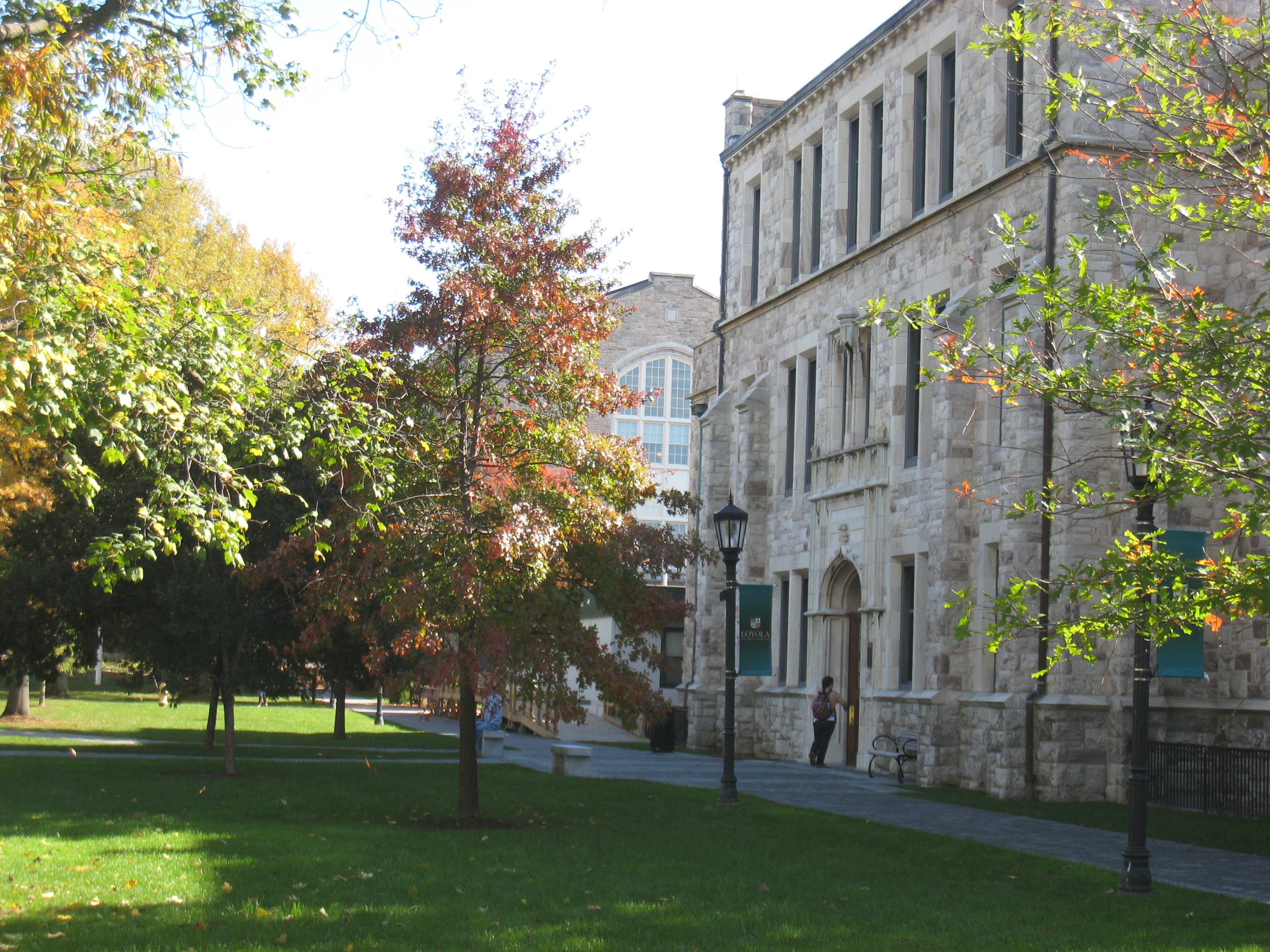
This week’s edition of our Baltimore Building of the Week highlights the history of Loyola University–where Dr. John Breihan teaches–with a feature on the Loyola University Quadrangle,

Image courtesy Jack Breihan

Another historical style taken up under the impulse of the Beaux-Arts movement was Gothic. Unlike the “gingerbread” Gothic revival of the early 19th century or the robust Victorian Gothic, the Gothic revival of the Beaux-Arts period adhered closely to actual medieval models, except that now these were steel framed buildings. Plumbing and heating were included; buttresses were entirely ornamental. The “Collegiate Gothic (so called on account of its popularity on college campuses) had tracery, moldings, and sculptural executed in white or tan limestone that contrasted with the natural colors of local fieldstone walls.

American colleges were restless in the early 20th century; many abandoned constricted urban sites for new locations in the suburbs. In Baltimore, Johns Hopkins moved to Homewood, Loyola to Evergreen, and Goucher to Towson (the latter move delayed by World War II). Hopkins’ new campus is neo-federal in style; Goucher took up the International Style. Loyola’s Collegiate Gothic period began in 1922 with Beatty Hall, pictured here along with neighboring Jenkins Hall, both from 1922-23. Unlike Hopkins and Towson, which face the outside world across a green lawn or “campus,” Loyola’s academic buildings and chapel face inwards a central court that derives from medieval college quads at universities like Cambridge and Oxford.

Congratulations to Preservation Maryland Award Winners!

Baltimore Heritage 50th Anniversary Celebration

On November 16, 2010, Preservation Maryland, our statewide historic preservation organization, honored long-time Baltimore Heritage board member and executive director of the Baltimore Chapter of the American Institute of Architects Karen Lewand with a volunteer award for her work. Ms. Lewand has been an active Baltimore Heritage board member for 27 years.

Among other significant accomplishments, she began Baltimore’s first tour series to explore historic neighborhoods around the city, a popular program Baltimore Heritage continues to this day, and she led an effort to write and publish histories of Baltimore’s neighborhoods. Ms. Lewand is a former commissioner of the Baltimore Commission for Historical and Architectural Preservation (CHAP) and was a founder of the state-wide smart growth organization 1000 Friends of Maryland. As the director of AIA Baltimore, Ms. Lewand has led the growth of that organization, including bringing a spotlight to the city’s architecture through an annual architecture week program that has now turned into a month-long series of lectures and events. The next time you see Ms. Lewand, please congratulate her on a much-deserved award.

The 2010 Preservation Maryland award winners also include John L. Graham, III, AIA of Salisbury who received the President’s Award for his architectural work and volunteer historic preservation efforts on Maryland’s Eastern Shore. Eddie and Sylvia Brown of Brown Capital Management and the Brownstone Project received the Stewardship Award for projects including Baltimore’s iconic Bromo Seltzer Tower. Finally, Preservation Maryland’s inaugural Phoenix Award went to Humanim, Inc. for their radical transformation of the long abandoned American Brewery into an asset for East Baltimore as Humanim’s workforce development center. Congratulations to all of this year’s award winners and to Preservation Maryland for another successful year supporting historic preservation in Maryland!

Baltimore Building of the Week: Hansa Haus

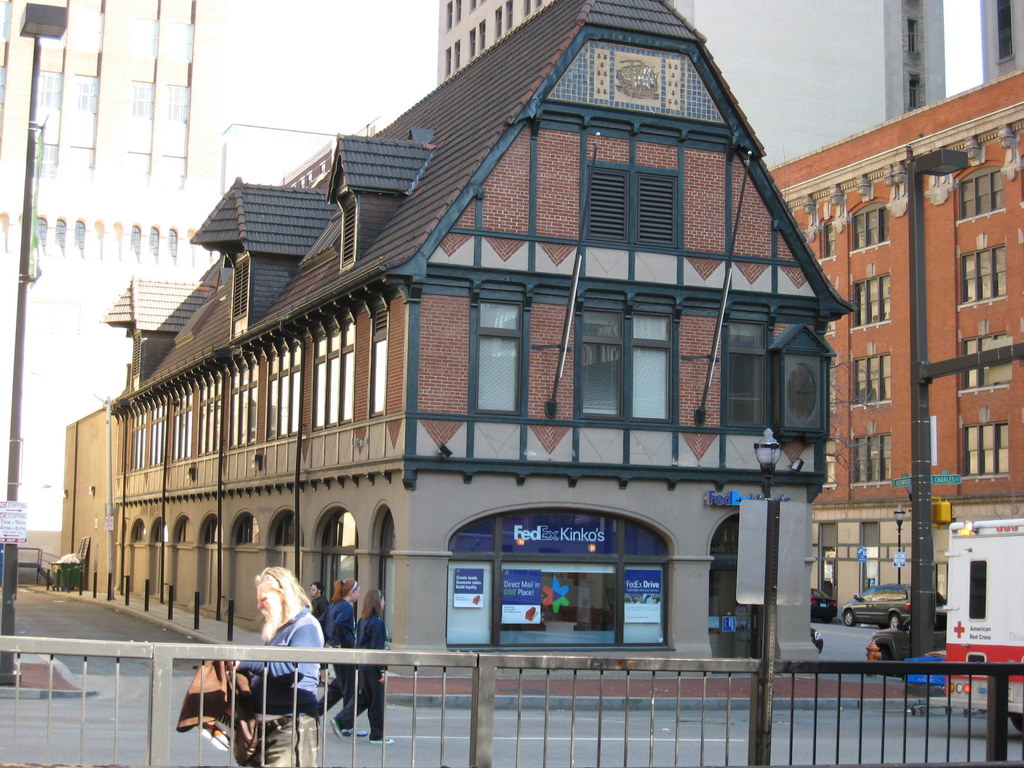
This week’s Baltimore Building of the Week from Dr. John Breihan, the Hansa Haus at Redwood and Charles Streets, is right next door to last week’s building– the Savings Bank of Baltimore. The Hansa Haus reflects both Baltimore’s rich German heritage and the history of immigration into Locust Point as the former Baltimore office of the North German Lloyd Steamship Company–

Image courtesy Jack Breihan

A favorite Beaux-Arts era historical-revival building housed the Baltimore offices of the North German Lloyd Steamship Company, a decidedly up-to-date modern enterprise when this building was erected in 1912. Its site, adjacent to the Baltimore Savings Bank (see last week) testified to the importance of German immigration to Baltimore in the early 20th century. To prevent said immigrants from being too homesick, Hansa Haus resembled a half-timbered 16th-century German Rathaus, perhaps the Zwicken in Halberstadt. Originally coats of arms of the cities in the Hanseatic League decorated the upper floor. Since the departure of the steamship line, Hansa Haus has had a variety of uses; it remains a challenge to sympathetic re-use.