Category: Behind the Scenes Tours

Celebrate five years of Behind the Scenes Tours with a House and Village Tour in Dickeyville

Baltimore Heritage’s Behind the Scenes Tours Program is celebrating 5 years and over 100 tours of sites throughout Baltimore with a guided house and village walk in Dickeyville.  Please join us for this fundraising event to learn about one of Baltimore’s oldest communities, peek inside a few private homes, and ensure the tours can keep going strong for years to come.

House and Village Tour in Dickeyville

Saturday, September 8, 2012
4:00 to 5:30 p.m.
2411 Pickwick Rd (Baltimore 21207)
$25 for members / $35 for non-members
RSVP today and bring a friend!
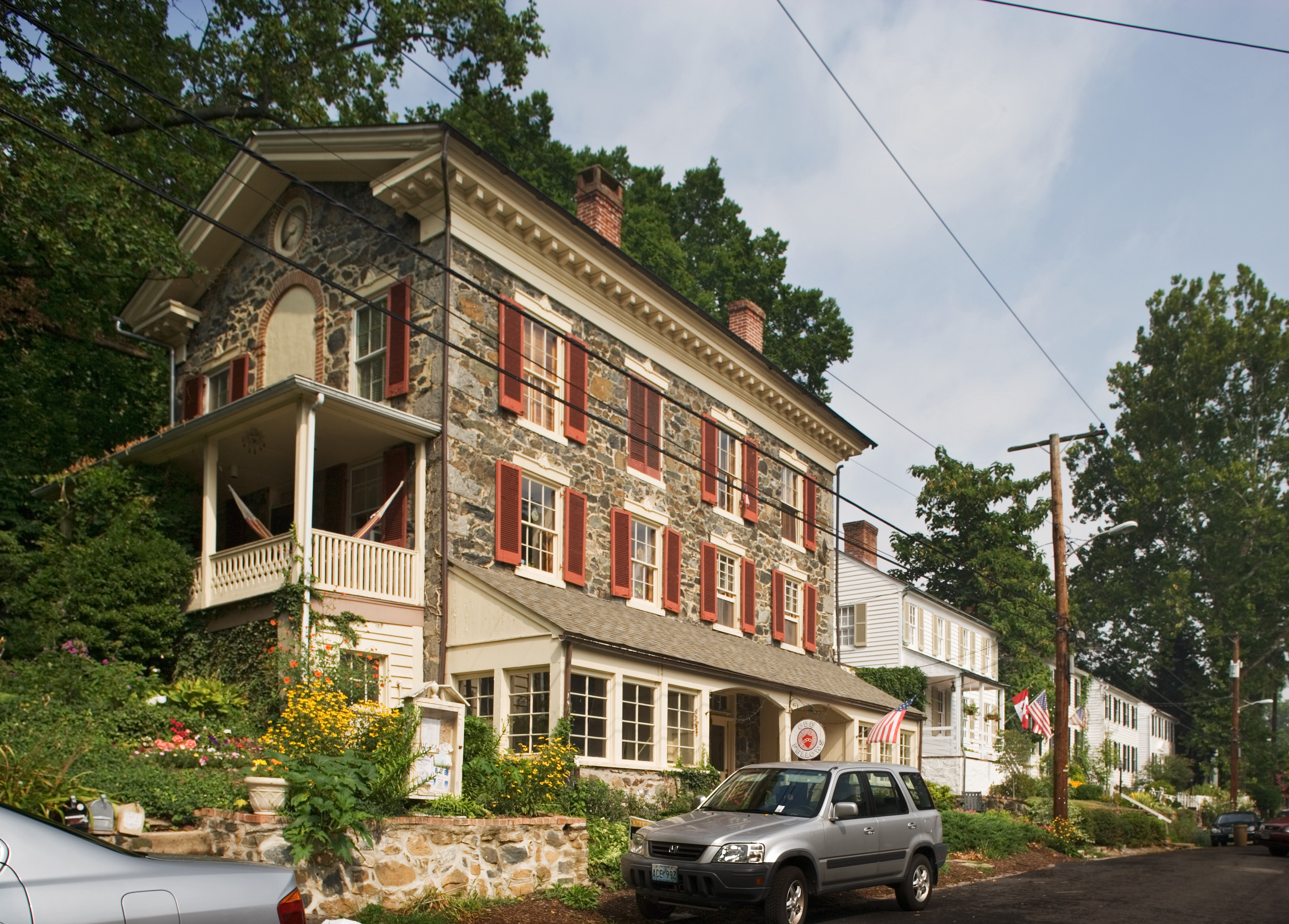
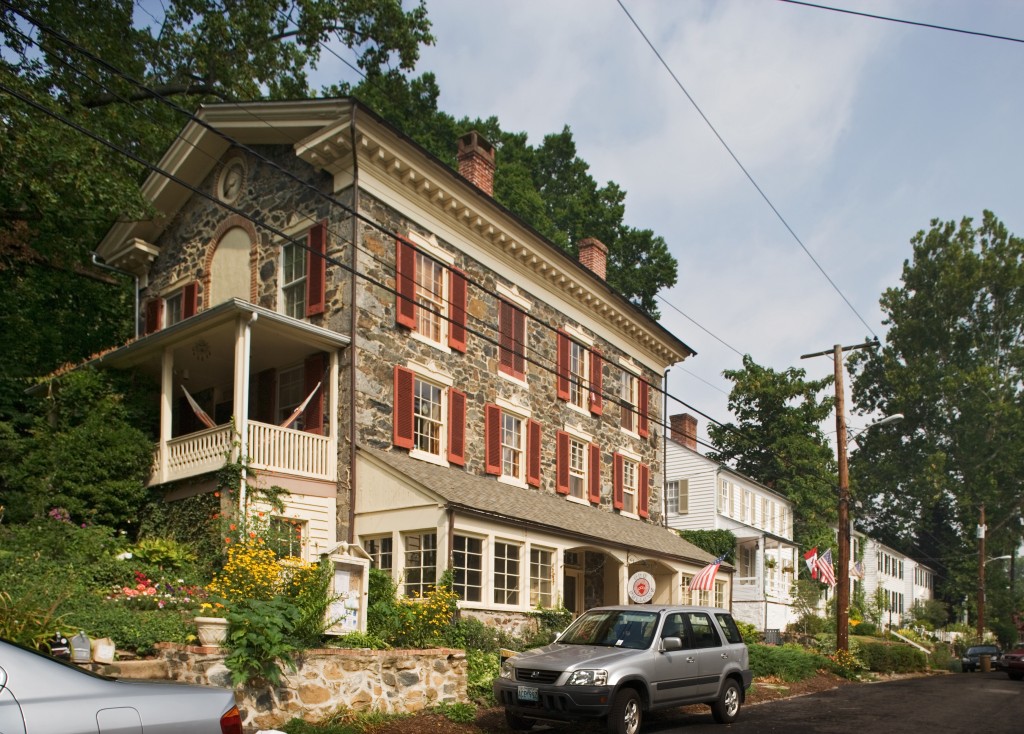
The Gwynns Falls first saw industrial development as early as the late 1700s and, by 1808, the small industrial village began to form around an early paper mill along the water where Dickeyville sits today. Although few of these early stone structures remain, the village endured and grew in the mid 1800s when the Wethered Brothers, owners of the mills, began building homes for their workers and made other improvements for the community. The Wethered’s sold off small lots to private owners, many of whom built their own houses along with public buildings such as a fraternal hall, a general store, and churches. The diversity of worker housing and industrial buildings created over time resulted a uniquely diverse architecture that is at the heart of the historic village’s captivating character today.

In the 1930s, however, the isolated mill village was rocked by change thanks to the start of the Great Depression and the introduction of electrified industrial facilities that brought older mills like those on the Gwynns Falls to a stop. In 1934, the entire stock of buildings was sold at auction and bought by a group called the Title Holding Company. The new owners hired Palmer and Lambden, noted local architects from the Roland Park Company, to build new houses and renovate existing ones, using the Roland Park Company as its sales agent. A rush of new residents decided they wanted their community to resemble an English village in design and name – making Dickeyville one of Baltimore’s earliest attempts at historic restoration. The new homeowners added many historic details such as gaslamps, Belgian Block gutters, and picket fences, and gave their streets names evoking another era – like Pickwick Road named for an English village.

Dickeyville residents have worked hard for several generations to maintain and build from the village’s historic buildings and character. Standing in the center of the community today, you might swear you were in the middle of an 19th century village in the Cottswalds. Please join our hostess, Patricia Hawthorne, and resident tour guide Mike Blair for a short stroll around the village and a look inside three private homes: with hosts Elizabeth and Steven Sfekas, Leslie and Bruce Greenwald, and Patricia Hawthorne.
Behind the Scenes Tour of the Old Town Firehouse

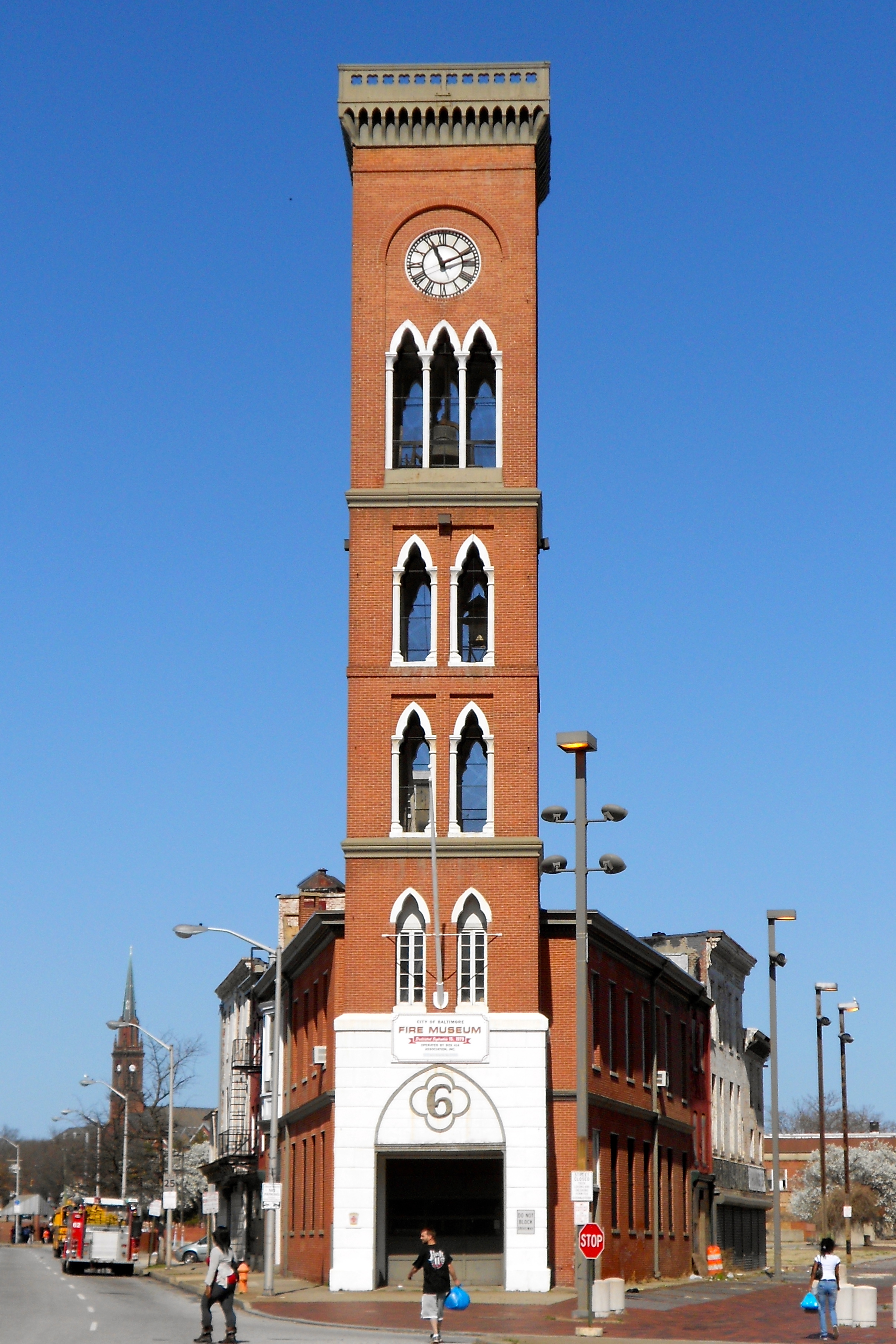
Which is older, Old Engine House No. 6 or the Baltimore City Fire Department? If you picked the firehouse you would be correct. Completed in 1853, this venerable fire station predates the Baltimore fire department by four years. It is located on Gay Street in the Jonestown neighborhood and was built not for Baltimore City but for the Oldtown Independent Fire Company. In its day, this fire company would fight battles with rival companies over who would have the honor of putting out a blaze, a practice that helped give Baltimore its notorious name, “Mobtown.” In addition to its age, the building boasts notable architecture, especially its 103-foot Italianate-Gothic tower that was copied from Giotto’s campanile in Florence, Italy.

On the inside, Engine House No. 6 was home to a steam engine named, appropriately, the “Deluge,” that weighed 8,600 pounds. During the great 1904 Fire, teams from the firehouse helped pump water from the Jones Falls to prevent the fire from jumping the river and destroying East Baltimore, and also operated as a sort of field hospital for injured firemen. In 1960 Baltimore’s Fire Board recommended razing the tower because it had outlived its usefulness. The tower and the station, however, hung on in active use until 1976 when the building closed as a municipal fire station and transformed into the Baltimore Fire Museum. Today the building is included on the list of landmarks that the city is evaluating with regard to use and ownership. Please join us on a tour this wonderful historic space and its rich collection of artifacts to learn about this fascinating part of Baltimore’s history.  We will have the honor of our tour being lead by Deputy Chief/Fire Marshal Raymond C. O’Brocki who will share his research on the firehouse.

Tour Details

Baltimore City Fire Museum
416 N. Gay Street, Baltimore, MD 21202
Thursday, August 9, 5:30 pm – 7:00 pm
$15 members | $25 non-members (wine & cheese will be served)
RSVP for this tour today!

Behind the Scenes Tour of Homewood House Restoration

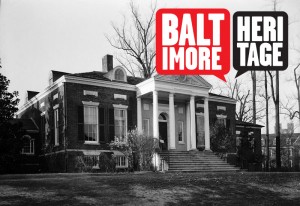
Homewood House Portico Restoration 2012

Are you among the many Baltimoreans who have passed Homewood House on the Johns Hopkins University campus and wondered what the construction is about? Wonder no more! Please plan to join us in learning what it takes to renovate a 211-year-old portico and then come inside for a close-up look at this historic and architectural gem. As for the portico, new discoveries during restoration underscore Homewood House’s superlative construction, and may explain why the house ended up costing four times the original $10,000 that Charles Carroll budgeted for it in 1801.

Tour Details

Wednesday, June 13, 5:30 pm – 7:00 pm
3400 N. Charles Street, Baltimore, MD 21218 (on JHU campus)
$15 members | $25 non-members (wine & cheese will be served)
RSVP for the tour today!

Check out the Homewood House with Explore Baltimore Heritage!

Homewood House is the former home of Charles Carroll, Jr., son of Maryland’s only Catholic signer of the Declaration of Independence, Charles Carroll of Carrollton. In 1800, the elder Carroll offered his son and new bride, Harriett Chew, the funds to build a country retreat. The original plan was to renovate an existing farmhouse, but Carroll the younger had higher social aspirations and wanted a house to reflect it. With more than a little contention between father and son, Homewood House was completed in 1801 at a cost of $40,000, four times what Father Carroll had wished to spend. The exceedingly high cost, however, went into both great architecture and great craftsmanship.

The current restoration of the south portico has reinforced this, with new discoveries of vaulted arches under the stairs and other construction practices that have helped the building stand straight and true for over two centuries. For the tour, Ms. Catherine Rogers Arthur, Director and Curator of Homewood House Museum, and Mr. Travers Nelson, project manager, will take us through the steps involved in the restoration of the south portico and then into the house itself. Today’s current craftsmen undertaking the restoration work include G. Krug & Son, Baltimore ironmongery in business since 1810, for the original wrought iron railing, and SMG Architects as the lead architect. As an extra bonus, the tour will include Homewood House’s most recent acquisition: Charles Carroll of Carrollton’s architectural drawing desk. With several Atlantic crossings to Ireland and back, this Irish-made desk has quite the story to tell. Please join us for a tour of this preservation project in action and one of Baltimore’s historic treasures.

Behind the Scenes Tour of the McDonogh School

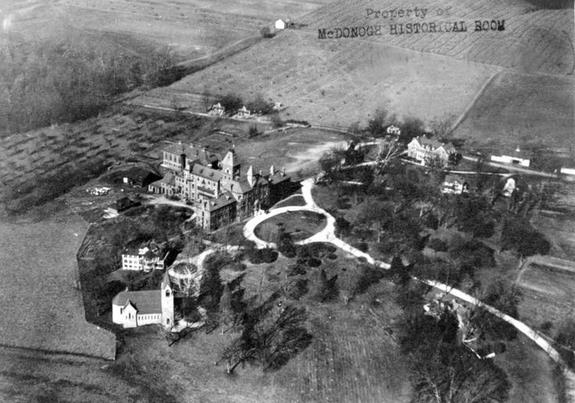
Image courtesy the McDonogh School.

Join us for a tour of the 139-year-old McDonogh School.  We will be venturing into Baltimore County to see a campus that has its roots in Baltimore City and was originally intended to be located there.  The school’s archivist, Ms. MaryLu Greenwood, and Vice Principal, Mr. Larry Johnston, will lead us on a tour of the school and its classical architecture and share the story of how this one time farm school for indigent “boys of good character” became the venerable private co-ed school it is today.

Tour Details
8600 McDonogh Road, Owings Mills, MD 21117
Thursday, May 10, 5:30 pm – 7:00 pm
$15 members | $25 non-members (wine & cheese will be served)

RSVP for the tour today!

Image courtesy Wikipedia.

John McDonogh, a Baltimore-born merchant and philanthropist, was born in 1779 and died in 1850, bequeathing half of his estate to the City of Baltimore to educate children. However, since the public school system already existed in Baltimore, the mayor and city council used the funds to endow a “school farm” for poor boys of good character. Mr. McDonogh had envisioned such a school in his handwritten will dated 1838. In 1872, a tract of 835 acres—essentially the same land that comprises the campus today—was purchased for $85,000 for the school’s establishment.  McDonogh School was founded on November 21, 1873 with the arrival of twenty-one poor boys from Baltimore City. From the beginning, the boys followed a semi-military system, which provided leadership opportunities and ensured order.  Major milestones in McDonogh’s history signaled change. The first paying students arrived in 1922 and day students in 1927. The semi-military program was dropped in 1971, and the first female students enrolled in 1975.  Today, McDonogh is a non-denominational, college preparatory, co-educational day and boarding school. The school calls many accomplished athletes alumni.  They include tennis-pro and sports commentator Pam Shriver, Orioles pitcher Brian Erbe, and equestrian Olympic gold medalist Bruce Davidson.

Behind the Scenes Tour: Animal House

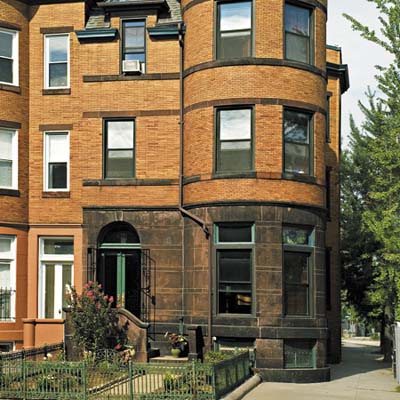
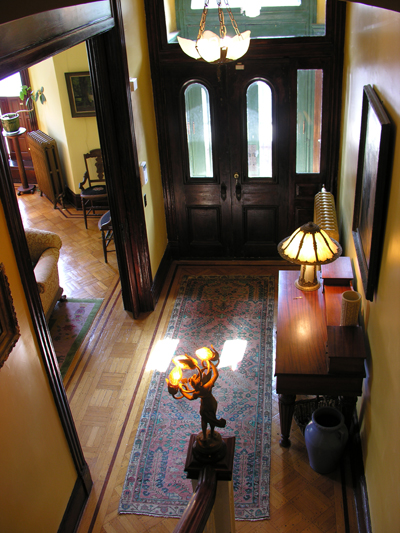
Many of us have seen the 1978 movie “Animal House.”  Have you wondered what happened to the chapter house after the mischievous frat boys graduated?  Homeowners Ron Tanner and Jill Eicher can pick-up where the story leaves off.  They call Charles Village’s version of the infamous Animal House home.  Please join us for a tour of this beautifully restored house and hear Mr. Tanner and Ms. Eicher offer tips on managing large projects, including how to stay together even when your house is torn apart.

Tour Details

2746 St. Paul Street, Baltimore, MD 21218
Tuesday, April 3rd | 5:30 pm – 7:30 pm
$15 members | $25 non-members (please join!)

RSVP for the tour today!

Ron Tanner and Jill Eicher have spent 12 years renovating an 1897 Queen Anne rowhouse that was condemned property when they bought it.  A notorious fraternity had all but destroyed the 4,500 square foot Charles Village house. The run-down rowhouse even found itself as the perfect setting for a horror film starring then unknown actresses Dana Delaney and Keri Russell.  Undaunted, Mr. Tanner and Ms. Eicher took on a whole-house restoration, beginning with emptying out multiple roll-off dumpsters of trash.  They found themselves learning how to re-plaster walls, finish floors, restore windows, and much more.  Their work was featured in This Old House magazine in 2008, in Baltimore Magazine in 2012 in an article called “Trashed to Treasured,” and just a few months ago by the National Trust for Historic Preservation.  Mr. Tanner, a writer by trade, created a blog about their adventures.  The blog was very popular and led to the recently published book, From Animal House to Our House: a Love Story, a must-read for anybody who has struggled through a home renovation project.  Mr. Tanner is a wonderful storyteller and the evening is sure to be entertaining as well as informative.