Category: Education

Our education programs include technical assistance to property owners, heritage education around the Civil War Sequicentennial and the Bi-Centennial of the War of 1812, and our ongoing Race and Place in Baltimore Neighborhoods project.

Workshop to help you choose paint colors and restore walls for your old house

Join Baltimore Heritage and our friendly team of paint and restoration experts at Second Chance for a two-part workshop on the secrets of choosing paint colors and preparing old walls to make sure they stick.

Image courtesy the The Old House Blog.

Paint Colors and Paint Restoration Workshop
Second Chance, 1700 Ridgely Street, Baltimore, MD 21230
Saturday, March 16, 2013
Morning Session – 9:00am – 11:30am
Afternoon Session – 1:00pm – 3:30pm
RSVP today! $10 for the morning session, $20 for the afternoon session or $25 for both sessions.

Morning Session – Introduction to Choosing Paint & Color with Margaret Nelson and Janie Reeves

Whether you are painting the porch fn a Victorian rowhouse in Reservoir Hill or the dining room of a Colonial Revival home in Roland Park, choosing paint colors can be a daunting. Repairing walls to prepare for paint or wallpaper also can prove maddening. Join us in our morning session with Margaret Nelson from Nelson Dorsey Interiors and Janie Reeves from Design 2 Finish to learn how to make paint color choices and choose alternative wall treatments that will enhance your home’s interior and exterior. Discover the use of color in period styles and historically accurate palettes!

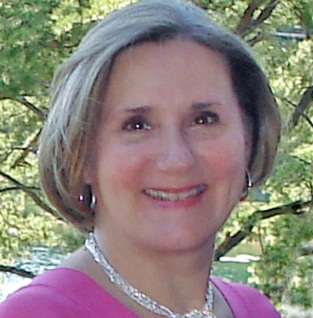
paint_workshop_photo_margaret_2-13-13Margaret Nelson, owner and principal designer of Nelson Dorsey Interiors, is the president elect of the Maryland Chapter of the American Association of Interior Designers with loads of color and design experience. Ms. Nelson most recently was honored with an award for her work from Chesapeake Home & Living Magazine.

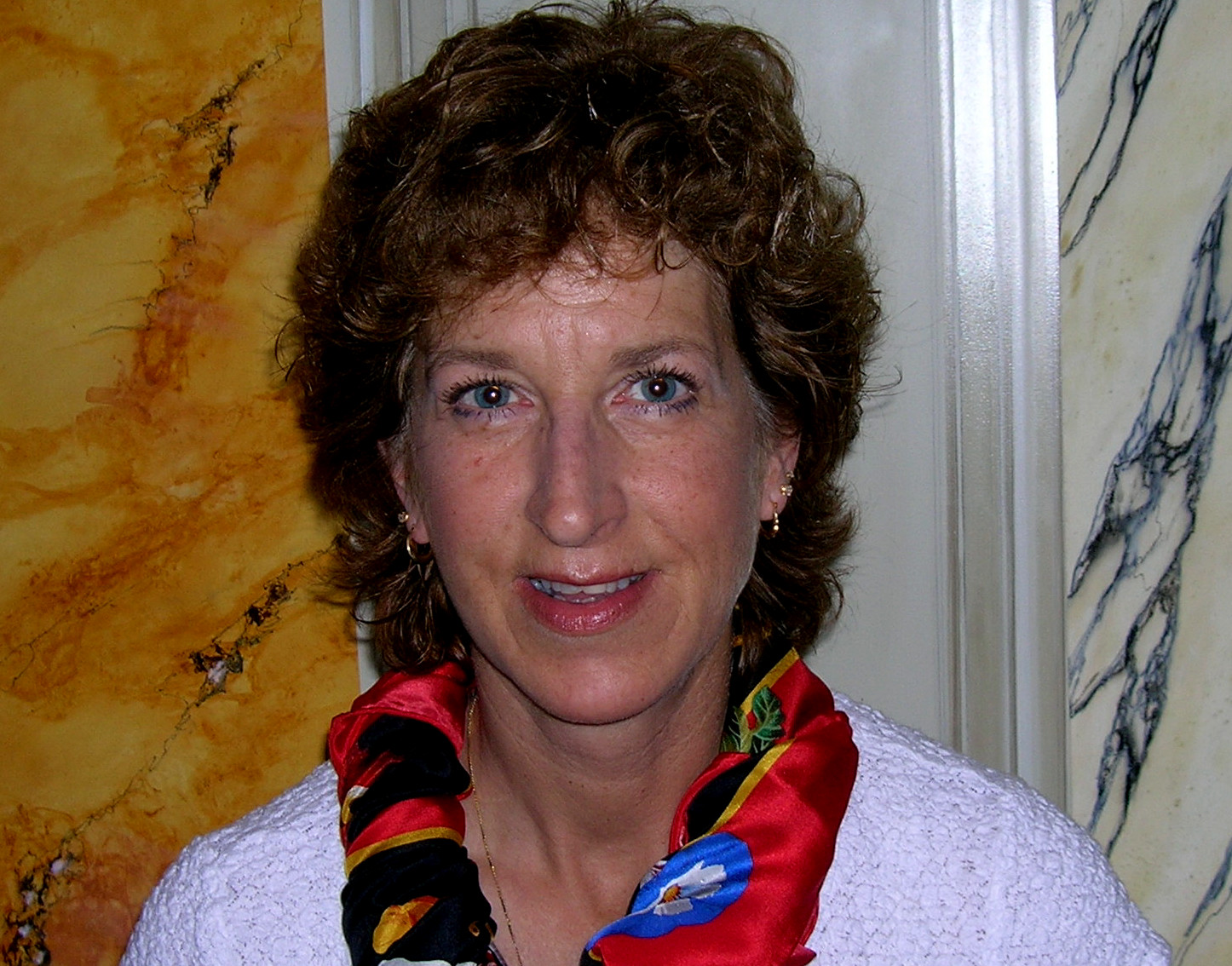
bio pic 1Janie Reeves discovered her passion for old houses while working on and living in three of them. She is a licensed contractor in PA, MD and VA and has been in the painting and wall finishing business for 25 years. Ms. Reeves is a member of the Maryland Chapter of the American Society of Interior Designers and has received awards for distinctive wallpapering and decorative painting.

Afternoon Session – Hands-on Introduction to Paint Process with Lawrence Oliva

Lawrence and Karen Dec 2012 A finalCome back after lunch to get even more involved in the painting process with individualized instruction on how to prepare, repair and paint walls with Lawrence Oliva from Second Century Homes. Registration for this session is limited to ensure a hands-on experience for all participants.

Lawrence Oliva is an architectural photographer, writer, and a licensed Maryland contractor with 30 years of restoration experience. He specializes in restoring historic wood elements such as windows, hardwood floors, doors, pediments, mantelpieces, and balustrades to their original elegance and functionality. Mr. Oliva is a partner in Second Century Homes, which specializes in restoring houses over 100 years old. One unique aspect to the company’s renovation approach is to obtain replacement materials directly from Baltimore suppliers – from the original company if they are still in business.

Take a look at F. Scott Fitzgerald’s Bolton Hill rowhouse this Sunday

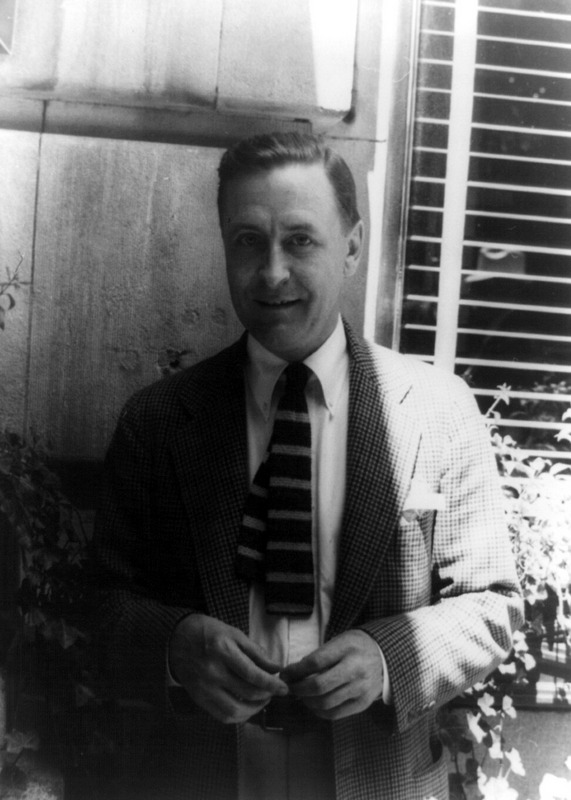
Francis Scott Fitzgerald 1937 June 4
F. Scott Fitzgerald, photographed by Carl van Vechten in 1937. Image Courtesy Library of Congress Prints and Photographs Division, LC-USZ62-88103.

Here is an exciting opportunity for anyone who loves Baltimore’s literary history: F. Scott Fitzgerald’s Bolton Hill rowhouse is now for sale! F. Scott and Zelda Fitzgerald lived in the home in the 1930s through several tumultuous years. The four bedroom, four bath house is going for $450,000. Take a look at the listing or stop by the open house before the Ravens take on the 49ers this Sunday, February 3 from 12:00pm to 2:00pm.

University of Baltimore student Nathan Dennies, a new volunteer working on Explore Baltimore Heritage, just finished a great story detailing Fitzgerald’s time at 1307 Park Avenue. Read on for an excerpt or find the full piece on Explore Baltimore Heritage. Don’t forget to download our free Explore Baltimore Heritage app for iPhone and Android!
In August 1933, F. Scott Fitzgerald moved with his family to 1307 Park Avenue. Fitzgerald had been forced out of his previous home in Towson due to a house fire attributed to his mentally ill wife, Zelda. Their rowhouse, a ten minute walk from the monument of Fitzgerald’s famous ancestor, Francis Scott Key, quickly became a place of turmoil, and was the last place where he and Zelda lived together.

Fitzgerald couldn’t get back on his feet at his new home. His first published novel in ten years, “Tender is The Night,” tanked after its April 1934 release, selling only 13,000 copies to mixed reviews, and left Fitzgerald under immense financial strain. Everyone in the house was affected. Zelda and Fitzgerald’s daughter, Francis Scott “Scottie” Fitzgerald, acted as a go-between for their landlord, forced to constantly ask her father for rent money.

Zelda, who spent her weekdays hospitalized at Sheppard Pratt in Towson, had a brief period of wellness during the first few months at 1307 Park Avenue and was allowed to go home and take painting classes at the Maryland Institute College of Art. However, her mental illness soon worsened and she was moved to the expensive Craig House sanitarium in New York, only to return to Sheppard Pratt in May 1934 in worse shape than ever.

While Zelda was in the hospital, Fitzgerald’s dependency on alcohol grew, and she even faced some hard times at the hospital. Writer H.L. Mencken, a friend of Fitzgerald who lived nearby in Mt. Vernon at the time, wrote in his journal in 1934, “The case of F. Scott Fitzgerald has become distressing. He is a boozing in a wild manner and has become a nuisance.”

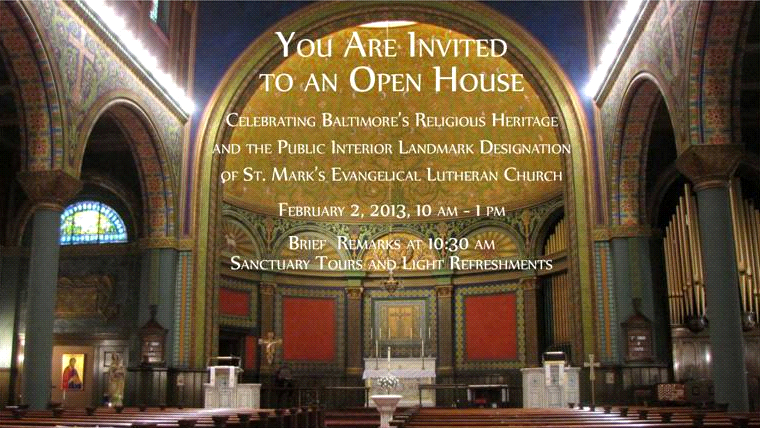
St. Mark’s Evangelical Lutheran Church celebrates Baltimore’s religious heritage with a free open house this Saturday

image001

While several churches and residences in Baltimore have Tiffany stained-glass windows, St. Mark’s Evangelical Lutheran Church is the only building with a Tiffany interior. Louis Comfort Tiffany was one of America’s most famous interior designers and artists of the late 19th – early 20th century. Today, he is best known for his stained-glass. Built in 1898, St. Mark’s (featured on Explore Baltimore Heritage) is one of only a few intact Tiffany-designed interiors left in the world. The Tiffany Glass and Decorating Company designed and produced the ornately decorated walls, mosaics, stained-glass windows, and lamps in the church.

Along with celebration the designation of St. Marks and celebrating Baltimore’s religious heritage, we’re also hoping this event will encourage other religious institutions to consider landmark designation, particularly interior designations.

St. Mark’s Evangelical Lutheran Church Open House

Saturday, February 2, 2013, 10:00 am – 1:00 pm – Remarks at 10:30am
St. Mark’s Evangelical Lutheran Church, 1900 Saint Paul Street, Baltimore, MD 21218
Sanctuary tours and light refreshments offered throughout the morning.

The open house is hosted by St. Mark’s Evangelical Lutheran Church and the Commission for Historical and Architectural Preservation (CHAP). For questions or to RSVP, please contact Lauren Schiszik, CHAP staff at lauren.schiszik@baltimorecity.gov or at 410-396-5796.

My morning nose-to-nose with plaster up in the scaffolding at the Baltimore Basilica

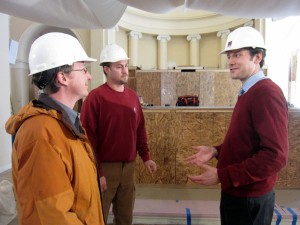
IMG_9165Yesterday morning, Tyler Tate from Lewis Contractors gave my colleague Eli and me a real treat: a visit up into the scaffolding that has been standing in the main sanctuary of the Baltimore Basilica to repair damage from the summer’s earthquake. The scaffolding, almost miraculously, spans the pews below and reaches to the top of the dome. The earthquake cracked plaster, compromised arches, and caused damage throughout the building, and the scaffolding essentially allowed the work crews to reach every inch of the interior. Weekend services (and even weddings) have bravely continued throughout the restoration thanks to the draperies that have hidden much of the scaffolding. The project is now winding down and the scaffolding is being removed, but we wanted to share some photos of our visit and what the ceiling of the Basilica looks like from up-close. I think that after our nose-to-nose look at the plaster, paint and stabilization work, the Basilica will be more stunning following this restoration than it was even after the major restoration work a few years ago.

In addition to Lewis Contractors and the Archdiocese of Baltimore, the project team includes architects Cho Benn Holback, plaster repair experts Hayles and Howe, and paint specialist Thomas Moore Studios. Fandango Productions provided the drapes over the scaffolding – a first for their business.

Restoration in process at the Basilica of the Assumption, January 10, 2013

Help document Baltimore public art with Wiki ♥ Monuments

Join Baltimore Heritage and the Walters Art Museum for Wiki ♥ Monuments – a local photo scavenger hunt where we ask you to take photos of outdoor public artworks across the city and share them on Wikipedia. From historic landmarks like the Washington Monument to the more modest civic sculpture of the 1970s, public artwork is an important part of our Baltimore’s cultural heritage. Unfortunately, many artworks often seem invisible to people driving or walking by. Many artworks are overlooked both in the world at large and on Wikipedia. Taking and sharing photographs is a great first step to documenting public artworks in Baltimore and raising awareness about their importance for our city. In addition, by adding these photos to Wikipedia, Baltimore’s sculptures and monuments can be more visible and accessible to people across the world.

Pulaski Monument, 2007. Courtesy Chuck Szmurlo/Wikipedia.

How can you participate in Wiki ♥ Monuments?

All you need is a digital camera and the list of public artworks – available (along with a map) from the Walters Art Museum. The full list includes over 250 artworks from across the city identified in the Save Outdoor Sculpture! Database maintained by the Smithsonian Archives of American Art and the Baltimore Office of Promotion and the Arts. Here are a few helpful guidelines.

  • While most of these artworks should be easy to find, a few may have been moved or destroyed so a little searching may be required.
  • You can take as few (or as many) photos as you like but taking photos of each artwork from different angles and vantage points is a good idea.
  • You may want to take a reference photo, including a index card with the name and date of the piece. This will help you to later provide complete and accurate information when uploading the image.
  • You can then upload them yourself on the Walters Art Museum website or join us on August 11 for an “Upload Party” at the museum.

We’ll be adding a bit of competition by awarding points for each photograph and extra points for photos taken outside of the neighborhoods around the Walters Art Museum in Mt. Vernon. Questions? Get in touch with Eli Pousson at pousson@baltimoreheritage.org.