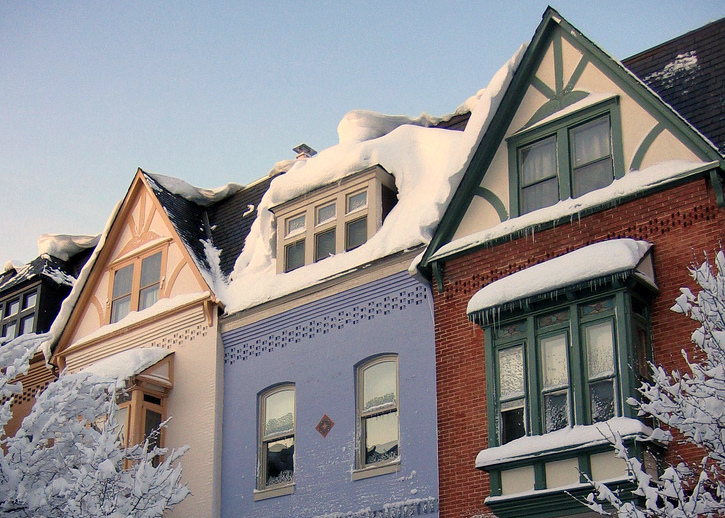
We’re partnering with Retrofit Baltimore to bring you two great workshops on how to combine historic tax credits with weatherization in your historic house. An energy retrofit makes your home more energy efficient, environmentally friendly and comfortable. Through measures such as insulating and air-sealing, you can drastically lower your energy use and save money on utility bills while eliminating uncomfortable drafts and decreasing your home’s impact on the environment. You can save even more if your project is eligible for historic tax credits from the Maryland Historical Trust! Check out our resources on city and state historic tax credits for more information or RSVP today for the first workshop in Roland Park next week. No RSVP is required for the free Baltimore Green Fest on February 2.
Weatherization & Historic Tax Credits Workshop
Wednesday, January 16, 7:00pm to 8:00pm
Roland Park Branch Library, 5108 Roland Avenue, Baltimore, MD 21210
This free one hour workshop provides a quick introduction to energy retrofits and how they can be combined with city and state historic tax credits. RSVP today!
Baltimore Green Fest
Saturday, February 2, 12:00pm to 4:00pm
The Mt. Washington School, 1801 Sulgrave Avenue, Baltimore, MD 21209 Introduction to Historic Tax Credits Workshop – 1:30pm to 2:00pm
Learn how local nonprofits and businesses are working to create a greener, more sustainable Baltimore through interactive workshops with Rebuilding Together Baltimore, Back River Restoration Committee, Baltimore Heritage, and more! Be sure to sample delicious food from local restaurants including Clementine and don’t forget to bring your bike for a road safety bike ride with Bikemore. Free – no RSVP required! More details from Retrofit Baltimore.
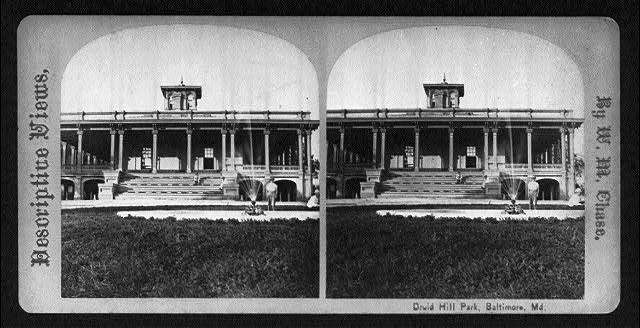
The Mansion House, built by Revolutionary War Colonel Nicholas Rogers, has stood in what is now Druid Hill Park since 1801. The house is the third to stand in this location. Originally a castle known as “Auchentorolie,” built by Rogers’ ancestors, occupied the hill but had burned sometime during the war. Rogers studied architecture in Scotland and most likely became familiar with Druids’ love of nature and hilltops and selected the name “Druid Hill” for his estate. The house was initially planned to be a summer home but during its construction the family home at Baltimore and Light Streets burned and it was decided to use the Druid Hill house year-round. The Mansion remained in the Rogers family until the mid-1800s, when Rogers’ grandson sold the house and lot to Baltimore City for $121,000 in cash and $363,000 in City of Baltimore stock. One stipulation of the sale was that the family burial plot remain property of the family, and the plot is still in place today in the park.
The Mansion House has seen many rebirths. In 1863, during the park movement in Baltimore City, the house was greatly modified. Under the direction of John H. B. Latrobe, it was turned into a pavilion and updated in the Victorian style. By 1935, the porches were enclosed and the house became a restaurant. In the 1940s, the building was used as a day school for the Young Men and Women’s Hebrew Association. The Zoo, which had begun developing around the mansion beginning in 1867, used the building as its bird house from the 1950s until its restoration in 1978. The restoration efforts took the house back to its 1860s design. Just last year, the Mansion underwent its most recent restoration and repair work, including much needed wood restoration and structural shoring. The building today house’s the Maryland Zoo in Baltimore’s administrative offices and event rental space. Please join us on a tour of the nooks and crannies of the Mansion by the restoration contractor, Tony Azola of The Azola Companies, and a short walk through the history of the Mansion and the Zoo by Ms. Lori Finkelstein, Vice President of Education, Interpretation, and Volunteer Programs (and unofficial historian) at the Zoo.
Behind the Scenes Tour at Rogers Mansion
Tuesday, January 8, 2013, 5:30 pm – 7:00 pm
1876 Mansion House Drive, Baltimore, MD 21217 RSVP Today! $15 members | $25 non-members (wine & cheese will be served) Follow signs to the administration building. Parking is available in front of the mansion and along the drive.
I am very sad to report that Karen Lewand, our friend and long time board member, passed away yesterday evening. Karen was an innovator, a leader, and a strong advocate for preserving Baltimore’s historic buildings and neighborhoods and helped Baltimore grow in countless ways. With an unwavering voice for preserving the best of our architecture and neighborhoods, she was instrumental in saving historic places that many of us now take for granted. Baltimore Heritage recognized her exceptional leadership this past summer by awarding her our 2012 Douglas Gordon Award for lifetime achievement. This fall, she generously gave to help Baltimore Heritage launched the Karen Lewand Preservation Education Fund that will remain a living memorial to her work.
I wanted to share a few stories of Karen’s life and work that help illuminate the love and devotion that this remarkable woman carried for her city and her family. Born Karen Elizabeth Schultz in Detroit, Michigan, Karen received a B.S. degree from the University of Dayton in 1967, and an M.A.S. degree from the Johns Hopkins University in 1988. She arrived in Baltimore in 1977 and, after serving nearly 10 years in the Office of Financial Development at Johns Hopkins, dedicated the rest of her professional and volunteer life to her two loves, the history and architecture of the city of Baltimore.
After taking several courses in preservation at Goucher College, Karen became involved with Baltimore Heritage. She quickly became a leading member and spent 27 years serving on our Board of Directors. Karen founded the Education Committee and developed some of the city’s first walking tours of historic neighborhoods that have grown into our the many heritage tours we have today.
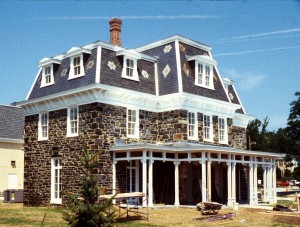
Gallagher Mansion in 1996, courtesy Maryland Historical Trust
In her own neighborhood of Radnor-Winston, Karen fought for the preservation and reuse of the Victorian Gallagher Mansion, which had fallen into ruin under its previous owners. She and her neighbors succeeded in saving the building, now the Gallagher Mansion Apartments, which won a Preservation Project Award from the Maryland Historical Trust in 1997. Karen also served on Baltimore’s Commission for Historical and Architectural Preservation where she played a key role in preventing the demolition of the Hinson Westcott Dunning factory and offices at Charles and Chase Streets (since renovated and re-used).
Karen’s passion for preservation included a commitment to sharing our city’s history with the next generation. In 1981, She developed a course for schoolchildren teaching local history through architecture. The following year CHAP received a grant from the National Endowment for the Humanities to take the course, entitled “Neighborhood Discovery,” to 23 Baltimore City public schools. Karen subsequently worked at the city’s Planning Department researching and writing neighborhood histories. Some of these appeared in her book, North Baltimore: From Estate to Development, published jointly by the University of Baltimore and the Baltimore City Department of Planning in 1989.
At the state level, Karen served for nearly two decades as a member of the Maryland Historical Trust. She was also one of the first organizers of coalition of preservationists, developers, and conservationists who in 2000 founded the statewide smart growth advocacy group, 1000 Friends of Maryland. In 2006 she was presented the Lucien E.D. Gaudreau Award recognizing her “outstanding contribution to the built environment in the Maryland region,” and just this month was given a 2012 award for leadership and service by the Governor’s Sustainable Growth Commission.
From 1992 to 2012, Karen served as executive director of the Baltimore Chapter of the American Institute of Architects, which under her leadership has been ever more committed to preservation. In 2001, she was awarded the American Institute for Architects’ Richard Upjohn Fellowship for her contributions to the profession of architecture. Seven years ago, in collaboration with several members of AIA Baltimore, she launched the annual Architecture Week in October, which has brought a number of prominent preservation advocates to speak. As a tribute to Ms. Lewand’s leadership, the chapter dedicated and named the chapter house located at 11½ West Chase Street in her honor.
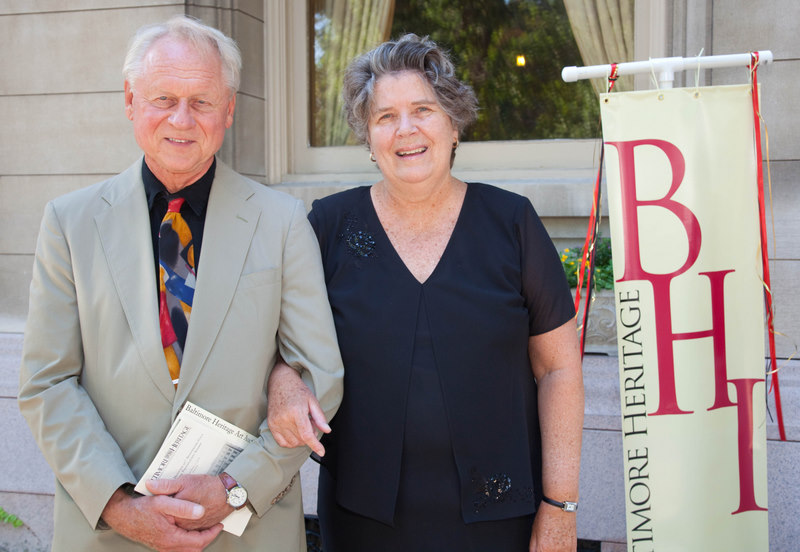
Karen and Robert Lewand at Baltimore Heritage 50th Anniversary Celebration, 2010
Karen is survived by her beloved husband of 45 years, Robert Lewand, as well as two daughters, Elizabeth Lewand of Brooklyn, New York and Stephanie Lewand of Baltimore. Other survivors include her brother David Schultz of Chelsea, Michigan, as well as one nephew and three nieces, son-in-law Chris Gray and sister-in-law Becky Schultz.
Karen’s family is planning the funeral service and we will have further details soon. We are humbled that Karen requested that, in lieu of flowers, donations be made in her name to the Karen Lewand Preservation Education Fund that she established at Baltimore Heritage this fall.
Funeral Services
Mass of the Resurrection
Thursday, January 3, 2013, 10:00 AM
The Church of Saints Philip & James
2801 North Charles Street, Baltimore, MD 21216
Inurnment immediately following the mass
Saint Mary’s Cemetery
233 Homeland Avenue, Baltimore, MD 21210
Reception immediately following inurnment
Knights of Columbus Hall (adjacent to cemetery)
201 Homeland Avenue, Baltimore, MD 21212