Eighteenth-century visitor John David declared Fell’s Point “a place remarkable for its commerce of various kinds, for here ships land their cargoes and their crews wait not even for the twilight to fly to the polluted arms of the harlot.” Please join us and architectural historian Ms. Sherri Marsh Johns on a short walking tour of some of the notorious bars and brothels (and other possibly more reputable places) of historic Fell’s Point.
Tour Information
Date: Tuesday, September 28, 2010
Time: 5:30 to 6:30 PM (or a tad later)
Place: Meet in front of 1629-31 Aliceanna Street, about ½ block west of Broadway
This is the old Captain’s Hotel. Park at meters on the street.
Cost: $10
Registration: Click Here to Register. Read more
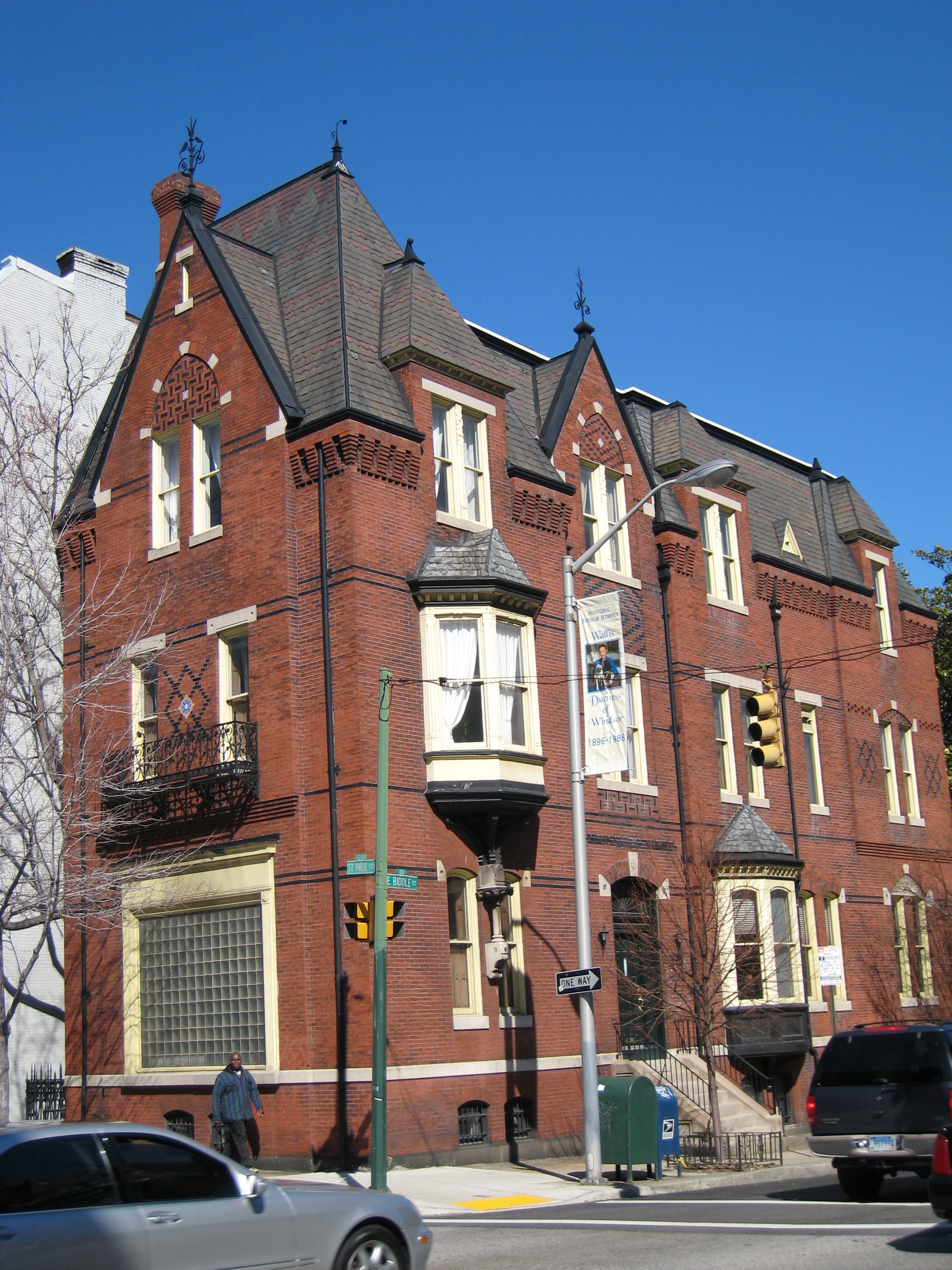
This week’s edition of the Baltimore Building of the Week series is the George C. Wilkins House, built in 1876 at the corner of St. Paul Street and Biddle Street,
Image courtesy Jack Breihan
Although the Victorian Gothic style, with all its spikey verticality and asymmetry, did not lend itself to the rowhouse, this attached house in Mount Vernon displays all these attributes. It was designed by the architect J. Appleton Wilson in 1876.
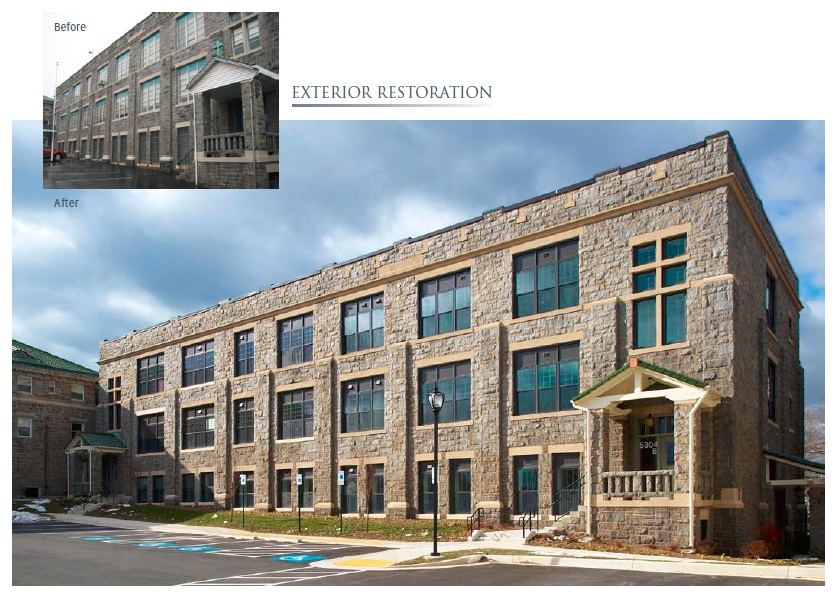
John Manley House before and after, Image courtesy hord | coplan | macht
This week’s entry in our series of 2010 Baltimore Heritage Preservation Awards is the John Manley House. Formerly St. Dominic’s Parish School, the John Manley House at 5304 Harford Road involved taking two school building dating to the early twentieth century and converting them into low-income housing for seniors. Preserving features like the clay tile roof, terrazzo floors, and trim-work were priorities. Even the chalkboards were preserved and reused as message boards for the residents. The result is a fantastic new residence for thirty lucky seniors and a well preserved set of historic buildings. The Adaptive Reuse and Compatible Design Award was awarded to architect Hord Coplan Macht and contractor Southway Builders.
Washington Monument, Detroit Publishing Company/LOC 1906
On September 13 at 1:45 PM, the Baltimore Commission for Historical and Architectural Preservation will hold a public hearing on the Mount Vernon Place Draft Restoration Master Plan. The plan was commissioned by the Mount Vernon Place Conservancy, a nonprofit established in 2008 to establish a public-private partnership with the City of Baltimore to restore and maintain Mount Vernon Place. Following a competitive process in 2009, MVPC selected Philadelphia landscape architecture firm OLIN to create the Mount Vernon Place Restoration and Revitalization Master Plan. The Master Plan is designed to serve as “the guiding document informing the fundraising and restoration of Mount Vernon Place to be completed before its bicentennial in July 2015.” The plan addresses a wide range of issues including the restoration of existing historic fabric, pedestrian access & safety, landscaping, lighting and infrastructure. You can download a PDF copy of the summary of the Mount Vernon Place Restoration and Revitalization Master Plan here.
This week’s edition of the Baltimore Building of the Week takes us to North Baltimore at the edge of Roland Park to appreciate an autumn photo of the Greenaway Cottages designed by architect Charles E. Cassell (ca 1838-1916) in 1874.
Image courtesy Jack Breihan
These three cottages along 40th Street epitomize the Victorian Gothic style: polychrome stone and tile, steeply gabled roofs, deliberately asymmetric plan. Originally identical, the three cottages have each been altered over the years in different ways. They were built in 1874 as summer retreats for various branches of the wealthy Greenaway family – who made their way north when they wished to flee from the heat of their mansion on Mount Vernon Place. The cottages are currently owned and well maintained by Roland Park Place.