Year: 2010

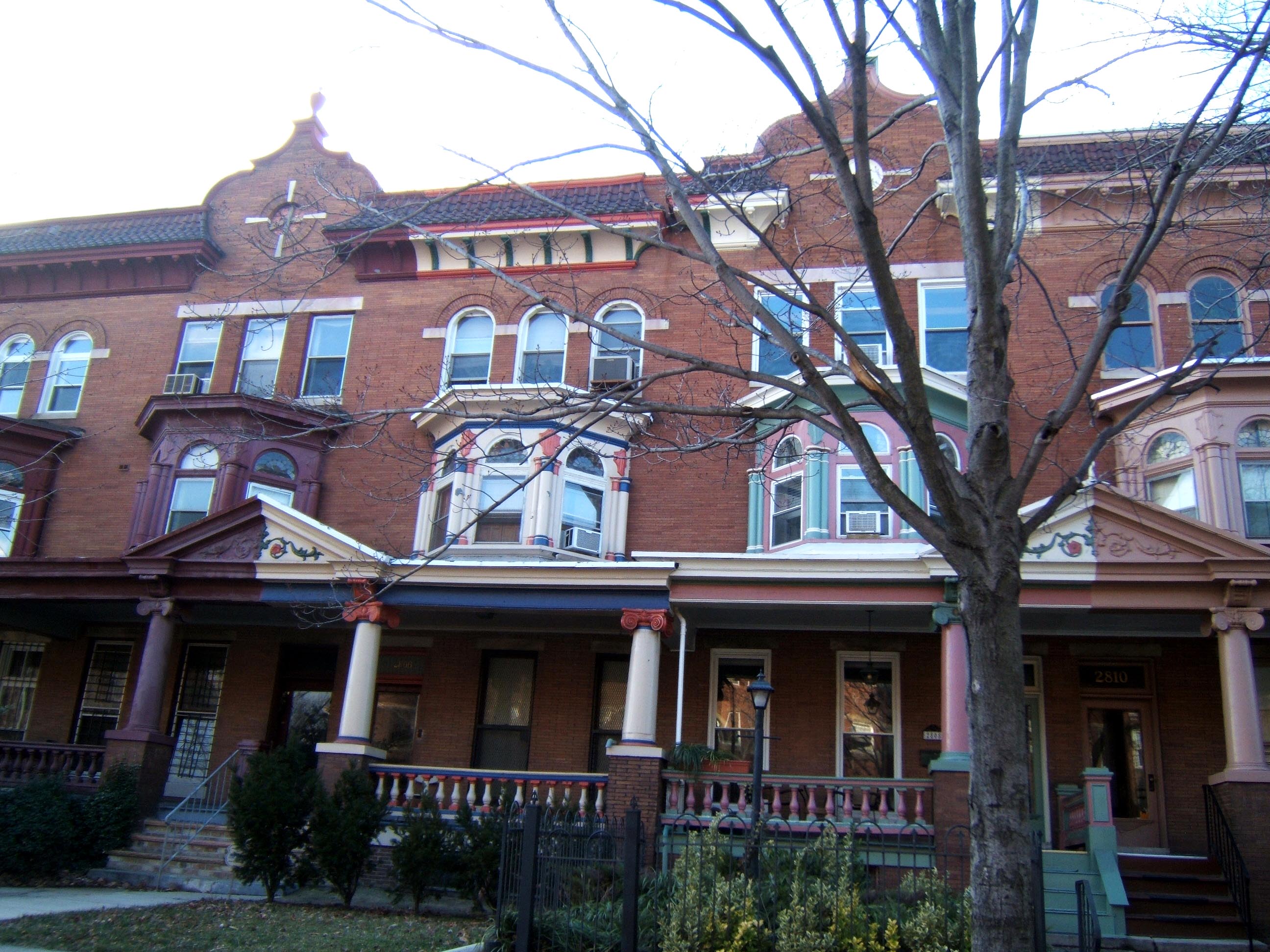
Baltimore Building of the Week: Charles Village Porch-Front Rowhouses

This week’s Baltimore Building of the Week returns to Charles Village to highlight the characteristic porch-front rowhouses,

Image courtesy Jack Breihan

The same sort of exuberant, uniquely American designs that appeared in the late 19th century reached a high point early in the 20th. The so-called Queen Anne Style had nothing to do with Britain’s last Stuart monarch, but instead mixed various architectural details into a happy pastiche. Here in Charles Village row houses boasted Flemish gables, Italianate brackets and arched windows, classical columns and pediments. Deep front porches offered some relief from the city’s heat as well as sociable contact with neighbors. Lately they have been acquiring vivid redecoration that highlights their architectural features.

Join us this Thursday for Rethinking Urban History from the Margins!

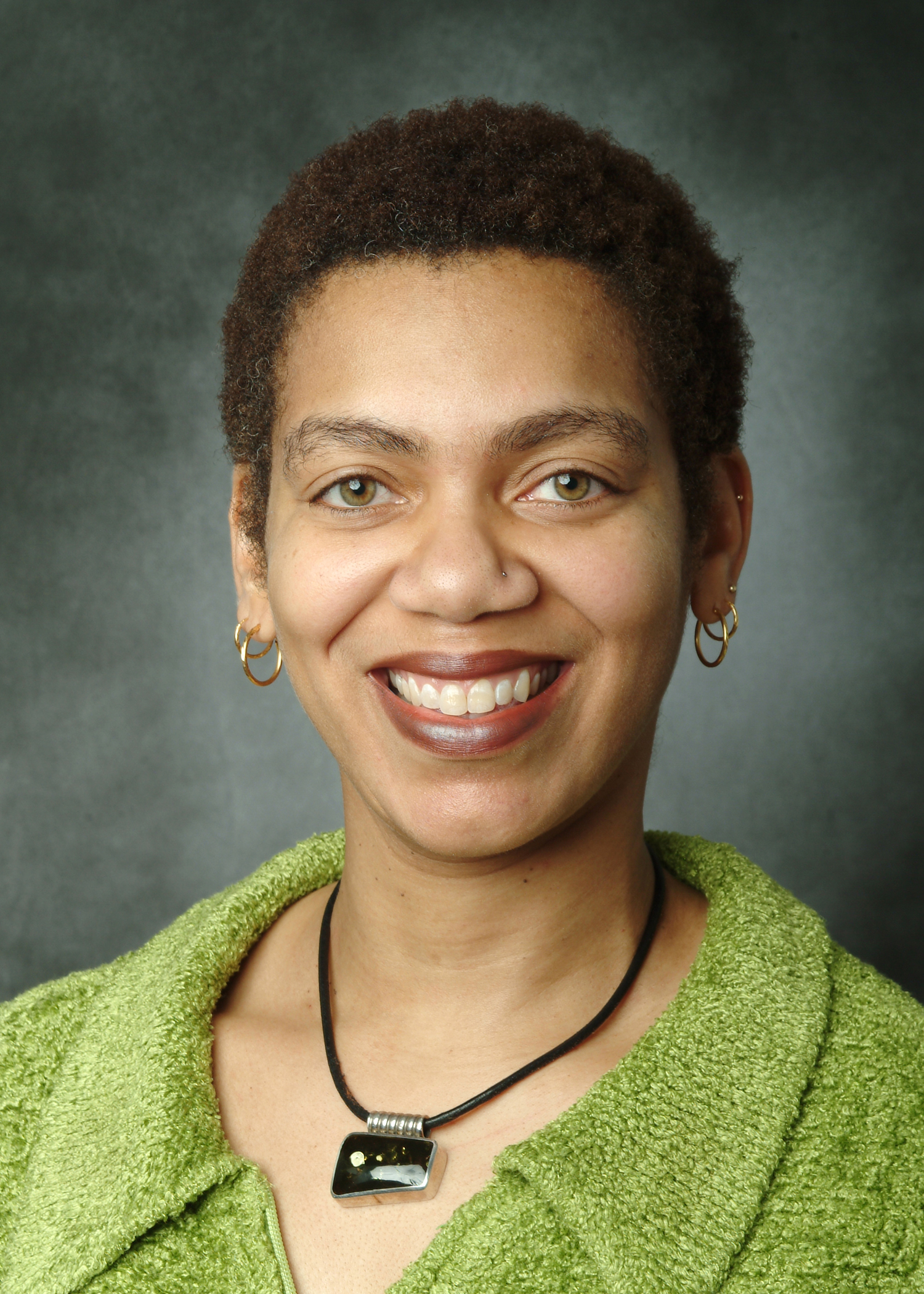
Please join us this Thursday, October 21 is our annual Fall Baltimore Heritage Lecture called “Rethinking Urban History from the Margins” by Dr. Rhonda Y. Williams, a Baltimore native and associate professor at Case Western Reserve University. Note that the location has moved from Ebenzer AME Church to Saints Stephen & James Evangelical Lutheran Church (938 S. Hanover Street, 21230).

Date:                     Thursday, October 21, 2010
Time:                     7:00 p.m. to 8:30 p.m.
Location:              Saints Stephen & James Evangelical Lutheran Church (938 S. Hanover Street, Baltimore 21230)
(This is in the historic Sharp-Leadenhall neighborhood)
Cost:                      Free!
RSVP:                    Click here to RSVP

The intersection of race and place is a central issue in the histories of Baltimore neighborhoods and is clearly present in the city’s tumultuous relationship with public housing.  Baltimore native Dr. Rhonda Williams will draw on extensive oral histories and archival research for to share the stories of the African American women as community activists who fought for “rights, respect, and representation” for their families and neighbors living in Baltimore public housing. Author of The Politics of Public Housing: Black Women’s Struggles Against Urban Inequality, Dr. Williams will challenge us to reconsider the role of public housing in Baltimore neighborhoods and its broader significance in Baltimore’s history of race and place.

This event series is supported by the Maryland Humanities Council and Free Fall Baltimore. Find out more information about the over 300 events in Free Fall Baltimore 2010 here or learn more about the many other events of the 2010 Baltimore Architecture Month sponsored by AIABaltimore between September 9 and October 25.

This talk is part of our October Race and Place in Baltimore series.  Thank you to all who are participating!

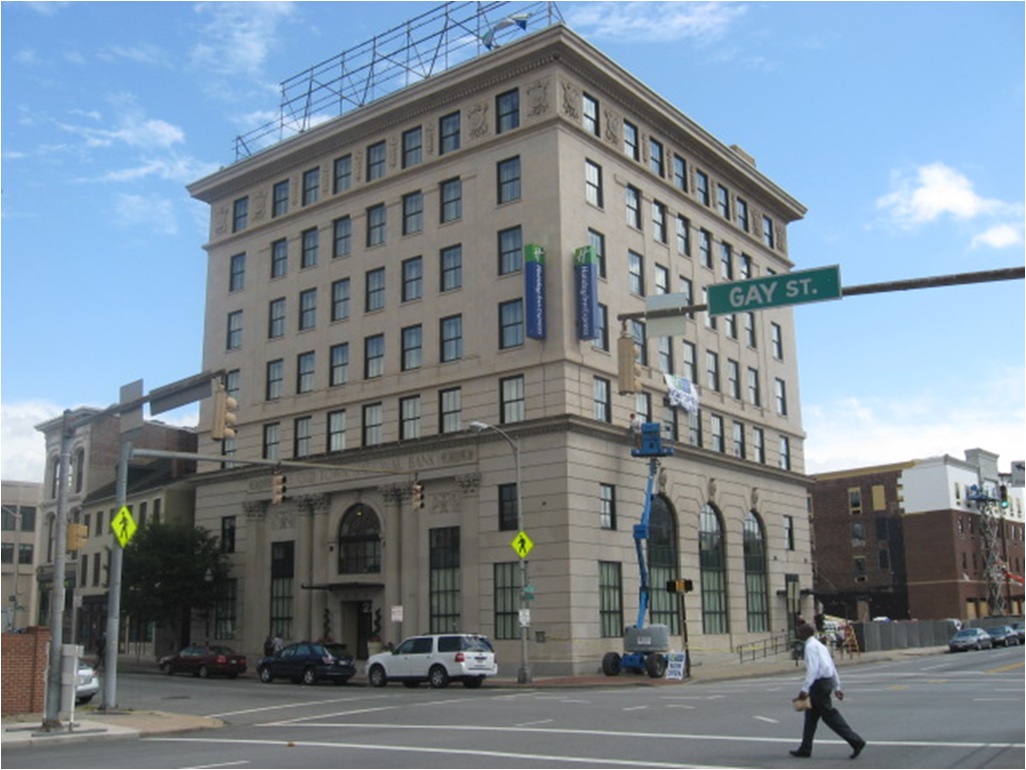
2010 Preservation Awards: Old Town National Bank

Image courtesy Kann Partners

The classically styled Old Town National Bank building at 221 N. Gay Street was constructed in 1924 as a bank headquarters. Despite many years of vacancy, the primary first stories retained an array of historic details, including a two story lobby, cornice and parapet wall, grand marble stairway, and even vault spaces. The work included refurbishing and repairing these and a host of other features, and the building now shines as a Holiday Inn Express Hotel. For more information on the project see this great account from the Baltimore Sun. The Adaptive Reuse and Compatible Design Awards went to owner Old Town Properties LLC and architects Kann Partners.

Baltimore Building of the Week: Equitable Bank Building

This week’s Baltimore Building of the Week is our first introduction to Baltimore’s tremendous historic skyscrapers, such as the 1891 Equitable Bank Building that survived the Great Baltimore Fire,

Image courtesy Jack Breihan

Another uniquely American style of the late 19th century originated in Chicago, where Louis Sullivan gave the new steel-framed “skyscrapers” unified facades of multistory arches. The former headquarters of Equitable Bank (shown here before exterior restoration) is Baltimore’s best version of the Sullivan/skyscraper style. Designed by Joseph Evans Sperry in 1891, it was gutted in the Great Baltimore Fire, but the frame and façade survived. After nearly a century’s service as an office building, it has been converted to residential use.