Baltimore Revisited: Social History for the Twenty-First Century City will draw from a wide range of researchers inside and outside of the academy to tell the stories of how and why Baltimore looks and functions as it does today. We are specifically looking for heavily researched pieces written in an accessible voice that can offer new perspectives on the city’s social history grounded in the specific places, neighborhoods, and communities in Baltimore. Each chapter could stand alone, but together, they will offer a newer vision of local history from the ground up to complicate our view of the past, as well as the present.
If you haven’t purchased tickets yet for our 2015 Preservation Awards celebration this Thursday June 18, now is the time! We are celebrating the year’s best preservation and adaptive reuse projects and the people behind them. We are also excited to give the Douglas Gordon Award for exceptional leadership in local preservation to Mr. Martin Azola. Read on for the full list of award winning projects!
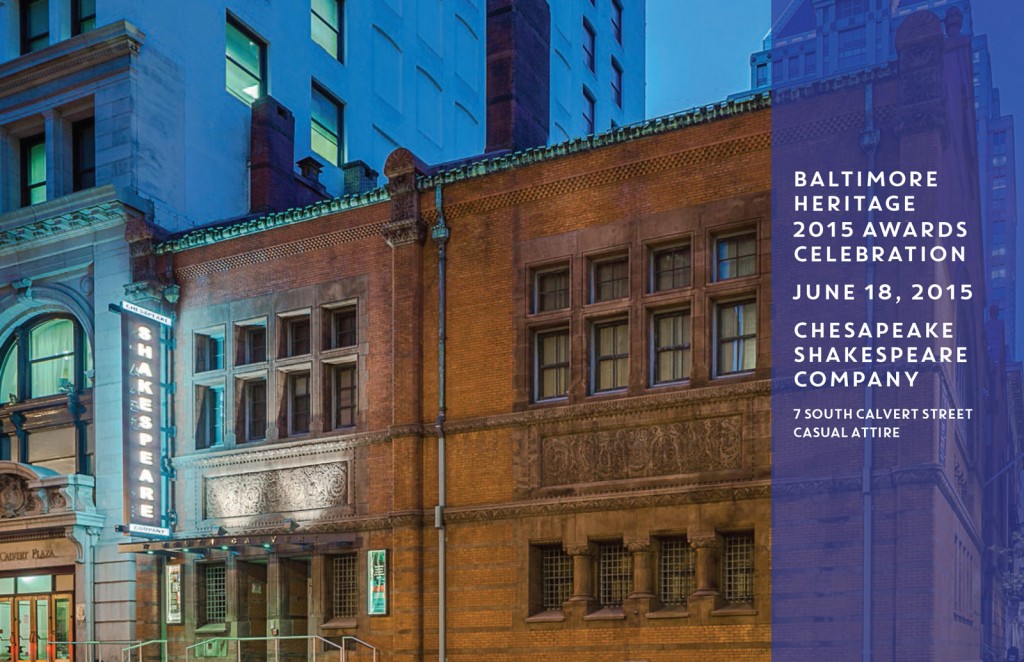
In addition to being in the wonderfully transformed Chesapeake Shakespeare Theater, we’ll get a tour of the historic Merchant’s Club building next door that the Chesapeake Shakespeare Company plans to expand into. And of course there will be plenty of food, drinks, and good cheer.
The Chesapeake Shakespeare Theater is located at 7 South Calvert Street, at the corner of Redwood Street. Parking is available one block away at the Arrow parking garage on Water Street. Garage entrances are located on Water Street and Lombard Street. Find more details or go ahead and register today!
I hope you can join us on Thursday evening. If you have any questions, please don’t hesitate to call me at 410-332-9992 or email me at hopkins@baltimoreheritage.org.
2015 Preservation Award Recipients
Restoration & Rehabilitation
Frazier Residence
424 South Dallas Street
Rita Church Community Center
2101 Saint Lo Drive
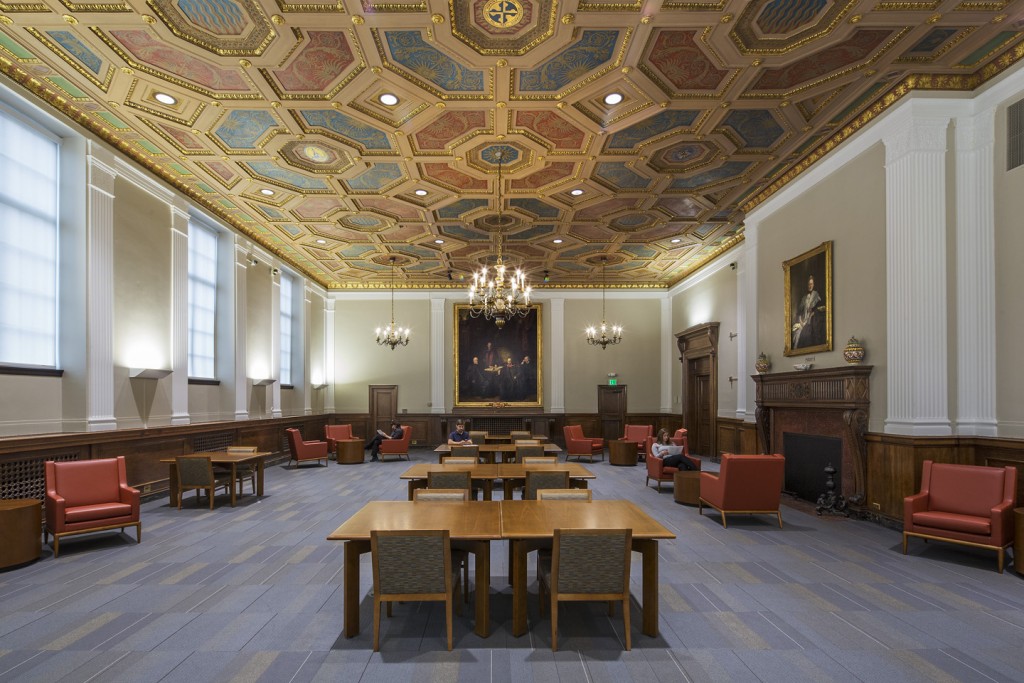
Interior view of the Welch Medical Library, Johns Hopkins University.
Welch Medical Library
1900 East Monument Street
939 South Clinton Street
1226 North Calvert Street
1418 Madison Avenue
Adaptive Reuse & Compatible Design
Interview view of The Algonquin, 11 East Chase Street.
The Algonquin
11 East Chase Street
Bolton Hill Nursery School
204 West Lanvale Street
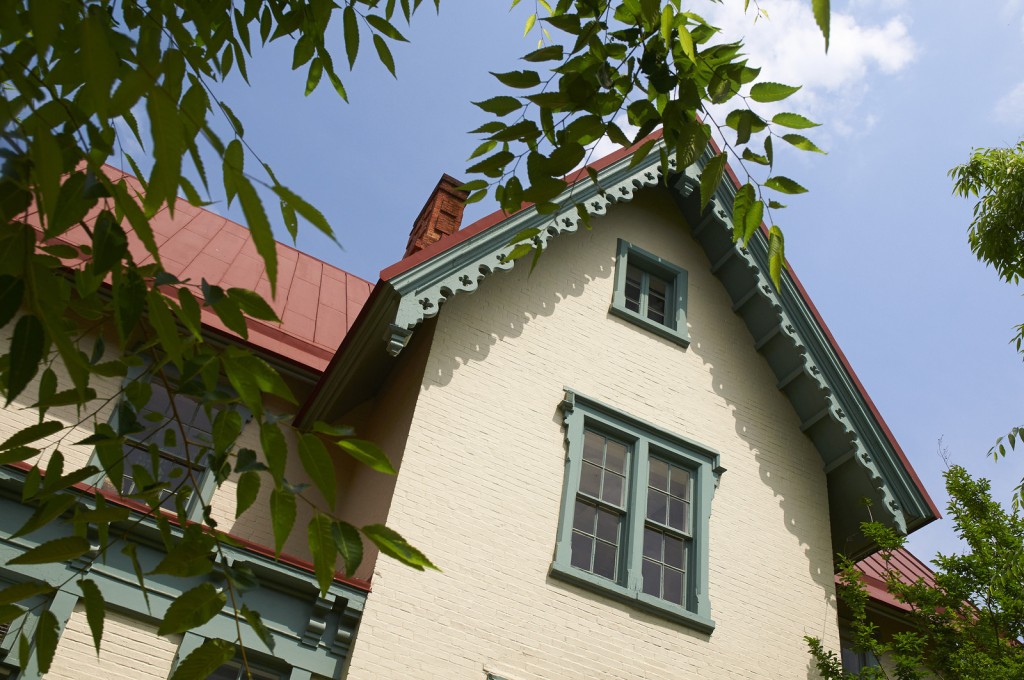
Exterior view of the Bolton Hill Nursery School.
Chesapeake Shakespeare Company Theater
7 South Calvert Street
Columbus School Apartments
2000 East North Avenue
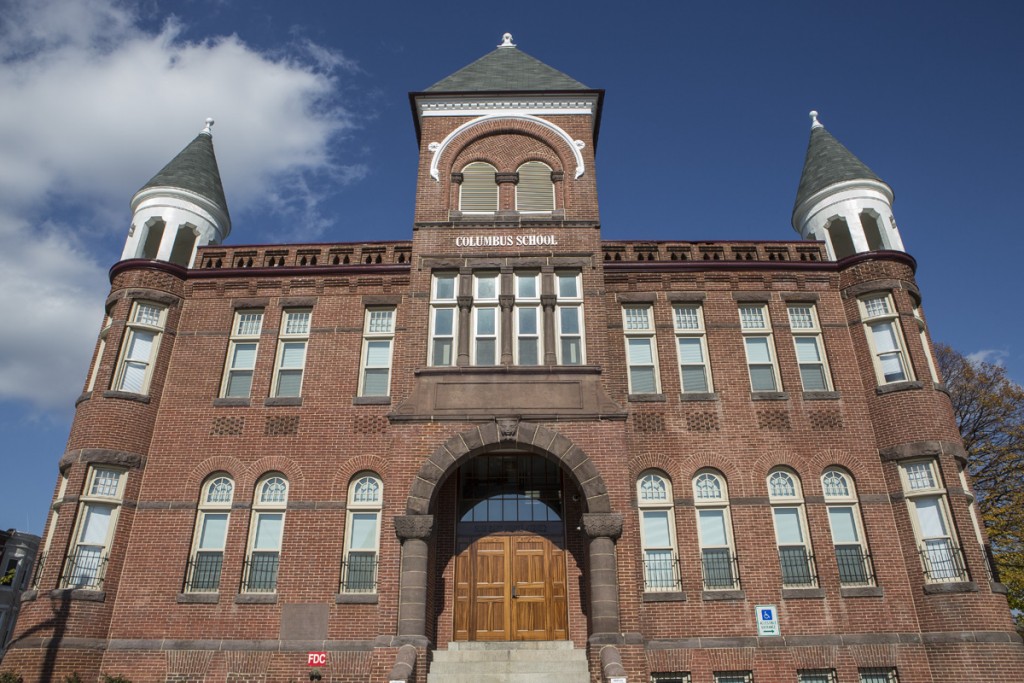
Front view of the Columbus School. Courtesy Cho Benn Holback.
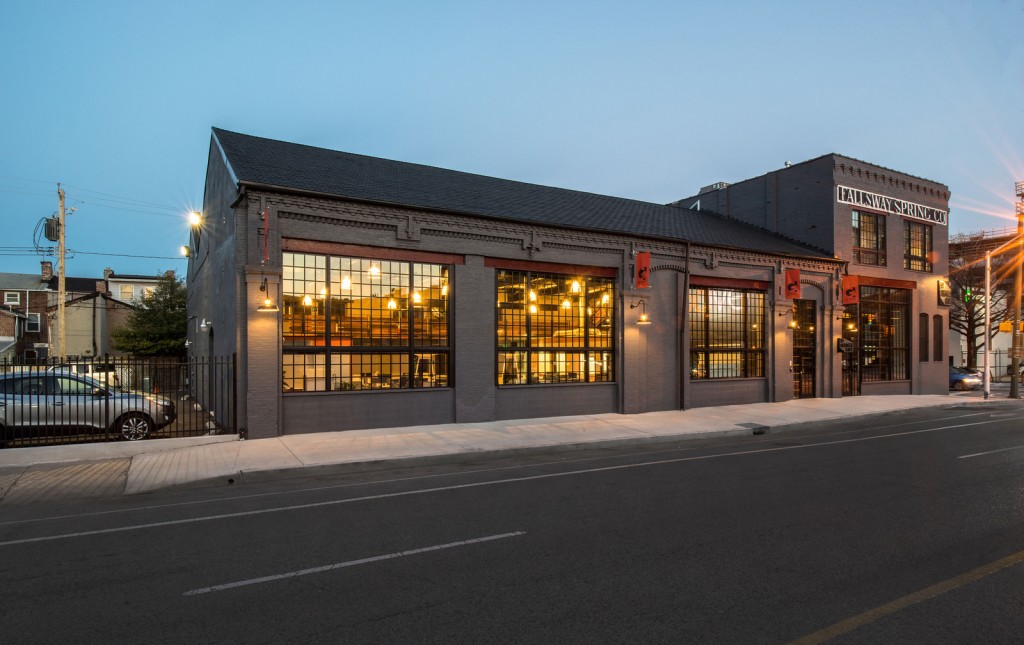
Exterior view of the Fallsway Spring building.
Fallsway Spring
415 South Central Avenue
Police Station at Fells Point Station
1621 Bank Street
The Lenore
114 East Lexington Street
300 Cathedral Street Apartments
300 Cathedral Street
Bmore Historic — Baltimore’s annual unconference on preservation, public history and cultural heritage—is returning to the Maryland Historical Society this fall on Friday, September 25.
Bmore Historic isn’t like most historic preservation workshops or trainings. Bmore Historic is an unconference—a gathering that emphasizes the important contributions that each and every participant brings into a full day of discussion sessions, workshops and conversations. We invite neighborhood activists, history teachers, graduate students, museum professionals and preservationists to share their knowledge about how preservation and public history can make Baltimore a better place to live, work and learn.
Each year we love to bring together a diverse community of history nerds who want to network with neighbors and improve our shared efforts to turn historic places and cultural heritage into a vital resource for our community. Over the past four years, hundreds of participants have led or participated in sessions on everything from modernist architecture to records management to deindustrialization and historic preservation to finding an 21st century audience for historic sites!
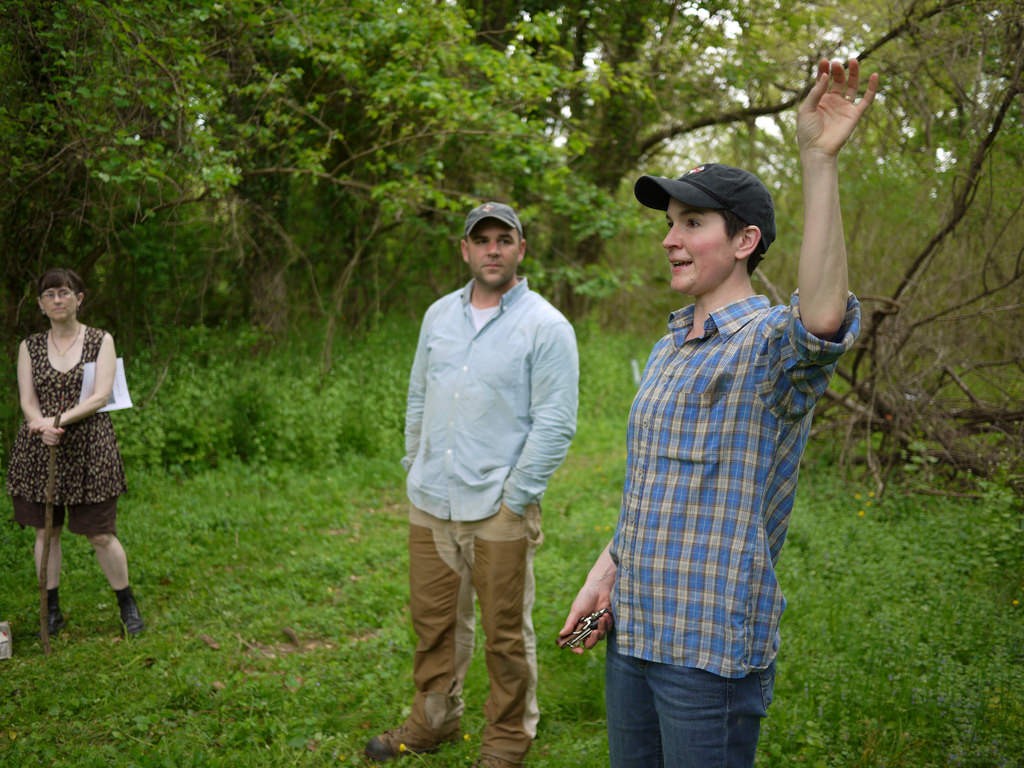
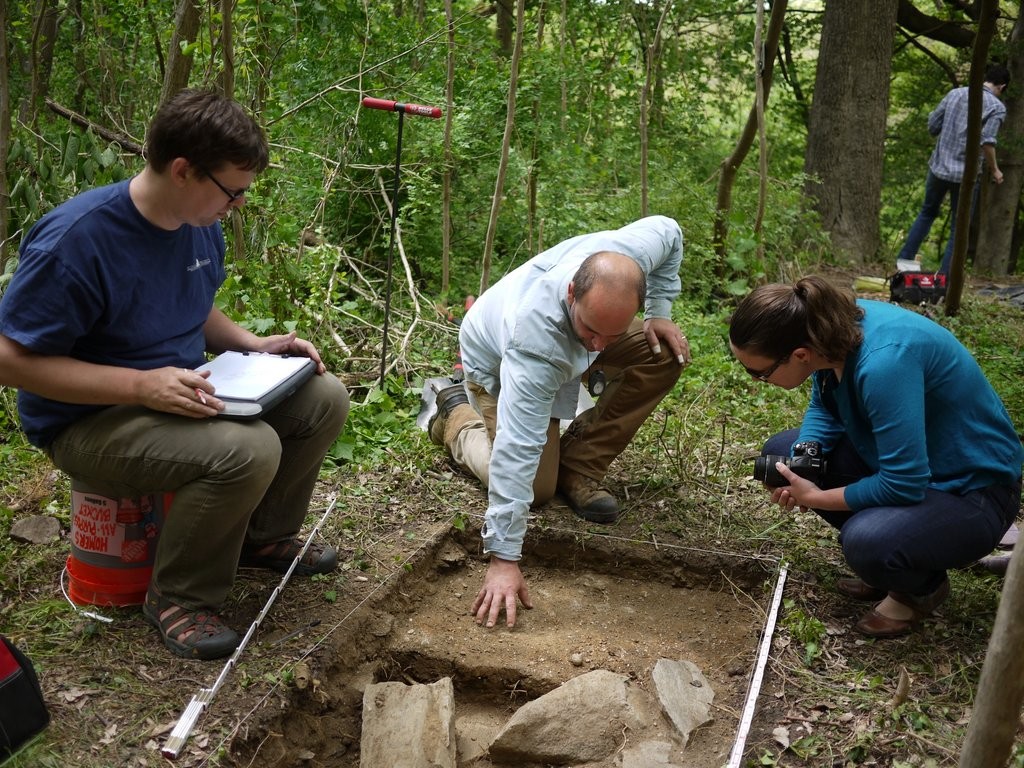
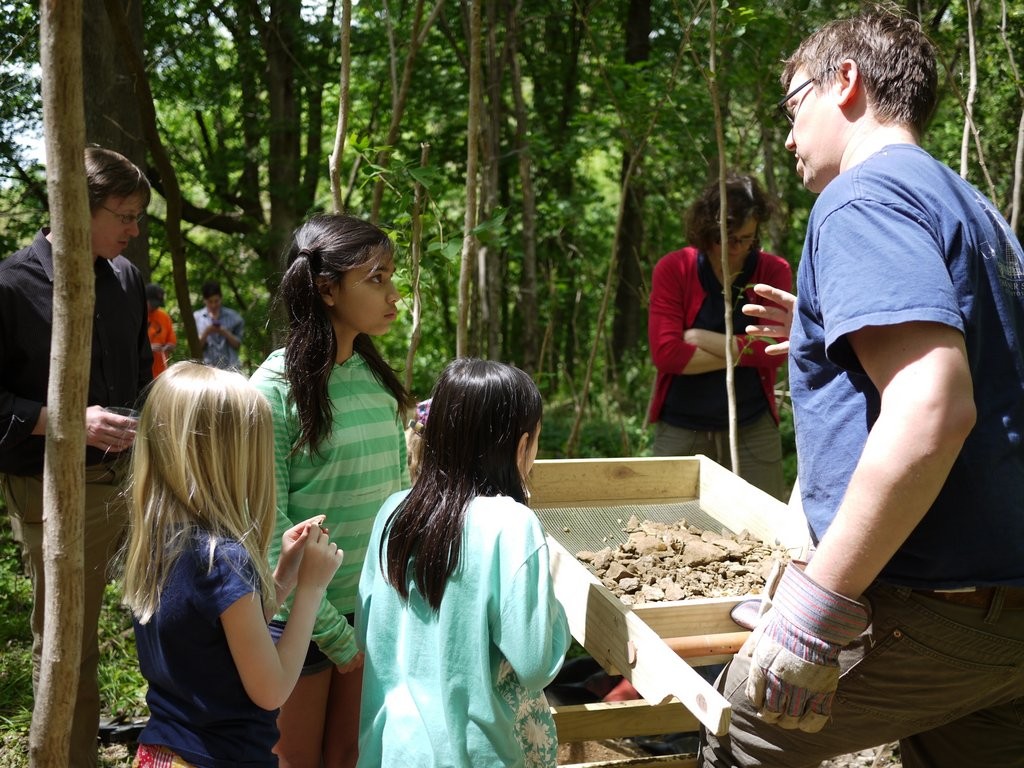
Thank you to everyone who came to visit or volunteer at our archaeological dig in Herring Run Park last month. For our final Field Notes entry from the 2015 field season Lisa Kraus and Jason Shellenhamer shared a recap of what we were searching for and what we found. We’ll be looking for more volunteers to assist with processing the artifacts this summer so please sign up for project updates or get in touch with questions and suggestions.
Archaeologists Jason Shellenhamer and Lisa Kraus, 2015 May 9.
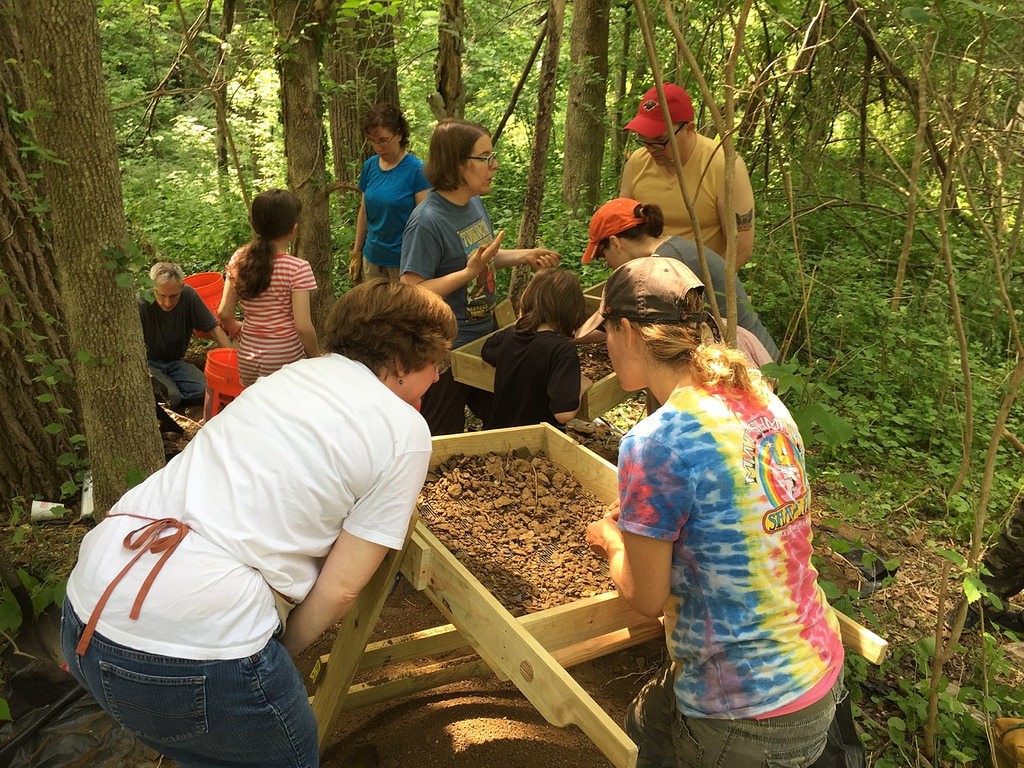
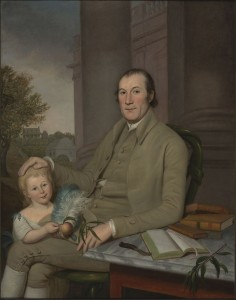
Last month, we worked with and a team of volunteers completed the inaugural field season of the Herring Run Park Archaeology project. The focus of the investigation was Eutaw Manor. Eutaw Manor was the late 18th-century retreat of William Smith. Smith’s country estate spanned all of present-day Herring Run Park between Belair and Harford Roads as well as portions of Lake Montebello.
In the 19th century, the estate and manor house became the home of Smith’s grandson, Benedict William Hall and his descendants. During their ownership, the property was improved to include a hotel, two mills, several tenant farms, and the Eutaw Methodist Church. In 1865, the Eutaw Manor house burnt to the ground as a result of an accident during a christening dinner.
Nearly 150 years after manor burned, archaeologists and volunteers from all over Maryland and greater Lauraville rediscovered this lost piece of local history. During the nine-day excavation, archaeologists and volunteers uncovered the remains of the home’s foundation and explored portions of the extensive cellar.
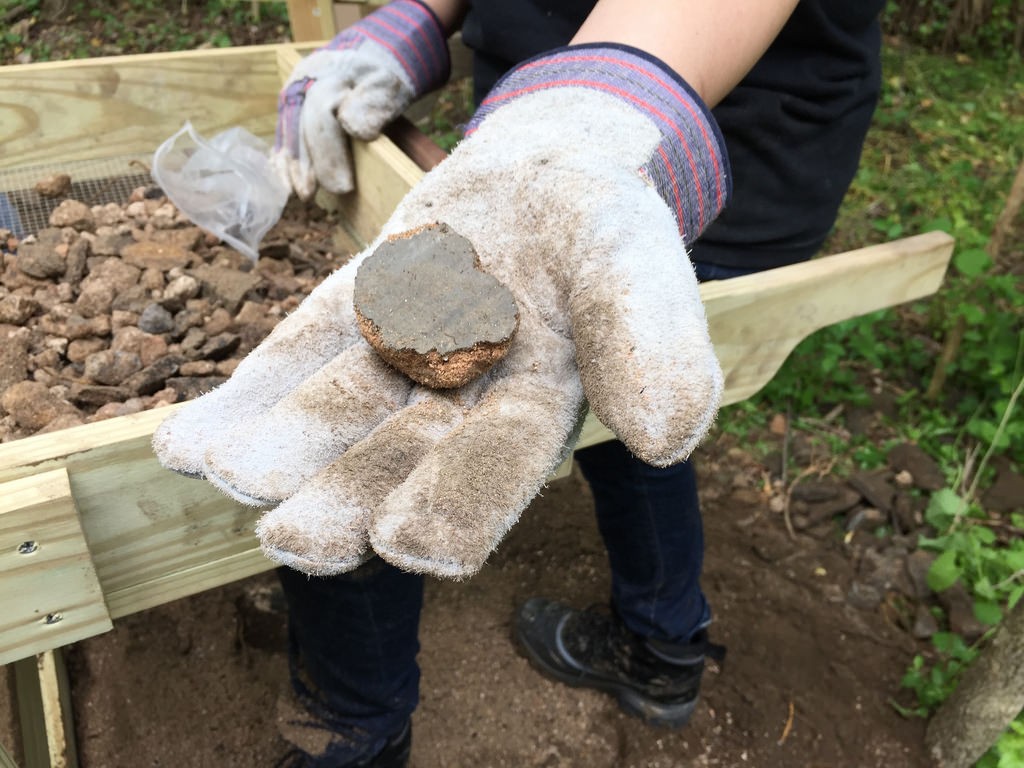
We recovered numerous artifacts during the excavation of the Eutaw Manor House including materials from the house itself. In addition to the foundation of the 60 by 60-foot house, numerous nails, window glass, and bricks were recovered from within the cellar hole and in the yards surrounding the home. Other artifacts included numerous fragments of tea and tablewares as well as tobacco pipe fragments, food remains, and glassware.
Burned plaster from Eutaw House. Photograph by Lisa Kraus, 2015 May 11.
While the fire that destroyed the house occurred over a century ago, the scars of that event were still evident. Much of the material recovered from the site bore evidence of the fire. The pottery was blackened, the glassware melted, and scorch marks on the foundation walls and the plaster showed evidence of smoke damage. Over the course of the excavation, it became apparent that many of the ceramic dish fragments recovered from the site were likely pieces of the very dishes the Hall family set out for their christening dinner on the last night the house stood. Although none of these fragmentary items has any monetary value, their worth in providing valuable information about the occupants of the house will be immeasurable.
Post hole for veranda on west side of the manor. Photograph by Eli Pousson, 2015 May 13.
Other discoveries from the site included the possible remains of the Eutaw kitchen, an oyster shell trash pit, and support posts for the large veranda that was once attached to the west side of the manor house. Another surprising find was a sizeable collection of pottery and other artifacts that suggest the site of the Eutaw Manor house was likely home to an earlier residence that predates the ownership of William Smith and his family; a home that might date to the 1750s or earlier.
Photography by Eli Pousson, 2015 May 13.
The project was a remarkable success, and would not have been possible without the support of our amazing partners: the Northeast Baltimore History Roundtable, Baltimore Heritage, the Friends of Herring Run Parks and a generous grant from Preservation Maryland. Most importantly we want to thank you, the greater Lauraville community, for you ongoing interest in the project, generous support, and the hard work of our nearly 60 volunteer archaeologists who helped us learn a little more about our community’s past.
While the excavation is over for this year, there are more volunteer opportunities to come. Starting in late July, we will announce days and times when we will be washing and sorting the hundreds of artifacts collected from Eutaw Manor. If you didn’t have a chance to join in last month’s excavation, this will be an opportunity to get to see and touch all the interesting objects discovered in Herring Run Park!
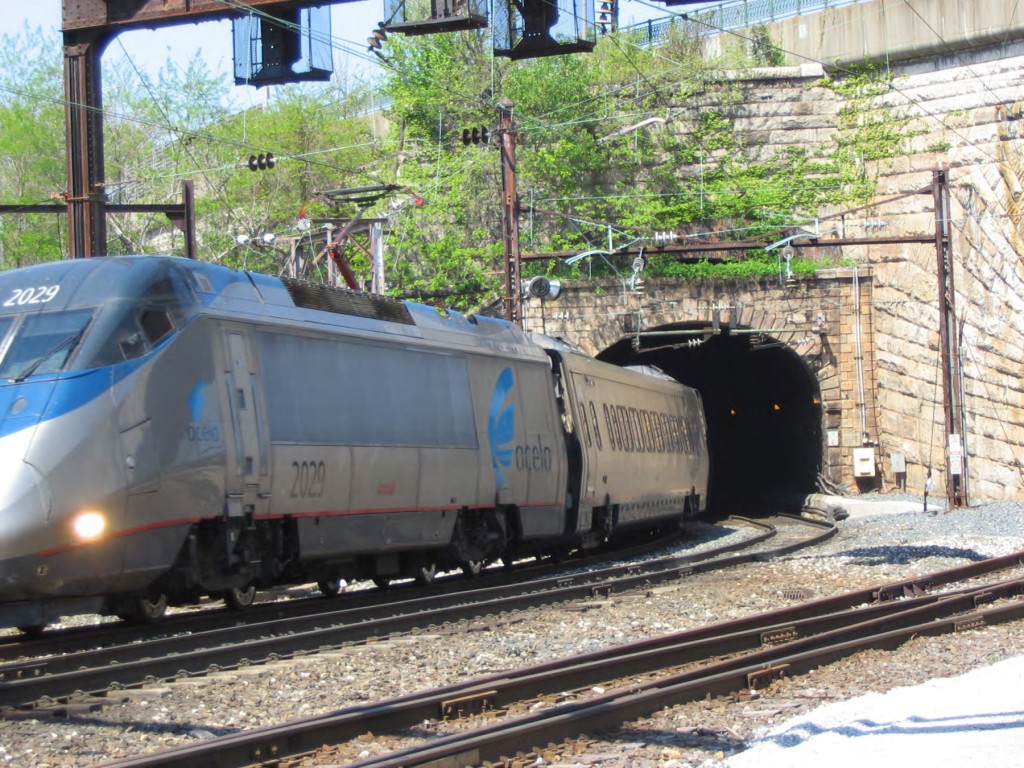
We are continuing to pay close attention to the Baltimore & Potomac Tunnel project where the possible replacement of an existing railroad tunnel threatens to blocks of historic rowhouses and industrial buildings in West Baltimore. An open house meeting next week provides the latest opportunity to learn more about the project including new details on the project engineering and the environmental impact on Baltimore.