Freedom House demolition is a wake-up call for preservation in West Baltimore

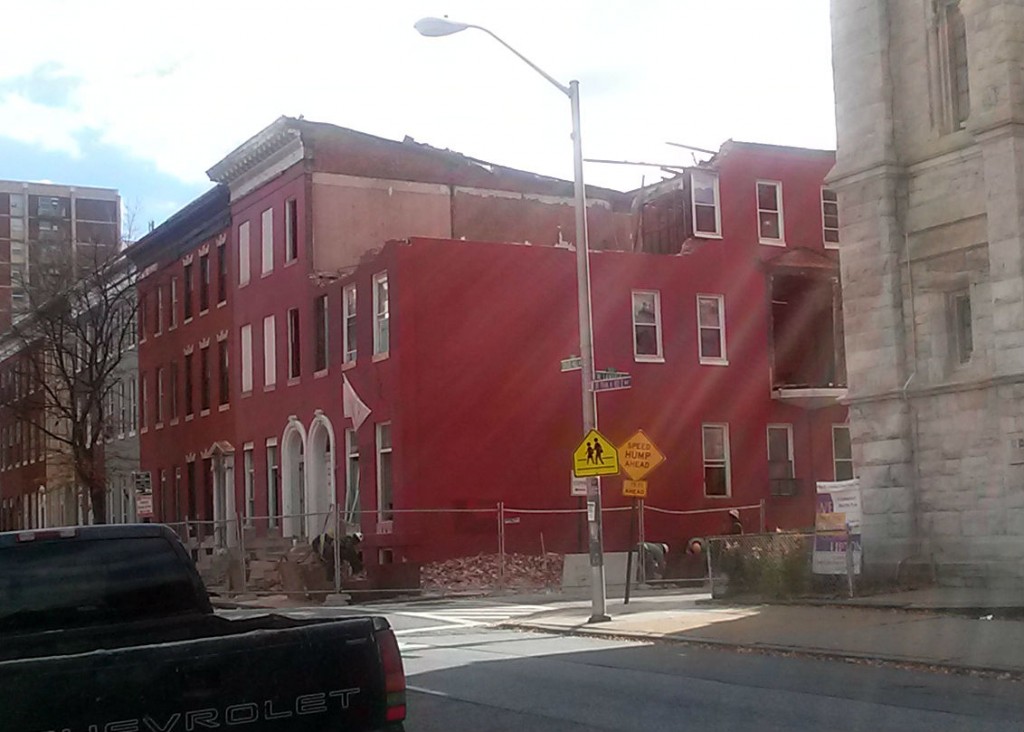
Last week, Bethel AME Church demolished 1234 Druid Hill Avenue, a rowhouse located just outside Upton’s Marble Hill historic district with strong connections to Baltimore’s Civil Rights movement. The demolition came as a shock to neighborhood activists who had urged city officials to investigate and protect the property when Bethel AME began work on the building in late September.
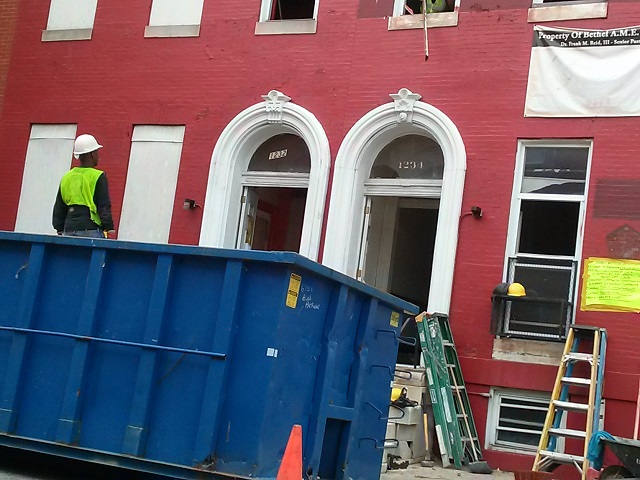
Demoltion contractor at 1234 Druid Hill Avenue, September 2015. Photo courtesy Dr. Steva A. Komeh, The Historic Marble Hill Community Association.
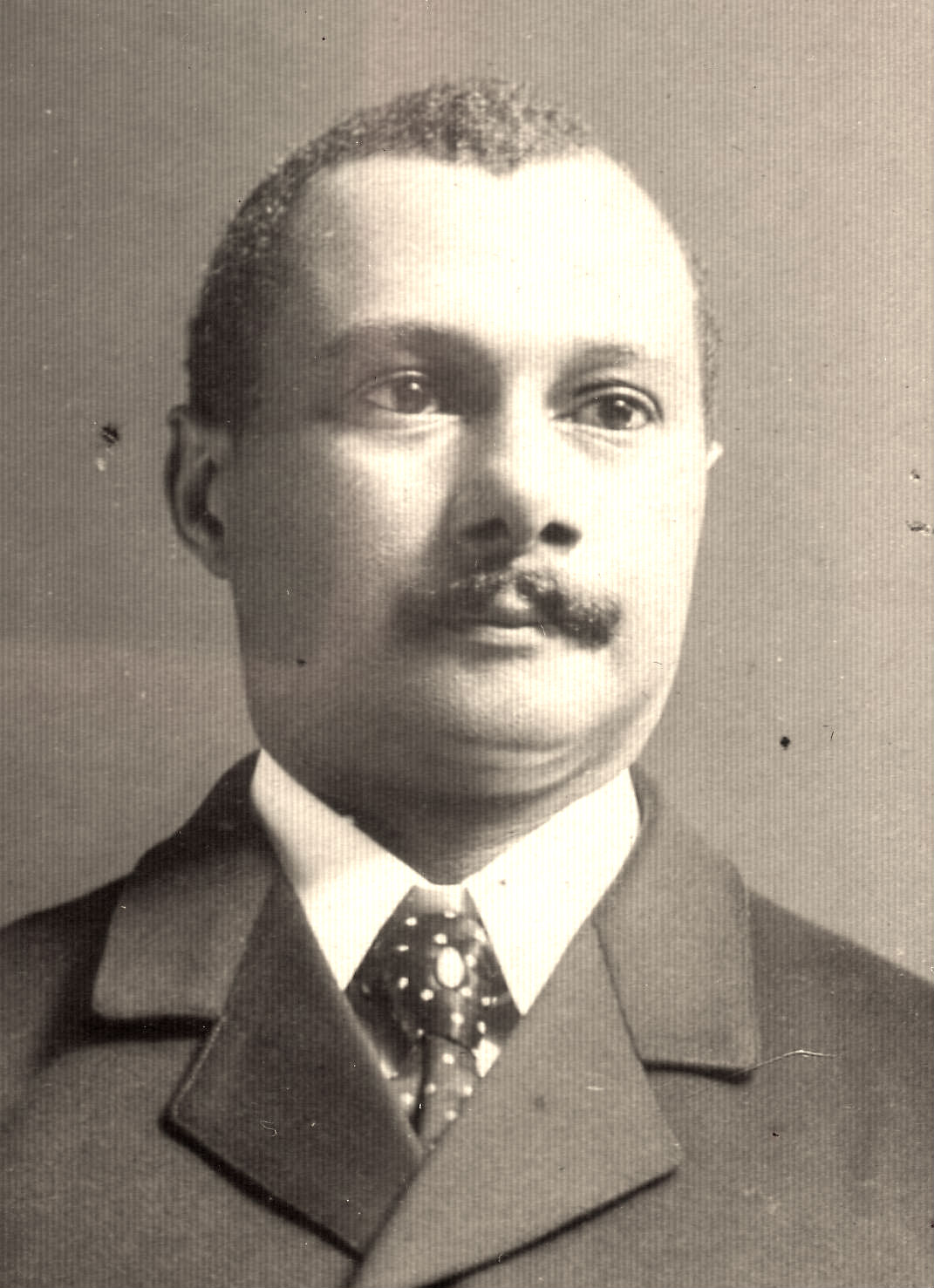
Harry S. Cummings. Courtesy University of Maryland.

1234 Druid Hill Avenue is known to a generation of local Civil Rights activists as “Freedom House”—serving as an office to the local chapter of the NAACP, hosting meetings with Clarence Mitchell, Lillie Mae Carroll Jackson, luncheons with Eleanor Roosevelt and even Martin Luther King, Jr. Known as a “mighty little organization,” Freedom House was established by the Baltimore NAACP in 1970 under the leadership of Dr. Lillie M. Jackson. By December 1977, the organization had “received many citations including the AFRO’s highest honor for its successful crusades in reducing unemployment, crime and delinquency.”

Just as importantly, 1234 Druid Hill Avenue had been the home of Harry Sythe Cummings and his family from 1899 to 1911. In 1889, Cummings graduated from the University of Maryland Law School (one of the first two black men to do so) and, in 1890, became the first African American elected to a Baltimore City Council seat.

How did Baltimore lose the Freedom House?

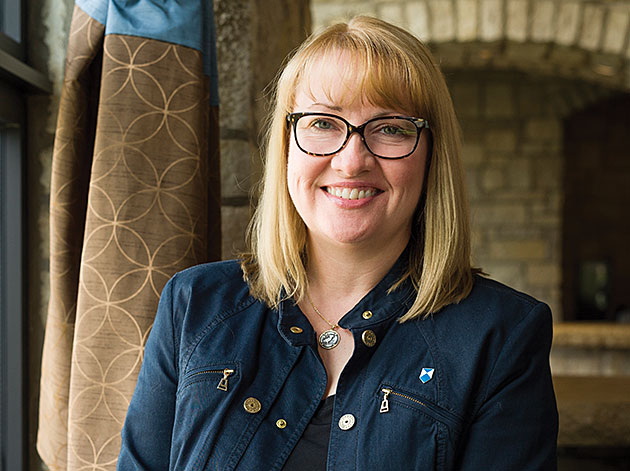
Carol Ott, July 2015. Baltimore Slumlord Watch.

1234 Druid Hill Avenue and its neighbor at 1232 have been owned or controlled by Bethel AME Church for decades. In recent years, the buildings deteriorated significantly and, in July 2015, Baltimore Slumlord Watch highlighted their poor condition. Bethel AME Church responded to these issues by securing a city building permit for both buildings in late September that allowed non-structural alterations and limited demolition (e.g. removing debris, interior drywall, nonbearing walls). Unfortunately, in October the church changed their plans and received approval from the Baltimore Housing Department to demolish 1234 Druid Hill Avenue—without notifying preservation advocates or the local chapter of the NAACP.

It is currently unclear whether the demolition permit for 1234 also applies to 1232. Continuing confusion around the status of the permit for this planned demolition has been a source of frustration for concerned residents. If reports by residents are accurate, Bethel AME Church is planning to continue to demolish 1232 Druid Hill Avenue within the next few days.

What can be done to preserve Baltimore’s Civil Rights heritage?

The destruction of the Freedom House on Druid Hill Avenue is a shocking wake-up call for anyone concerned about the preservation of Baltimore’s Civil Rights heritage. Persistent vacancy and demolition by neglect are destroying historic buildings that tell the important story of the Civil Rights movement in Baltimore and around the country. Please join Baltimore Heritage as we support tomorrow’s rally urging Bethel AME Church to preserve 1232 Druid Hill Avenue and fight for the protection of West Baltimore’s Civil Rights landmarks. Baltimore Heritage is asking neighborhood leaders and elected officials to support a comprehensive effort to address the deteriorating condition of the landmarks of Baltimore Civil Rights history and ensure their preservation for future generations to discover.

Rally to Save Baltimore’s Civil Rights Heritage

Thursday, November 12, 2015, 1:00pm
1234 Druid Hill Avenue, Baltimore, MD 21217
RSVP and share this event on Facebook!

Learn more about our work to document and protect Civil Rights landmarks. For questions or additional information about tomorrow’s rally, please contact Louis Fields, President, African American Tourism Council of Maryland, Inc. at 443-983-7974.

A full weekend of heritage tours from Annapolis to Fell’s Point

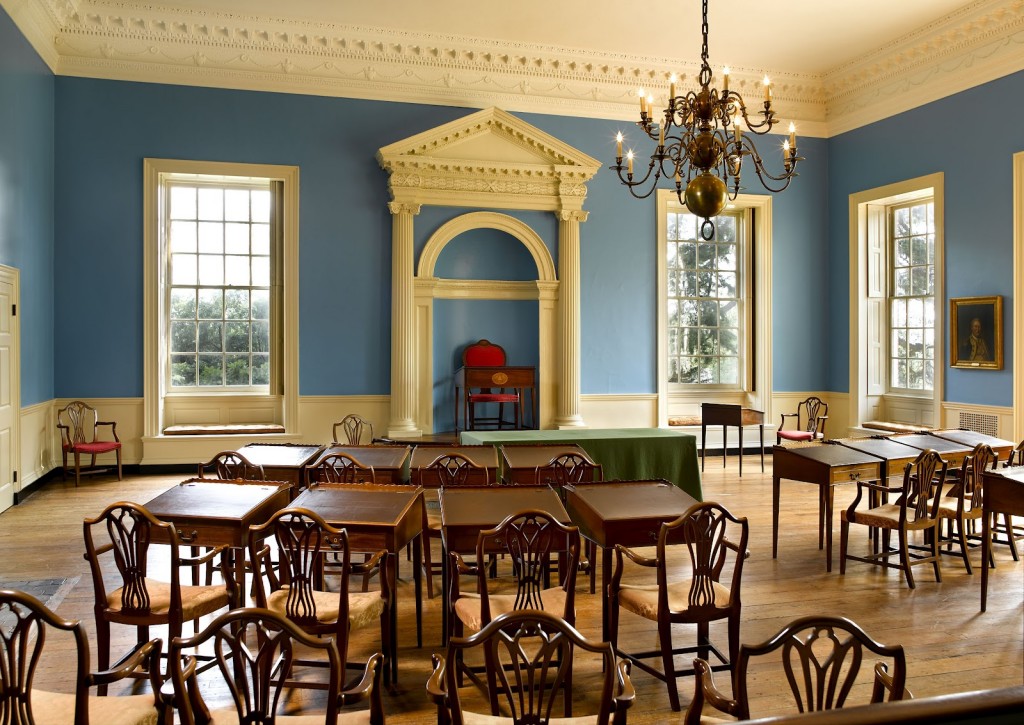
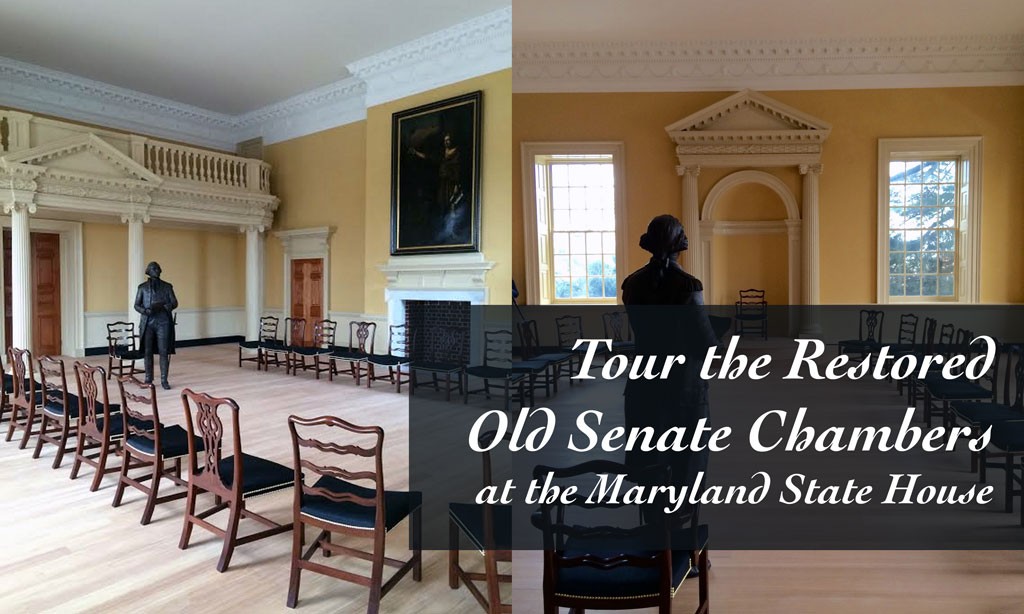
What better way to spend the weekend than by joining us on two upcoming heritage tours? On Saturday morning we’re visiting the richly restored Annapolis State House Senate Chamber where George Washington resigned his military commission and affirmed that civilians would control the new United States. And on Sunday we’re stretching our legs on a walking tour in Fell’s Point with local historian Dean Krimmel to discover more about this historic waterfront neighborhood and its colorful immigrant past.

George Washington’s fellow revolutionary Benjamin Franklin once said:

“Tell me and I forget, teach me and I may remember, involve me and I learn.”

We invite you to come and get involved through these upcoming tours!

Protecting Heritage in Worldwide Conflict Zones: A Discussion on October 21

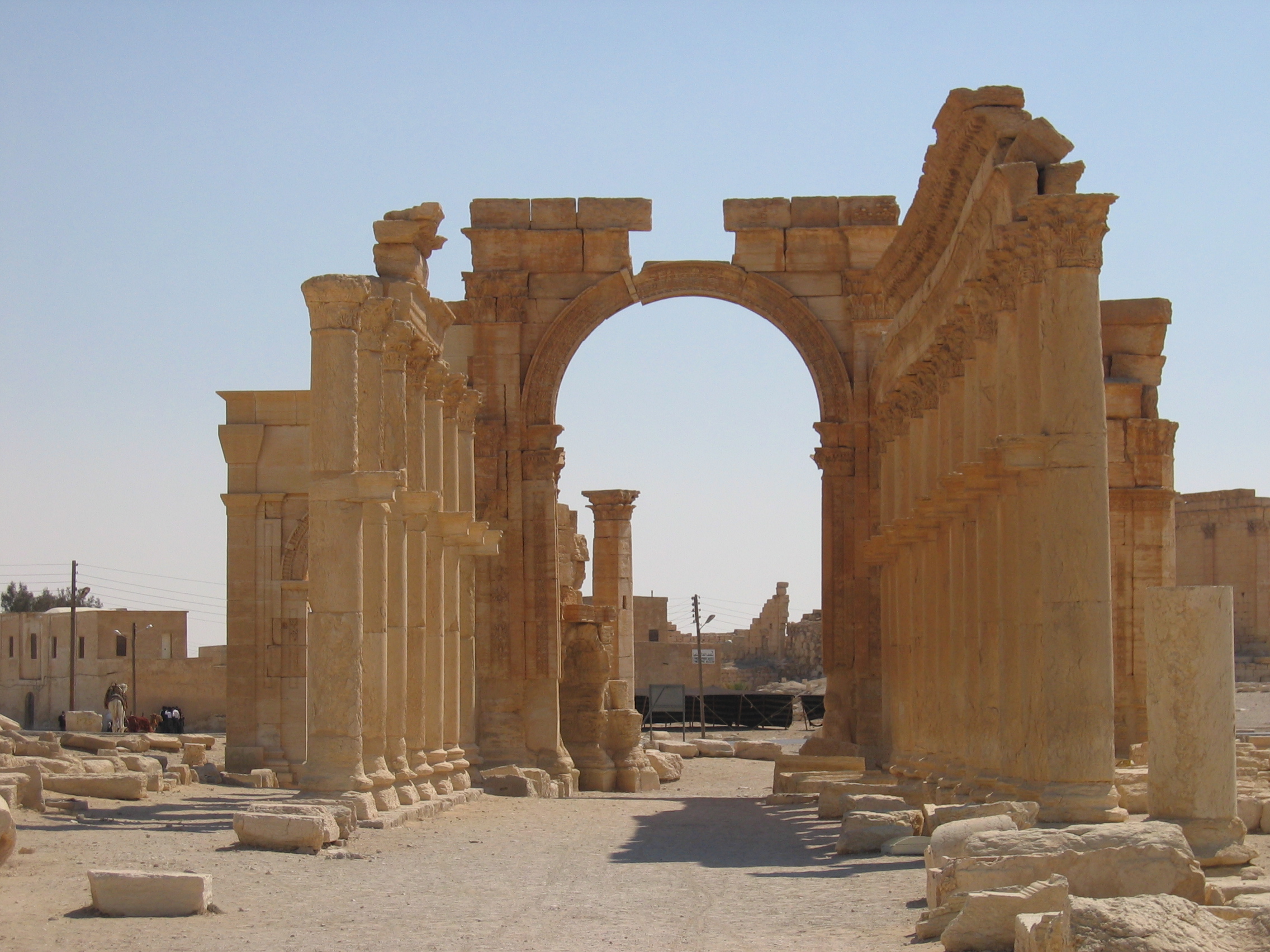
Over the last several years, we have all watched aghast at the images of ancient statuary, irreplaceable temples, and priceless historic artifacts are that damaged and destroyed by violence and theft in conflict zones around the world. Just today, we read about the terrible news that the Islamic State has blown up the Triumph Arch in the Syrian city of Palmyra, an iconic 2,000 year-old landmark within a UNESCO world heritage site.

Hadrian's Gate, Palmyra, Syria, 2005. Wikimedia Commons
Hadrian’s Gate, Palmyra, Syria, 2005. Wikimedia Commons

I know I’m not alone in feeling almost helpless to stop this heart-breaking destruction in places half-way around the world. I also know I’m not alone in wondering what people around the world are doing to prevent these losses. While the challenge is immense, the good news is that there are indeed people and groups working hard to protect our global heritage in war zones. We are pleased to bring a leader in this field to speak to our community in Baltimore: Corine Wegener from the Smithsonian Institution.

Corine WegenerMs. Wegener is a founder of the U.S. Committee of the Blue Shield, a nonprofit organization dedicated to protecting cultural property worldwide during armed conflict, and helped lead efforts to recover artifacts for the National Museum of Iraq after looting there. She works throughout the world helping museums protect against looting, strengthening international laws to safeguard antiquities, and engaging front-line soldiers on the importance of shared culture.

We hope you can join us for a talk by Ms. Wegener on October 21 with a wine and cheese reception following. Our host is the First Unitarian Church of Baltimore, a historic treasure of its own. Built in 1818 and designed by noted architect Maximilian Godefroy (who also designed Baltimore’s Battle Monument on Calvert Street), the church is the oldest Unitarian building still being used in the country. Please get in touch with any questions and come out to learn more about this important international preservation issue.

Join us for Baltimore by Bike and out-of-town tours this fall

We love Baltimore best but even we have to admit stunning architecture and incredible history can be found in communities all across Maryland. This month, we’re  offering two tours that take us beyond the city: a repeat of our sold-out spring walking tour of Lutherville and a look at the newly restored and reopened Senate Chambers at the Maryland State House in Annapolis. Deputy State Historic Preservation Officer Michael Day is personally leading our Senate Chambers tour which includes the opportunity to stick around for lunch and hear more behind-the-scenes stories of this incredible restoration project.

Of course, you’ll still see us rolling around Baltimore on our two upcoming bike tours: Baltimore Meets Florence and Black and Jewish Civil Rights Heritage by Bike. We’ll also be strolling down the narrow alleys of Fell’s Point (and dreaming of fish dinners) with historian Dean Krimmel on a tour of Baltimore’s immigrant past organized in partnership with the Preservation Society. We hope you can join us!

What do we do about Baltimore’s Confederate monuments?

Yesterday, Baltimore Heritage attended the first of four meetings for the Mayor’s Special Commission to Review Baltimore’s Public Confederate Monuments. Over the next six months, this commission plans to consider four public monuments:

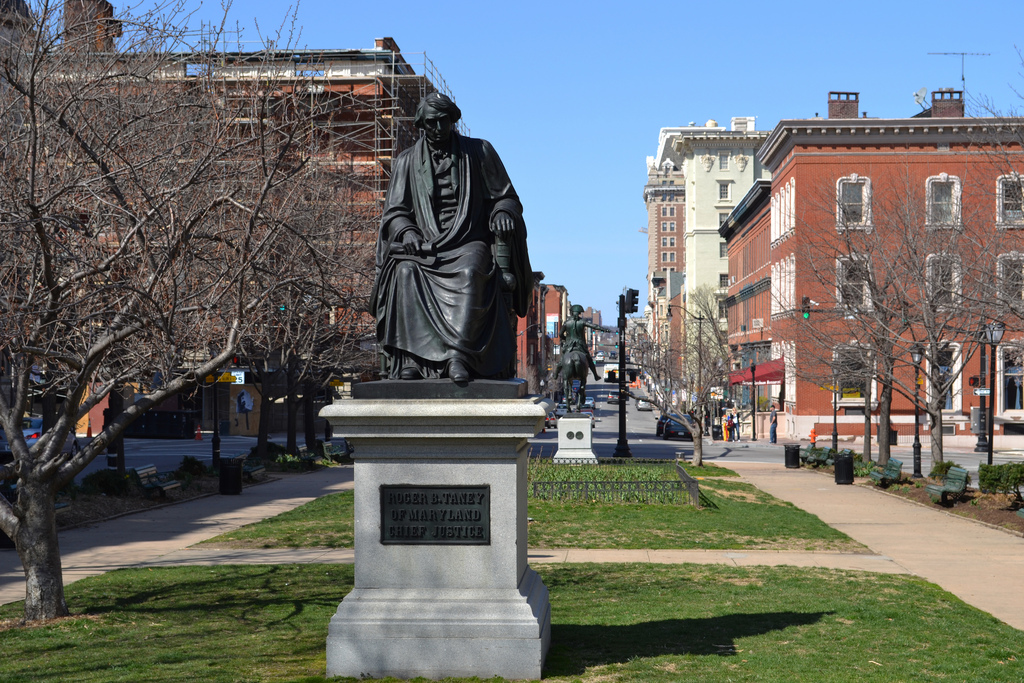
  • Roger B. Taney Monument (1887)
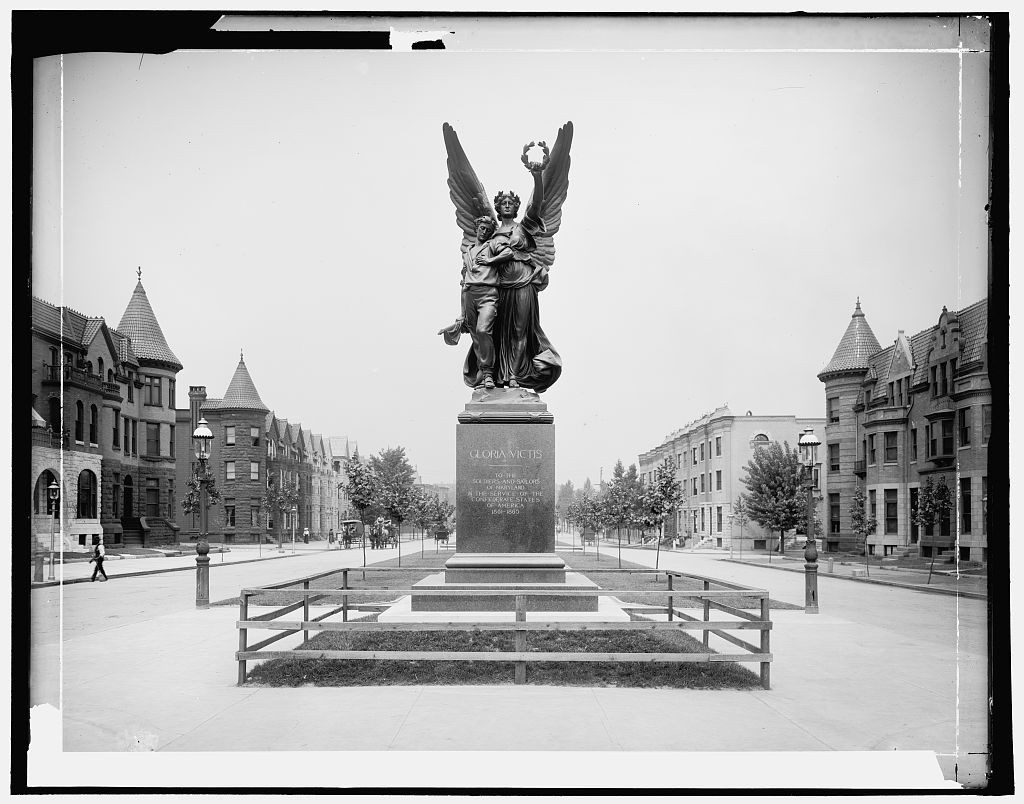
  • Confederate Soldiers and Sailors Monument (1903)
  • Confederate Women’s Monument (1919)
  • Lee-Jackson Monument (1948)

Today’s meeting helped to define scope of the commission’s work and a process for moving forward. The commission is closely focused on these four public monuments—works that are owned by the city and located on public land. They have no plans to address the name of Lake Roland Park (an issue already being addressed by the Baltimore City Council).

Baltimore’s public art collection includes hundreds of statues, memorials and works of art found in neighborhoods across the city. Different works have been donated by individuals or groups, commissioned directly by Baltimore City, or supported by the 1% for art program. The city’s public art collection is managed by the Baltimore Public Art Commission (PAC) and the Commission for Historical and Architectural Preservation (CHAP). Appropriately, the new special commission is made up of four representatives from CHAP, three from PAC, and a representative of the Mayor’s Office. For more on the membership of the commission read the Mayor’s announcement of the membership from September 3.

By January 2016, the commission expects to make a set of recommendations, informed by research, public comments, and deliberation, and laid out in a final report. For each monument, there are a range of possibilities:

  1. Keep the sculpture as it stands at present.
  2. Keep the sculpture with specific conditions. Conditions could include a recommendation to install new signage or some other intervention.
  3. Keep the sculpture in the city’s collection at a new location.
  4. Remove the sculpture and de-accession from the city’s collection.

Some may recall that this current discussion began in the wake of the tragic shooting in Charleston, South Carolina and the renewed efforts to reject symbols of the Confederacy for their links to white supremacy past and present. In Baltimore, the Confederate Soldiers and Sailors Monument on Mount Royal Avenue was tagged on July 22 with the words “Black Lives Matter”—matching the well-publicized tagging of monuments in Charleston and beyond. A group of activists, including Marvin “Doc” Cheatham and others who had advocated against the Lee-Jackson Monument for years, staged a protest and press conference to draw attention to the troubling meaning of these statues. Mayor Stephanie Rawlings-Blake and city staff quickly responded with the announcement of the special commission on June 30.

Other cities around the country are exploring many of the same challenges. After convening a task force in June, the University of Texas at Austin decided to deal with a set of troubling statues along the Main Mall with the full range of options: moving their statue of Jefferson Davis to UT’s Briscoe Center for American History, relocating their statue of Woodrow Wilson, and leaving four others in place. In Frederick, Maryland officials are considering removing a statue of Roger B. Taney and in Rockville, Montgomery County officials are already considering alternate locations for a monument to the Confederacy located in front of the county courthouse.

Baltimore Heritage supports the Mayor’s leadership in organizing this special commission to consider this issue carefully. We hope the commission meetings provide an opportunity for an open discussion about the legacies of the Civil War and the decades of racial discrimination that followed in Baltimore and across the state. The testimony from city residents today pointed to the importance of this issue to Baltimoreans. One person reminded the commission that the “Spirit of the Confederacy” on Mount Royal Avenue stands just outside the doors of the Midtown Academy and asked: what are we teaching our children? Another speaker, expressed a call for unity urging the commission to seek a more inclusive vision of Baltimore’s history that includes abolition as well as slavery.

Taney Monument, March 28, 2011. Monument City

We have put together a historic context on Baltimore’s Confederate memory and monuments that we have provided to the special commission and through our new Civil Rights heritage project. We encourage you to read the historic context and get informed about this issue. You can submit your testimony to the commission through their online contact form. The public is also welcome to attend upcoming commission meetings:

  • Thursday, October 29, 9:00 am
  • Tuesday, December 15, 5:00pm
  • Thursday, January 14, 10:00 am

For questions or suggestions, please don’t hesitate to reach out to us and share your views on Baltimore’s Confederate monuments and their future.