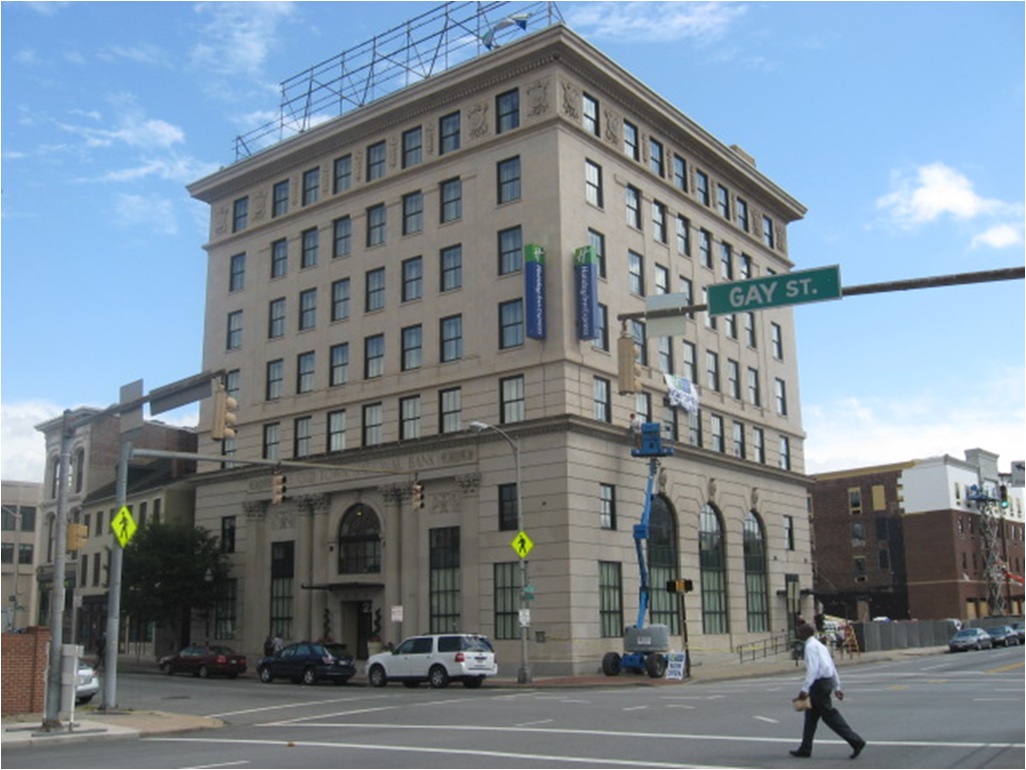
The classically styled Old Town National Bank building at 221 N. Gay Street was constructed in 1924 as a bank headquarters. Despite many years of vacancy, the primary first stories retained an array of historic details, including a two story lobby, cornice and parapet wall, grand marble stairway, and even vault spaces. The work included refurbishing and repairing these and a host of other features, and the building now shines as a Holiday Inn Express Hotel. For more information on the project see this great account from the Baltimore Sun. The Adaptive Reuse and Compatible Design Awards went to owner Old Town Properties LLC and architects Kann Partners.
This week’s Baltimore Building of the Week is our first introduction to Baltimore’s tremendous historic skyscrapers, such as the 1891 Equitable Bank Building that survived the Great Baltimore Fire,
Image courtesy Jack Breihan
Another uniquely American style of the late 19th century originated in Chicago, where Louis Sullivan gave the new steel-framed “skyscrapers” unified facades of multistory arches. The former headquarters of Equitable Bank (shown here before exterior restoration) is Baltimore’s best version of the Sullivan/skyscraper style. Designed by Joseph Evans Sperry in 1891, it was gutted in the Great Baltimore Fire, but the frame and façade survived. After nearly a century’s service as an office building, it has been converted to residential use.
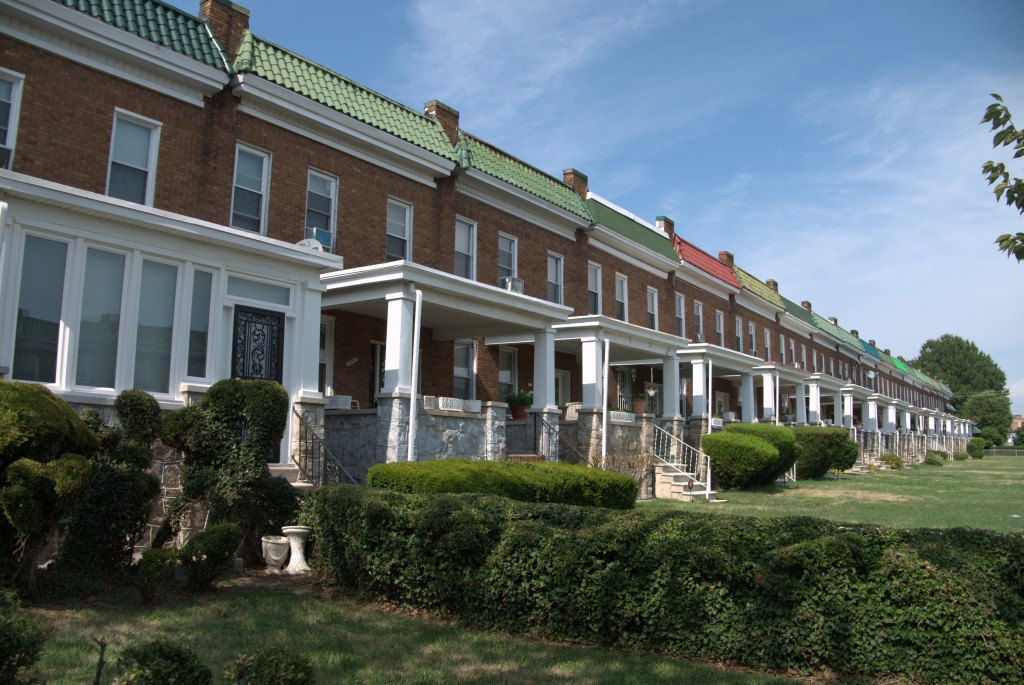
2400 block of West Lafayette Avenue within the proposed Edmondson Avenue Historic District.
This month’s edition in our new monthly series highlighting the hearing agenda for the Baltimore Commission for Historical and Architectural Preservation is an opportunity for us to share a bit about our own work on the proposed Edmondson Avenue National Register Historic Historic District. In partnership with the National Trust for Historic Preservation, Baltimore Heritage has been working in West Baltimore to establish new historic districts and enable home-owners in West Baltimore to access the state Sustainable Communities Tax Credit Program. With support from the Evergreen Protective Association, the Bridgeview/Greenlawn Neighborhood Improvement Association, the Alliance of Rosemont Community Organizations and West Baltimore MARC TOD, Inc. we have nominated nearly 1700 properties in West Baltimore to the National Register of Historic Places.
The neighborhoods within the proposed historic district have a rich architectural legacy including handsome daylight rowhouses, graceful Gothic churches, and well-built schools. In addition, this proposed designation recognizes the important social history of Greater Rosemont as a middle-class African American community that successfully resisted displacement from the threat of the “Highway to Nowhere” in the 1960s and 1970s. You can download a draft copy of the National Register of Historic Places nomination form here (PDF) or take a look at our photos from the Edmondson Avenue Historic District up on Flickr.
Other items on the CHAP Agenda include a concept review for a proposed addition to 524 South Hanover Street within the Otterbein Historic District and a continuation of last month’s discussion on the Mount Vernon Place Restoration Master Plan.
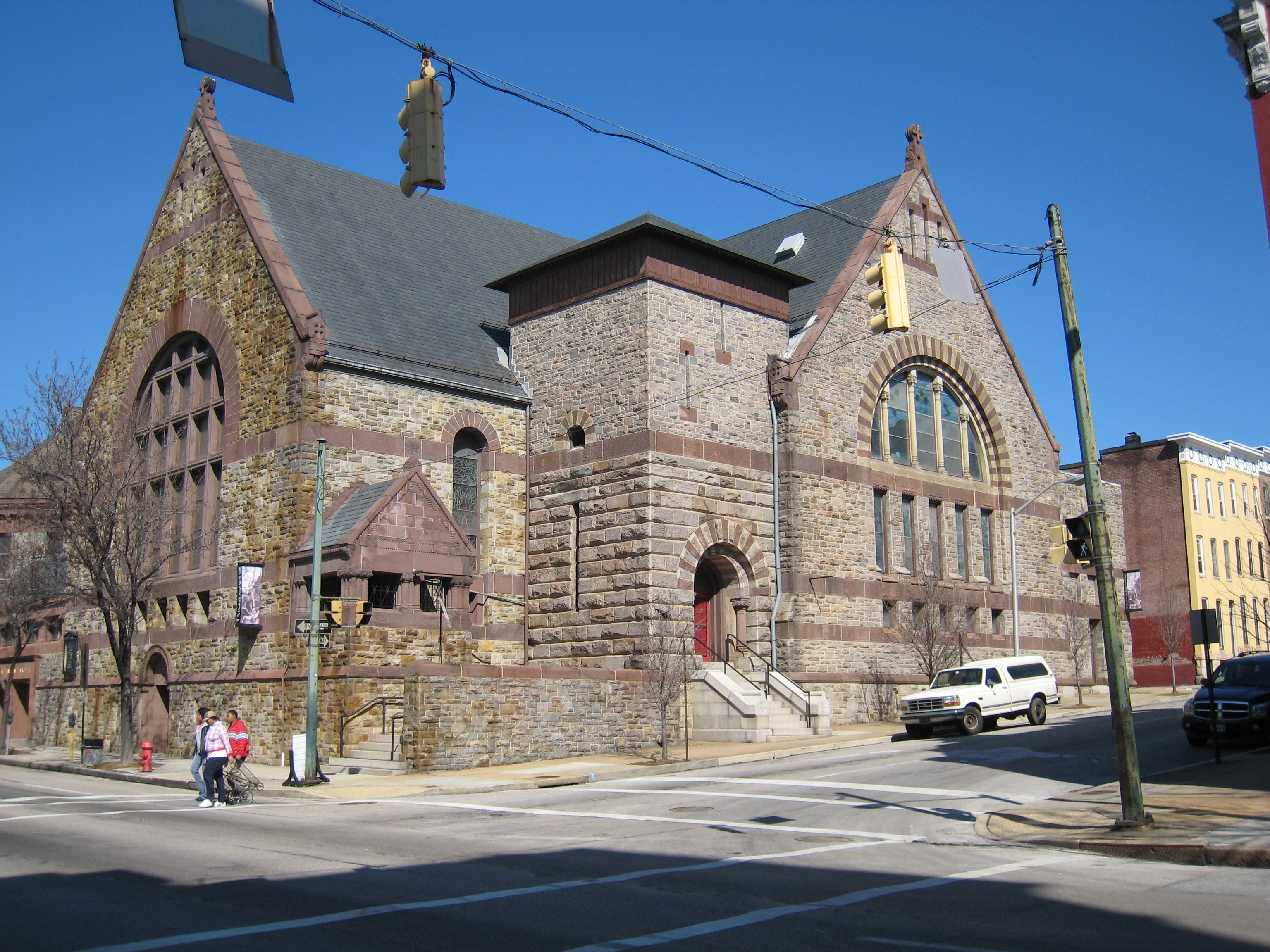
This week’s Baltimore Building of the Week from Dr. John Breihan is St. Michael and All Angels Episcopal Church representing the many Baltimore buildings designed in the Richardsonian Romanesque Style,
Image courtesy Jack Breihan
Still another distinctively American architectural style of the late 19th century was named for the most prominent architect of the day, Henry Hobson Richardson. “Richardsonian Romanesque” was even more robust than the blocky, polychrome Romanesque style that grew up alongside Victorian Gothic in England. Richardson favored very heavy masonry walls punctuated with enormous round arches springing directly from the ground. The best-known Richardsonian Romanesque building in Baltimore is Lovely Lane Methodist Church, designed by Stanford White in his youthful Richardsonian period. Most of the old Goucher College buildings that line St. Paul Street just north of Lovely Lane are also in the Richardsonian style. My featured building is also not far away on St. Paul. It is St. Michael and All Angels Episcopal Church, designed in 1877 by the socially prominent Baltimore architect James Bosley Noel Wyatt. Wyatt attended Harvard and the Ecole de Beaux Arts in Paris about a decade after Richardson, and was clearly influenced by his style.
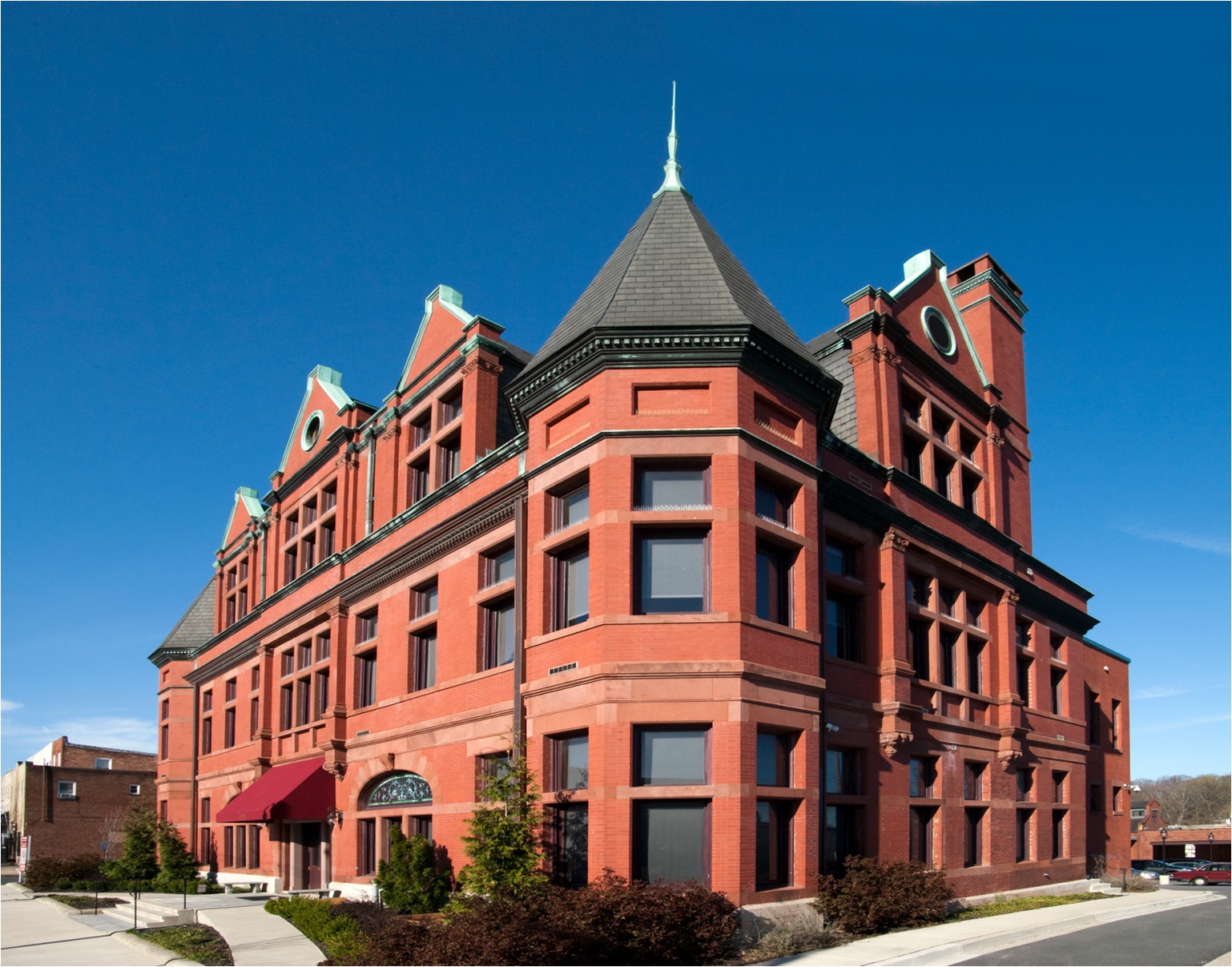
Built in 1899 and designed as a police station for Baltimore’s Northern District Police Station, now known as The Castle, at 3355 Keswick Road originally housed police functions such as a call room, gymnasium, holding cells and offices, as well as a stable area and two carriage houses for the mounted police unit in the pre-automobile era. Rehabilitation involved more than extensive work inside and out, including un-doing some unfortunate changes that were made in the 1970s. The original entry way was restored, along with the carriage houses and even the holding cells. The building now houses an array of offices and is a welcome addition to the section of Hampden. The Adaptive Reuse and Compatible Design award went to David Gleason Architects. Enjoy this video of the interior from Ben Frederick Realty Inc. or continue on for more photos. Read more