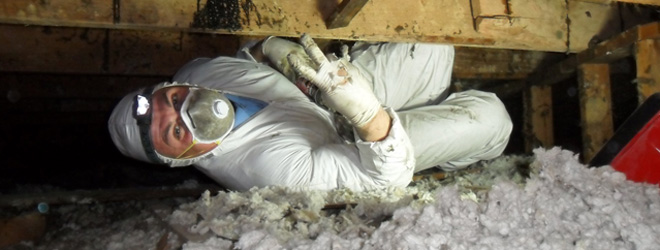
Weatherization, Retrofit Baltimore

Weatherization & Historic Tax Credit Workshops in March and April

Planning any rehab or maintenance projects for your house this spring? Don’t miss the chance to save money with historic tax credits while taking advantage of financial incentives for weatherization retrofits. Join Baltimore Heritage and Retrofit Baltimore for a free one-hour workshop to learn how to save money retrofitting your historic home for energy efficiency. Learn more about historic tax credits with our comprehensive guide.

If you are a home-owner in a historic district like Roland Park, Homeland, Ednor Gardens or Original Northwood, you may be eligible for city and state historic tax credits for weatherization and projects from re-painting to re-pointing.

Weatherization & Historic Tax Credits Workshop on March 14

Thursday, March 14, 7:00 pm to 8:00 pm
Neighborhood Design Center, 1401 Hollins Street, Baltimore, MD 21223
RSVP today!
Free on-street parking is available in the area and the Neighborhood Design Center is only a few blocks from the Charm City Circulator Orange Route stop 211 at Hollins Market. For more information contact, Whitney Graham at wgraham@retrofitbaltimore.org.

Weatherization & Historic Tax Credits Workshop on March 21

Thursday, March 21, 6:30pm to 7:30pm
Govans Branch Library, 5714 Bellona Ave Baltimore, MD 21212
RSVP today!
Free on-street parking available. For more information contact, Ben Legow at blegow@retrofitbaltimore.org.

Weatherization & Historic Tax Credits Workshop on April 22

Monday, April 22, 6:30pm to 7:30pm
Roland Park Library, 5108 Roland Avenue, Baltimore, MD 21210
RSVP today!
Free on-street parking available. For more information contact, Molly Rice at mrice@retrofitbaltimore.org.
Maryland Historical Trust leads effort to update statewide preservation plan this spring

We’re glad to share a guest post from Tim Leahy who is working with the Maryland Historical Trust leading the update to our State Historic Preservation Plan. This plan is not just important to the Maryland Historical Trust but is intended to offer direction on preservation issues for everyone from local governments to non-profit advocacy organizations like Baltimore Heritage to individual citizens. In addition to his work with MHT, Tim serves as the Vice Chairman of the Annapolis Historic Preservation Commission and is a long-time volunteer with the Charles Carroll House of Annapolis.

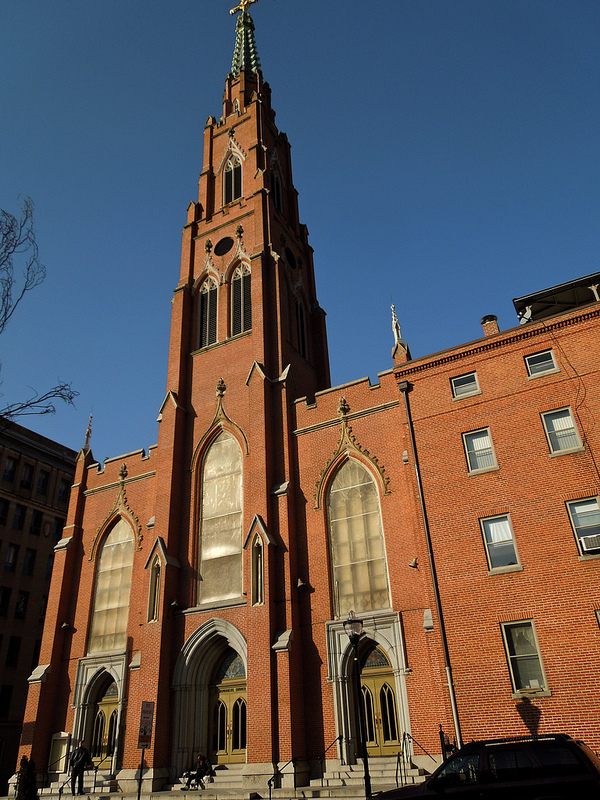
January 2011, Maryland Historical Trust.
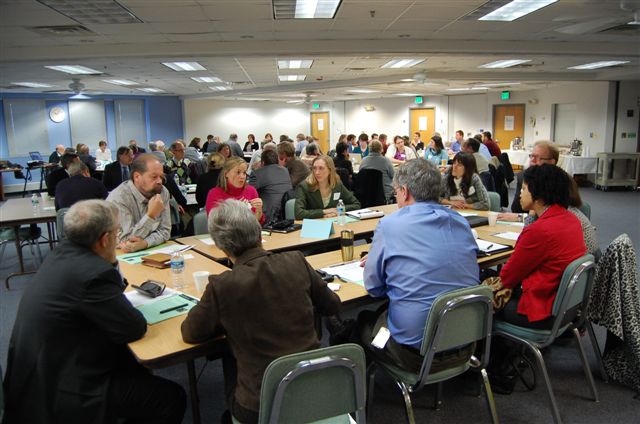
PreserveMaryland planning meeting, January 2011, Maryland Historical Trust.

Earlier this month, the Maryland Historical Trust announced the start of a new effort to update Maryland’s State Historic Preservation Plan. The goal of the preservation plan is to gain a full understanding of the issues facing historical and cultural resources in Maryland and to identify innovative strategies for their recognition, long term care, and enhancement. State historic preservation plans are prepared periodically, in part to comply with National Park Service requirements. Plans must be updated in order for state historic preservation offices to remain eligible to participate in programs that provide federal funding and support for local preservation efforts across the country. Maryland’s most recent statewide preservation plan was published in 2005.

MHT is conducting interviews with stakeholders this winter and planning a series of public forums across the state for spring and summer. MHT is also looking to get input from citizens in Baltimore and across the state of Maryland with an easy online survey. Find more information about the plan on the Maryland Historical Trust website or PreserveMaryland Facebook page. You can also contact Tim Leahy at (410) 514-7625 or tleahy@mdp.state.md.us with questions and comments.

Behind the Scenes Tour at Thomas Brown Woodwright highlights architectural millwork and antique machines

thomasbrown
Thomas Brown, Woodwright

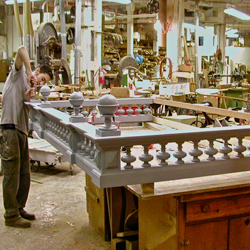
Thomas Brown, Woodwright custom mills architectural products for historic buildings all over Baltimore and beyond. Amazingly, Thomas Brown does all this mostly on machines that pre-date the Great Depression. The shop uses very few machines built after 1929 and keeps some machines that date as far back as the 1830s. Please join us for a Behind the Scenes Tour of this workshop located in a 1905 former icehouse building in the Remington neighborhood.

Behinds the Scenes at the Thomas Brown, Woodwright Workshop
Wednesday, March 13, 5:30 pm – 7:00 pm
330 West 23rd Street, Baltimore, 21211
RSVP Today! $15 members | $25 non-members – wine & cheese will be served.
Parking is available on the street. Enter on the Hampden Avenue Side.

You can see Thomas Brown’s handicraft in architectural millwork across the city at places like Hampton Mansion, Evergreen House, and the Garrett Jacobs Mansion. A little further afield, his shop has has helped to restore the Gracie Mansion in New York, the Harvard University Center in Boston, Winterthur Museum in Delaware, and the National Cathedral in Washington, DC. Thomas Brown’s workshop has fifteen wood working machines that have vanished from the planet everywhere else except their shop in Remington! What others consider antiquated or outdated, Thomas Brown considers essential to fabricating architectural woodwork for historic buildings.  Please join Mr. Brown as he walks us through his shop sharing the stories of this rare historic wood-working equipment and the architectural woodwork that they produce.

Thomas Brown, Woodwright

Let’s Go O’s (and adpative reuse)! Join us for a Behind the Scenes tour of Camden Yards

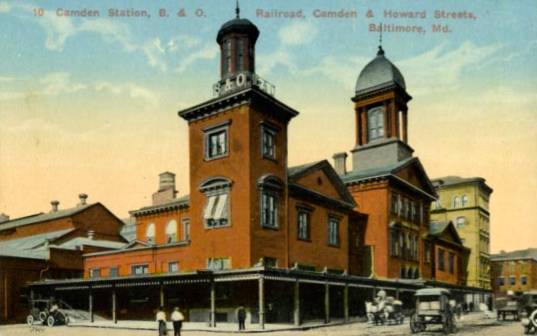
Camden Station
Camden Station

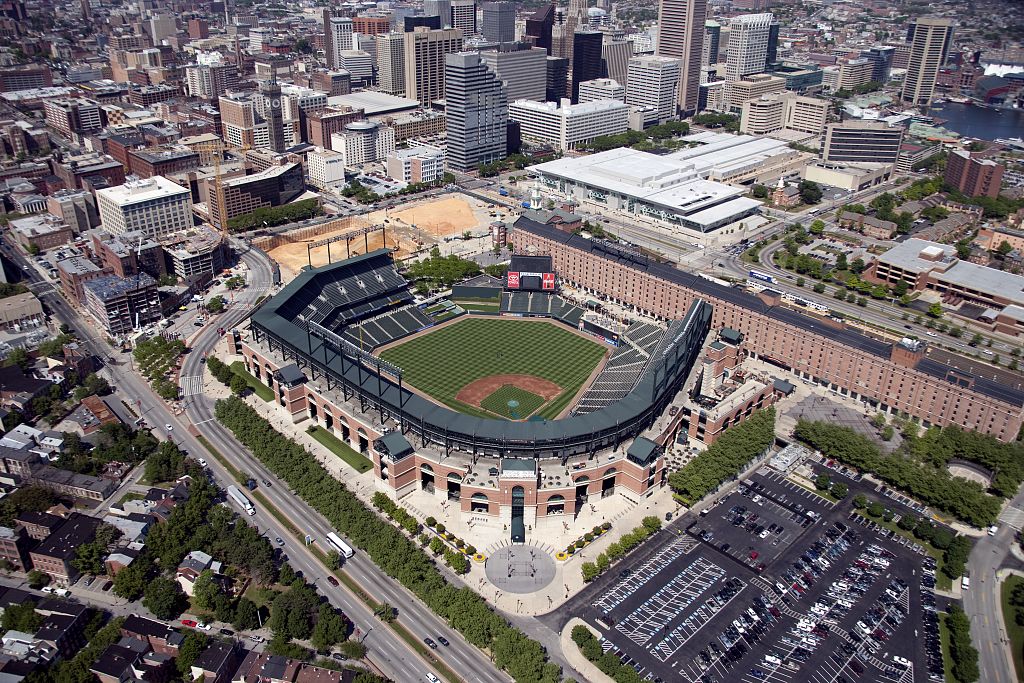
Camden Yards, home to the Baltimore Orioles, is much more than a ballpark. When the park first opened as the new home of our Baltimore’s baseball team in 1992, the buildings had already served the people of Baltimore for over 130 years. Many of us have visited Camden Yards on game day amid the crowds of enthusiastic sports fans. Here is a chance to see the ballpark at a quieter time and to visit places that are not typically open to the public. Our tour will include the dugout, umpires tunnel, press box, club level, and the JumboTron control room. We will hear about the history of baseball in Baltimore while gaining an appreciation for all that goes into making a home for a great team like the Orioles.

Behind the Scenes Tour of Camden Yards
Saturday, March 9, 10:15 am or
Sunday, March 24, 12:30 pm
333 W. Camden Street, Baltimore, 21201
RSVP Today!  $15 members | $25 non-members
Parking is available at lots B & C located between Oriole Park and Ravens Stadium for a fee or visit the MTA website for details on transit options.

The history of Camden Yards began in 1855 when the B&O Railroad started construction on Camden Station. The iconic B&O warehouse  that frames the west side of the stadium today was built between 1899 and 1905. The warehouse is over eight stories tall and over 1,100 feet long – large enough to hold the freight from 1,000 railroad cars. The station remained in active use by the B&O’s passenger trains until the 1980s making it one of the longest continuously operated railroad terminals in the United States. The building has gone through many changes since its original design of a castle-like façade to today’s ballpark. Today, Camden Yards and Camden Station are a nationally known success story for adaptive reuse and a great place to catch a game!

Photograph of Camden Yards, 2006 by Carol Highsmith. Courtesy LOC, LC-DIG-highsm-04854