Category: Behind the Scenes Tours

Charles Village Pride! Talk and tour on the early history of Baltimore’s LGBT Community

Together with the Baltimore City Historical Society, we are excited to present two upcoming programs on Baltimore’s LGBT history with a talk by historian John Wood on Thursday, June 20 and a walking tour of Charles Village with Richard Oloizia, Louis Hughes and many more special guests on Saturday, June 22.

The Baltimore Gay Community: The Early Years

Thursday, June 20, 2013, Reception at 7:00 PM, lecture at 7:30 PM
2521 St. Paul Street, Baltimore, MD 21218
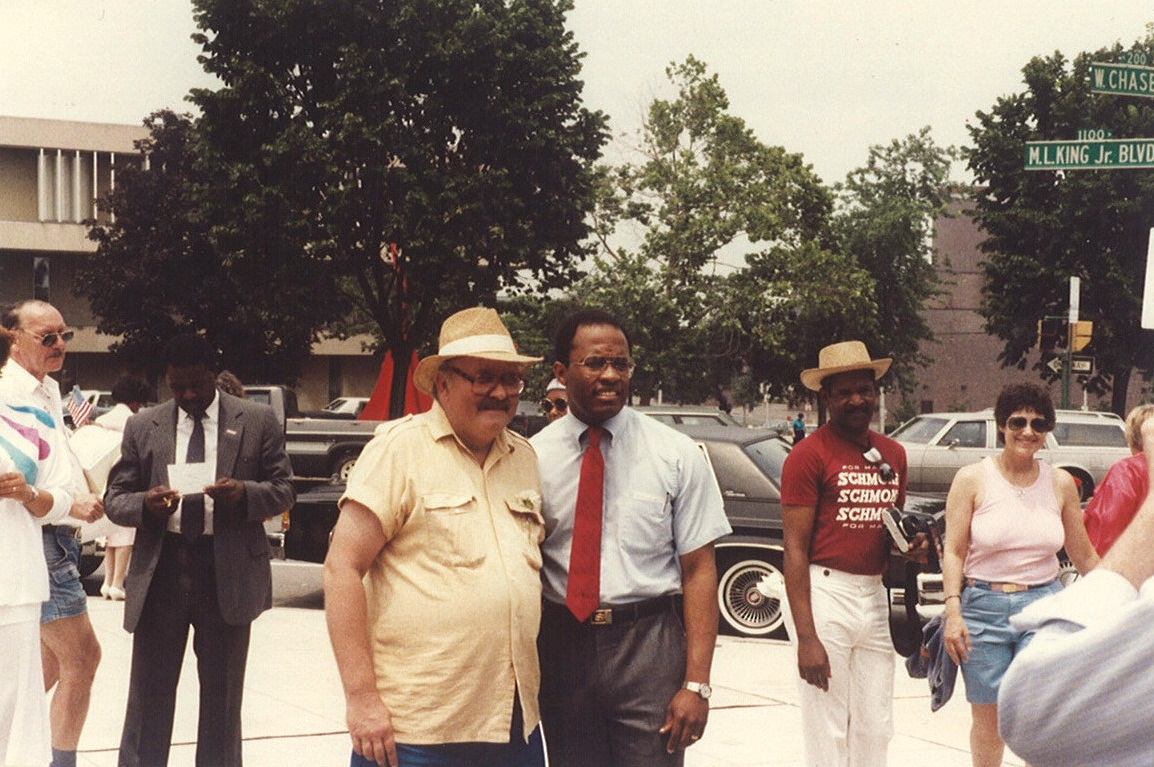
Mayor Kurt Schmoke at Gay Pride after Gay Rights Bill passed, 1988

The Baltimore City Historical Society & Village Learning Place are hosting the final spring Baltimore History Evening with a presentation by John Wood, a local historian and teacher at the McDonogh School on the early history of Baltimore’s gay community. Wood will share how members of the city’s LGBT community organized and fought for civil rights from 1975 up through the passage of the city’s landmark gay and lesbian civil-rights bill in 1988. The period was shaped by the growth of pride in gay and lesbian identity, tensions between gay men and lesbians, the impact of AIDS, and the professionalization of the equal rights campaign during the 1980s. The program will include special guest Jody Landers, a City Council member at the time the bill passed, talking about the impact that negative opposition testimony during the bill’s hearing had upon his vote.

Charles Village Pride! LGBT Heritage Walking Tour

Saturday, June 22, 2013, 10:00 AM through 12:00 PM
Meet at Normal’s Books & Records, 425 East 31st Street, Baltimore, MD 21218
Sign up online today! Tickets are $10 for Baltimore Heritage members, $15 for non-members
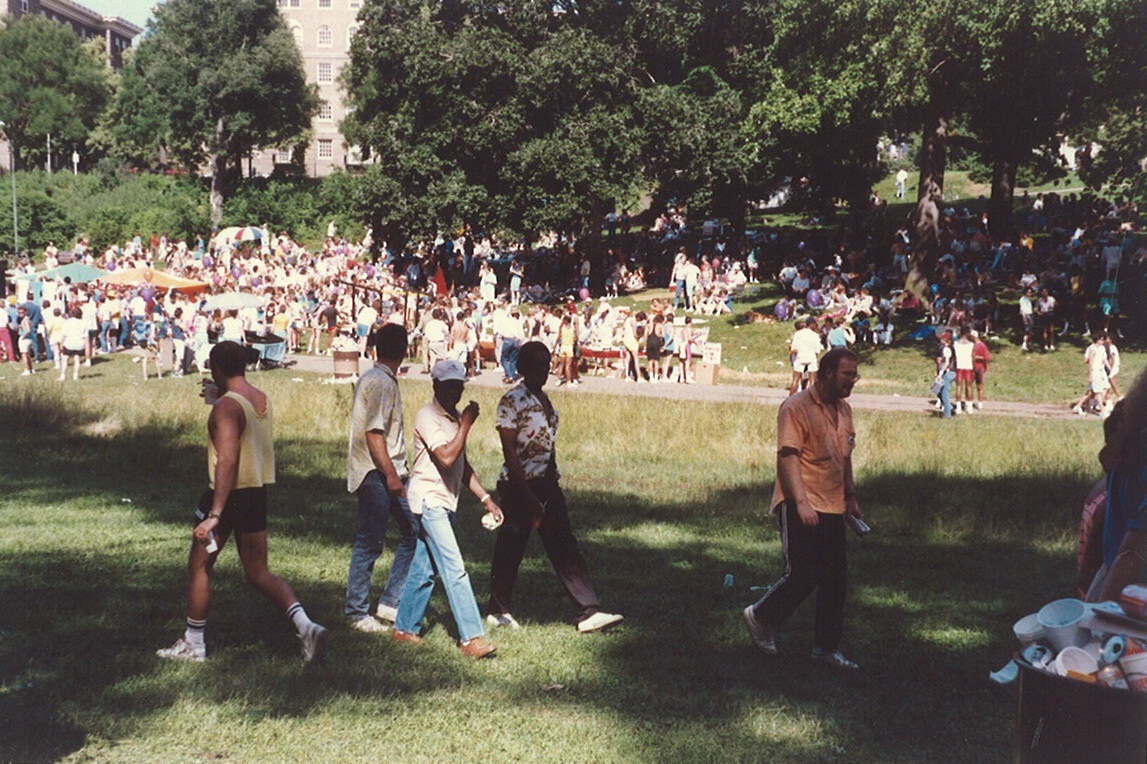
Gay Pride in Wyman Park, June 1988

Although Charles Village is better known for its colorful “painted ladies,” the neighborhood was home to many of the activists and institutions at the heart of the city’s LGBT community in the 1970s and 1980s. Historian Richard Oloizia and activists Shirley Parry and Louis Hughes will take us on a walk past local landmarks from the original home of the Gay Community Center of Baltimore, now the GLCCB, to the St. Paul Street church that supported the growth of the Metropolitan Community Church, Baltimore’s oldest LGBT religious organization, and the radical feminist publishers, writers and activists that gave a voice to lesbian authors who might not otherwise have been read. Whether you lived this history or are learning it for the first time, this tour is a unique opportunity to explore the places that shaped the growth of Baltimore’s LGBT community and civil rights movement.
Find 300 years of history beyond the stone walls of the Friends Burial Ground on June 5

Contained on a little less than three acres across from Clifton Park in northeast Baltimore, the Friends Burial Ground tells the stories of generations Baltimore’s Quaker families across their 300 years of rich history in our city. Established in 1713 on a tract of land known as Darley Hall when the Friendship Meetinghouse was built on what is today Harford Road, the cemetery has been in continuous use ever since. While small, and a bit unassuming, the Friends Burial Ground has approximately 1,800 graves with the earliest legible marker dating from 1802 and many undoubtably date from the 1700s. The stone wall around the grounds and the Sexton’s House both date back to the 1860s and, in 1926, 122 graves were moved from a Friends cemetery at at the Aisquith Street Meeting House in Old Town.

The many notable internments include Louisa Swain, who made history in Wyoming in 1880 as the first woman to legally vote in the United States at age 69, and Dr. Thomas Edmondson who lived in a grand estate that eventually became Harlem Park in West Baltimore. Dr. Edmondson recently resurfaced in the public light: it is his collection of Richard Caton Woodville’s artwork that is currently on exhibit at the Walters Art Museum.

Please join us on a tour of the site with long-time caretaker Adrian Bishop, who will share his knowledge of the cemetery and the Sexton House on the grounds that he and his wife call home, together with Ms. Frances Ferguson, who has been digging graves by hand at the cemetery for over 40 years.

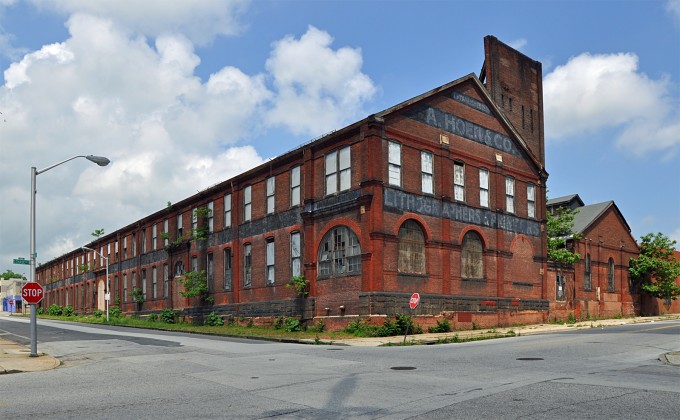
A. Hoen Lithograph Plant

How does an abandoned factory become urban farm?

After decades of neglect, it takes a bit of imagination to look at the cavernous A. Hoen & Co. Lithography Plant and see a unique opportunity for neighborhood revitalization. Fortunately, an exciting partnership between the American Communities Trust, Humanim, East Baltimore Development Inc., Big City Farms, Historic East Baltimore Community Action Coalition Inc., Woodberry Kitchen and Johns Hopkins (whew!) is leading the way to transform the plant and the nearby Eastern Pumping Station site into the new Baltimore Food Hub. By fall of 2014, these long vacant historic buildings will be bursting with entrepreneurs, urban farmers, students, and job trainees working with food-related businesses and learning about healthy food and sustainable agriculture.

The A.  Hoen Co. Lithography Plant includes a series of buildings from the mid 19th century through the turn of the 20th century and remained in use by the company up through the 1980s. Established in the 1840s, owner August Hoen became a pioneer in both the technology and business of printing – distributing affordable color maps, books, decorative prints and more across the country. Built in 1890 just a few blocks away on the opposite side of the railroad tracks, the Eastern Pumping Station was once stylish industrial landmarks in northeast Baltimore even rivaling the architecture of the nearby American Brewery Building (then known as the Bauernschmidt and J.F. Weissner Brewery) with a more dignified Romanesque style. Architect Jackson Gott who designed the Pumping Station completed a number of projects for Baltimore City included the Maryland Penitentiary in 1893 and the Southern District Police Station in 1896.

Join us to discover more on the fascinating history of both buildings and the exciting future of food and healthy living that their preservation and re-use promises for East Baltimore! Our tour guides will include project manager Gregory Heller from Econsult and Bill Streuver, President of the American Communities Trust.

Baltimore Bar Libary

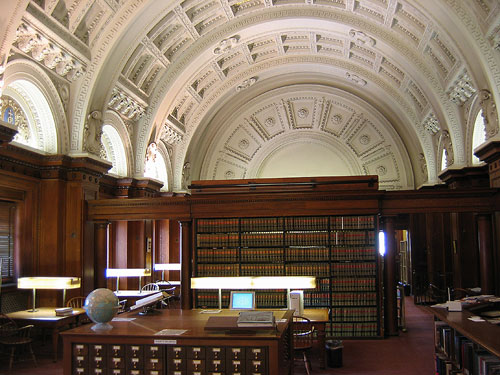
Discover law books, architecture and a rich history Behind the Scenes at the Baltimore Bar Library on May 21

In 1840, a 27-year-old Baltimore lawyer named George William Brown took it upon himself to organize a legal library open to the city’s attorneys. The Library Company of the Baltimore Bar, better known as the Bar Library, was born the same year as Mr. Brown and 43 other Baltimore attorneys opened the library in a room at the old courthouse at Calvert and Lexington Streets. (Mr. Brown, it seems, came from a line of innovators: one grandfather was Rev. Patrick Allison, founder of the First and Franklin Church, and another grandfather was Dr. George Brown, a founding member of the first medical society of Baltimore. Both grandfathers were among the men who founded Baltimore’s first circulating library, the Library Company of Baltimore.)

The Bar Library is one of the oldest dues-supported libraries in the country and contains cases, treatises and other legal material dating back hundreds of years. It also is occupies a fantastic historic space inside the Clarence M. Mitchell Jr. Courthouse. The Main Reading Room is 35 feet by 125 feet and is crowned with a soaring barrel vault ceiling. Rich oak wainscot rises fifteen feet around the room, complemented by carved English oak shelves and wall paneling. Please join us in this wonderful historic space starting at 5:30pm for wine and cheese and a tour with Joe Bennett, Director of the Baltimore Bar Library, will begin at 6:00pm.

Eat your way through Baltimore’s Old Chinatown

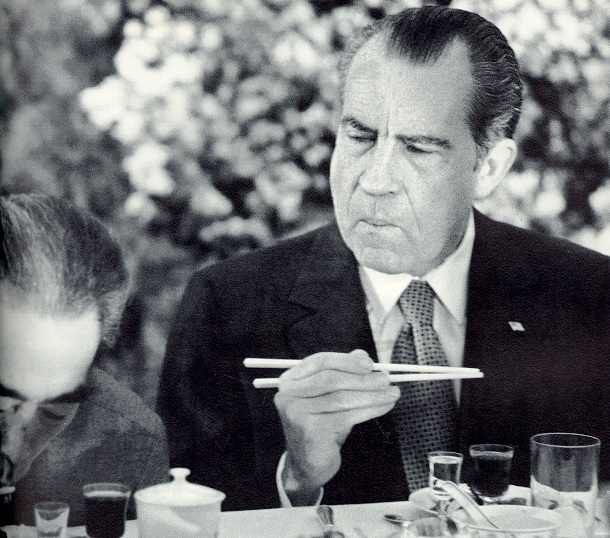
nixon_eating_chinese_food
President Nixon’s historic 1972 visit to China

Behind the Scenes Tour of Old Chinatown
Saturday June 1, 2013 from 4:15 pm to 6:30 pm
RSVP Today!
$45 members / $55 non-members
Includes sampling of international food from several restaurants
Limit of 10 people

Beginning in the 1870s, Chinese settlers started arriving in Baltimore from California and other West Coast states. Most had worked as laborers for the transcontinental railroad that was completed in 1869 and came east looking for jobs and to escape a rising level of persecution. In Baltimore near Lexington Market, the immigrants established places of worship (Joss houses), laundries, gambling houses, and restaurants. The original “Chinatown” was in the 200 block of Marion Street and even included a school for 40 children. Baltimore’s Chinatown was relocated to Park Avenue during an urban renewal effort in the 1950s and achieved its peak in the years preceding President Richard Nixon’s historic visit to China in 1972. Today the area has a number of shops and restaurants featuring international cuisine, including of course Chinese.

Please join us and our guide, Ms. Sharon Reuter, on a walking and eating tour that will follow Baltimore’s Chinese immigrants through historic Chinatown along Park Avenue to the present-day hodgepodge of ethnic eateries. The tour will include sampling dishes from Vietnamese/Thai, Ethiopian, and of course Chinese restaurants. It will also include learning about this once-bustling two-block area in the heart of downtown Baltimore and finding out what happened to the vigorous Chinese community and its many restaurants that once inhabited the area and which newer immigrants have since opened restaurants nearby.

The tour will provide an early dinner with a menu of vegetables, legumes, beef, shrimp, pork and duck dishes, along with water, tea and a bottle of Chinese beer. Vegetarian options, with or without shellfish, are available with advance notice. I hope you can join us! Johns