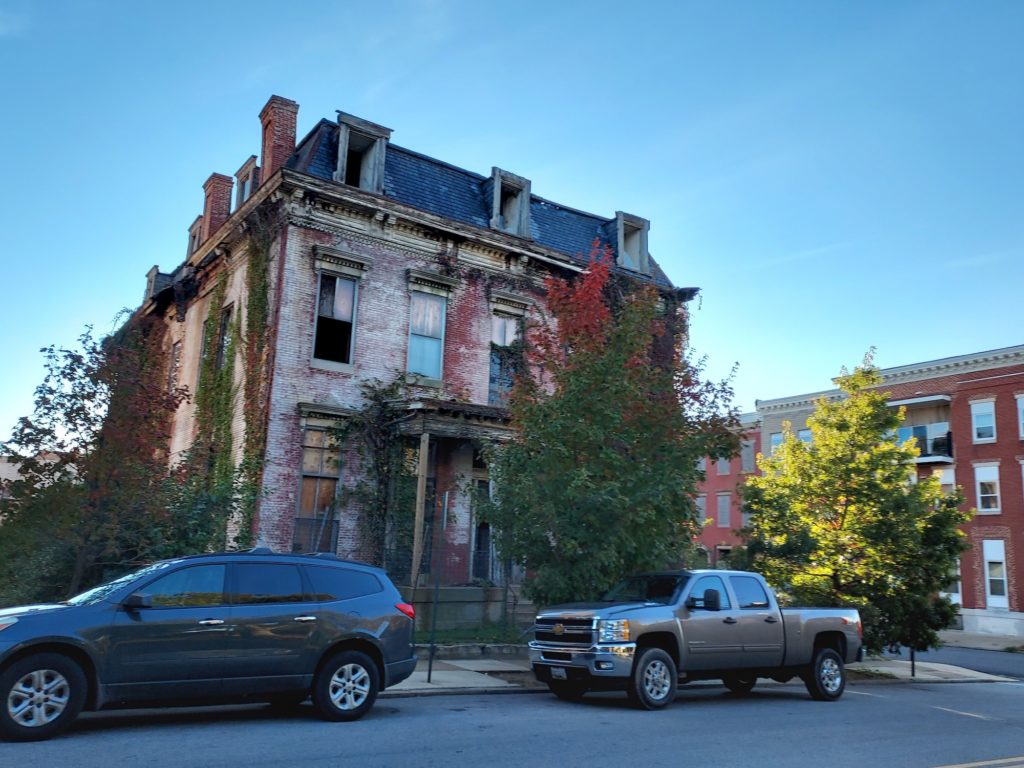
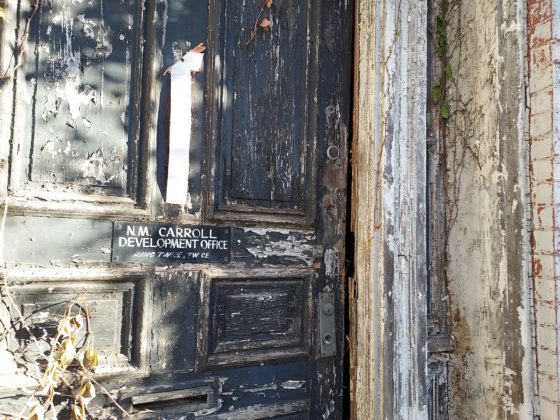
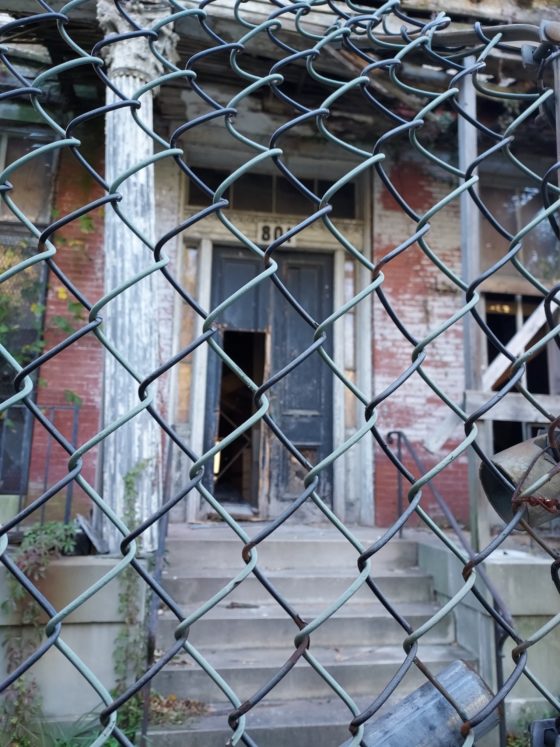
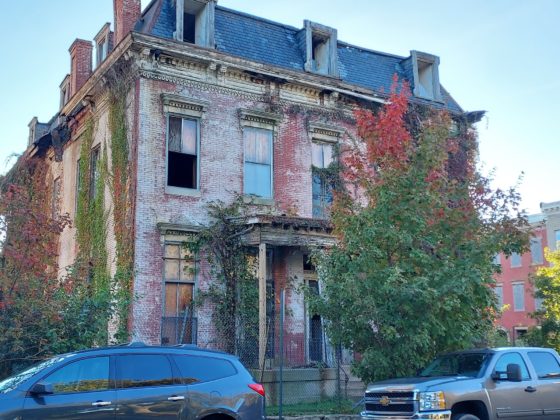
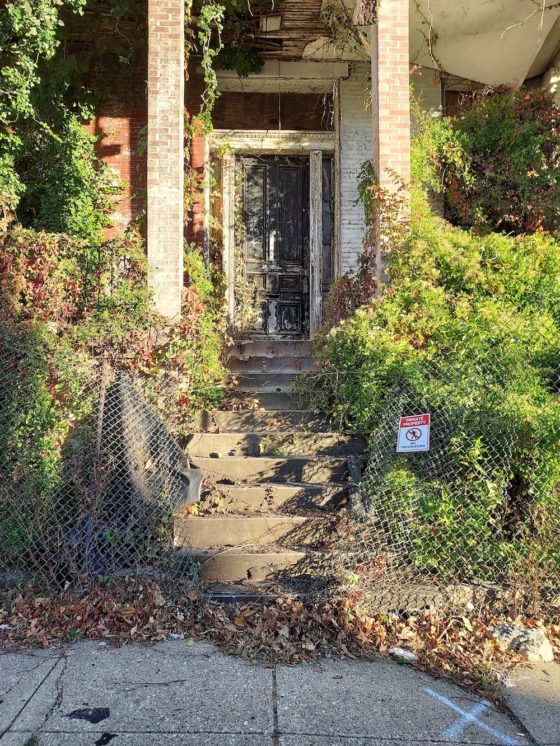
Yesterday the Sellers Mansion in Lafayette Square had a fire inside. Built in 1868 just after Lafayette Square turned from a Civil War Union Army hospital base into a residential community, the mansion is listed as a Baltimore City historic landmark. It has anchored the Lafayette Square neighborhood for nearly 150 years as a private residence and as offices for community nonprofit organizations. And it has been vacant for over 20 years. See our Five Minute Histories video on the Sellers Mansion for more of its history!
We checked things out at the mansion this morning, and it appears the damage was contained to the interior and the roof. That’s the good news. The challenge is that the building is in severely poor shape and needed attention before the fire, and even more so now. As the Baltimore Sun reported this morning, it is owned by developer Ernst Valery and although the city approved redevelopment plans about two years ago, work has yet to begin.
We at Baltimore Heritage have been working to try to save the Sellers Mansion for nearly 25 years and remain committed to do everything we can to see this grand Second Empire building return to being an asset for the Lafayette Square neighborhood in West Baltimore. Scroll down to see photos taken this morning by Baltimore Heritage’s Executive Director Johns Hopkins.
Thank you to everyone who came to our virtual micro-grant party last night and helped select grants for six Baltimore projects! It was a fun and participatory event. Here are the six projects that received funding:
$500 Micro-Grants:
Thomas Johnson Elementary Middle School field trip to the Baltimore Museum of Industry
Community murals in Irvington by Cooperative Community Development, Inc.
$250 Micro-Grants:
Website costs for the Friends of St. Vincent Cemetery
Shutter restoration at the Irish Railroad Workers Museum Visitors Center
$50 Micro-Grants:
Brochures for the Baltimore Immigration Memorial and Museum
Research equipment and other costs for the Baltimore Crime Museum
We will keep you posted as these projects move along and, again, thank you!!
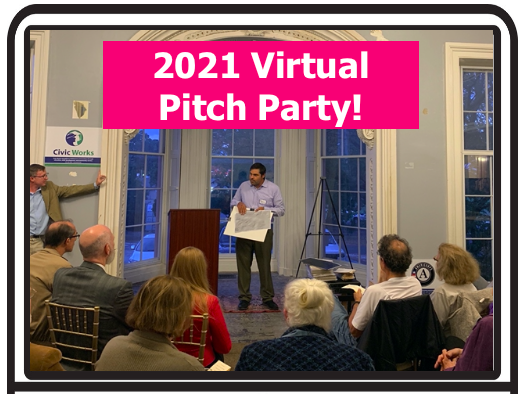
Please help us give away six micro-grants to advance good ideas in Baltimore. This is our sixth year of providing micro-grants and as we have done in past years, we’ll have five finalists provide three-minute “pitches” of their ideas… and then we will ask you to cast virtual ballots for your favorite. Based on your votes, we will give out two $500 grants, two $250 grants, and two $50 grants. Register here!
This year hear pitches from these organizations:
Baltimore Crime Museum
Baltimore Immigration Memorial and Museum, Inc.
Cooperative Community Development Inc
Irish Railroad Workers Museum
Friends of St. Vincent Cemetery (FoSVC)
Thomas Johnson Elementary Middle School #84
We’ll learn about some great initiatives underway in Baltimore and have a little fun helping them out. This is also Baltimore Heritage’s annual meeting where we elect board members and officers. It’s free and we hope you join us!
Thank you again for supporting us and our work with Baltimore’s historic buildings and neighborhoods. Whether from your couch or your backyard, we hope you can join us at 5:30 pm on October 21, 2021 via Zoom for this special event.
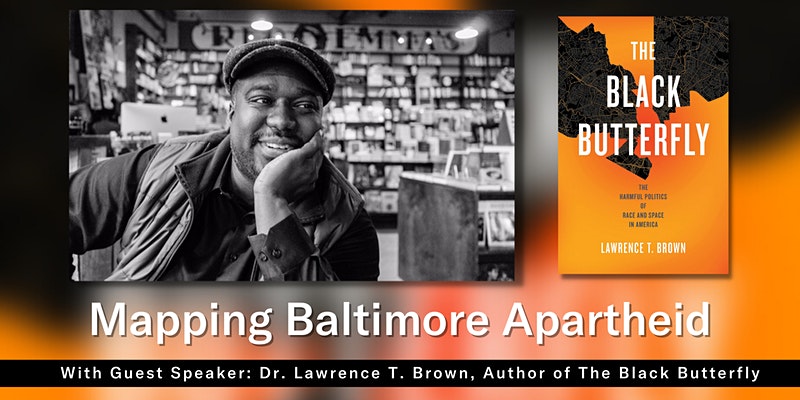
Dr. Brown will put Baltimore under a microscope, looking at the causes of segregation and drawing on extensive research of data and policy. Brown will demonstrate how data visualization can be a tool to distribute resources to communities in need, and speak to the roles of design, planning, and preservation in healing and restoring redlined Black neighborhoods.
Dr. Brown’s presentation will be followed by a discussion and Q&A moderated by author and journalist Elizabeth Evitts Dickinson.
Participating discussants include:
Seema Iyer, Ph.D, Associate Director of the Jacob France Institute, University of Baltimore
Tom Liebel, FAIA, Vice-President of Moseley Architects and CHAP Commission Chair
A limited number of signed copies of The Black Butterfly: The Harmful Politics of Race and Space in America are available through the Baltimore Architecture Foundation bookstore at the Baltimore Center for Architecture and Design. Books can be purchased using one of the Eventbrite ticket options, either “Delivery” or Pick Up.” Further details on getting your book will be included in the confirmation email. Questions? Reach out to Nathan Dennies at ndennies@aiabalt.com.
Doors Open Baltimore 2021 includes a month’s worth of virtual and in-person programming. Visit www.doorsopenbaltimore.org for more information. We are pleased to be sponsoring this event in partnership with the Baltimore Architecture Foundation, which is handling registration.
About this event
This program is hosted on Zoom and Facebook Live. Upon registering you will receive an email confirmation and a Zoom link. If you do not receive a link, please contact ndennies@aiabalt.com. If you do not contact us at least 1 hour prior to the start of the program, we cannot guarantee admittance.
Tickets are donation based. We encourage you to give what you can to support BAF and Baltimore Heritage. Your support helps us make up for lost tour and program revenue from COVID-19 and create more virtual programs like this.
This talk is part of Free Fall Baltimore which is presented by BGE, and is a program of the Baltimore Office of Promotion and the Arts, an independent non-profit 501(c)(3) organization.
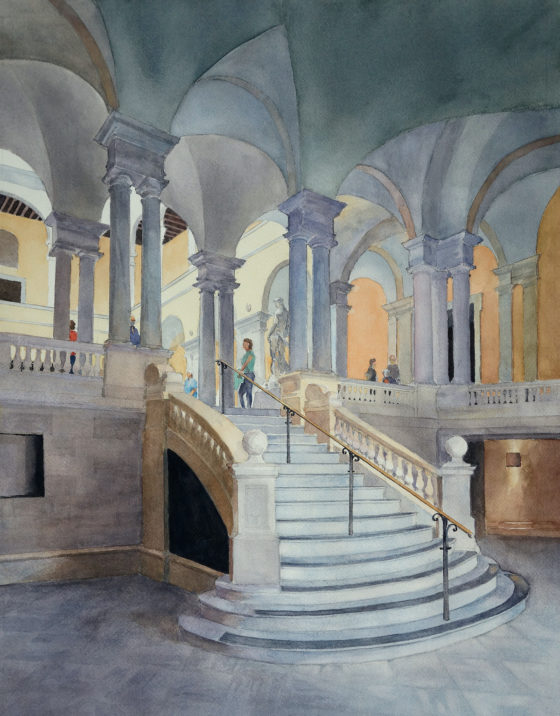
Thank you to all who participated in this year’s art show activities! The Best in Show Award goes to Michael Kotarba, for his painting Currently on View and congratulations to Tom Ritchie for winning this year’s People’s Choice Award for his piece Check-In. (see both paintings below!). We hope to see you again next year!
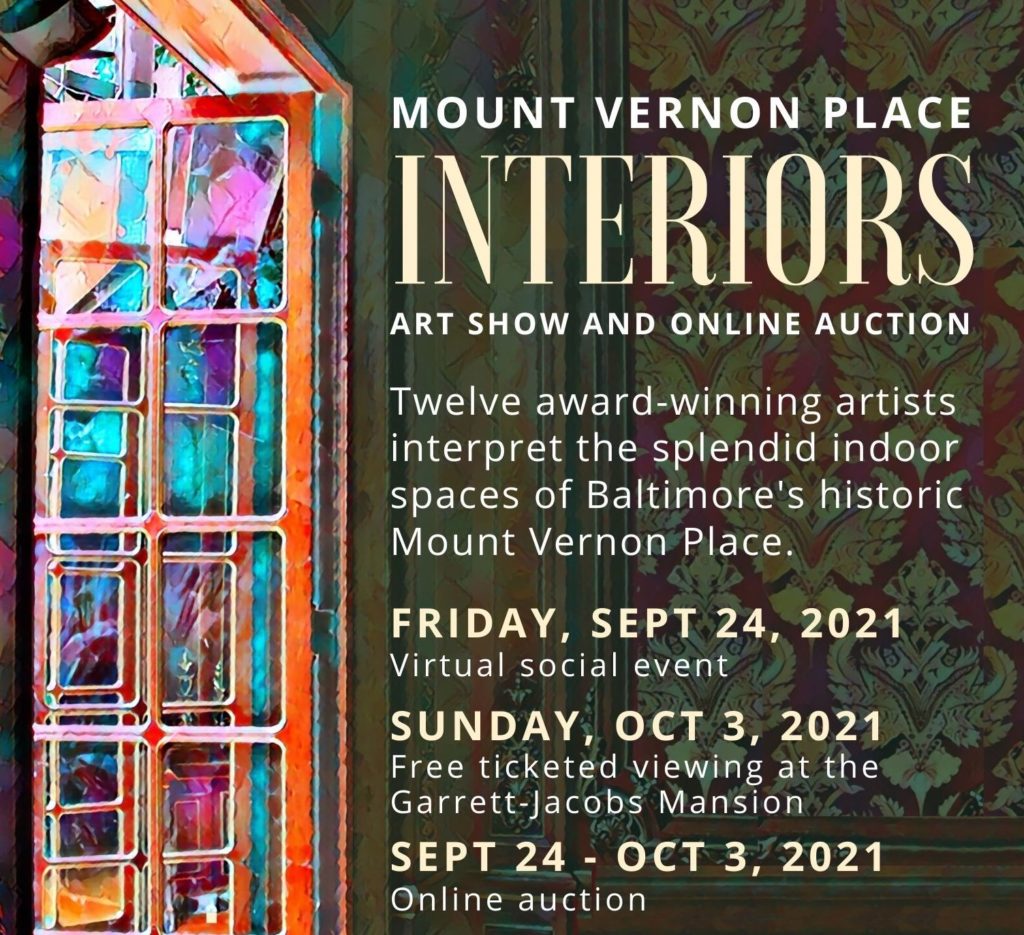
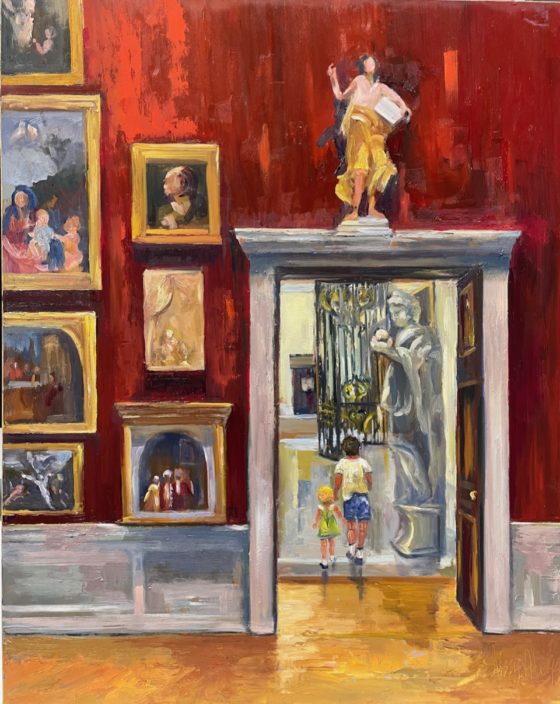
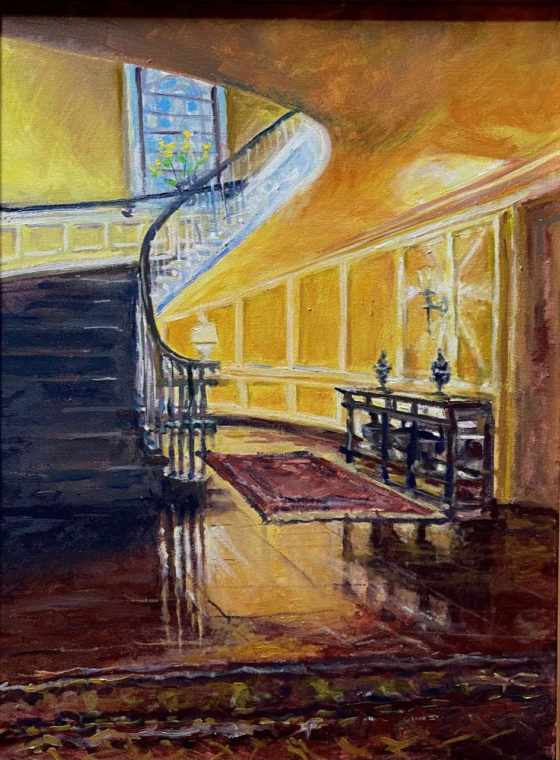
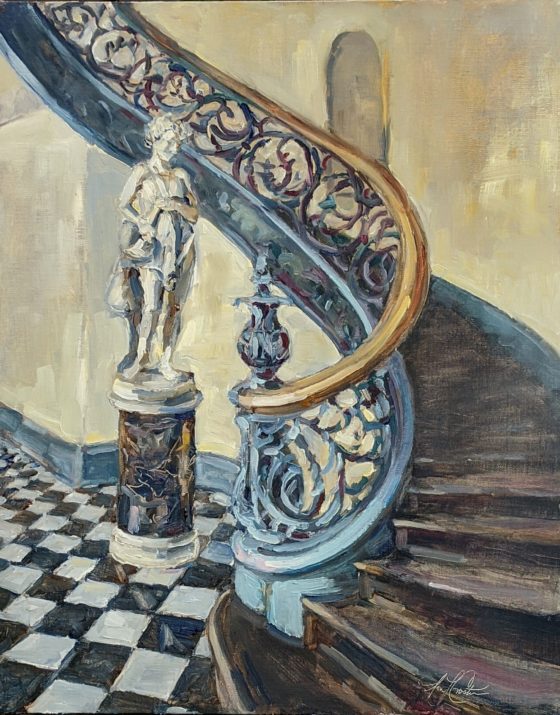
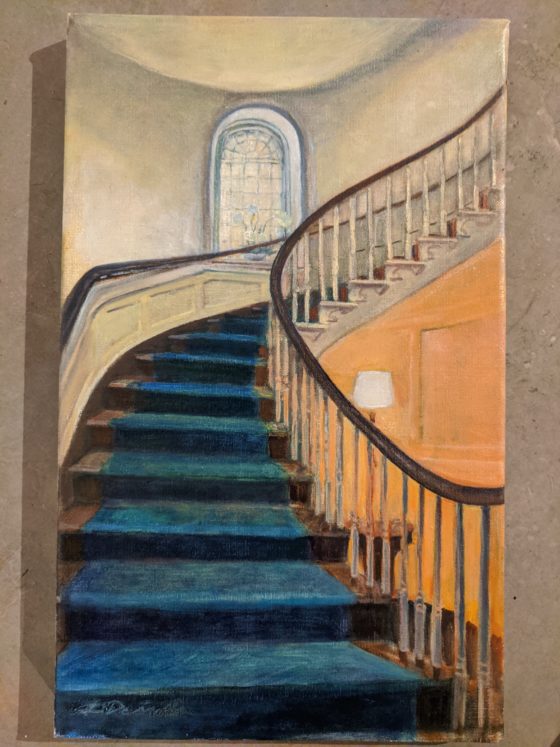
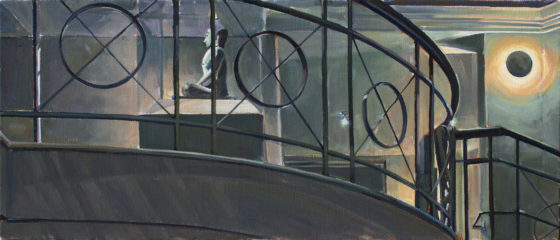
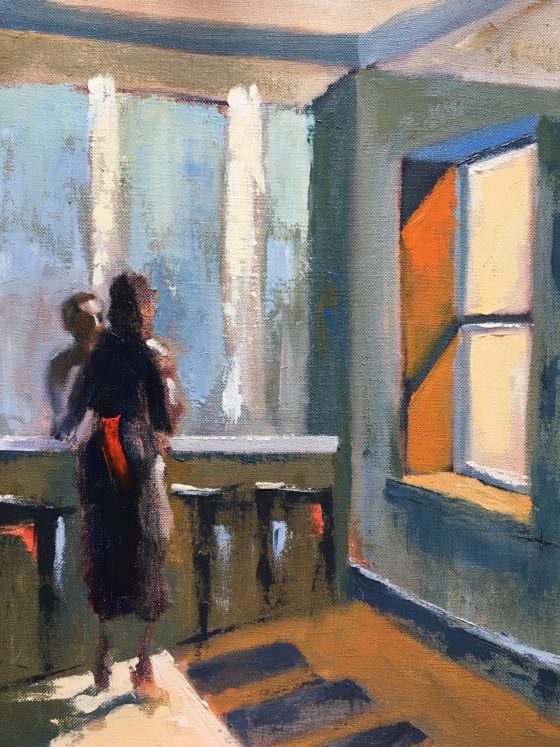
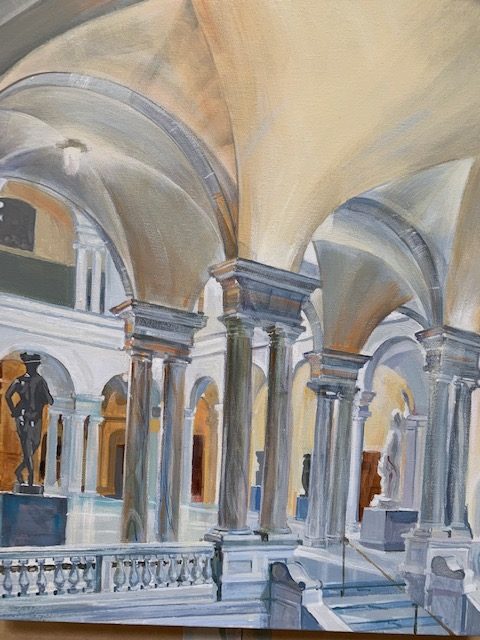
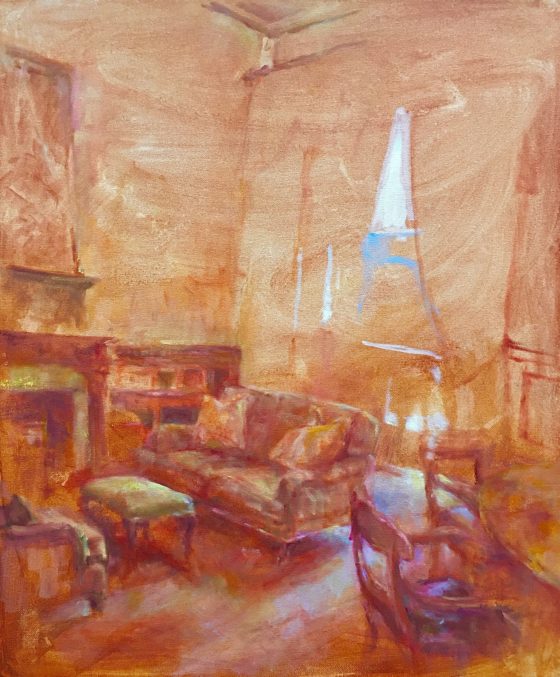
Baltimore’s Mount Vernon Place is famous for the beauty of its exterior architecture. This fall, we invite you to virtually view—and bid on—some of its stateliest indoor spaces at the Mount Vernon Place Interiors Art Show. This mostly online event—an offshoot of the popular 2019 Mount Vernon Place Plein Air Art Show—will feature paintings by 12 artists. Their subjects will include the interiors of the Peabody Institute, the Walters Art Museum, Hotel Revival, and the Garrett-Jacobs Mansion. Scroll down to see the art!
Bidding begins at 5pm on Friday, September 24th. Proceeds and donations will benefit Baltimore Heritage, the Garrett-Jacobs Endowment Fund, the Mount Vernon Place Conservancy, and most importantly, the artists.
The Engineers Club of Baltimore will be hosting a virtual reception on Friday, September 24 at 5pm. Guests are invited to join the event for an opportunity to meet and talk with the artists and other guests, and preview the items up for auction. Please note, the site will not be accessible until the event begins.
The artwork will be on display at the Garrett-Jacobs Mansion on Sunday, October 3rd, from 11am-3pm. Bidders are invited to see the artwork in person by registering for a 20-minute session HERE. Awards for Best in Show and Viewer’s Choice will be announced on social media at 3pm, and the auction will close at 8pm.
Check out the Facebook page for updates! Or you can email heritage@esb.org, and we’ll notify you when bidding begins. Baltimore Heritage is pleased to co-host this event with the Garrett-Jacobs Endowment Fund, the Mount Vernon Place Conservancy, and the Engineers Club.
Watch Over Us by Lissa Abrams oil on board, 16×20
The Evening Staircase by Bruno Baran oil on canvas, 18×24
Peabody Steps by Ann Crostic oil on linen panel, 20×16
Staircase by Laurie DeMatteo oil on canvas, 10×16
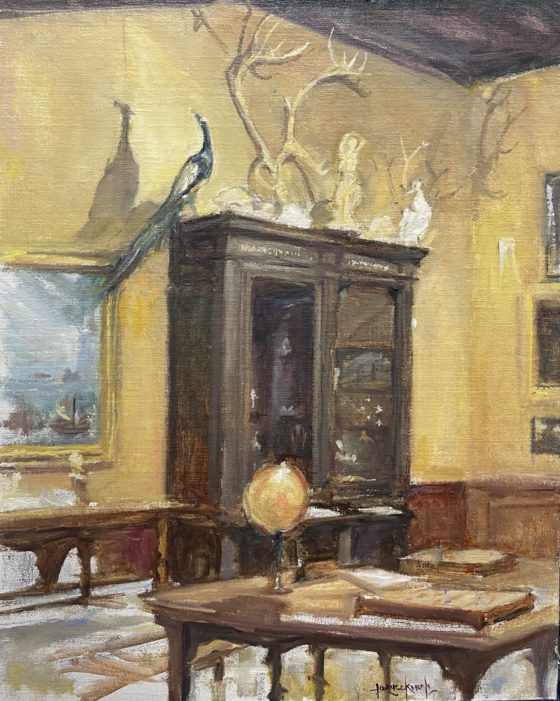
Art and Wonder by Janice Kirsh oil on linen, 20×16
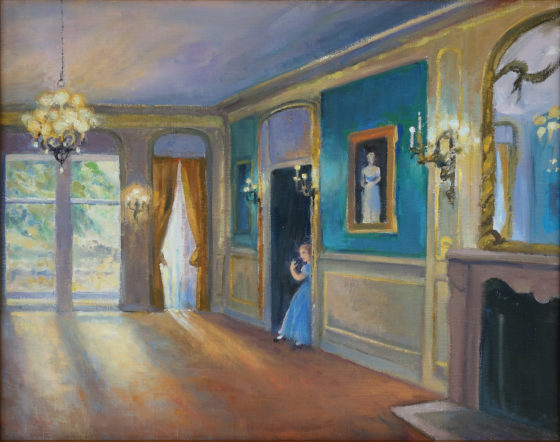
Lights and Mirrors by Kathleen Kotarba oil on linen panel, 16×20
Currently on View (2021 Winner, “Best in Show”) by Michael Kotarba watercolor, 22×17
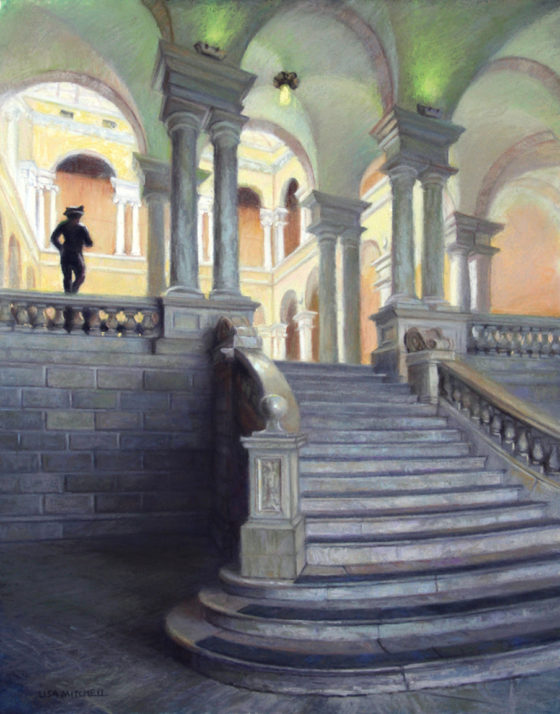
Grand Entrance, Walters Art Museum by Lisa Mitchell pastel, 20×16
Meditating in the Walters by Crystal Moll oil on canvas, 12×28
Check-In (2021 Winner, “People’s Choice Award”) by Tom Ritchie oil on linen, 16×20
Walters Museum Interior by David Wiesand acrylic on canvas, 16×20