Year: 2010

Baltimore Building of the Week: Loyola University Quadrangle

This week’s edition of our Baltimore Building of the Week highlights the history of Loyola University–where Dr. John Breihan teaches–with a feature on the Loyola University Quadrangle,
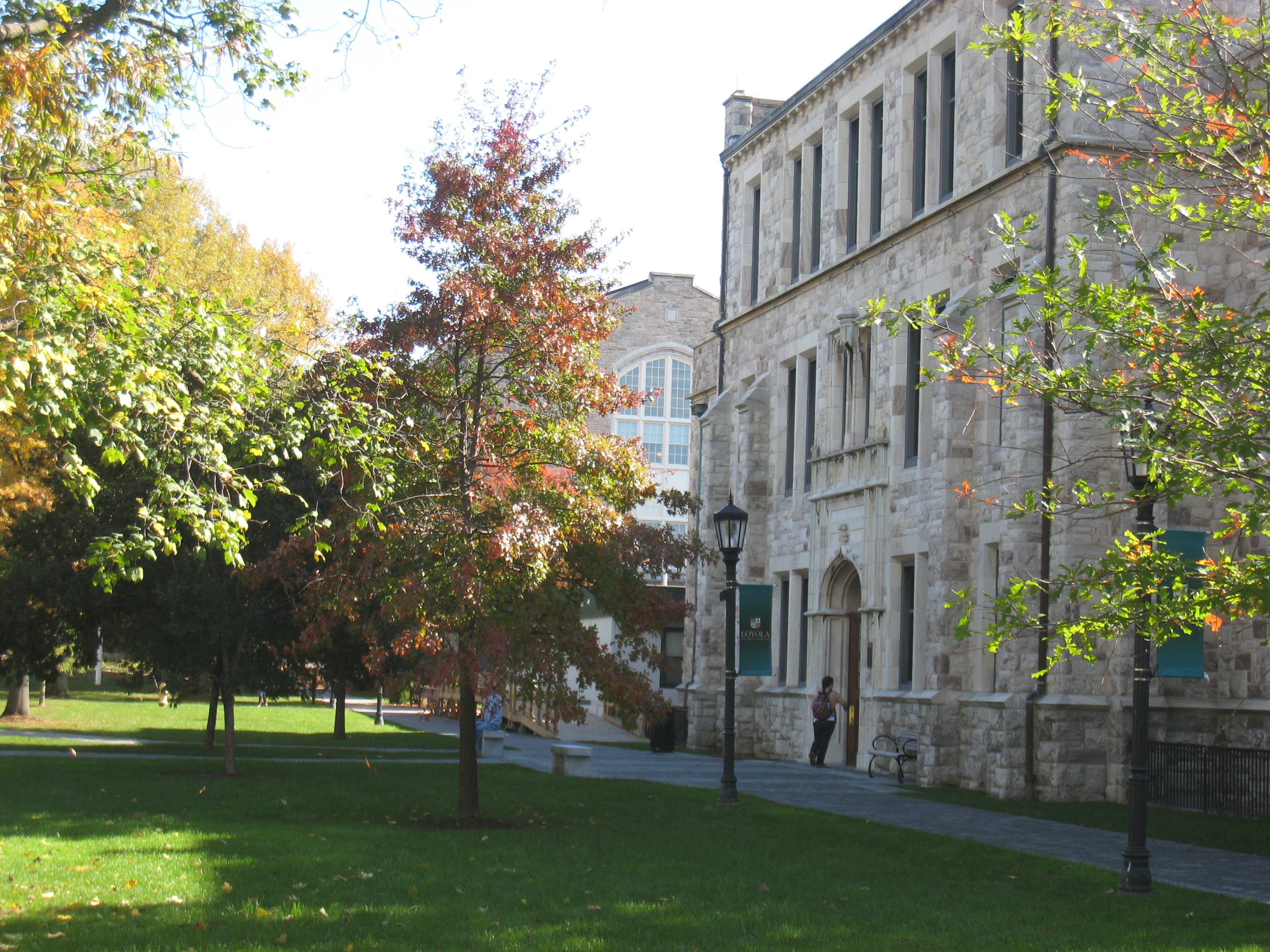
Image courtesy Jack Breihan

Another historical style taken up under the impulse of the Beaux-Arts movement was Gothic. Unlike the “gingerbread” Gothic revival of the early 19th century or the robust Victorian Gothic, the Gothic revival of the Beaux-Arts period adhered closely to actual medieval models, except that now these were steel framed buildings. Plumbing and heating were included; buttresses were entirely ornamental. The “Collegiate Gothic (so called on account of its popularity on college campuses) had tracery, moldings, and sculptural executed in white or tan limestone that contrasted with the natural colors of local fieldstone walls.

American colleges were restless in the early 20th century; many abandoned constricted urban sites for new locations in the suburbs. In Baltimore, Johns Hopkins moved to Homewood, Loyola to Evergreen, and Goucher to Towson (the latter move delayed by World War II). Hopkins’ new campus is neo-federal in style; Goucher took up the International Style. Loyola’s Collegiate Gothic period began in 1922 with Beatty Hall, pictured here along with neighboring Jenkins Hall, both from 1922-23. Unlike Hopkins and Towson, which face the outside world across a green lawn or “campus,” Loyola’s academic buildings and chapel face inwards a central court that derives from medieval college quads at universities like Cambridge and Oxford.
Congratulations to Preservation Maryland Award Winners!

Baltimore Heritage 50th Anniversary Celebration

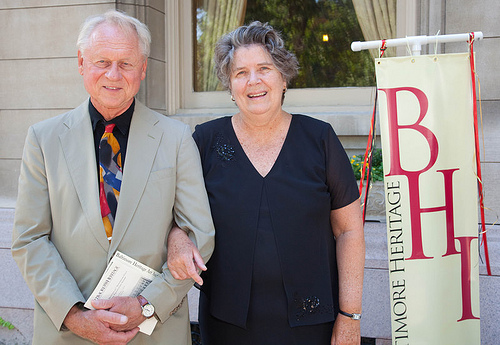
On November 16, 2010, Preservation Maryland, our statewide historic preservation organization, honored long-time Baltimore Heritage board member and executive director of the Baltimore Chapter of the American Institute of Architects Karen Lewand with a volunteer award for her work. Ms. Lewand has been an active Baltimore Heritage board member for 27 years.

Among other significant accomplishments, she began Baltimore’s first tour series to explore historic neighborhoods around the city, a popular program Baltimore Heritage continues to this day, and she led an effort to write and publish histories of Baltimore’s neighborhoods. Ms. Lewand is a former commissioner of the Baltimore Commission for Historical and Architectural Preservation (CHAP) and was a founder of the state-wide smart growth organization 1000 Friends of Maryland. As the director of AIA Baltimore, Ms. Lewand has led the growth of that organization, including bringing a spotlight to the city’s architecture through an annual architecture week program that has now turned into a month-long series of lectures and events. The next time you see Ms. Lewand, please congratulate her on a much-deserved award.

The 2010 Preservation Maryland award winners also include John L. Graham, III, AIA of Salisbury who received the President’s Award for his architectural work and volunteer historic preservation efforts on Maryland’s Eastern Shore. Eddie and Sylvia Brown of Brown Capital Management and the Brownstone Project received the Stewardship Award for projects including Baltimore’s iconic Bromo Seltzer Tower. Finally, Preservation Maryland’s inaugural Phoenix Award went to Humanim, Inc. for their radical transformation of the long abandoned American Brewery into an asset for East Baltimore as Humanim’s workforce development center. Congratulations to all of this year’s award winners and to Preservation Maryland for another successful year supporting historic preservation in Maryland!

Baltimore Building of the Week: Hansa Haus

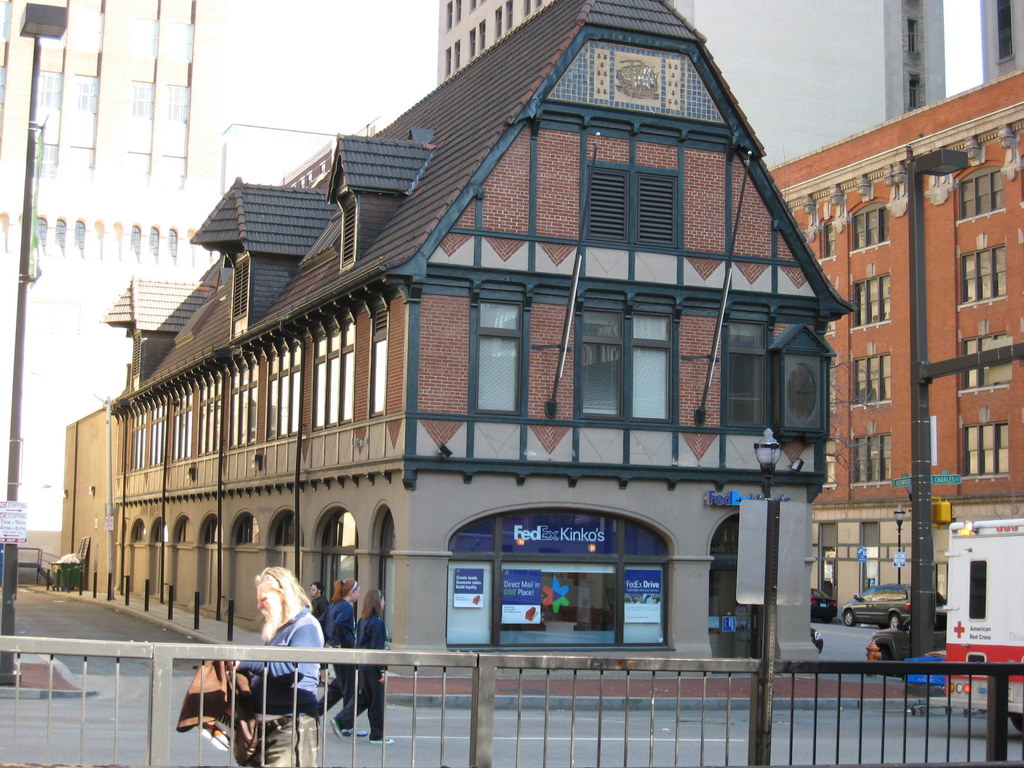
This week’s Baltimore Building of the Week from Dr. John Breihan, the Hansa Haus at Redwood and Charles Streets, is right next door to last week’s building– the Savings Bank of Baltimore. The Hansa Haus reflects both Baltimore’s rich German heritage and the history of immigration into Locust Point as the former Baltimore office of the North German Lloyd Steamship Company–

Image courtesy Jack Breihan

A favorite Beaux-Arts era historical-revival building housed the Baltimore offices of the North German Lloyd Steamship Company, a decidedly up-to-date modern enterprise when this building was erected in 1912. Its site, adjacent to the Baltimore Savings Bank (see last week) testified to the importance of German immigration to Baltimore in the early 20th century. To prevent said immigrants from being too homesick, Hansa Haus resembled a half-timbered 16th-century German Rathaus, perhaps the Zwicken in Halberstadt. Originally coats of arms of the cities in the Hanseatic League decorated the upper floor. Since the departure of the steamship line, Hansa Haus has had a variety of uses; it remains a challenge to sympathetic re-use.

2010 Preservation Awards: Elisha Tyson House

Image courtesy Mark Thistel

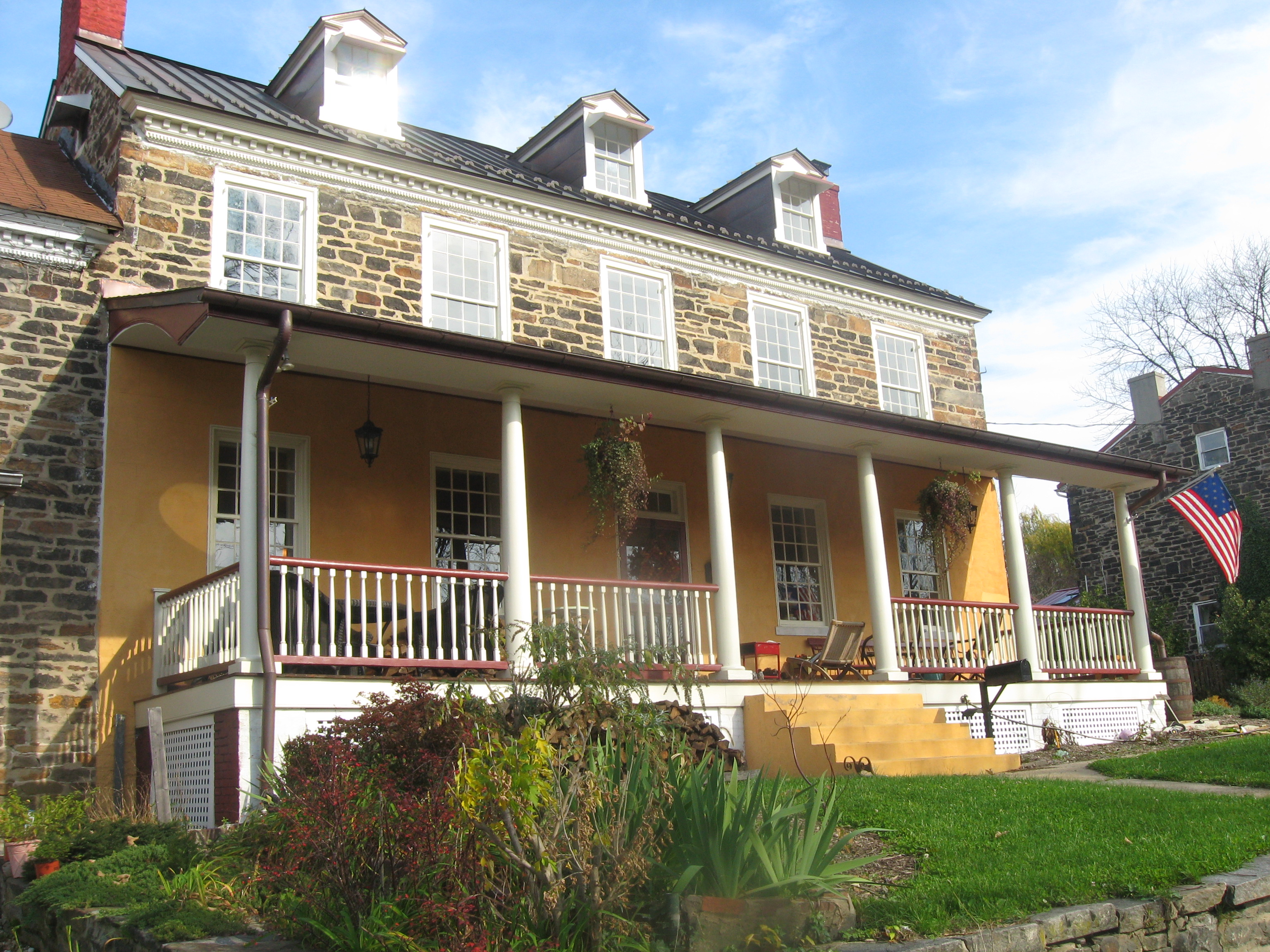
Originally the summer home of industrialist and abolitionist Elisha Tyson in the early 1800s, 732 Pacific Street is a classic Federal style house built with native granite two feet thick. Among many other accomplishments, Tyson helped finance the very profitable Falls Road Turnpike in 1805 and reportedly established safe houses for runaway slaves along the route. The building on Pacific Street was later owned by the Mount Vernon Mill Company and used as a superintendent’s house for the mill complex. Robyn Lyles and Mark Thistle (also a Baltimore Heritage board member) purchased the house in 2005 and finished renovations in 2009. The rehab project included archeology work by the University of Maryland, painstakingly saving windows including the original antique glass, and disassembling and reassembling the porch to save the original materials. 13,000 hours of work later, the finished product is a masterpiece of historic preservation.

The award goes to owners Robyn Lyles and Mark Thistle, SMG Architects, and contractor Traditional Builders. For more information check out this great feature in Urbanite Magazine with a slideshow on the house and a profile on Elisha Tyson. You can also enjoy a few photos from our recent Behind the Scenes Tour of Mount Vernon Mill No. 1, just around the corner from the Elisha Tyson House.
Read more

Baltimore Building of the Week: Savings Bank of Baltimore

This week’s Baltimore Building of the Week is unfortunately really last week’s Baltimore Building of the Week as we play a bit of catch up. The Savings Bank of Baltimore is a classic bank building at the very heart of downtown–

Image courtesy Jack Breihan

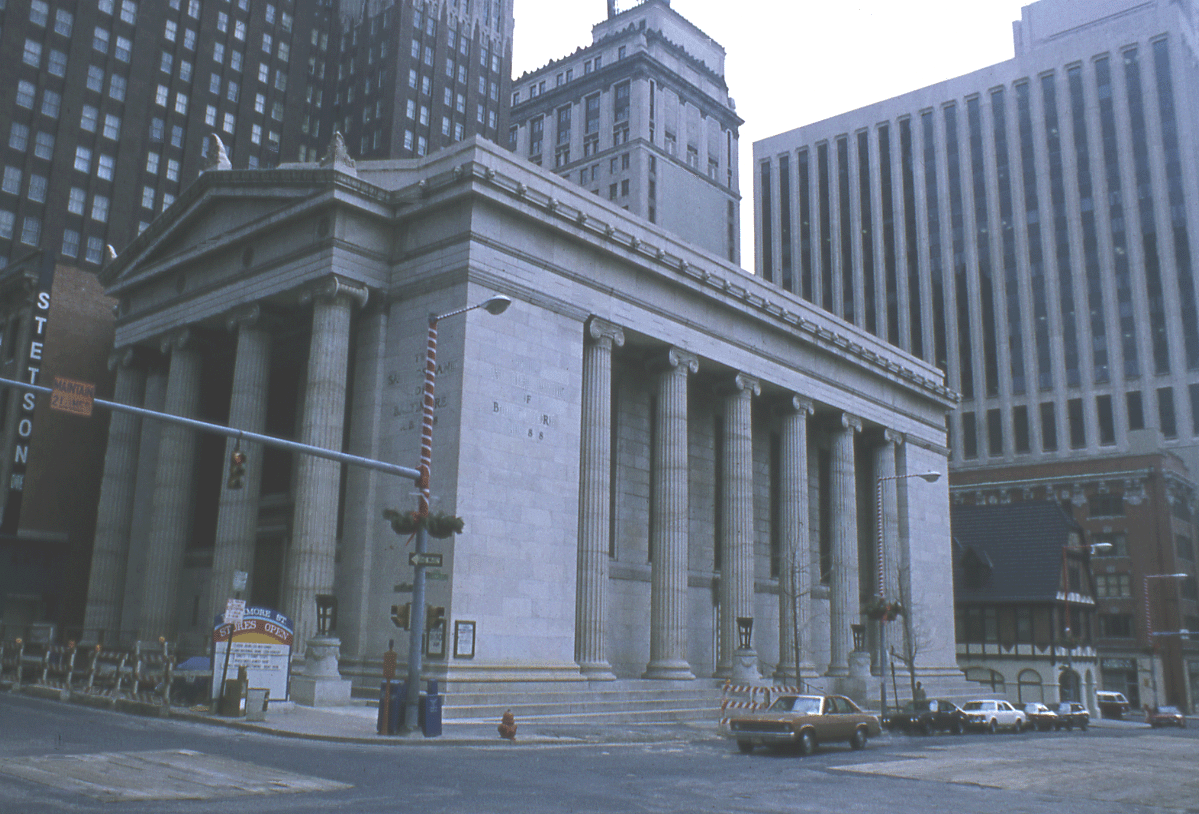
The Beaux-Arts movement of cloaking modern steel-framed buildings with historical architectural styles appears again. This time the style is drawn from ancient Greece. Built in 1907, this elaborate white marble Ionic temple sits atop three underground of parking and vaults. It was built for the Savings Bank of Baltimore, the city’s oldest bank.

Appropriately, the site is the corner of Charles and Baltimore Streets (from which all Baltimore street numbers are calculated). Catty-corner to it is the headquarters of the B&O Railroad, a more conventional Beaux-Arts skyscraper. Both were built in the aftermath of the Great Baltimore Fire of 1904. It currently houses offices.