
Patterson Park archaeological dig set to start in April, Baltimore Guide, February 5, 2014.
[Baltimore 1814: January 16-22] “this morning presents a most violent Snow Storm” and more familiar stories
1814 is much like the present in many ways. Women became mothers, men became grandparents, and others passed away leaving family behind. Here are two births and one death we’re remembering this week:
- Wendell Bollman was born at his father’s bakery on Water Street. Bollman grew up to become the “Master of the Road” for the B&O Railroad, famed for his iron bridges.
- With the birth of Ramsay McHenry, James McHenry, the namesake of Fort McHenry, became a grandfather. At the beginning of 1814, the elder McHenry suffered an attack of paralysis that left him home-bound in West Baltimore.
- John Henry Fusselbaugh, a dealer in building materials and resident of Old Town on East Street, died. He was survived by his wife Barbara and his 13-year-old son.
Missed last week’s update? Don’t forget to check out our story on Robert Mills and his “book of designs” for Baltimore’s Washington Monument.

[Photo] Washington Monument’s “Basement”

Thanks to G. Krug and Son Ironworks for sharing this neat shot from the ongoing restoration of the Washington Monument. Tons of brick and marble make up this 178-foot tall icon—all supported by the stone and brick arches down in the “basement.”
[Baltimore 1814: January 8-15] “Cloudy morning,” a “book of designs” for the Washington Monument, and Baltimore at Sea
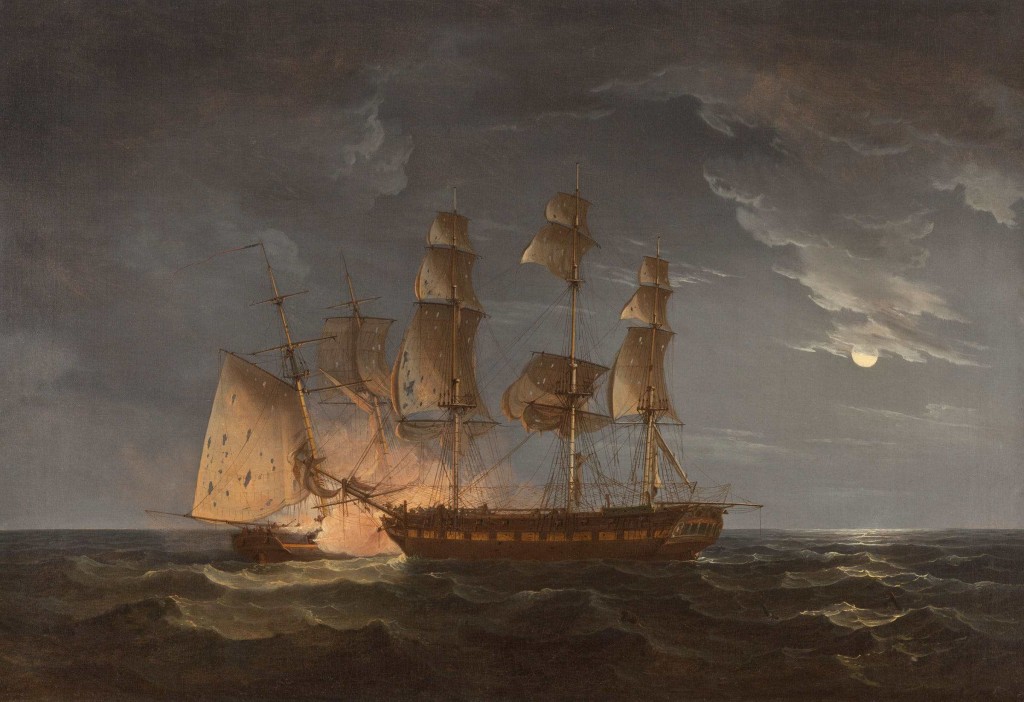
This week’s Baltimore 1814 stories include much more than just news about the “cloudy morning” of January 15, 1814:
- 33-year-old architect Robert Mills submitted a “book of designs” to the Board of Managers of the Washington Monument with a dozen drawings and a letter staking his claim to the title of “first American architect.”
- Nathan Levering and the Baltimore Manufactory Company advertised to hire a blacksmith, wood turner, weaver and a “complete Mule Spinner” to work at the Powhatan Cotton Works (built along the Gwynns Falls in 1811).
- Joseph Sterett, commander of Maryland’s Fifth Regiment, lost a $2500 check made out by Thomas Tenant, a wealthy major in Maryland’s Sixth Regiment. What was the check for and how was it lost? Let us know if you have a theory!
Read on for a few items from one of our newest themes: Baltimore At Sea – featuring the stories of seamen, shipbuilders, privateers and the United States Navy. Thanks to volunteer Dennis Lilly for his help in launching this new series!
Missed last week? Check out last week’s update or go read the story of Jean Pierre Morel de Guiramand, a refugee from the Haitian Revolution, received a patent a new “power loom” on January 7, 1814.

[Baltimore 1814] “Frozen for a week” & more stories from January 1 to January 8, 1814
Brrr! Weathering the “polar vortex” this week certainly encouraged our interest in Captain Henry Thompson’s daily journal entries on Baltimore’s weather. On January 7, 1814, Thompson recorded:
“7th – Fine day, and having Frozen for a week past, commenc’d filling my Ice House, haul’d 21 loads today with two Carts from Herring Run Went to Town return’d to Dinner”
Over the past week of 1814, Baltimore has been hauling ice and more:
- The Wardens of the Port of Baltimore called a public meeting for property owners around Oakum Bay: a “sink of putrefaction” where the Living Classroom Marina is located today.
- Sheriff John Chalmers advertised an auction to sell off property confiscated from James Hamilton: “A negro Woman named Ledda, with 2 small female children, slaves for life.”
- Jean Pierre Morel de Guiramand, one of many of former French colonists who fled Saint-Domingue for Baltimore at the beginning of the Haitian Revolution,received a patent a new “power loom.”
If you missed last week’s update, go back and check out the New Year’s Day reflections of Baltimore newspapermen William Pechin and Hezekiah Niles. Find more background on the history of the city in the early 1800s and our Baltimore 1814 project.
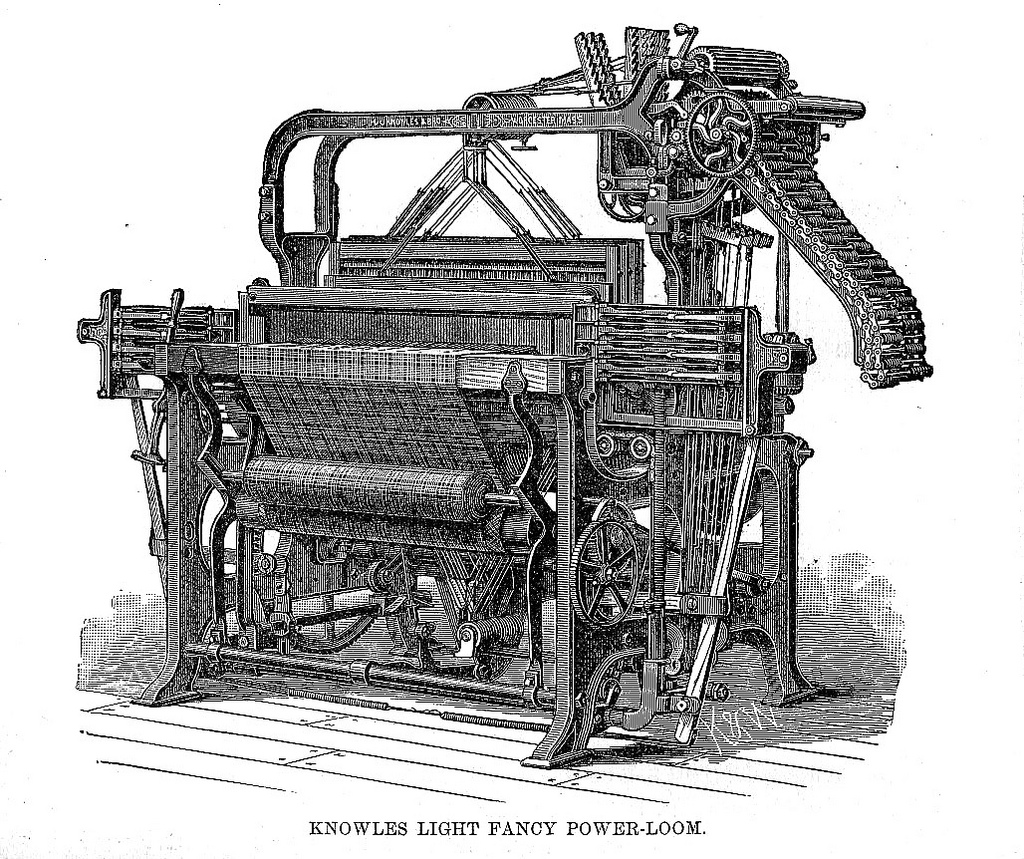 Knowles Light Fancy Power-Loom, ca. 1787