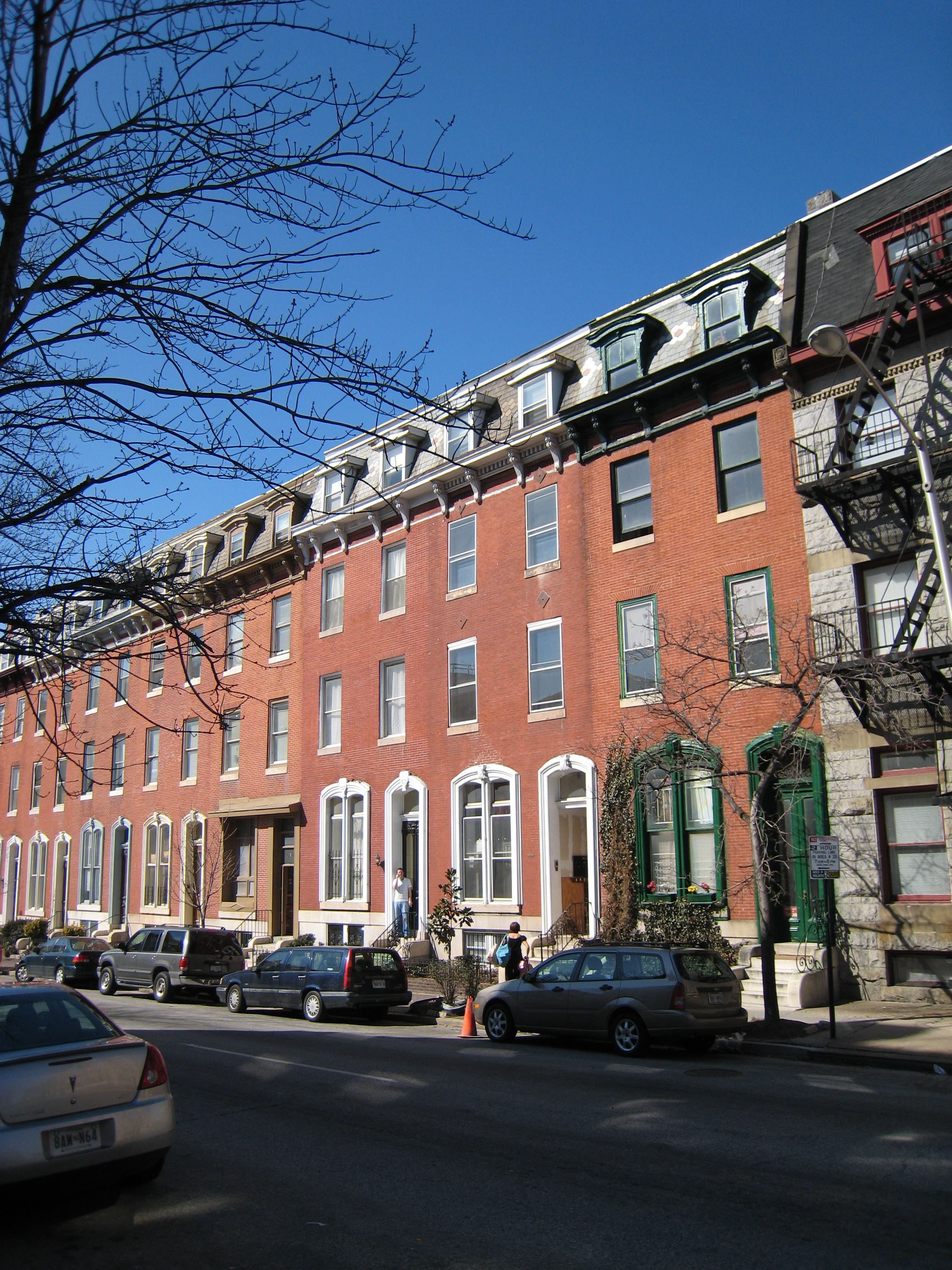
This week’s featured Baltimore Building of the Week from Dr. John Breihan is the stylish Second Empire Rowhouse, St. Paul Street, courtesy Jack Breihan
St. Paul Street is particularly rich in rowhouses in the Second Empire style. Note the elaborate window moldings and of course the crowning Mansard roof. These houses were probably constructed in the 1870s, the heyday of the style. The grandest of the Second Empire city houses was the mansion of Enoch Pratt on Monument Street, an 1870s-era remodeling of an original Greek Revival house of 1847. The house has been preserved by the Maryland Historical Society.
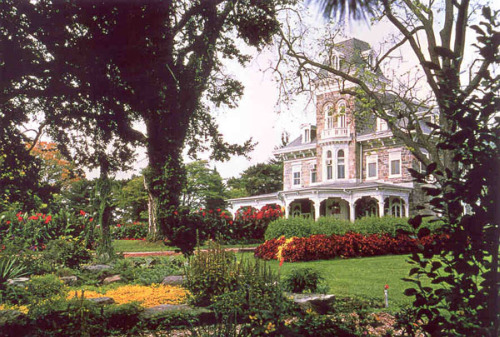
With a Civil-War era mansion and a brand new visitors center, Cylburn Arboretum is bustling with history and energy. Please join us and our hosts from the Cylburn Arboretum Association on a tour of the historic mansion, a stroll through the grounds to view some less visited historic sites, and a peek at the new visitors center. Oh yes, and a glass of wine on the mansion porch.
Tour Information
Note: We are having two identical tours on the same evening. Please sign up for only one.
Date: Wednesday, September 8, 2010
Time: Tour 1 — 5:15 p.m. to 6:15, with reception to follow
Tour 2 — 6:00 p.m. reception, 6:30 to 7:30 tour
Place: Cylburn Arboretum, 4915 Greenspring Avenue (Baltimore, 21209)
Free parking is available at the arboretum
Cost: $15 (includes wine and cheese reception)
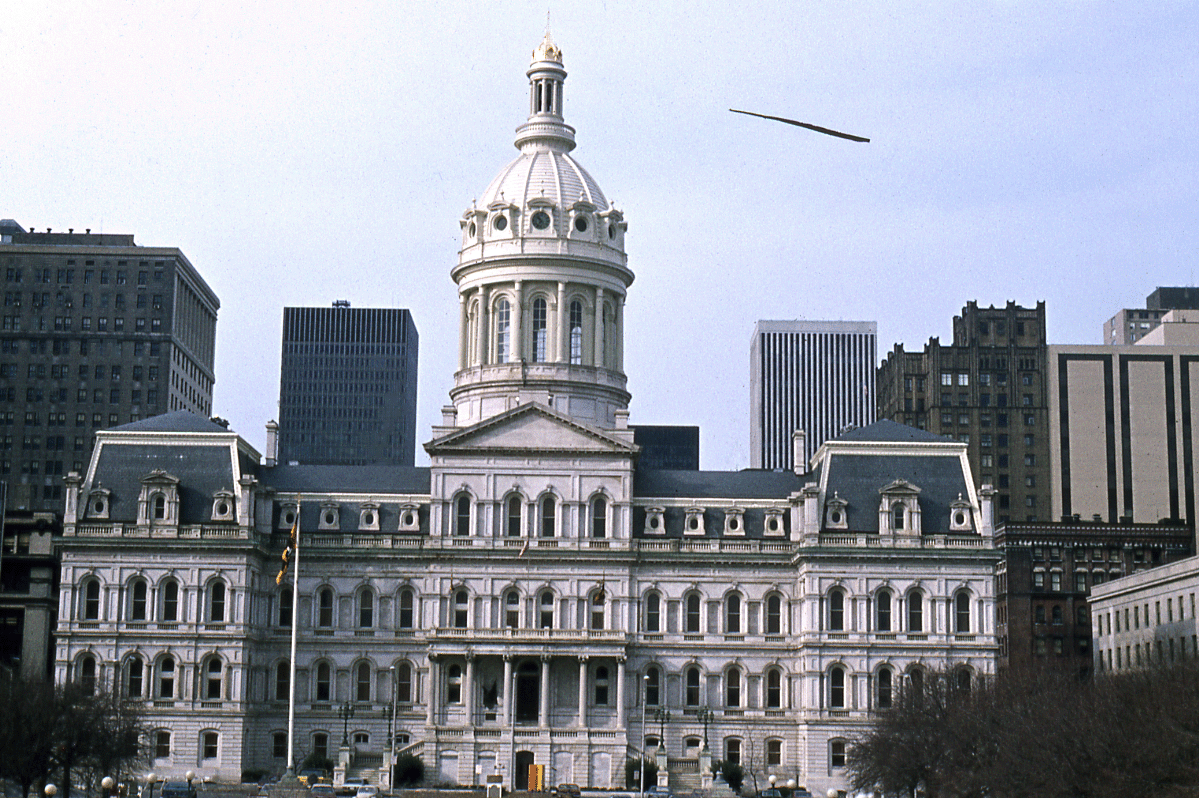
Although it imitates the arrangement of the U.S. Capitol – central dome and symmetrical side wings, the Baltimore City Hall is covered in French architectural elements, including banded rustication, arched windows, and a crowning Mansard roof. How did this come about?
Between 1861 and 1865 the American Civil War retarded most building projects. By the time it ended, tastes had changed. Although the Italianate style remained popular (especially in conservative Baltimore), the antebellum Greek and Gothic Revival styles faded away. Indeed, this whole era in American architecture bears a European name: “Victorian,” for the queen of Great Britain, 1837-1901. Victorian buildings showed off the new products of the industrial revolution then pouring forth a wealth of new building products – cheaper bricks and cut stone, encaustic tiles and terracotta, various forms of structural iron.
The Victorian style from France is named for the Second Empire of the Emperor Louis-Napoleon Bonaparte, who styled himself Napoleon III. It was this Napoleon who extended the Louvre and laid out the boulevards and sewers that made Paris the most modern city in the world in the late 19th century. The Second Empire style became very popular for government buildings after the Civil War; it was sometimes called the “General Grant” style after the 18th President. In Baltimore, George A. Frederick’s design, completed in 1875, employed a good deal of cast iron, including the 227-foot tall dome designed by Wendel Bollman and cast by Bartlett, Robbins, and Company.
About 75 years after their construction, Victorian buildings inevitably came to be seen as downright ugly. In Baltimore, the construction of the Abel Wolman Municipal Building overshadowed City Hall, blocking any views from the north. In the 1970s, demolition of City Hall was seriously discussed. But wiser heads prevailed, and a prize-winning renovation equipped City Hall for continued use as the center of Baltimore’s government.
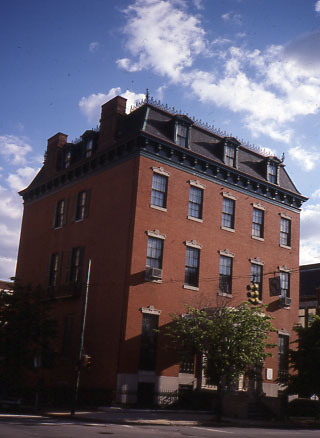
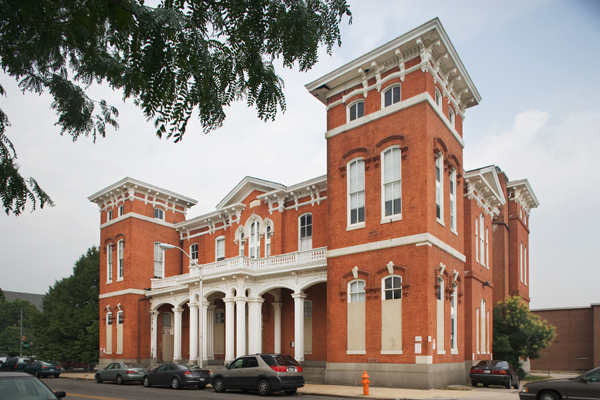
We’re still playing a bit of catch-up on the Baltimore Building of the Week, but we should soon return to our regular weekly schedule. Today’s featured building is the Eastern Female High School at 249 Aisquith Street owned by Sojourner-Douglass College, is also included on our Baltimore Heritage Watchlist for its continued vacant condition.
Eastern Female High School, August 2007
An odd urban version of the towered Italian Villa style, this building includes symmetrical towers at the corners – along with Italianate arched windows and bracketed cornices. A pioneering effort in women’s education, the school was built in 1869 at the corner of Orleans and Aisquith Streets. It is the oldest Baltimore school building still standing. Derelict in the 1970s, it was restored in the following decade as housing for elderly citizens. In 2010, the again-vacant landmark awaits another round of adaptive reuse.
In June, Baltimore Heritage celebrated 50 years of historic preservation work in Baltimore with an anniversary gala at the Garrett-Jacobs Mansion. With a crowd of 400, a set of historic open houses across Mount Vernon Place, an auction of Baltimore art, and the annual presentation of historic preservation awards, the evening was a crowded and celebratory affair.
Highlighting the event, three of Baltimore Heritage’s original 11 founders from 1960 were present to help celebrate. Richard E. Gatchell, Charles A. Porter Hopkins, and William Boulton “Bo” Kelly, Jr. helped launch Baltimore Heritage a half-century ago to provide a voice for preserving the city’s historic buildings and neighborhoods. At the June gala, they offered remarks on the historic preservation movement in Baltimore, its accomplishments and the challenges that lie ahead.
As the three founders noted, the creation of Baltimore Heritage was a joint effort by many civic institutions and led by a group called the Junior Chamber of Commerce. In the early years, high priority projects included saving the Garrett-Jacobs Mansion and other buildings on Mount Vernon Place from proposed demolition and blocking a federal highway proposed to run through Fell’s Point and Federal Hill.
The celebration continues this fall with a special 50th Anniversary bus tour. On October 3, you can join us in retracing the route of the central Baltimore bus tour that led to the founding of Baltimore Heritage. For more information on upcoming programs and events call 410-332-9992 or e-mail Johns Hopkins at hopkins@baltimoreheritage.org.