Behind the Scenes Tour of McClain Wiesand Custom Built Furniture

In New York, Chicago and San Francisco, the custom built decorative art pieces created by Baltimore’s own McClain Wiesand studio are featured for their beauty and careful craftsmanship. This tour offers a “twofer”: a tour of the McClain Wiesand workshop and an open house of the owner’s fabulously renovated apartments (Moroccan room and all) above his shop in historic Mount Vernon.

Tour Information

Date: Wednesday April 7, 2010
Time: 5:30 to 6:00 p.m. — Wine and Cheese
6:00 to 7:00 p.m. — Tour
Place: McClain Wiesand Custom Built Furniture
1013 Cathedral Street (Baltimore, MD 21201)
Cost: $15 (includes wine and cheese reception)
Read more

Baltimore Building of the Week: Washington Mill

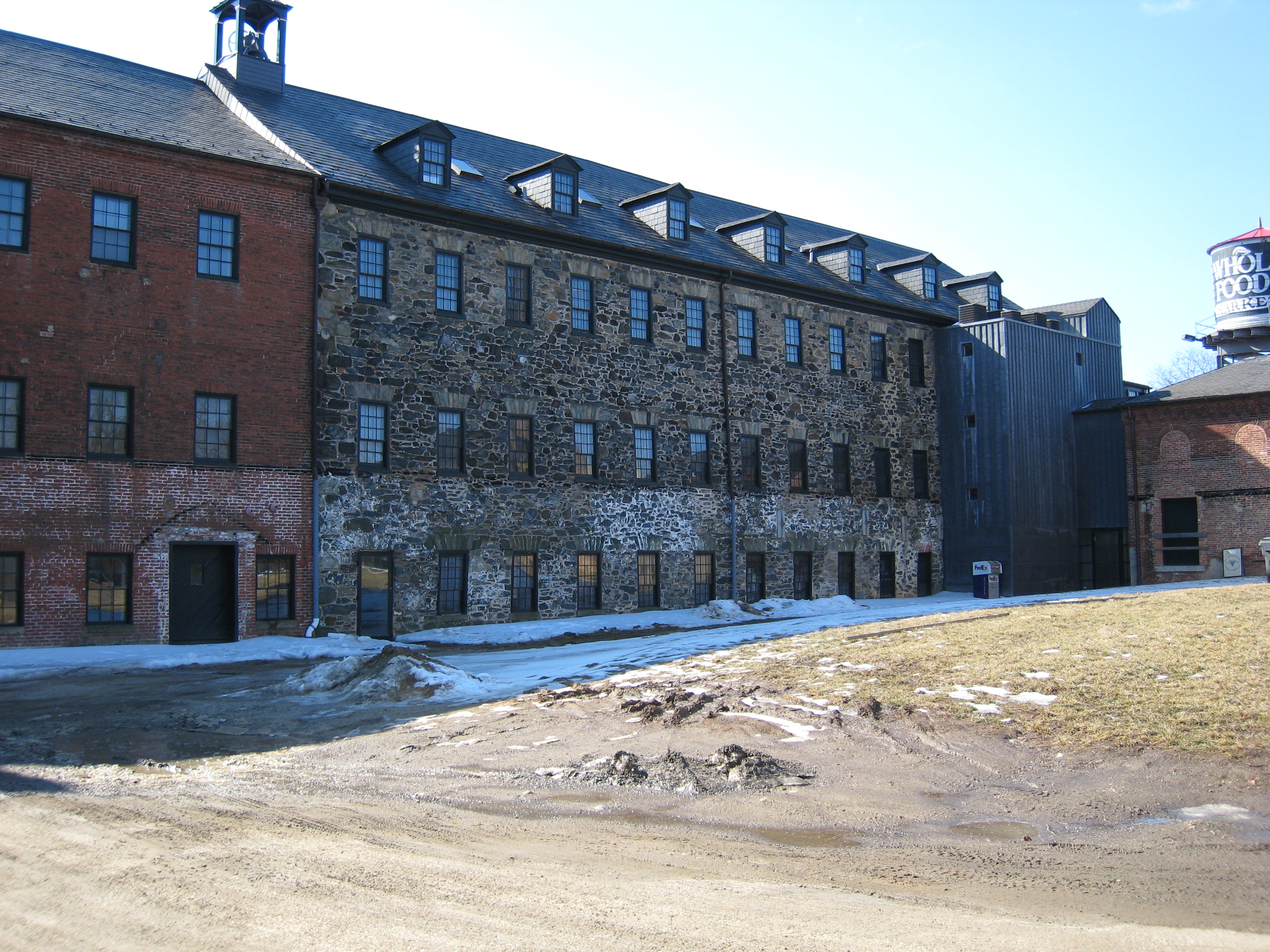
Reflecting the rich industrial heritage of the Jones Falls Valley, this week’s Baltimore Building of the Week is the 1807 Washington Mill building.

Image courtesy Jack Breihan

The Industrial Revolution began in England with simple water-powered machines to spin and later to weave cotton. Although Samuel Slater smuggled some of the designs into Rhode Island in 1793, the English mills dominated the market until 1807, when President Jefferson imposed an embargo on trade with England. The Washington Cotton Factory in Mount Washington dates from that year. Besides being the oldest industrial building in Baltimore, it is arguably the third oldest in the USA. Drawing power from the swiftly flowing Jones Falls, the sturdy stone mill was built to bear the weight of heavy machinery. Long rows of windows provided natural light for the three factory floors. This historic building, along with other pioneer industrial buildings on the site, has been imaginatively preserved as part of the mixed office and retail Mt. Washington Mill development. Other textile mills along the Jones Falls south of Mount Washington have been put to a variety of new uses, reminding Baltimoreans of their industrial heritage.

The rehabilitation of the historic mill complex began in 1988 and many more photos of the site may be found on the Mt. Washington Mill website. For more on the industrial heritage of the Jones Falls, check out this history from the Jones Falls Watershed Association or the Maryland Byways brochure on Falls Road (PDF).

Baltimore Building of the Week: St. Mary’s Seminary Chapel

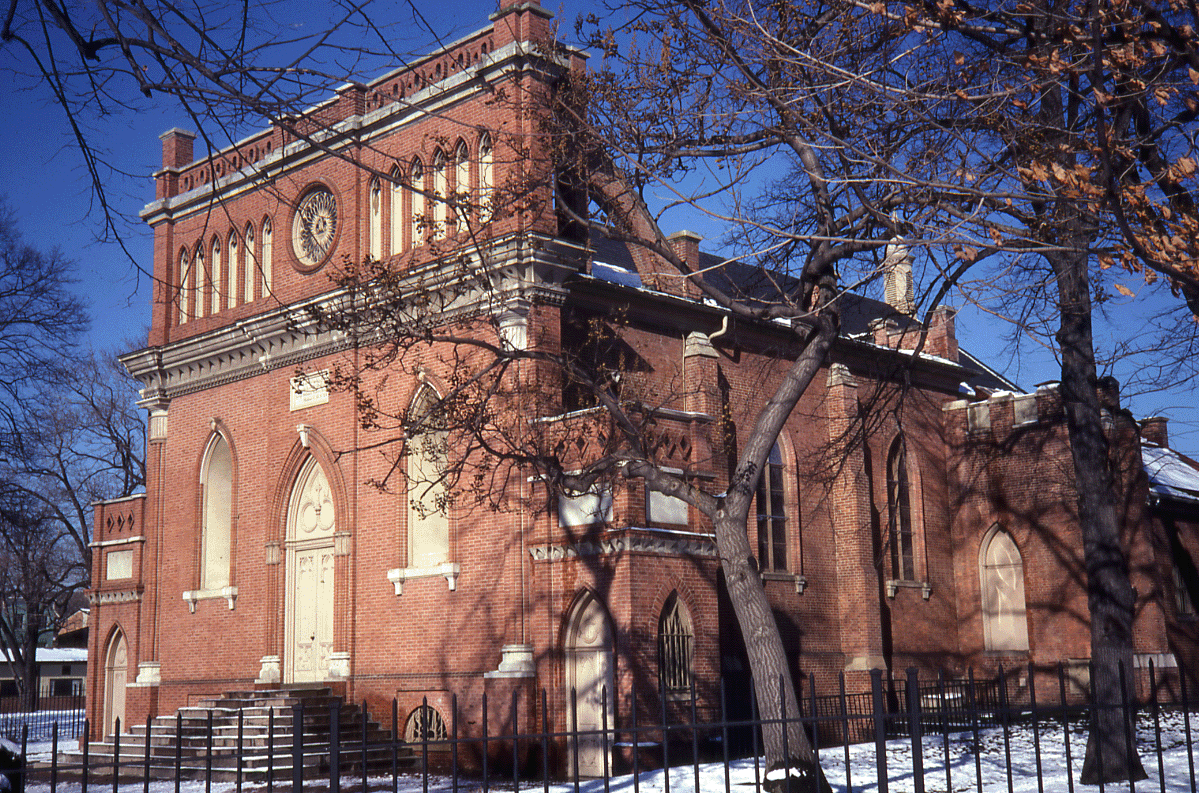
The Baltimore Building of the Week is St. Mary’s Seminary Chapel at 600 North Paca Street in Seton Hill– the first seminary established in the United States. Over two dozen photos of this important building were taken by the Historic American Building Survey in 1936 and tours of both the St. Mary’s Seminary Chapel and the Mother Seton House are offered every day of the week.

Image courtesy Jack Breihan

At a time when neoclassical architecture was in style, this gothic chapel, built in 1808, was an anomaly. Indeed, it is probably the first Gothic Revival building in the United States. It ushered in an era of eclecticism, in which architects worked different styles at the same time. The architect here was Maximilian Godefroy, recruited as a faculty member at St. Mary’s Seminary, founded in 1781 as Baltimore’s first institution of higher education. Godefroy was clearly happier in the neoclassical style (at the Battle Monument and the First Unitarian Church). The chapel is stiff and symmetrical, with “flying buttresses” facing the wrong way, but it pleased his patrons – Sulpician fathers homesick for the gothic monuments of their native France. The Seminary moved to Roland Park in 1927, but the Sulpicians should be congratulated for continuing to maintain this important building.

Read more

Baltimore Building of the Week: First Unitarian Church of Baltimore

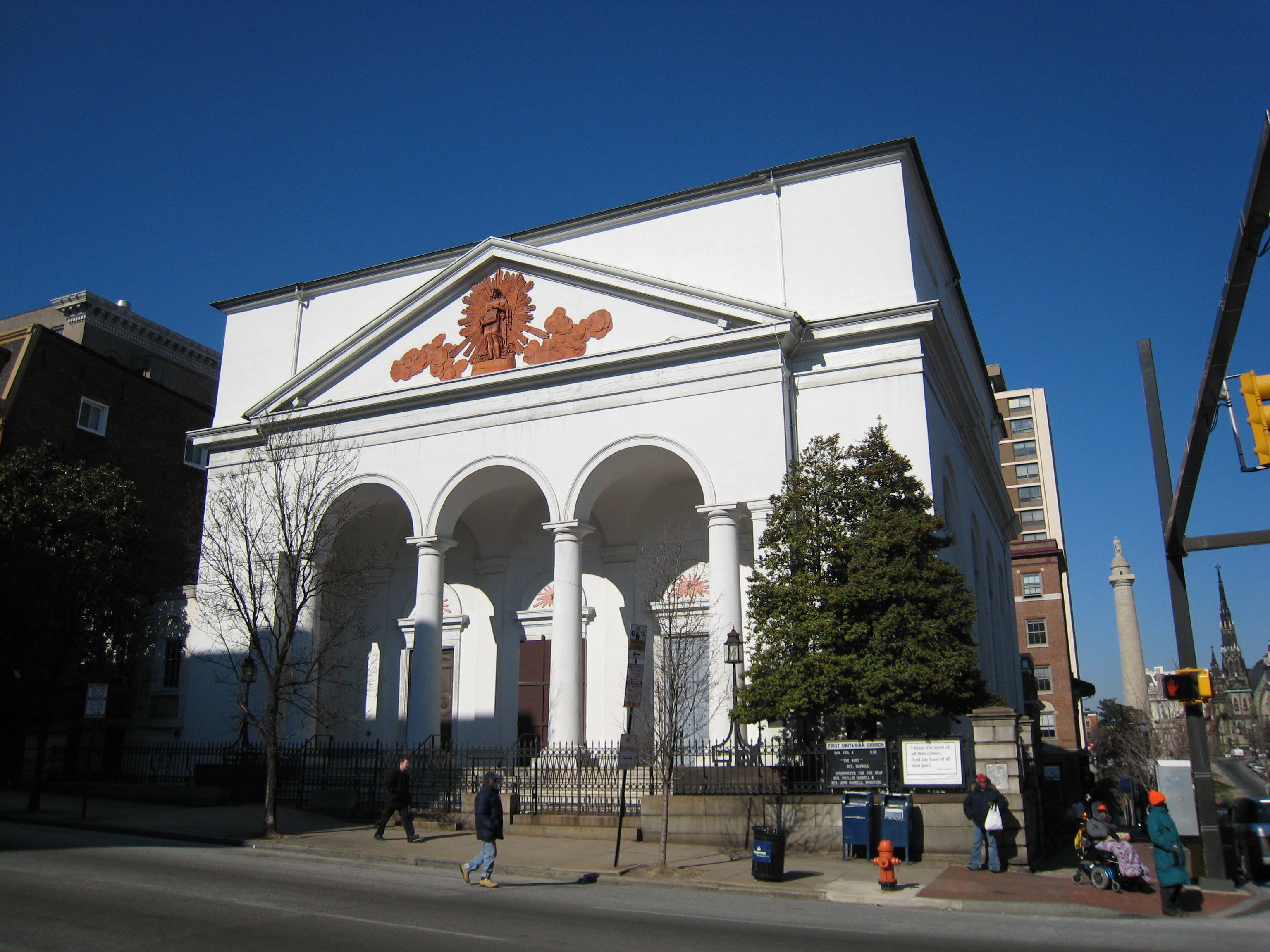
Returning to religious architecture, this week’s entry in the Baltimore Building of the Week series is the First Unitarian Church of Baltimore, the very first building erected for Unitarians in the United States, at the northwest corner of Franklin and Charles Streets. Continue to the end for the answer to the question posed in last week’s post on Baltimore’s Columnar Monuments.

Image courtesy Jack Breihan

If the Basilica is Baltimore’s neoclassical Hagia Sophia, its neoclassical Roman Pantheon stands only a block away. Completed in 1819 to the designs of the French architect Maximilian Godefroy, the First Unitarian Church is a simple cube topped with a hemispherical dome. An arched Roman Doric portico and pediment mark the entrance on Franklin Street (the new prayer garden commemorating Pope John Paul II has opened up the view). Despite its classic simplicity, the dome had notoriously bad acoustics. Eventually a lower plaster vault was constructed beneath it. Baltimore’s other Pantheon is Davidge Hall, the original building of the University of Maryland, at Greene and Lombard Streets.

Read more

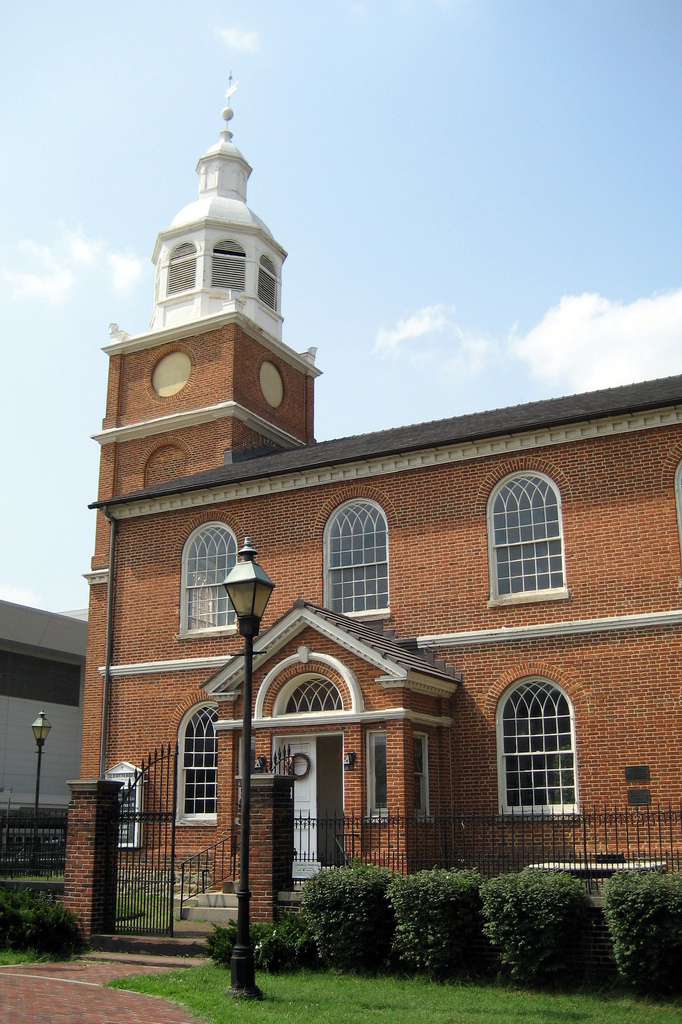
Behind the Scenes Tour of the Old Otterbein Church

Image courtesy wallyg/Flickr

Old Otterbein Church, built in 1785, is the oldest church still standing in Baltimore. With its classic brick and white trim tower (with bells brought over from Germany), the church shows off its landmark stature for countless Orioles fans and anybody traveling around downtown and Camden Yards. Please join us to get a better look at this Baltimore gem and its two historic ancillary buildings, the 1811 Parsonage and the 1872 Sunday School. We’ll also be treated to a demonstration of the church’s one-of-a-kind 1897 Niemann Organ.

Tour Information

Date: Thursday, March 25, 2010
Time: 6:30 to 7:30 p.m. (the organist will start playing at 6:15)
Place: Old Otterbein Church, 112 West Conway Street, 21201
Park in the church lot to the east of the church, entrance off Conway Street
Cost: $10
Read more