Looking Up Downtown tours are free for Blue Star Families now through Labor Day

blue-star-museum-logo

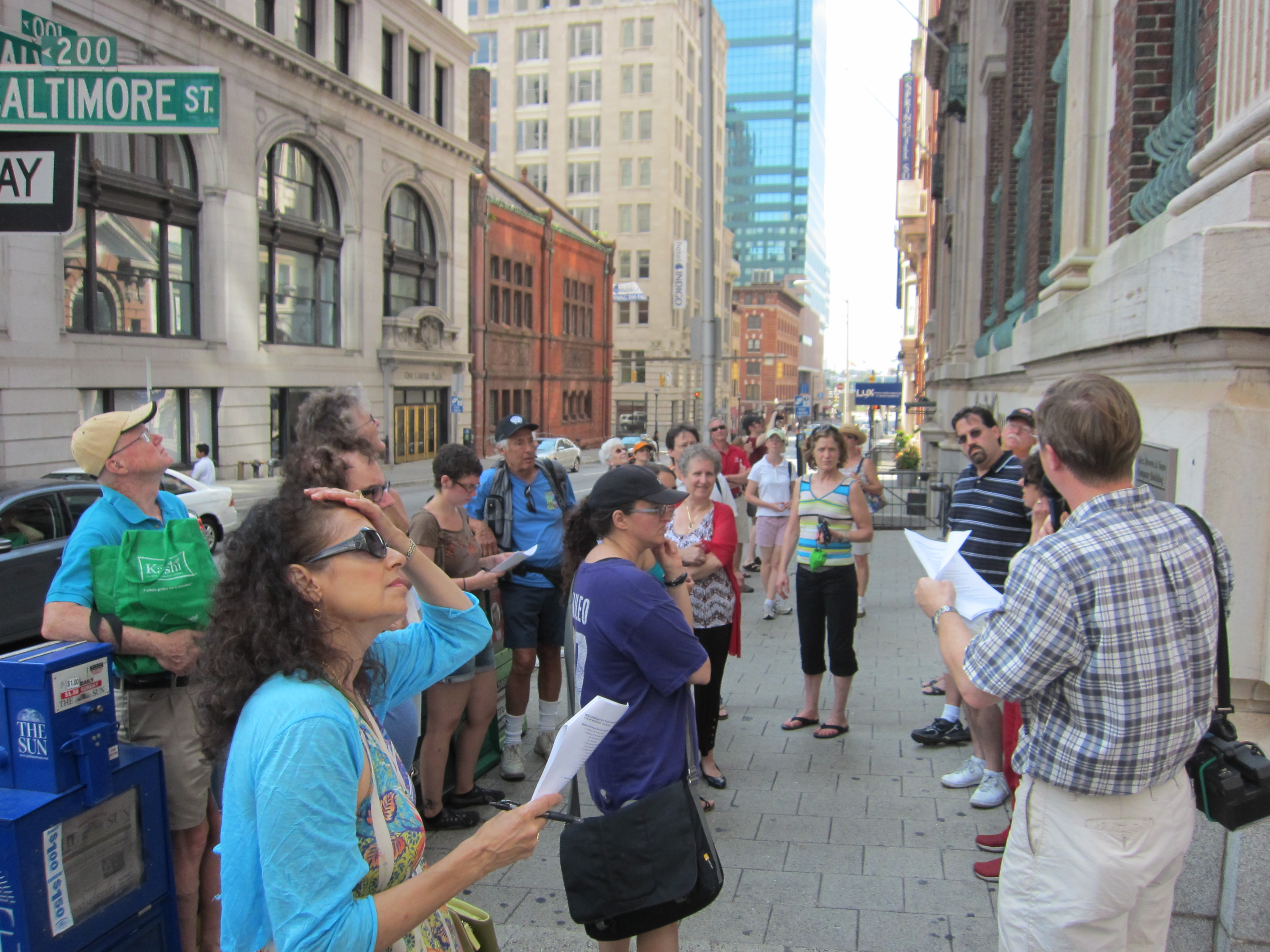
As a participant in the Blue Star Museums program, first launched in the summer of 2010, we are proud to offer free admission to all active duty military personnel and their families for Looking Up Downtown walking tours from now through Labor Day, Monday, September 3. On this 75-minute guided walking tour, everyone from first-time visitors to Baltimore to born-and-raised locals can learn something new and surprising about the architecture and history of downtown Baltimore.

The route – less then one mile and stroller friendly for families with small children – winds through the grounds of the Zion Lutheran Church, continues past a few enduring local landmarks like the Alex Brown & Co. building that still bears the scorch marks from the Great Baltimore Fire of 1904. the and ends right back where it started at the Baltimore Farmer’s Market. All Looking Up Downtown! Gargoyles & More walking tours start at 9:30am on the first and third Sunday from April through November. Meet at the Baltimore Farmers’ Market in front of the Hollywood Diner at North Holiday and South Saratoga Streets. RSVP to join us this weekend or stay tuned to check out another tour later this year!

Don’t forget to check out other local history museums participating in the Blue Star Museums program this summer! In Baltimore, along local museums and historicsites include:

Blue Star Museums is a collaboration among the National Endowment for the Arts, Blue Star Families, the Department of Defense, and more than 2,000 museums across America. Leadership support has been provided by MetLife Foundation through Blue Star Families.
IMG_8665


Baltimore meets Florence! Enjoy Italian-inspired Desserts and Architecture by Bike on June 15

Have you ever seen a handsome building in Baltimore and swear that you had seen it before? Maybe around Florence, Italy? Join Dr. Ralph Brown for our fun bike tour around Baltimore and you’ll swear you are back in Florence—even for just a few hours. Florence has Michelangelo’s David, the Duomo, the Palazzo Vecchio, the Medici, the Arno River spanned by the Ponte Vecchio and great gelato. Baltimore has the Bromo Seltzer Tower, the Jones Falls and, of course, our own tasty gelatos in Little Italy.

We’ll re-discover the sights, sounds and tastes of the great Renaissance city of Baltimore has while learning something new about iced desserts and Baltimore’s key role in their history.

Find 300 years of history beyond the stone walls of the Friends Burial Ground on June 5

Contained on a little less than three acres across from Clifton Park in northeast Baltimore, the Friends Burial Ground tells the stories of generations Baltimore’s Quaker families across their 300 years of rich history in our city. Established in 1713 on a tract of land known as Darley Hall when the Friendship Meetinghouse was built on what is today Harford Road, the cemetery has been in continuous use ever since. While small, and a bit unassuming, the Friends Burial Ground has approximately 1,800 graves with the earliest legible marker dating from 1802 and many undoubtably date from the 1700s. The stone wall around the grounds and the Sexton’s House both date back to the 1860s and, in 1926, 122 graves were moved from a Friends cemetery at at the Aisquith Street Meeting House in Old Town.

The many notable internments include Louisa Swain, who made history in Wyoming in 1880 as the first woman to legally vote in the United States at age 69, and Dr. Thomas Edmondson who lived in a grand estate that eventually became Harlem Park in West Baltimore. Dr. Edmondson recently resurfaced in the public light: it is his collection of Richard Caton Woodville’s artwork that is currently on exhibit at the Walters Art Museum.

Please join us on a tour of the site with long-time caretaker Adrian Bishop, who will share his knowledge of the cemetery and the Sexton House on the grounds that he and his wife call home, together with Ms. Frances Ferguson, who has been digging graves by hand at the cemetery for over 40 years.

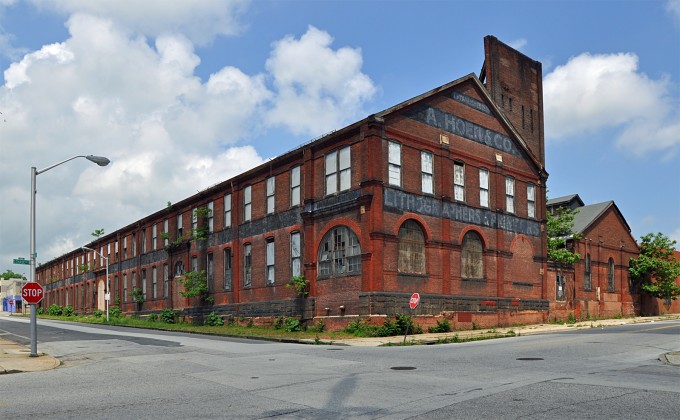
A. Hoen Lithograph Plant

How does an abandoned factory become urban farm?

After decades of neglect, it takes a bit of imagination to look at the cavernous A. Hoen & Co. Lithography Plant and see a unique opportunity for neighborhood revitalization. Fortunately, an exciting partnership between the American Communities Trust, Humanim, East Baltimore Development Inc., Big City Farms, Historic East Baltimore Community Action Coalition Inc., Woodberry Kitchen and Johns Hopkins (whew!) is leading the way to transform the plant and the nearby Eastern Pumping Station site into the new Baltimore Food Hub. By fall of 2014, these long vacant historic buildings will be bursting with entrepreneurs, urban farmers, students, and job trainees working with food-related businesses and learning about healthy food and sustainable agriculture.

The A.  Hoen Co. Lithography Plant includes a series of buildings from the mid 19th century through the turn of the 20th century and remained in use by the company up through the 1980s. Established in the 1840s, owner August Hoen became a pioneer in both the technology and business of printing – distributing affordable color maps, books, decorative prints and more across the country. Built in 1890 just a few blocks away on the opposite side of the railroad tracks, the Eastern Pumping Station was once stylish industrial landmarks in northeast Baltimore even rivaling the architecture of the nearby American Brewery Building (then known as the Bauernschmidt and J.F. Weissner Brewery) with a more dignified Romanesque style. Architect Jackson Gott who designed the Pumping Station completed a number of projects for Baltimore City included the Maryland Penitentiary in 1893 and the Southern District Police Station in 1896.

Join us to discover more on the fascinating history of both buildings and the exciting future of food and healthy living that their preservation and re-use promises for East Baltimore! Our tour guides will include project manager Gregory Heller from Econsult and Bill Streuver, President of the American Communities Trust.