Category: Education

Our education programs include technical assistance to property owners, heritage education around the Civil War Sequicentennial and the Bi-Centennial of the War of 1812, and our ongoing Race and Place in Baltimore Neighborhoods project.

Baltimore Building of the Week: Hansa Haus

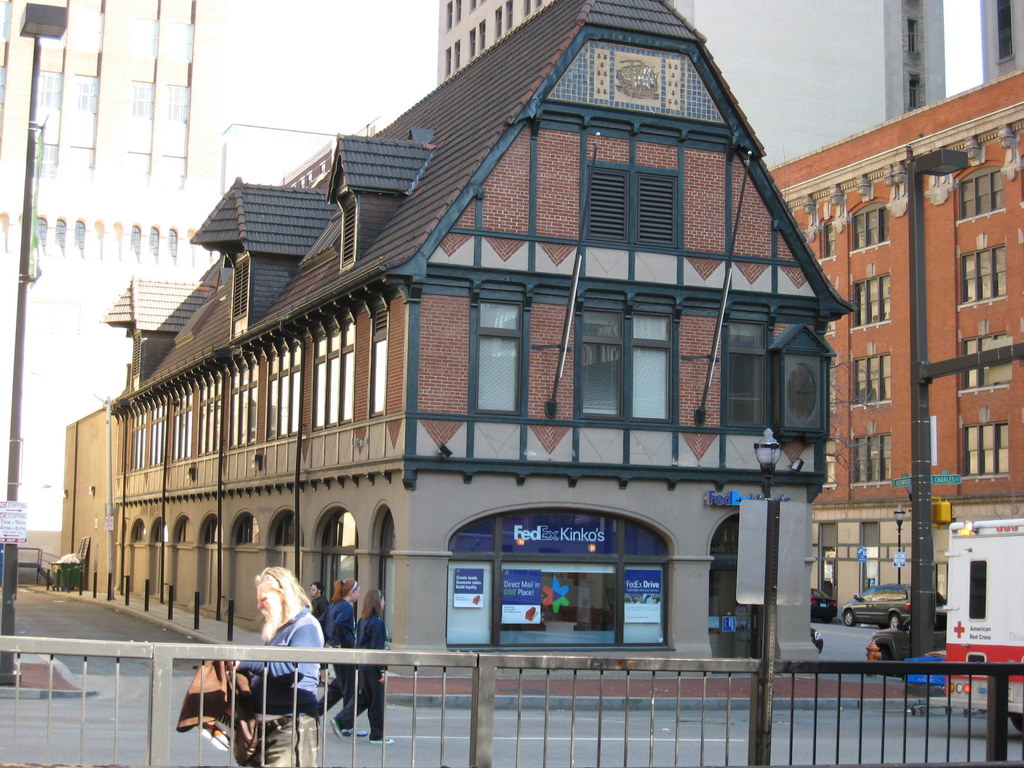
This week’s Baltimore Building of the Week from Dr. John Breihan, the Hansa Haus at Redwood and Charles Streets, is right next door to last week’s building– the Savings Bank of Baltimore. The Hansa Haus reflects both Baltimore’s rich German heritage and the history of immigration into Locust Point as the former Baltimore office of the North German Lloyd Steamship Company–

Image courtesy Jack Breihan

A favorite Beaux-Arts era historical-revival building housed the Baltimore offices of the North German Lloyd Steamship Company, a decidedly up-to-date modern enterprise when this building was erected in 1912. Its site, adjacent to the Baltimore Savings Bank (see last week) testified to the importance of German immigration to Baltimore in the early 20th century. To prevent said immigrants from being too homesick, Hansa Haus resembled a half-timbered 16th-century German Rathaus, perhaps the Zwicken in Halberstadt. Originally coats of arms of the cities in the Hanseatic League decorated the upper floor. Since the departure of the steamship line, Hansa Haus has had a variety of uses; it remains a challenge to sympathetic re-use.

Baltimore Building of the Week: Savings Bank of Baltimore

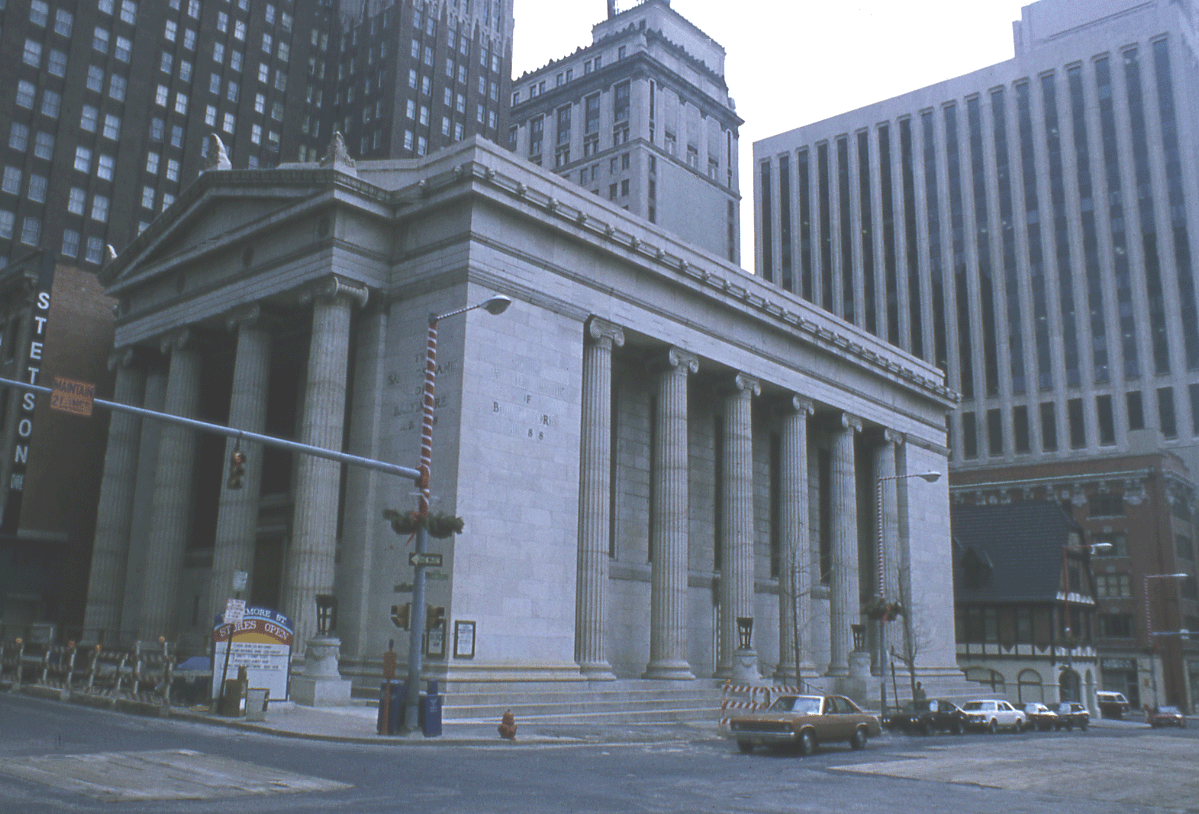
This week’s Baltimore Building of the Week is unfortunately really last week’s Baltimore Building of the Week as we play a bit of catch up. The Savings Bank of Baltimore is a classic bank building at the very heart of downtown–

Image courtesy Jack Breihan

The Beaux-Arts movement of cloaking modern steel-framed buildings with historical architectural styles appears again. This time the style is drawn from ancient Greece. Built in 1907, this elaborate white marble Ionic temple sits atop three underground of parking and vaults. It was built for the Savings Bank of Baltimore, the city’s oldest bank.

Appropriately, the site is the corner of Charles and Baltimore Streets (from which all Baltimore street numbers are calculated). Catty-corner to it is the headquarters of the B&O Railroad, a more conventional Beaux-Arts skyscraper. Both were built in the aftermath of the Great Baltimore Fire of 1904. It currently houses offices.

Baltimore Building of the Week: Maryland Institute College of Art Main Building

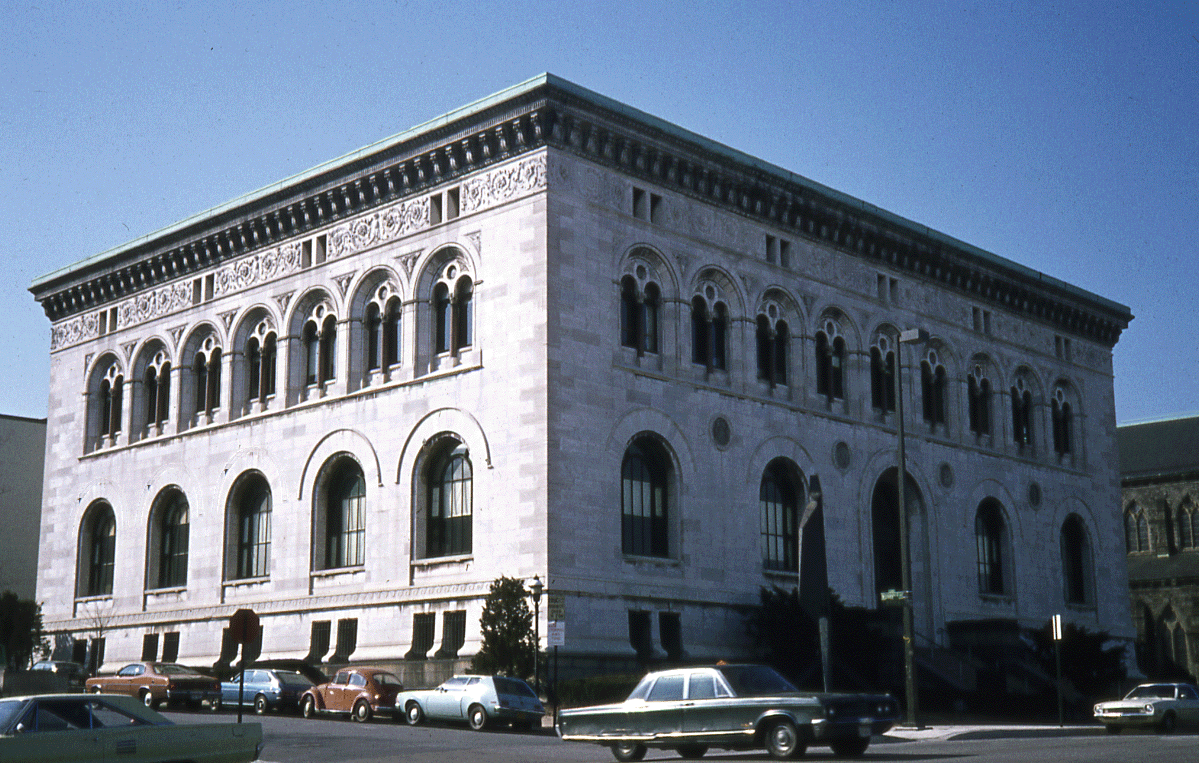
The Baltimore Building of the Week arrives on Mount Royal Avenue and the campus of the Maryland Institute College of Art for a feature on their 1908 Main Building designed by New York architects Pell & Corbett following a design competition sponsored by the New York Association of Independent Architects.

Image courtesy Jack Breihan

The Beaux-Arts movement in architecture used up-to-date technology clothed in various historical styles. Penn Station (featured last week) employed French Neoclassical elements; MICA’s Main Building revives the Italian Renaissance style. Renaissance palazzos were considered most appropriate for art galleries – the Walters Art Museum is another example.

Baltimore Building of the Week: Penn Station

This week’s Baltimore Building of the Week for Dr. John Breihan includes a great photo of the historic Penn Station prior to the installation of the controversial Man/Woman sculpture–

Image courtesy Jack Breihan

Louis Sullivan’s skyscraper style (as seen in Baltimore’s Equitable Bank Building featured last week) made full use of modern steel-framed construction and electrical appliances like elevators. But in the 1890s it was superseded by a style with equally advanced technology but not based on Sullivan’s famous pronouncement that “Form follows function.” Inspired by – and named after – the great French architecture school, the Ecole de Beaux-Arts, this new style combined modern steel-framed construction with historical European styles. Penn Station, completed in 1911, is a good example. Planned to handle several streams of travel on several different levels, it nevertheless presents a serene classical façade to viewers approaching up Charles Street – balustrade roofline, modillioned cornice, paired Roman columns, rusticated stone base. The equally classical interior has undergone several restorations since the 1970s. In the 1990s a connection to Baltimore’s new light rail system was added. As it approaches its 100th birthday Penn Station shows how old buildings, well maintained can continue to serve the community.

Baltimore Building of the Week: Charles Village Porch-Front Rowhouses

This week’s Baltimore Building of the Week returns to Charles Village to highlight the characteristic porch-front rowhouses,

Image courtesy Jack Breihan

The same sort of exuberant, uniquely American designs that appeared in the late 19th century reached a high point early in the 20th. The so-called Queen Anne Style had nothing to do with Britain’s last Stuart monarch, but instead mixed various architectural details into a happy pastiche. Here in Charles Village row houses boasted Flemish gables, Italianate brackets and arched windows, classical columns and pediments. Deep front porches offered some relief from the city’s heat as well as sociable contact with neighbors. Lately they have been acquiring vivid redecoration that highlights their architectural features.