
[Video] Restored Historic Statues at McColloh Homes, Baltimore City Cable 25, July 2, 2013
Congratulations to Baltimore’s 2013 Historic Preservation Award Winners!
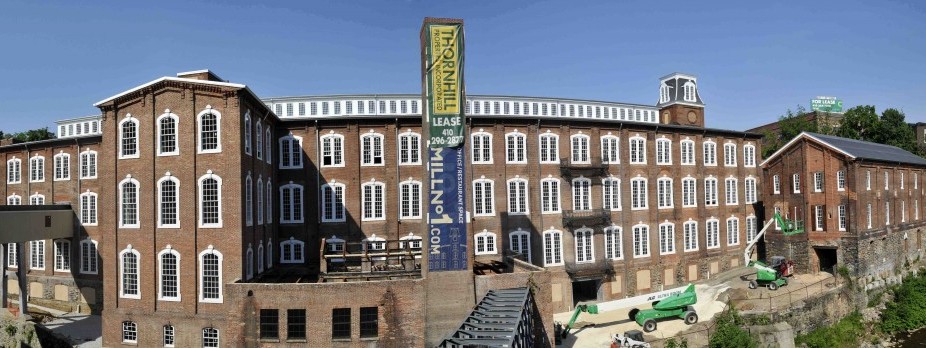
Thank you to everyone who joined us last month for our 2013 Preservation Awards Celebration at Mill No. 1. We owe a special thanks to our event sponsor PNC Bank and to our host Terra Nova Ventures whose tremendous rehabilitation of the historic Mt. Vernon Mill Company No. 1 was a highlight of the evening.
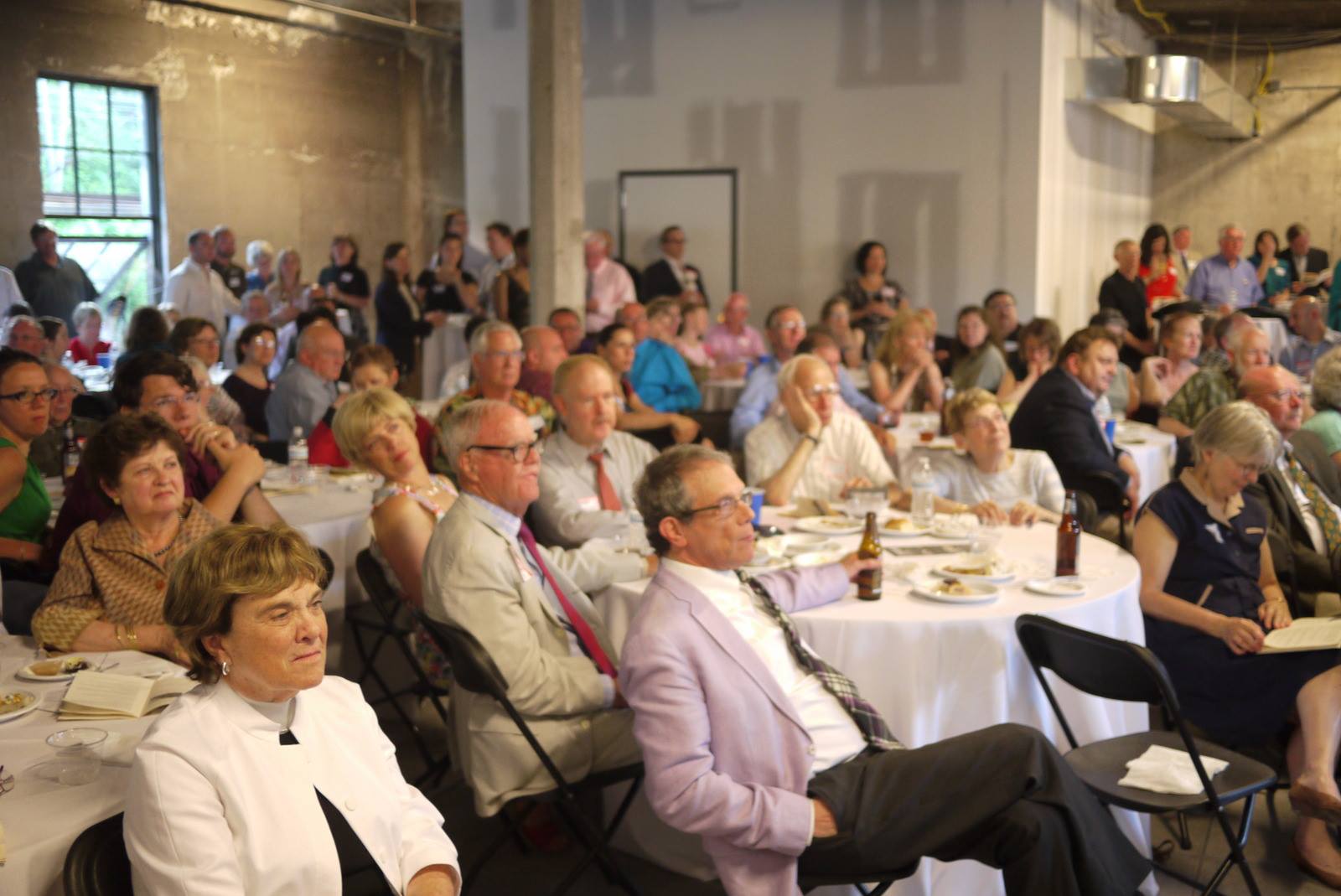 Every year we have the pleasure of honoring a host of projects and individuals for a diverse range of exceptional restorations, thoughtful adaptive reuse projects, and leadership within Baltimore’s preservation community. This year was no different, as we recognized the meticulous restoration of the Basilica of the Assumption, the inspiring rehabilitation of the former David Bachrach House in Reservoir Hill, and the adaptive reuse of the historic Morgan Millwork Company as the MICA Graduate Studio Center. We were especially glad to present Ms. Kathleen Kotarba with the Douglas H. Gordon Award for Lifetime Achievement for over 30 years of service to historic preservation through her work with the Baltimore Commission for Historical and Architectural Preservation and well beyond.
If you couldn’t join us last month you can find a gallery of photos from the event on Flickr or on our Facebook page. Read on for the full list of award winners and join us in celebrating the businesses and individuals who have contributed to these important accomplishments in historic preservation. Stay tuned for more updates over the summer profiling each award-winning project!
Restoration and Rehabilitation Award
Basilica of the National Shine of the Assumption of the Virgin Mary
Archdiocese of Baltimore, Cho Benn Holback + Associates, Lewis Contractors, Keast & Hood Company, Alan Gilbert Photography
1515 Eastern Avenue
Baltimore Home Rentals, David H. Gleason Associates, Inc.
106 South Gilmore Street
Urban Design
1711 Guilford Avenue
Mr. Umar Moulta-Ali
The Linden House
The Women’s Housing Coalition, Episcopal Housing Corp., K. Lechleiter Architects, Southway Builders, Peristyle LLC, Clifton Company LLC, T&D Plumbing and Heating Co., A-L Abatement, Inc., C.L. McCoy Framing Co., John H. Myer & Son, Inc., Western Cary Building Products, Tri-County Roofing and Sheet Metal, Inc., Chesapeake Siding Contractors, Inc., Walbrook Mill and Lumber, Zeskind’s Hardware and Millwork, Shenandoah Sash and Door, Inc., Carpentry & Hardware Services, Inc., Novo Construction, Healthy Neighborhoods
400 Block of East Oliver Street
TRF Development Partners, O’Connell and Associates
St. Mary’s Chapel at Paca Street
Associated Sulpicians of the United States, Kann Partners, Lewis Contractors, Thomas Moore Studios, Giorgini Construction
Adaptive Reuse and Compatible Design Award
Everyman Theater
Everyman Theater, Cho Benn Holback + Associates, Lewis Contractors, Theatre Projects Consultants, James Posey Associates, Inc., Keast & Hood Company, Gower Thompson, Shen Milsom Wilke, Inc., Dunlop Lighting Design, Alan Gilbert Photography
MICA Graduate Studio Center
Maryland Institute College of Art, Cho Benn Holback + Associates, Whiting Turner, James Posey Associates, Morabito Consultants, Gower Thompson, Lazarus Design Associates
Heritage Preservation Award
Monsignor Arthur W. Bastress
For the preservation and stewardship of St. Alphonsus Church
Douglas H. Gordon Award
Ms. Kathleen Kotarba
For over thirty years of service and leadership for historic preservation in Baltimore
Behind the Scenes Tour of the Institute of Notre Dame High School – rescheduled for August 12!
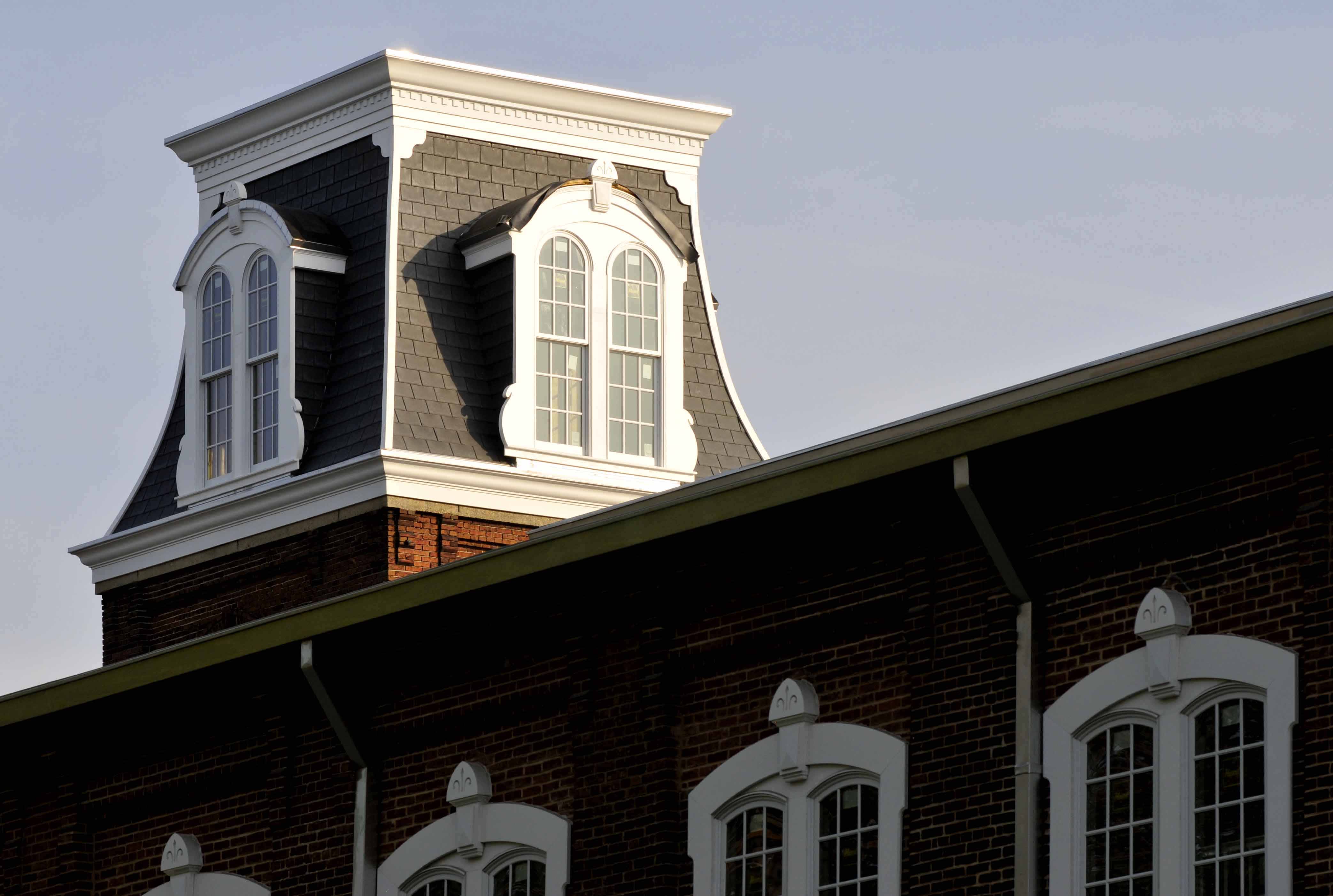
Join us on a tour of the Institute of Notre Dame – a Baltimore landmark that has educated young women for over 150 years. Our guide, long-time resident Sister Hilda Marie Sutherland better known as Sister Hildie, is 81 years old and a local treasure in her own right. She came to IND from St. Mary’s Female Orphan Asylum in Roland Park at age 14 and never left.
Originally established in 1847 as the Collegiate Institute of Young Ladies, the Institute of Notre Dame High School (IND) was founded by Baltimore’s own Mother Theresa – the Blessed Mother Theresa of Jesus Gerhardinger. A native of Munich, Bavaria, Mother Theresa helped to found the School Sisters of Notre Dame (SSND) in Germany and came to Baltimore with a small group of sisters to educate the children of immigrants and minister to the poor. Mother Theresa purchased the original convent building from the Redemptorist priests assigned to nearby St. James in 1847 and soon expanded the convent into a boarding school when the sisters discovered two orphans left on their doorstep. By 1852, the sisters had built the school that still stands today.
The school continued to grow through the years: adding an auditorium in 1885, a chapel in 1892, additional classroom space in 1926, and their gymnasium in 1992. Since the first graduation ceremony on July 24, 1864, over 7,000 alumnae have graduated from IND including House Speaker Nancy Pelosi (1958) and Sen. Barbara Mikulski (1954) who later recalled, “They taught me more than geography or mathematics; they taught me to help those in need of help. They inspired my passion for service.”
Sister Hildie is the perfect guide to the school’s rich legacy with over 60 years in residence at the school. Her service has touched countless students among the school’s students and East Baltimore residents who have been helped by her weekly efforts to collect clothing, household items and food to share with the school’s neighbors. Come out to Aisquith Street and discover the charms and history of Sister Hildie and IND!
News: Baltimore’s Venerable Buildings Imperiled by Increasing Seas
Lauren Loricchio highlights the urgent issue of climate change’s impact of historic buildings and neighborhoods with her article Baltimore’s Venerable Buildings Imperiled by Increasing Seas:
From fragile wooden houses in Fells Point, along the city’s oldest blocks, to Fort McHenry, which inspired “The Star-Spangled Banner,” Baltimore’s waterfront historic places are at risk of being lost forever as sea levels rise and storm surges grow more powerful.
For a city founded because of the water—the Port of Baltimore was officially designated at Locust Point in 1706—much of its history rings the harbor. And though the state is cataloging Maryland’s treasures, neither the state nor City Hall has a plan to protect them…
“Some of the oldest houses in Baltimore are in the potential path of sea-level rise and storm surges,” said Johns Hopkins, executive director of Baltimore Heritage… “The last couple of hurricanes that came through really hurt. I don’t know how many times the area can withstand that,” Hopkins said. “And if it gets worse, who knows what will happen.”
The issues of historic preservation and rising sea level is not limited to Baltimore and is perhaps even more urgent on the Eastern Shore where rising sea levels threaten the new Harriet Tubman Underground Railroad National Monument:
Harriet Tubman led slaves to freedom through the thick reeds and marshes of her hometown on the Eastern Shore of the Chesapeake Bay. In an effort to preserve that history, President Barack Obama recently designated the area the Harriet Tubman Underground Railroad National Monument. But even a presidential proclamation can’t halt natural forces. Sea levels have been rising in the Chesapeake Bay at more than twice the global rate — and one of the most important stops on the Underground Railroad likely will be largely underwater within the next 50 years.
Photo: Carrollton Viadcut
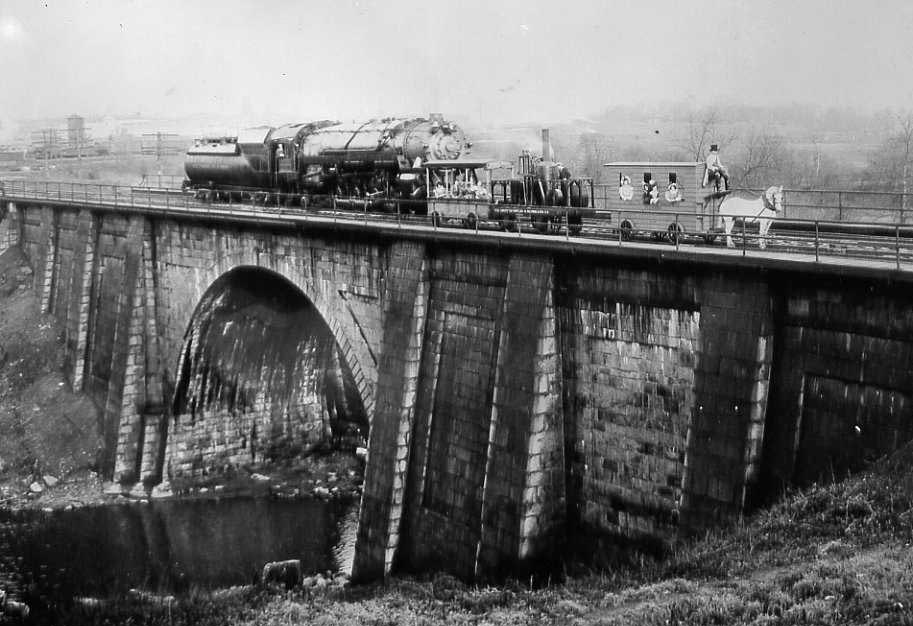
On July 4, 1828, Charles Carroll of Carrollton, the last living signer of the Declaration of Independence and a director of the Baltimore and Ohio Railroad, laid the cornerstone for the Carrollton Viaduct, with the remark, “I consider this among the most important acts of my life, second only to my signing the Declaration of Independence.” Learn more at Explore Baltimore Heritage.