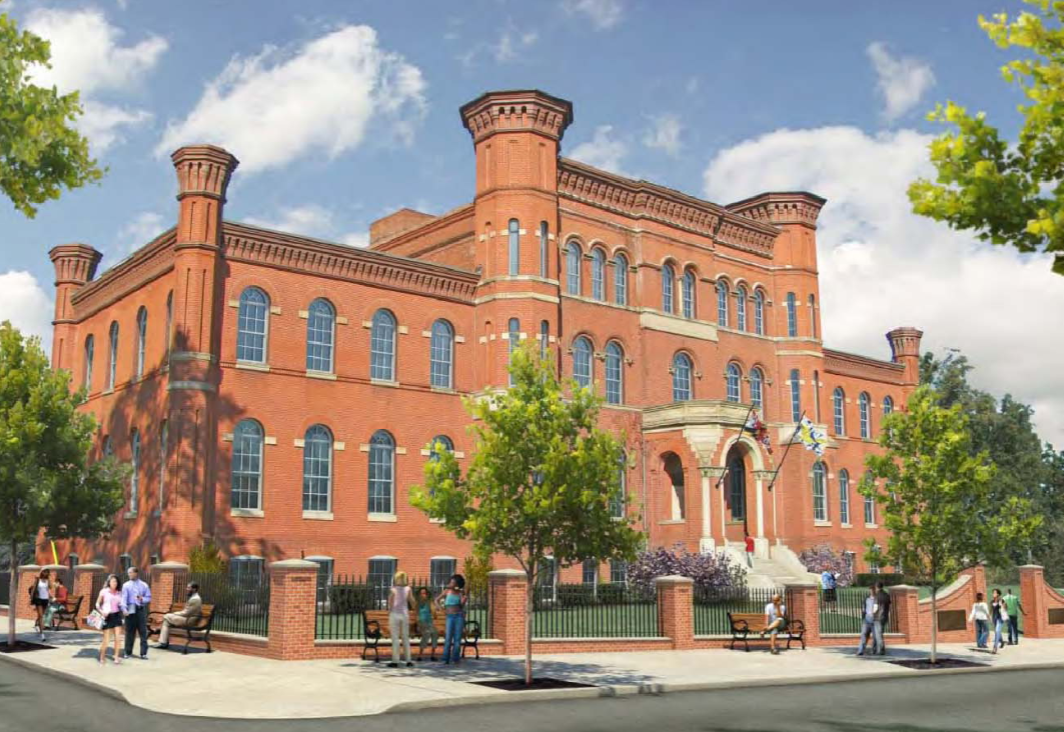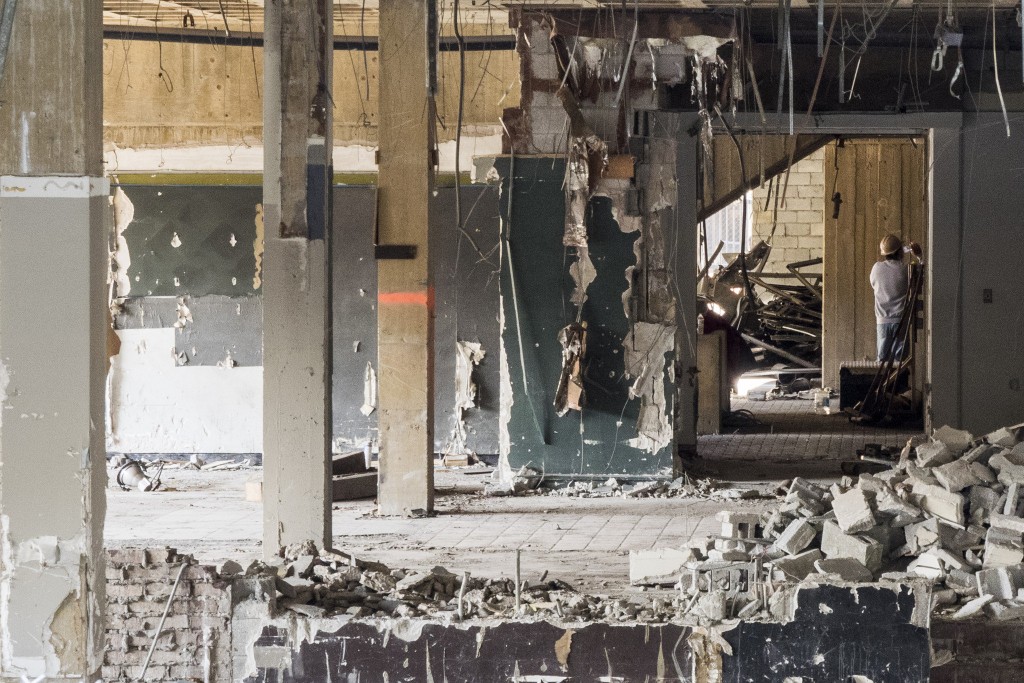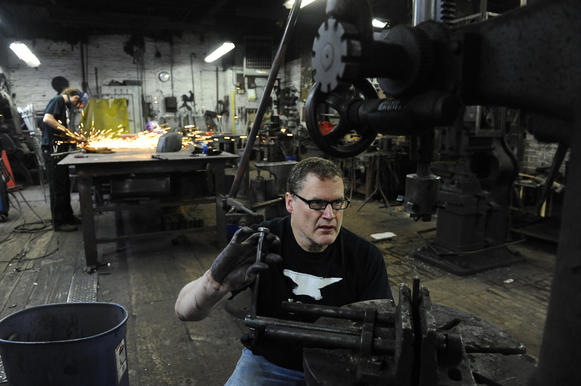
Sparks started flying at the blacksmith shop on West Saratoga Street when James Madison was president of the United States, and a crew there is still on the job, now operating in a hybrid historical museum and working business…
“It’s not just another museum,” said Johns W. Hopkins Jr., executive director of the preservation organization Baltimore Heritage. “It is highly unusual for many reasons, that combination being one of them.”
We had a great time in Patterson Park this weekend as we helped to celebrate the Bicentennial of the Battle of Baltimore and shared information and artifacts from this spring’s archeological dig in Patterson Park. Over the next few weeks, we are exploring the history of the First World War with downtown Behind the Scenes tours at Zion Lutheran Church and the War Memorial Building.
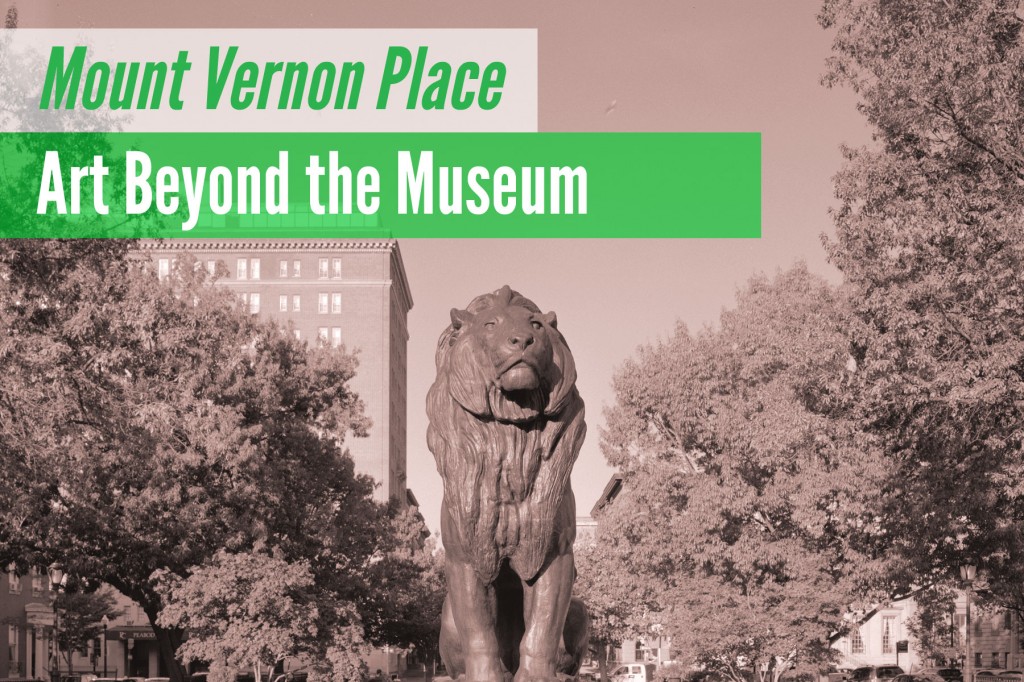
We’re also excited to share that Cindy Kelly – one of our favorite tour guides and an expert on the history of Baltimore’s public art – is leading our next Mount Vernon Place tour in October and we’re partnering with AIABaltimore to organize a tour of the recently rehabilitated Chesapeake Shakespeare Theater. And don’t forget about Hampdenfest this weekend! Our friends from the Greater Hampden Heritage Alliance will be unveiling their brand-new self-guided tour brochure of Hampden landmarks.
Any archeologist will tell you: the most important part of a dig is not what we find, it is what we find out! Processing artifacts is an essential step to learning more about an archeological site and the stories it may hold. Thanks to support from the Maryland Historical Trust Archeology Lab in Crownsville, project archeologists from Louis Berger, and a great group of fourteen volunteers, we just completed the laboratory processing for the artifacts recovered from Patterson Park this past spring.
Between July 29 and August 27, our volunteers (including seven people who helped out during the dig this spring) washed and labeled artifacts then recorded detailed description in a catalog for the collection. The artifacts included a War of 1812 musket ball, a Civil War belt buckle, and a half-plate made of ironstone. The oldest artifact is the Piscataway point created over 2,000 years ago. We didn’t realize in the field that we had found huge number of pieces of kiln furniture (the protective vessels that held pipes as they were fired in the kiln) or “muffles.” The large number of pieces raises the question of whether a kiln was located at the site or whether they were just brought in as dirt fill.
In the next few weeks, Louis Berger will send the artifacts to Kansas City to be photographed at their own laboratory. They’ll be back in Baltimore in time for the bicentennial celebrations on September 14. In October, we will send the collection to its permanent home at the Maryland Archaeological Conservation Laboratory, at Jefferson Park and Museum in St. Leonard, Maryland. You can look forward to seeing a selection of artifacts back in Baltimore this spring as part of a new exhibit we are planning at the Patterson Park Observatory with the Friends of Patterson Park.
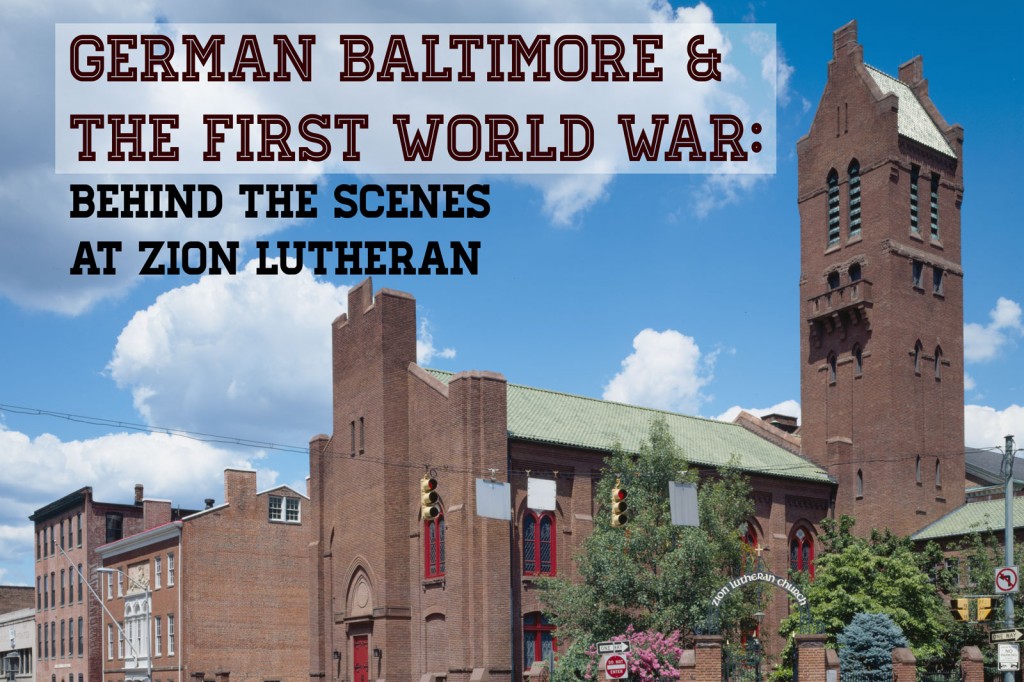
Although the Farmer’s Almanac says that we have three more weeks of summer, we’re ready for fall with an exciting line-up of heritage tours and events in the month ahead. We hope you can join us for tomorrow’s tour at Mount Vernon Place, our Patterson Park-sized “huzzah!” for the Bicentennial of the War of 1812 at the Hampstead Hill Festival, and a new tour at Zion Church reflecting on the crossroads of German and American heritage on the 100th Anniversary of WWI.