Reminder! Civil War 150: Slavery & Historic Sites Lecture tomorrow

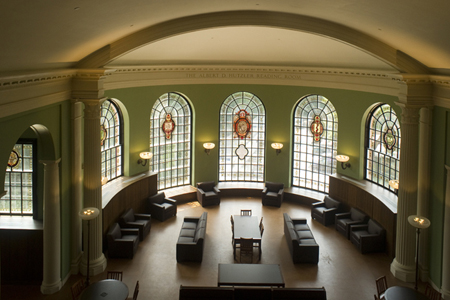
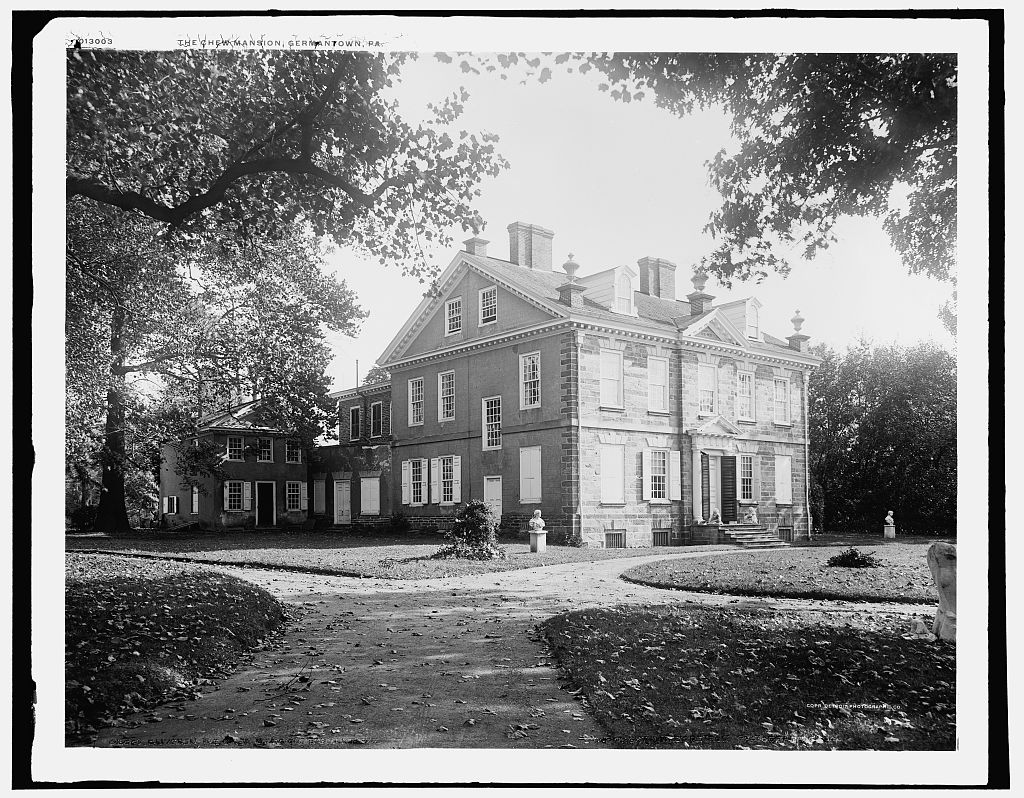
What do the historic sites of Cliveden in Philadelphia, Drayton Hall in Charleston, and Decatur House in Washington, DC all have in common? They are fantastic historic places with ties to slavery and are at the forefront in thinking about how to interpret slavery in a historic context. As we continue our commemoration of the 150th anniversary of the start of the Civil War, please join us and Ms. Nell Ziehl from the National Trust for Historic Preservation for a discussion on how sites across the country preserve and interpret the history of slavery. This field has evolved quickly over the last several years, with richer information and more accurate accounts displayed and featured. The National Trust owns several sites with strong ties to slavery (including the three listed above) and has been a leader in this movement, and Ms. Ziehl will share some of the challenges and successes in this ongoing endeavor. The location of the talk, Ebenezer AME Church, itself has ties to slavery and the Civil War. Constructed in 1865, it is the oldest standing church built by African Americans in Baltimore, and the congregation, dating to 1836, was active in the helping escaping slaves for many years.

Slavery and Historic Sites with the National Trust for Historic Preservation

Thursday, October 6, 2011
7:00 pm to 8:00 pm
Ebenezer AME Church, 20 West Montgomery St., 21230
Free (thanks to Free Fall Baltimore!)
No RSVP required! Just show up. We have plenty of space.

Civil War 150: Slavery and Historic Places in Baltimore

In recognition of the 150th anniversary of the beginning of the Civil War, Baltimore Heritage is sponsoring a two-part program to explore sites in Baltimore with important ties to slavery and to learn about what historic sites around the country are doing to tell the story of slavery in America. The first part of the program is a walking tour of FrederickDouglass’s Fell’s Point, led by historian Louis Fields. The second part will be a talk by Ms. Nell Ziehl of the National Trust for Historic Preservation, on interpretation of slavery at historic sites nationally. Both are free, and I hope you can join us.

Frederick Douglass’s Fell’s Point Walking Tour

Saturday, October 1, 2011, 10:00 am to 12:00 pm
Free, RSVP
RSVP is required.  Expect confirmation with additional details.

Slavery and Historic Sites

Ms. Nell Ziehl, National Trust for Historic Preservation

Thursday, October 6, 2011, 7:00 pm to 8:00 pm
Ebenezer Church, 20 West Montgomery Street, Baltimore 21230
Free, RSVP not required

Frederick Douglass is quoted as saying that knowledge is the pathway from slavery to freedom, and he certainly grabbed a good dose of it as a youngster in Fell’s Point. It was here that he learned to read and write, and from here that he escaped to freedom. In a two hour walking tour, local historian Louis Fields will lead us through Fell’s Point as experienced and shaped by Frederick Douglass in the years leading up to the Civil War and immediately after it. Mr. Fields was a driving force behind the creation of the plaques and monuments to Frederick Douglass that are now located throughout the area.

In the second part of our Civil War commemoration series, Ms. Nell Ziehl will lead a discussion on how sites owned by the National Trust for Historic Preservation across the country preserve and interpret slavery. The interpretation and presentation of history involving slavery has evolved quickly over the last several years, with richer information and more accurate accounts in the forefront. The National Trust owns several sites with strong ties to slavery and the Civil War and has been a leader in this movement, and Ms. Ziehl will share some of the challenges and successes in this ongoing endeavor. Please join us for either or both of these free events.

These events are made possible by Free Fall Baltimore and its sponsors: Susquehanna Bank and the Baltimore Office of Promotion & The Arts, Joseph and Harvey Meyerhoff Family Charitable Funds, The Abell Foundation, William G. Baker, Jr. Memorial Fund, American Trading and Production Corporation (Atapco) and Baltimore Community Foundation. Thanks also to Free Fall media sponsors: The AFRO-American Newspapers, The Baltimore Sun, The City Paper, The Urbanite, The Jewish Times, , Maryland Public Television, WBAL-TV, WJZ-TV, WBFF/Fox45-TV, CW/Baltimore-TV, WMAR-TV, WUTB-TV, WYPR Radio, WEAA Radio, WWMX Radio , Radio One: Magic 95.9; Spirit 1400; WOLB; 92Q, and CityPeek.

Young Preservationist Happy Hour in Fell’s Point on September 29

Baltimore’s Young Preservationist Happy Hour is headed down to southeast Baltimore (finally!) on Thursday, September 29. Fell’s Point has been a vibrant historic neighborhood for nearly 300 years and we’re sure that it has had its share of great bars since the early 1700s. Located in a building dating from 1858, One-Eyed Mike’s on Bond Street still has an 1860s hand-carved back bar and the original tin ceiling. Their Thursday happy hour includes specials on draft beer, call cocktails and wine by the glass through 7:00 pm. We’ll be enjoying the start of fall out on the back patio, which Baltimore City Paper declared the place for Baltimore’s Best Outdoor Dining.

Young Preservationist Happy Hour in Fell’s Point

One-Eyed Mike’s, 708 South Bond Street
Thursday, September 29, 6:00pm – 8:00pm
RSVP today!

This month’s Happy Hour is co-hosted by the Preservation Society– the historic preservation nonprofit for Fell’s Point and Federal Hill. Among other things, the Preservation Society is at the heart of why Fell’s Point is a great neighborhood and not an interstate highway, so be sure to check the box to learn more about their work and upcoming programs. If this is your first Baltimore Heritage event, we’ll give you a free membership with discounts on tours and a subscription to our quarterly newsletter. Please RSVP for a chance to win pair of Behind the Scenes Tour tickets.

Behind the Scenes Tour of the Audubon Society at Patterson Park

If you were migrating 5000 miles from Northern Canada to Mexico and passing over Baltimore, why would you pick anywhere else to take a rest other than historic Patterson Park? As it turns out, a large number of migrating birds do just that, and that’s why Audubon Maryland-DC chose to rehab a historic rowhouse at the edge of the park for use as an office and bird center. Please join us for a peek at the restored Patterson Park Audubon Center, a glass of wine on the roof deck overlooking the park, and a stroll through the 155-acre green space with Audubon bird guide David Curson to spot our avian visitors and see how they utilize one of Baltimore’s great historic spaces.

Patterson Park Audubon Center

2901 East Baltimore Street, Baltimore 21224
Wednesday, September 14
5:30 pm – 6:00 pm Wine & Cheese on the Roof
6:00 pm – 7:00 pm Bird Tour of historic park
$15/members, $20/non-members
RSVP for the tour today!

Rain Date: Thursday, September 15 (same times)

Mid-September is peak Fall migration for birds in Patterson Park, a great time to see warblers, vireos, tanagers, and flycatchers as they make their way from the breeding grounds in the Canadian arboreal forest to South and Central America. Over 160 bird species have been seen in the park and the well-spaced trees make for great viewing opportunities. The Patterson Park Audubon Center and Audubon Maryland-DC share a charming space on the second floor of a former rowhouse opposite the northeast corner of the park. The center, occupying two adjacent rowhouses, was built around 1860 and rehabilitated in 2005. With neighboring businesses upstairs and downstairs, Audubon shares a leafy view of Patterson Park, which is even better from the rooftop deck.

Patterson Park has played a vital role in Baltimore’s history. Formerly the estate of William Patterson, the land has been home to soldiers during two wars. During the War of 1812, British soldiers began marching towards the park, then called “Hamstead Hill,” only to find themselves face to face with 100 cannons and 10,000 troops from Baltimore. The Red Coats turned around and left the Baltimore Harbor. Patterson later donated five acres for a public walk in the 1820s, and Baltimore City augmented this gift by acquiring various adjacent parcels through the 1860s. With the advent of the Civil War, the Union military placed a hospital and encampment in the park. In 1905, as with many Baltimore parks, the Olmsted Brothers architecture firm was brought in to put its special touch on the landscape. Most recently, the park underwent extensive maintenance, upgrades and beautification projects pursuant to a 1998 master plan. These include renovating the 1891 observatory (designed by Charles Latrobe), dredging and landscaping the pond, and installing pedestrian lighting. The result is certainly one of Baltimore’s greatest historic assets, for birds and for people.