
Year: 2010

Behind the Scenes Tour of Wilson House B&B

President Woodrow Wilson has a number of connections to Baltimore, including the roots of his presidency that trace to a series of back-room deals made in a Mount Royal Terrace mansion during the 1912 Democratic National Convention here in Baltimore. Please join us for a tour of this mansion, now called the Wilson House, a 10,000 square foot wonderfully restored Victorian complete with castle-like turrets and curved balconies.

Tour Information

Date: Thursday, April 22, 2010
Time: 5:30 to 6:00 p.m. — Wine and Cheese
6:00 to 7:00 p.m. — Tour
Place: Wilson House B&B, 2100 Mount Royal Terrace (Baltimore, MD 21217)
Parking: Parking is available on the street nearby
Cost: $15 (includes wine and cheese reception)
Read more
Baltimore Building of the Week: McKim’s Free School

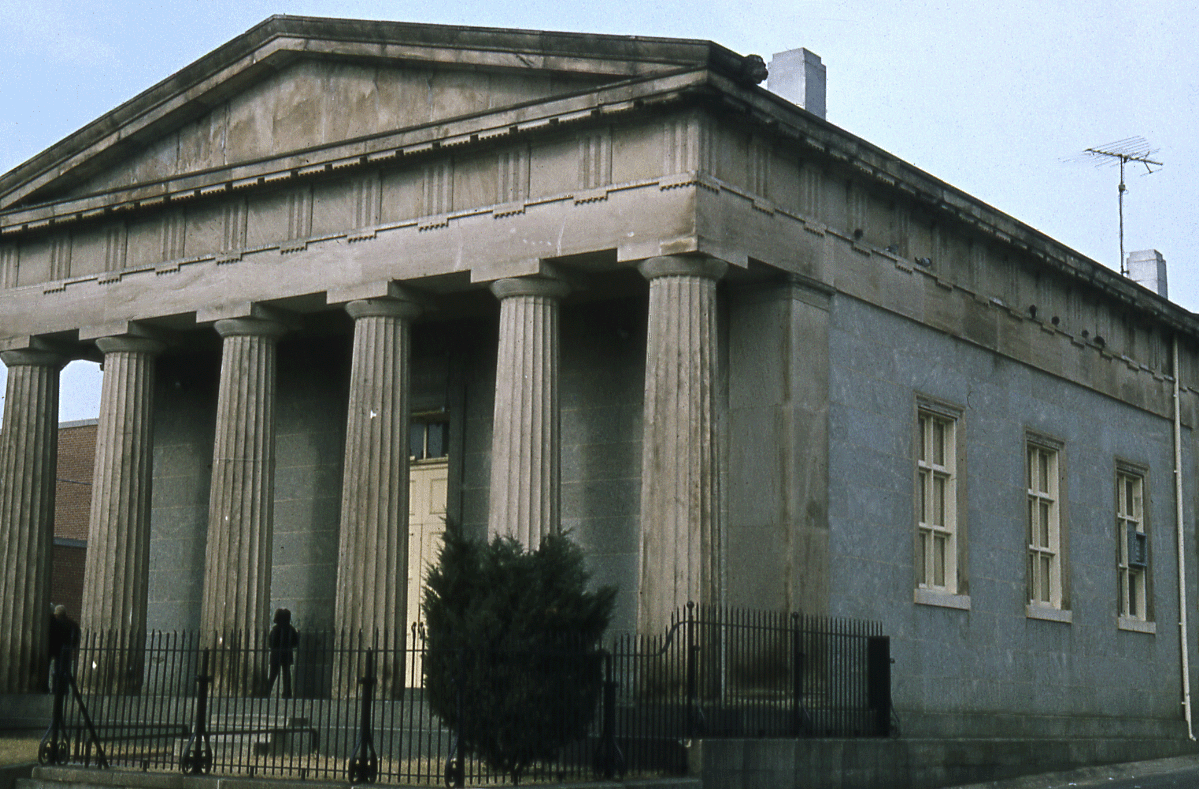
This week’s Baltimore Building of the Week from Dr. John Breihan is McKim’s Free School at 1120 East Baltimore Street,

Image courtesy Jack Breihan

“Democracy” became a byword for American society in the late 1820s, as property requirements for white, male voters were repealed, and the decidedly un-aristocratic Andrew Jackson was elected President. In architecture, this meant returning to the styles of ancient democracy in Athens. A remarkably fine example of this Greek revival is the McKim Free School on East Baltimore Street. John McKim, a wealthy merchant and a member of the nearby Old Town Friends Meeting, instructed his two sons to establish a school for poor children. The building they erected in 1835 was clearly intended as a monument of democracy. The small school, only 40 by 60 feet, boasted an elaborate (and expensive) stone portico and pediment in the Greek Doric order. Today, a nonprofit foundation preserves both McKim’s concern for disadvantaged youth and his sons’ classical monument.

Baltimore Building of the Week: Peale Museum

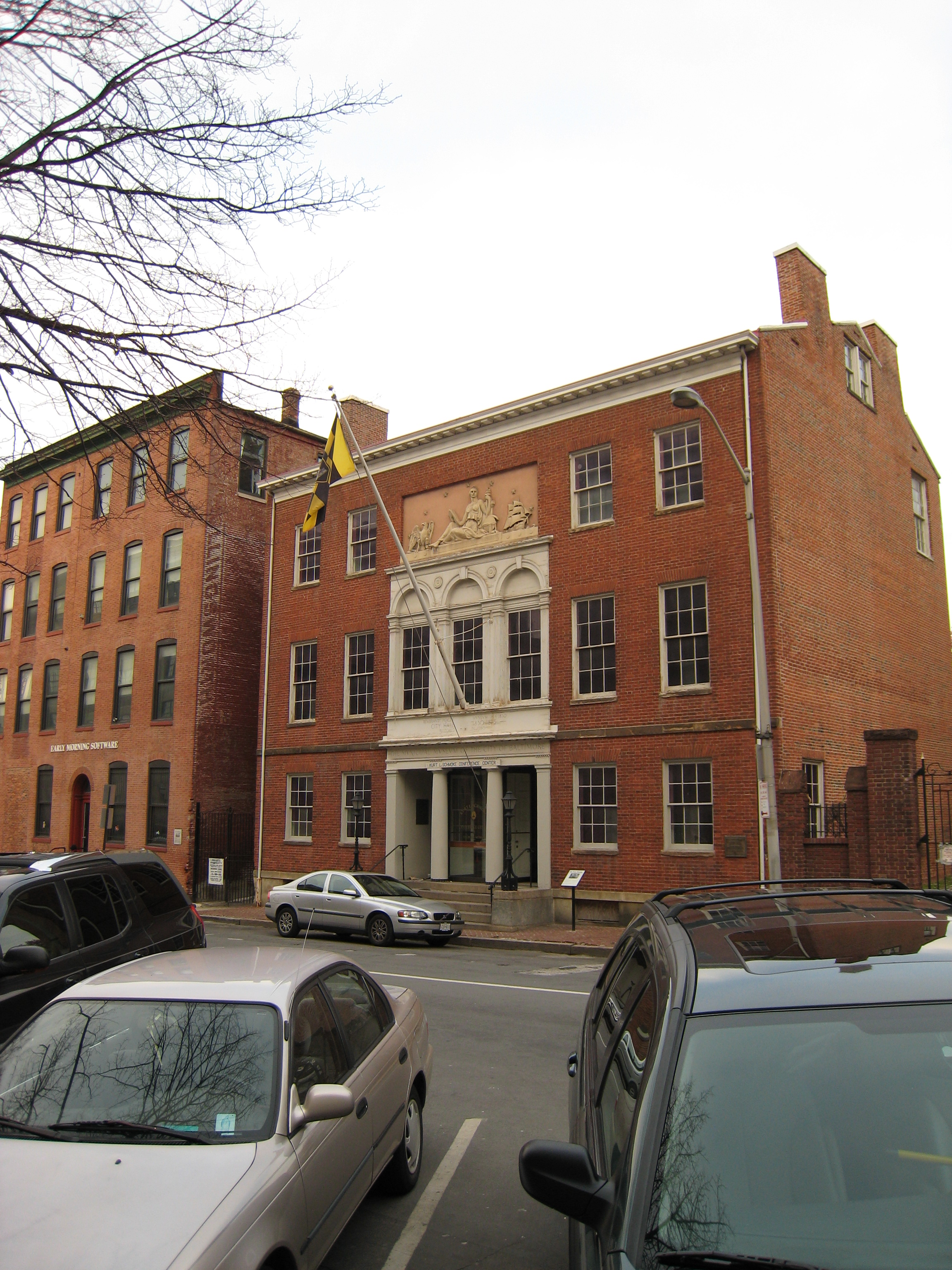
This week’s Baltimore Building of the Week is the first building in the Western Hemisphere designed and built as a museum, the Peale Museum.

Image courtesy Jack Breihan

Another industry to make an early start in Baltimore was the museum. In 1801, the artistic Peale family (father Charles, sons Rembrandt, Raphaelle, Reubens, and Titian) opened the first American museum in borrowed or rented quarters in Philadelphia. In 1814, Rembrandt Peale commissioned this federal-style museum in Baltimore – the first purpose-built public museum in the Western hemisphere. On display were scientific exhibits like the excavated skeleton of a prehistoric mastodon as well as paintings and curiosities. In 1830, the museum closed, and the building began 45 years service as Baltimore’s City Hall. Later it served as Colored Elementary School No. 1. After restoration in 1928 it once again became a museum, this time of Baltimore municipal history. In 1976 the Peale became part of the underfunded Baltimore City Life Museums, the financial collapse of which was the greatest disaster for the city’s history since the Great Fire. Largely vacant since City Life folded in 1997, the city-owned Peale Museum is the locus of a proposal to open a center for local history organizations.

Behind the Scenes Tour of McClain Wiesand Custom Built Furniture

In New York, Chicago and San Francisco, the custom built decorative art pieces created by Baltimore’s own McClain Wiesand studio are featured for their beauty and careful craftsmanship. This tour offers a “twofer”: a tour of the McClain Wiesand workshop and an open house of the owner’s fabulously renovated apartments (Moroccan room and all) above his shop in historic Mount Vernon.

Tour Information

Date: Wednesday April 7, 2010
Time: 5:30 to 6:00 p.m. — Wine and Cheese
6:00 to 7:00 p.m. — Tour
Place: McClain Wiesand Custom Built Furniture
1013 Cathedral Street (Baltimore, MD 21201)
Cost: $15 (includes wine and cheese reception)

Read more
Baltimore Building of the Week: Washington Mill

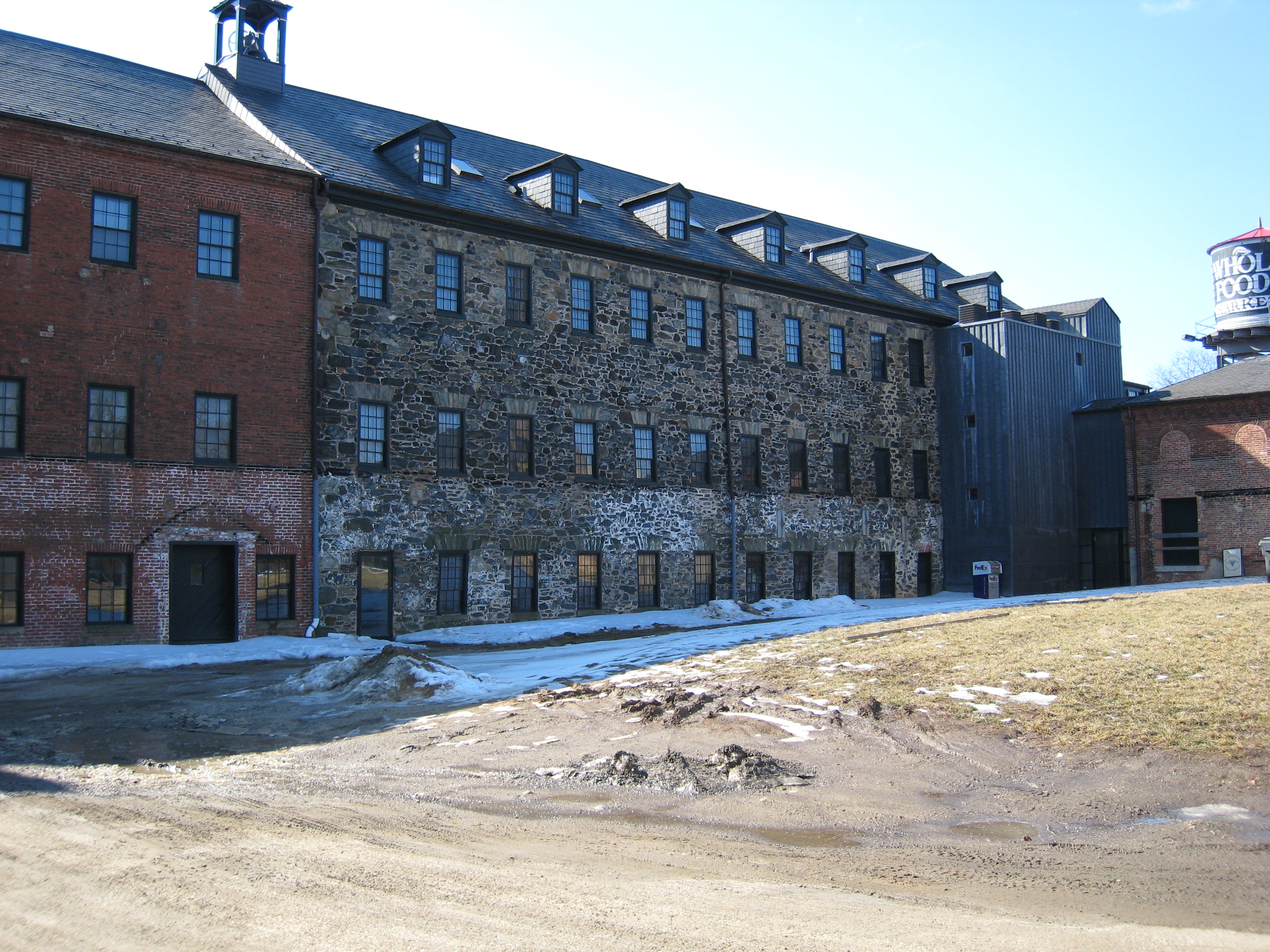
Reflecting the rich industrial heritage of the Jones Falls Valley, this week’s Baltimore Building of the Week is the 1807 Washington Mill building.

Image courtesy Jack Breihan

The Industrial Revolution began in England with simple water-powered machines to spin and later to weave cotton. Although Samuel Slater smuggled some of the designs into Rhode Island in 1793, the English mills dominated the market until 1807, when President Jefferson imposed an embargo on trade with England. The Washington Cotton Factory in Mount Washington dates from that year. Besides being the oldest industrial building in Baltimore, it is arguably the third oldest in the USA. Drawing power from the swiftly flowing Jones Falls, the sturdy stone mill was built to bear the weight of heavy machinery. Long rows of windows provided natural light for the three factory floors. This historic building, along with other pioneer industrial buildings on the site, has been imaginatively preserved as part of the mixed office and retail Mt. Washington Mill development. Other textile mills along the Jones Falls south of Mount Washington have been put to a variety of new uses, reminding Baltimoreans of their industrial heritage.

The rehabilitation of the historic mill complex began in 1988 and many more photos of the site may be found on the Mt. Washington Mill website. For more on the industrial heritage of the Jones Falls, check out this history from the Jones Falls Watershed Association or the Maryland Byways brochure on Falls Road (PDF).