Our volunteer program manager Lisa Doyle wrote this article for the January 2010 issue of Forum News on the development of our Centennial Homes program and the story of John Pente and the Little Italy rowhouse the Pente has owned for over 100 years. Thanks to Lisa for sharing this great story!
Historic preservation is all about places: buildings, sites, communities, even entire towns and cities. As preservationists, we uncover forgotten or neglected details about these treasures, restore them, and find ways to preserve and share their relevance for future generations. Yet some of the greatest preservationists in our own neighborhoods receive scant recognition: the people and families that have been living in the same home on the same block in the same neighborhood for a long time. Baltimore’s Centennial Homes Program seeks to thank these cornerstones of communities by honoring families that have lived in the same house for 100 years or more.
Centennial Homes families are the “unsung heroes” that have played a significant role in preserving the history of Baltimore’s neighborhoods. They have unique voices and perspectives that recount how their neighborhoods have evolved through times of war, immigration, social and economic changes. Heartfelt decisions from generation to generation to remain not only in the same neighborhood but in the same home reflect a true commitment and stewardship for their neighborhoods.
Baltimore’s Centennial Homes Program was born five years ago when a local city councilman was knocking on doors trying to get elected. He came across a number of “little old ladies” who answered their doors and mentioned that they had been born in their houses as had their parents. James Kraft, now a councilman for a district near Baltimore Harbor, felt that there should be some way to thank these families that have long been a part of Baltimore’s historic neighborhoods. He initiated a partnership between the City of Baltimore and Baltimore Heritage, and the Centennial Homes Program began.
The program is modeled after the numerous state programs that honor agricultural properties that have been continuously owned and maintained in agricultural use by the same family for a century or more, such as those of Illinois, Michigan, Nevada, North Dakota, Tennessee, and Wyoming. Families may be recognized in ceremonies at the state fair, as well as with certificates or plaques and other publicity. Colorado’s Centennial Farm Program and Oklahoma’s Centennial Farm & Ranch Program both present an additional Historic Structures Award to farm and ranch families that have preserved four or more historic buildings (at least 50 years old) in conjunction with the land. The Georgia Centennial Farm Program gives special recognition to properties listed in the National Register of Historic Places.
Baltimore’s Centennial Homes Program gives this idea an urban twist. The focus of the program is on families and how they have contributed to their communities. The Centennial Homes houses are not grand or historically important, other than as part of the fabric of their historic neighborhoods. And Baltimore Heritage has emphasized the link between the family and neighborhood, regardless of the condition of the house.
From its beginning, the Centennial Homes Program has relied on partnerships with local universities. As a semester project, a Goucher College historic preservation program undergrad created the nuts and bolts of how the program works. Undergraduates from Loyola University and the University of Baltimore history programs interview the homeowners, create a family profile, and document neighborhood history of the last 100 years. Baltimore Heritage features each family and the family’s neighborhood on its website, providing inspiration to other neighborhood residents about their own past and future community involvement. Along with these profiles, each Centennial Home receives a bronze plaque to identify the house and its occupants as long-term stewards.
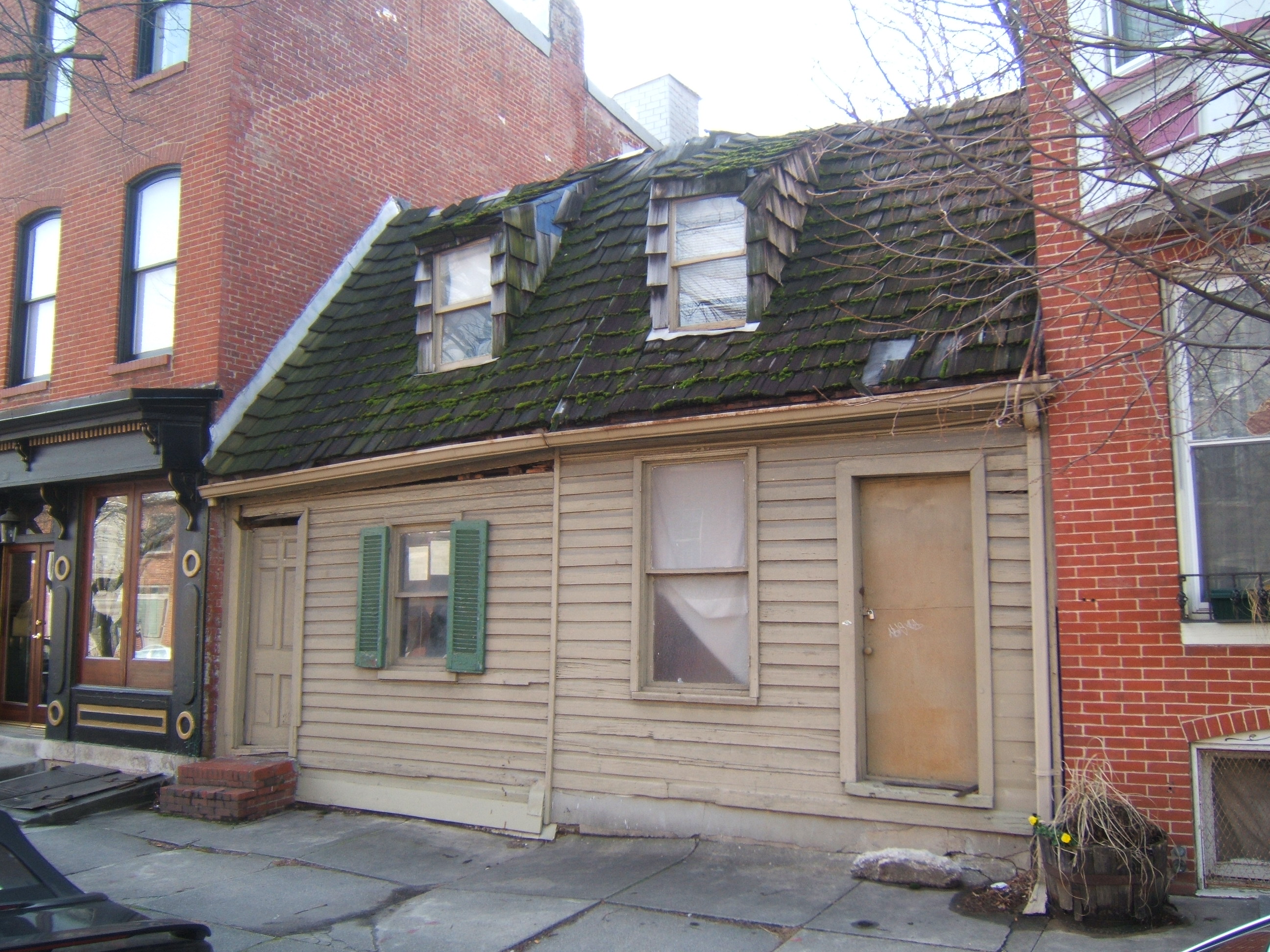
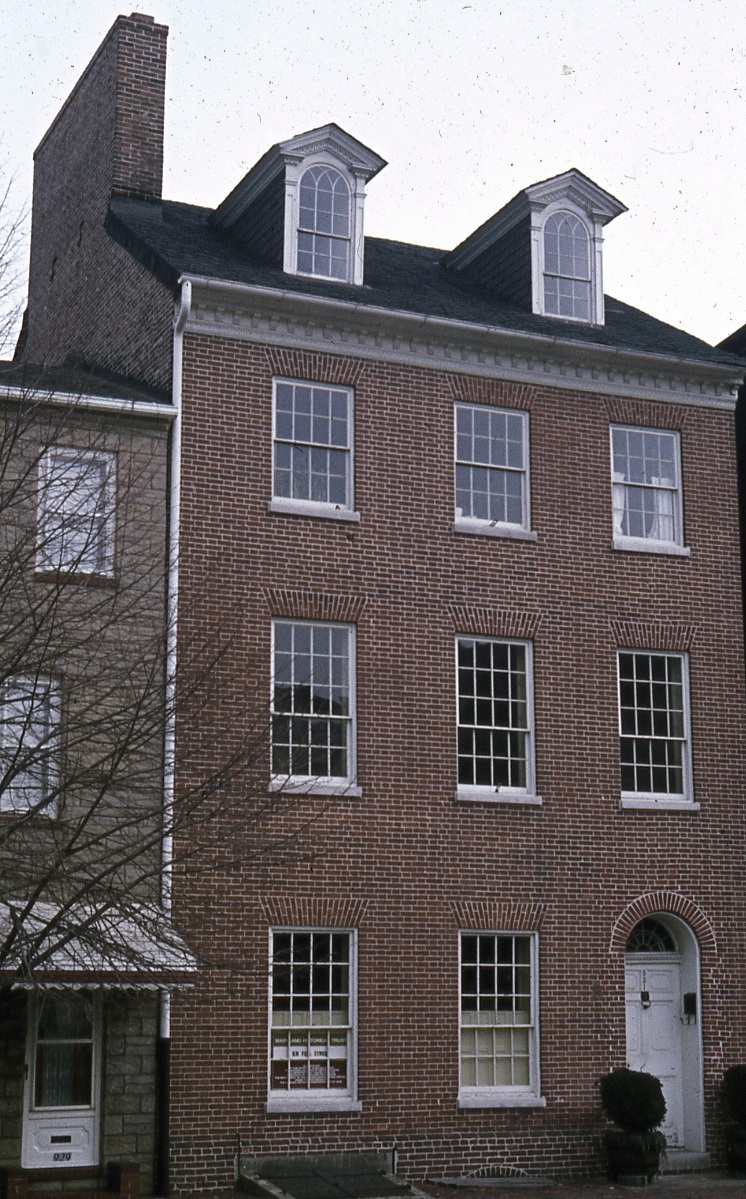
At the real heart of the program are the people and their neighborhood stories. The story of the first Centennial Homes family tells a lot about the program itself and what it can accomplish. John Pente, the 99-year-old patriarch of the Pente family in Baltimore’s Little Italy neighborhood, lives by himself in a quintessential Baltimore rowhouse. John’s father purchased the house in 1904 and John has lived in it since his birth in 1910. From this house, he wooed his future wife, raised his family, found work during the Great Depression, cheered for returning troops from both World Wars, saw new families join the neighborhood in different waves of immigration and others leave for homes in the suburbs, and experienced booms and busts of economic fortunes. Throughout all this, the family has stayed active in the neighborhood, from volunteering at church dinners to advocating sidewalk repairs. The Pente family has been part of the backbone that makes Little Italy a unique and thriving neighborhood.
For the past 11 years, John has allowed the Little Italy Film Festival, held outdoors on Friday nights in the summer, to project movies from a bedroom window of his home. It was only fitting that the official launch of the Centennial Homes Program honor the Pente family at one such Friday film night. Neighbors new and old came out to honor and thank the Pentes for their stewardship. Most viewers would not identify themselves as “historic preservationists,” but their support for the neighborhood and the Pente family proves otherwise.
Perhaps the biggest surprise of the evening was learning that John’s great-niece recently purchased the house next door from her grandmother, John Pente’s sister. With a fifth generation of Pentes due to arrive soon, it appears this family’s commitment to the neighborhood will not fade any time soon. As Meredith Nagle, John’s great-niece, said: “I just couldn’t let someone other than family buy the house that feels like a second home to me.”
There are now nearly a dozen Centennial Homes families identified in ten different neighborhoods across Baltimore, with new leads on possible 100-year owners coming in regularly. As we work to preserve our buildings and neighborhoods in Baltimore, the Centennial Homes Program helps us focus on an essential component: these unsung people and families, whose voices and daily efforts to care for historic communities cannot be forgotten.