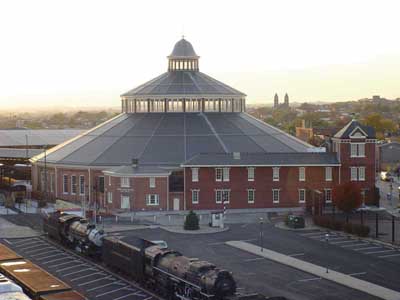
In partnership with the Mount Vernon Place Conservancy, we are glad to present a new series of walking tours exploring the rich history and architecture of one of Baltimore’s true treasures – Mount Vernon Place. Each month this fall, we’ll be meeting on the south side of the Washington Monument and leading a short tour around new theme – the history of the park squares, the fight to preserve Mount Vernon Place in the face of urban renewal, and the hidden histories of slavery and emancipation.
Mount Vernon Place: A History of the Squares
Saturday, September 7, 2013, 9:30am to 10:45am – Register today!
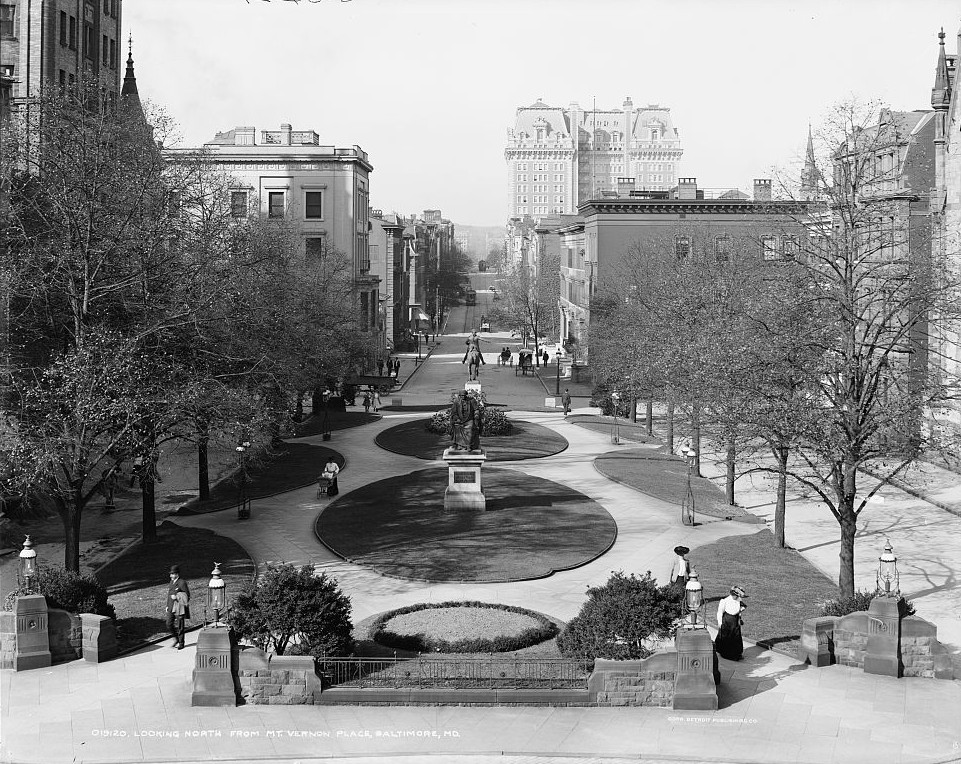
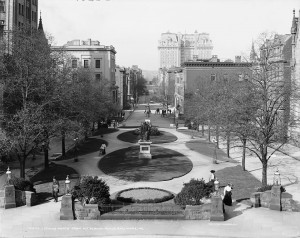 When the four squares of Mount Vernon Place were laid out in 1831, George Washington had only sat at the top of the monument for a few years and locals still knew the neighborhood as Howard’s Woods for the forested country estate that long occupied the hills north of the harbor. As the city grew up around the parks, their design was shaped by two luminaries in landscape architecture: Frederick Law Olmsted, Sr. contracted in 1876 to carry out improvements to the north and south squares and the architectural firm of Carrère & Hastings who designed the parks’ handsome Beaux Arts fountains, stairs and balustrades in 1917.
Since 2008, the Mount Vernon Place Conservancy has been working on a new vision to restore and maintain the parks as renewed world-class urban spaces. On our first Mount Vernon Place walking tour this fall, we’ll share nearly 200 years of history in these four squares and consider their promising future.
Mount Vernon Place: Architecture, Urban Renewal & Preservation
Saturday, October 5, 2013, 9:30am to 10:45am – Register today!
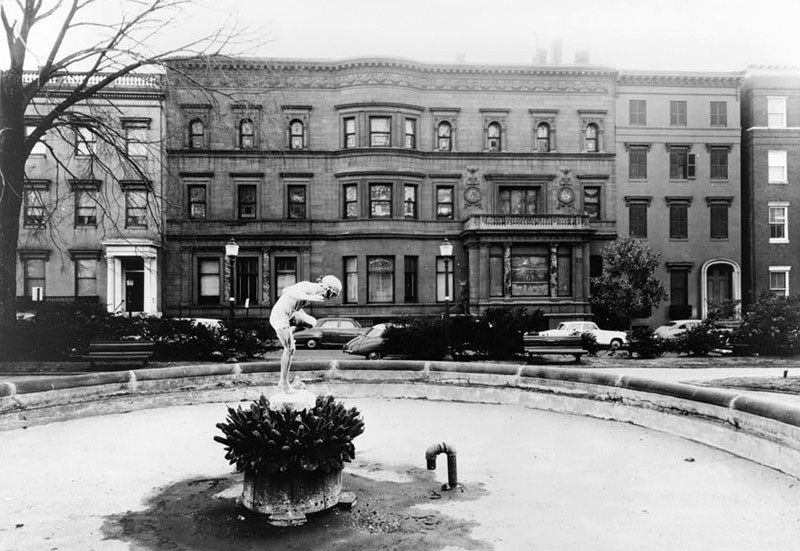
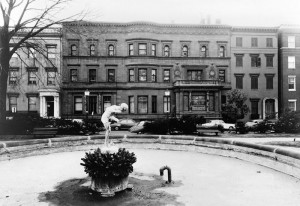 Far removed from the city’s bustling harbor, Mount Vernon Place developed as an affluent suburb in the mid 19th century. It was home to men like William Walters, a successful wholesale merchant whose legacy helped to establish the Walters Art Museum, and Robert Garrettt II, the first born son and heir of John Work Garrett, the founder of the Baltimore and Ohio Railroad. Robert and his wife Mary Frick Garrett made the perfect high society couple and engaged architect Stanford White to turn an already grand townhouse into a palatial 40-room mansion.
With such a distinguished history and stylish architecture, it is hard to believe that the neighborhood narrowly avoided being flattened for the development of an east-west highway in the 1960s and the Garrett-Jacobs Mansion itself was lucky to escape demolition in the face of urban renewal. On our second Mount Vernon Place walking tour this fall, we’ll highlight the rich architecture around the Squares and how preservationists saved these unique blocks from destruction.
Mount Vernon Place: Stories of Slavery & Emancipation
Saturday, November 9, 2013, 9:30am to 10:45am – Register today!
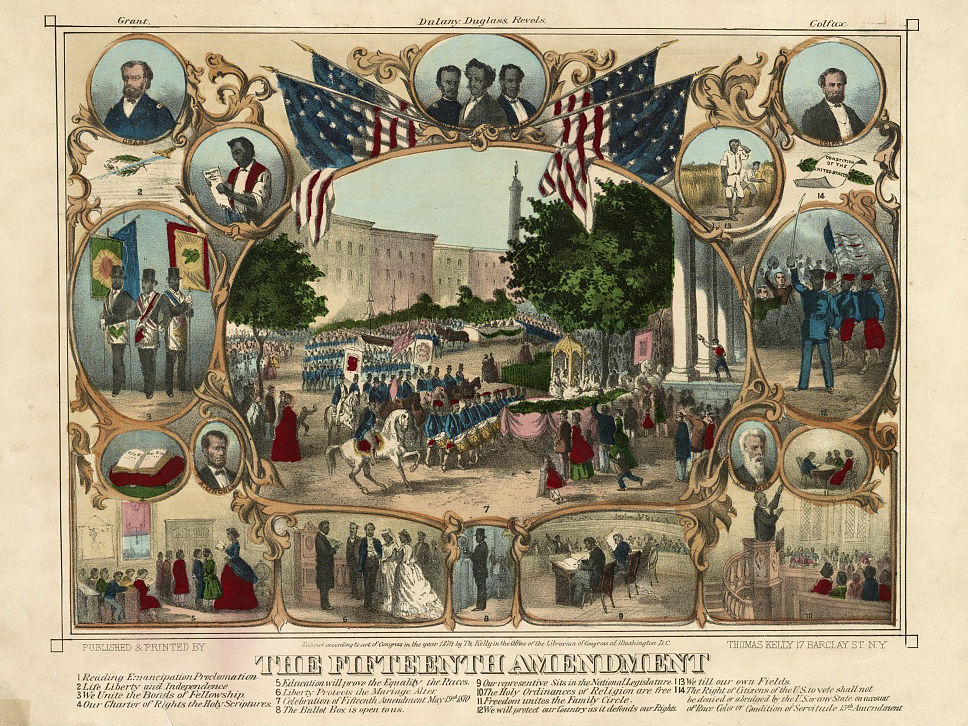
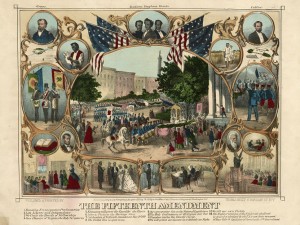 Around Mount Vernon Place, memorials in bronze and marble honor slave-holders – George Washington, John Eager Howard, and Roger B. Taney. No statute recognizes the labor of the enslaved people who worked and lived in the neighborhood’s handsome antebellum houses. No plaque recalls Frederick Douglass’ response to Taney’s notorious Dred Scott decision – “All that is merciful and just, on earth and in Heaven, will execrate and despise this edict of Taney” – or preserves the stories of men like Richard Mack, born into slavery and employed as a butler in a the Garrett-Jacobs Mansion at the turn of the century.
The stories of slavery and emancipation on Mount Vernon Place are far from simple, however, including the monument to the Marquis de Lafayette, a hero of the American Revolution who personally urged George Washington and Thomas Jefferson to emancipate their slaves and abolish slavery in the United States. On our third and final Mount Vernon Place walking tour this fall, we’ll uncover the lives of enslaved people and slave-owners with stories from violent politics of the Civil War and the revolutionary changes of emancipation.
Tickets are $10 per person for adults and free for children under the age of 16. All tours proceed rain or shine and advance registration is encouraged.